




Related: The Importance of Fleet Safety Kits
The Value of a Fleet Accident Packet
The document provides fleet drivers with a method to effectively report details related to an automobile accident, which can help prevent issues regarding liability.

Andy Lundin・Former Senior Editor
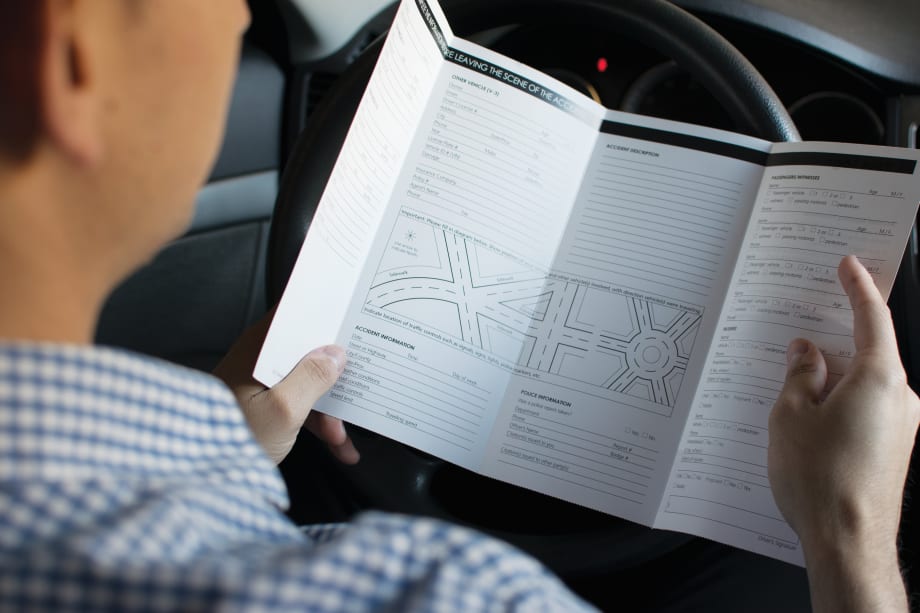
Photo courtesy of Eric Gandarilla.
3 min to read
Photo courtesy of Eric Gandarilla.
If there is one thing that fleets actively look to avoid in their day-to-day operations it’s having drivers get into crashes. Fleet safety programs and consistent driver training can help fleet managers prevent such an event from occurring, but fleets should always be prepared.
In the event of an accident, there is much for drivers to consider in the heat of the moment, including issues related to vehicle damage, injuries, etc. During such a distressing incident, it’s critical that drivers document as much about the incident as possible, and fleet safety packets can help them do this.
Fleet safety packets — which are normally designed as a pamphlet or a letter with a set of instructions — are a tool that drivers can use in the event of an accident. The packet may include sections where the driver can document details about where an accident took place, persons involved, and additional details about the accident. The document would also give details about what drivers should do at the scene of an accident and offer advice that is specific to a fleet, said Chris Villella, senior director of account management and special markets, The CEI Group.
The packet must be a simple and intuitive document. Robert Martines, chairman of Corporate Claims Management, Inc. (CCM), said the packets are straightforward and offer instruction that a driver should follow in case of an accident.
Villella of CEI echoed this sentiment.
“We’ve always tried to keep it as simple as possible with the ability to add some customization,” he said. “It’s not an elaborate document, it’s not 20 pages; it’s there to do its job and help the drivers.”
Following and filling out a fleet safety packet provided by a fleet safety organization in the event of an accident can accurately help in appropriately documenting the incident.
“Most times drivers are a bit frazzled after an accident or breakdown so we make it very easy to reach us,” said Martines. CCM provides a client specific letter that can fit within an envelope, he added
Indeed, having the packet tailored specifically to a fleet is a standard practice.
“Each customer is provided an accident kit based on their specific needs, but the framework of the accident kit is the same for everybody. It basically flows the way that we’re going to ask the questions,” said Villella of CEI. “We know that’s a stressful situation when you’re in an accident, and we want to make sure that we’re providing documentation that helps our customer’s drivers capture all the information they need to get.”
Keeping Drivers Educated
But, it is crucial that fleet managers stay involved in implementing and educating their drivers about the packets, as doing so can help streamline the accident process and reduce further complications, including issues related to liability.
Martines of CCM said that driver education is essential to utilizing the packets.
“Drivers typically are so busy that they do not always read emails from the fleet manager or their HR department. Repeated emails and a hard copy letter helps tremendously to make drivers aware of the company’s concern for their welfare and safety,” he said.
Originally posted on Automotive Fleet
Subscribe to Our Newsletter
More Small Fleet


Developing Budget-Friendly Driver Safety Programs
From driver training and safety meetings to one-on-one coaching and incentive programs, several small fleets share how they have developed a safety culture with their drivers using low- to no-cost resources.
Read More →
Sponsored•March 9, 2026
Boosting Last-Mile Fleet Uptime, Safety, and Value with AI Vehicle Inspections
AI-powered inspections are transforming last-mile fleets by replacing manual checks with highly accurate automated scans that detect defects in seconds. By giving fleet operations visibility into the daily condition of their vehicles, you can identify trends over the vehicle’s lifecycle that enable improved procurement decisions, route management, driver training and accountability.
Read More →
Five Ways Seat Belts Help Prevent Injuries
There are five ways seat belts protect occupants from injuries, according to the Tennessee Department of Safety and Homeland Security.
Read More →
Sponsored•January 14, 2026
It’s here: The 2026 Fleet Technology Trends Report
What does AI mean for fleets? Get the answer — and learn other top tech trends.
Read More →
Small Fleets, Big Impact: How Independent Drivers Power Wreaths Across America
Check out how small fleets and independent drivers power Wreaths Across America each December and why their impact matters more than ever.
Read More →
VMS Survey Finds 65% of Small Fleet Managers Run Operations Alone
A new VMS survey shows small fleet managers are stretched thin, with most handling operations solo and eager to adopt digital tools for relief.
Read More →
Tips for Driving Safely on Halloween Night
This video features a reminder from the Connecticut Department of Transportation (DOT) and the Connecticut Police Chiefs Association, urging drivers to prioritize safety this Halloween.
Read More →
AI, Access, and Uptime: VMS’s Next Chapter with David Prusinski
VMS’s new Co-CEO, David Prusinski, shares how an AI-first approach will give small fleets and repair shops the tools to compete like big players.
Read More →
Fleet Managers Share Winter Prep Tips: It's Never Too Early!
Three fleets share best practices to prep vehicles for winter and prevent downtime when the cold sets in.
Read More →