




Taking a Long-Term Approach to Designing an Emergency Response Vehicle
The American Red Cross collaborated with volunteers, students, and a range of industry experts to design a new vehicle for its Disaster Response fleet.

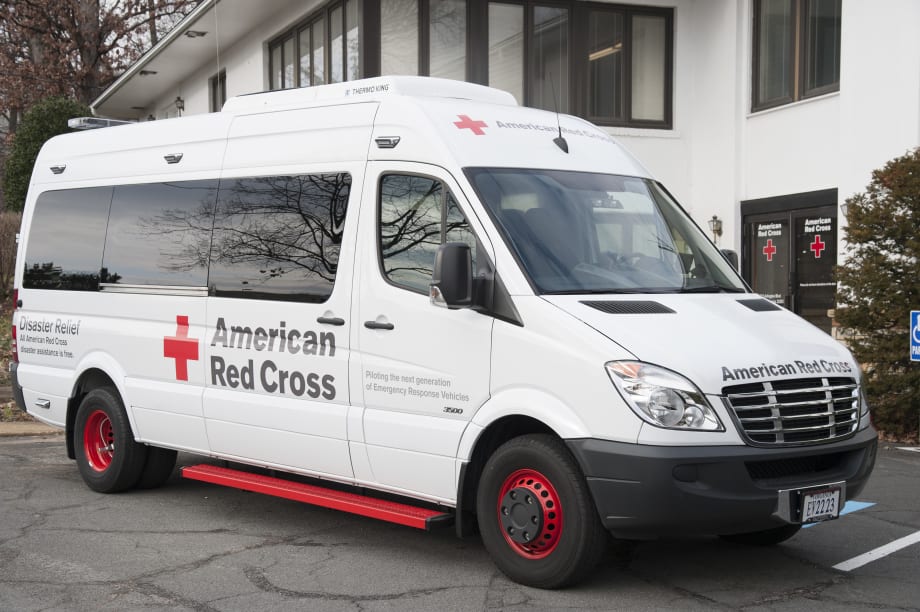
The American Red Cross chose the Freightliner Sprinter as the platform for its new Emergency Response Vehicle (ERV). Photo courtesy American Red Cross.
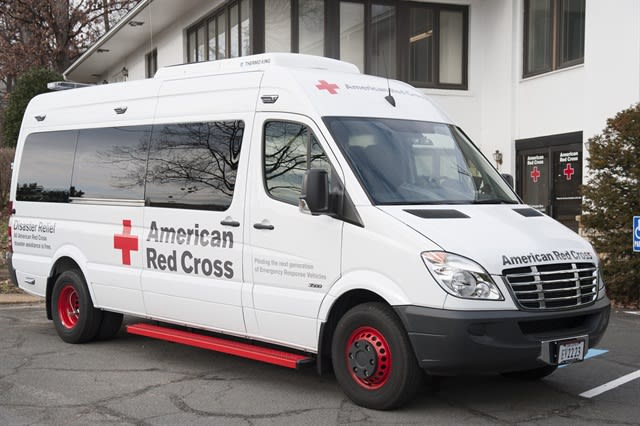
The American Red Cross chose the Freightliner Sprinter as the platform for its new Emergency Response Vehicle (ERV). Photo courtesy American Red Cross.
The American Red Cross recently completed piloting a new prototype emergency response vehicle (ERV) for its Disaster Services fleet. Unlike many fleet projects to select a new vehicle and upfit it to meet an organization’s needs, the Red Cross took a different approach. The company worked with students from the Arts Center College of Design, and involved a wide range of stakeholders, to develop the new ERV.
The Red Cross started the project because it determined its original ERV was getting “long in the tooth” and needed updating. The organization wanted to not only improve the ERV’s disaster response effectiveness, but also make it more ergonomic for volunteers. Automotive Fleet interviewed Lauren Twohig, director, response services, about the process and the new vehicle’s features, and PHH Arval’s Tom Keilty, chief operating officer and senior vice president of customer & vehicle services, about the fleet management company (FMC)’s involvement.
Overview of Current Use
The current ERV is used for many mission types. It is a converted ambulance designed for feeding large groups of people during disasters and the large-scale distribution of supplies. Although this was the vehicle’s original design, Twohig explained the current vehicle is used most frequently at the local Red Cross chapter level, and that this was the opportunity for the company to improve the vehicle for the organization’s local field units. Most chapters respond to smaller scale, regional disasters, such as house fires and flooding, and use the vehicle for community engagement and education.
To make the next-generation ERV fit its missions, and volunteers, better, the Red Cross decided to engage in more of a “blue sky” design process to ensure the vehicle is effective not only in the near future but in the years to come.
“For the next generation [ERV], we’ve actually very intentionally designed it to be modular so it could fulfill a number of missions and seamlessly transition from the one mission to the next,” said the Red Cross’ Twohig. “We do that through a more intentional use of space and designing the interior around those mission sets versus taking something off the shelf in the model we currently have.”
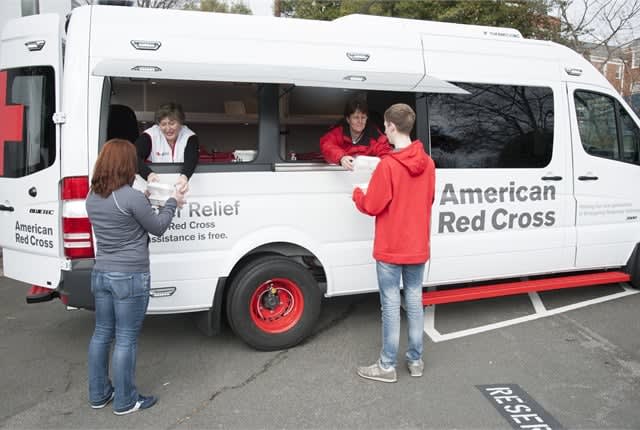
The new ERV features an awning that can provide American Red Cross clients with protection from inclement weather. Photo courtesy American Red Cross.
The Design Process
The Red Cross took a different approach to designing the next-generation ERV. Twohig explained how the entire project got its start.
“The idea started with one of our local disaster responders in the Greater New York Chapter, a gentleman by the name of Sean Hart,” Twohig said. She said Hart is the co-lead for the Next Generation ERV project and a volunteer for the Red Cross. Hart is an industrial designer and CEO/owner of KBC Design/Build NYC: a design and fabrication company located in Brooklyn, New York. He noticed the organization had modified an existing vehicle, rather than designed it from the ground up, when it had created the original ERV.
“He approached the local emergency director who, a few months later, walked into my office when I was the national fleet manager, presented the idea, and recommended we take action,” Twohig said. “That was in the summer of 2010.”
From there, the Red Cross accepted a donation from the Art Center College of Design in Pasadena, Calif. The donation wasn’t the usual gift of funds but rather the Art Center’s students’ time. Two of its design classes determined their students’ project for the entire semester would be to design the next-generation ERV for the American Red Cross.
After the students finished their designs, Twohig said the Red Cross brought together approximately 70 stakeholders inside the organization, including volunteers who drive and maintain the vehicles. Next, the Red Cross narrowed down that group to 30 individuals and spent a week determining the minimum feature set the new ERV would need from an operational standpoint.
The Red Cross decided to select a new commercial van platform for the ERV and chose the Sprinter. PHH came into the picture when the Red Cross engaged the company after the students had their chance to design the new ERV from the ground up.
PHH Arval’s Keilty said the FMC kept the OEMs’ production timetables in mind when selecting the new vehicle, as a number of new vans are slated to arrive in 2014. The Sprinter features a BlueTEC diesel engine that gets better fuel economy than the older Ford E-450 vans the Red Cross had used for years, according to Keilty. He added that a huge number of ideas came from the Art Center College of Design students’ work.
“The students from the college all had their own interpretation,” Keilty said. He added they had turned in design renderings of their ideas. “After eight hours in the conference room, we took a look at the key issues they were trying to address,” he said. “We chose key elements and pulled a final design together.”
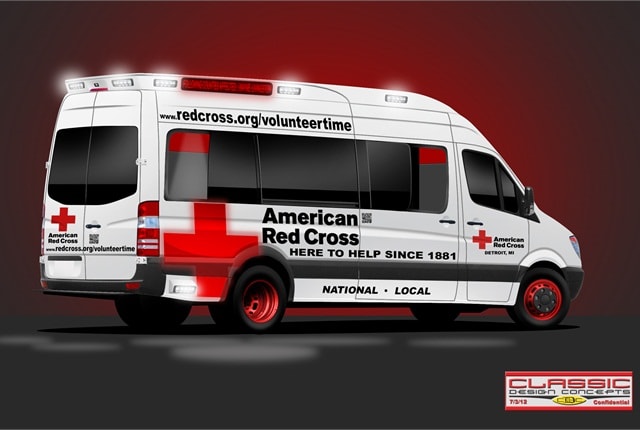
A drawing by Classic Design Concepts, the company that handled the upfitting process for the vehicle. Photo courtesy American Red Cross.
Keilty said the interior shelving and storage, and seating is modular, so it can work with a range of vehicle platforms. That way, if another OEM donated vans to the Red Cross in the future, the organization could easily upfit the new models without going back to the drawing board. The Red Cross and the FMC also worked with a company called Classic Design Concepts to handle the actual upfitting process.
“It was collaborative across all three organizations,” the Red Cross’ Twohig said. “We worked directly with Classic Design Concepts and PHH helped us navigate that process. Over the course of two and a half years we’ve had more than 1,000 individuals participate in the process. We surveyed more than 800 of our volunteer drivers to identify what their needs and challenges were with the current vehicle so we could really design something that was the best tool possible for our volunteers who help us assist the American public in times of need.”
Taking an Overview of the ERV
The next-generation ERV features a range of improvements. Starting with cargo, the Art Center College of Design students, PHH, and the Red Cross found a new way to secure food, which is stored in 70-pound containers, and other items used during relief efforts and community outreach.
“For our volunteer demographic, the average ERV driver is a woman over the age of 50,” Twohig said. “One concern for us was the loading and unloading of the food containers.”
The food storage container racks have a four-by-two configuration, which means volunteers can put up to four containers on the shelves or underneath them, wherever a volunteer can best fit them. Also, the vehicle has a unique loading system mounted on the rear door. The food container shelves also allow volunteers to slide, rather than lift, the containers, making them safer and more ergonomic for volunteers to load and unload. For serving the food, the seats volunteers use can rotate, thereby reducing potential back strain.
Another key feature the ERV Sprinter provides is enough interior room for Red Cross volunteers in disaster response scenarios to meet with individuals, giving them privacy during difficult emotional situations.
PHH’s Keilty noted the vehicle has many safety systems designed to help drivers avoid collisions, for example in a disaster area. They include a backup camera, back-up alarm systems, and various sensors. Other core features include two types of WiFi hotspots (to provide Internet access in a disaster area) and a “messaging” system (an LCD monitor, connected to a PC, on the vehicle’s driver’s side) that allows the Red Cross to display emergency and community outreach information.
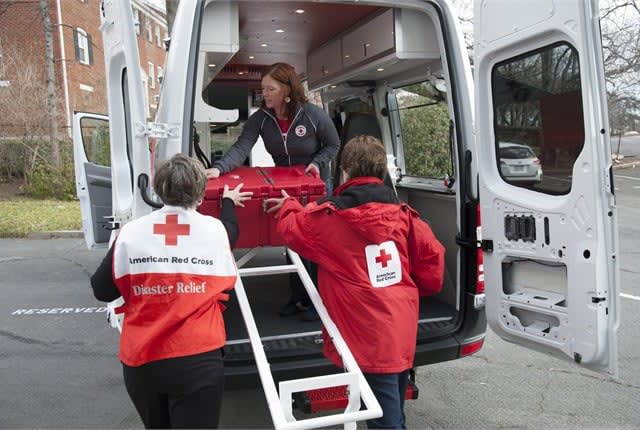
One of the ERV's features allows volunteers to more easily load cargo into the vehicle. Photo courtesy American Red Cross.
Looking Down the Road
With prototype testing complete, the Red Cross is currently modifying the prototypes based on user feedback and finalizing the specifications for the production units. According to Twohig, the Red Cross’ goal is to raise funds to purchase 25 production units each year until the entire fleet is replaced. At that point the Red Cross will have replaced its entire Disaster Response fleet with the next-generation ERVs, a total of 320 vehicles.
Looking ahead, the Red Cross’ ultimate goal for the next-generation ERV is to make its disaster response fleet more effective for volunteers and the communities the organization serves.
Originally posted on Automotive Fleet
More Vehicle Research
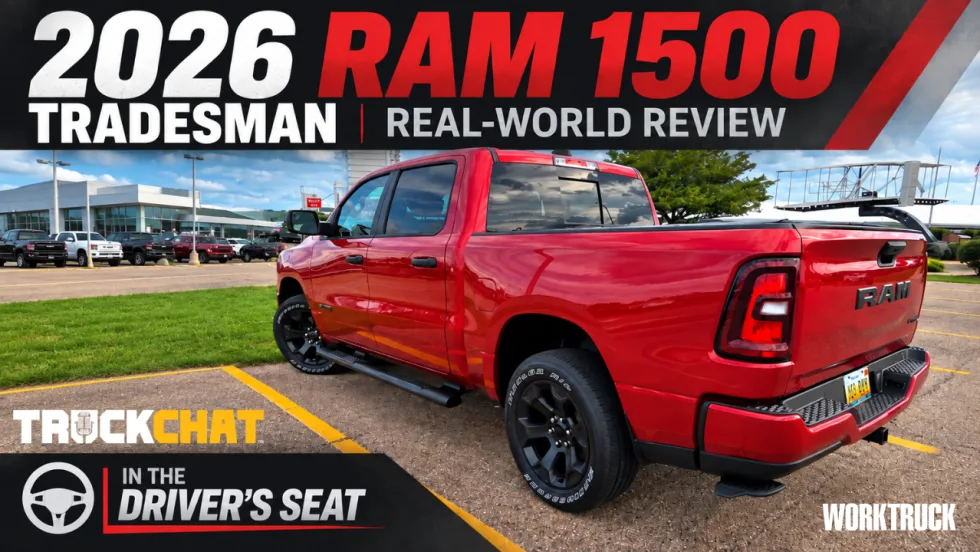
2026 Ram 1500 Tradesman Put to a Real-World Fleet Test
A few days behind the wheel of a 2026 Ram 1500 Tradesman turned into a test of visibility, parking, work-ready features, and even severe-weather driving.
Read More →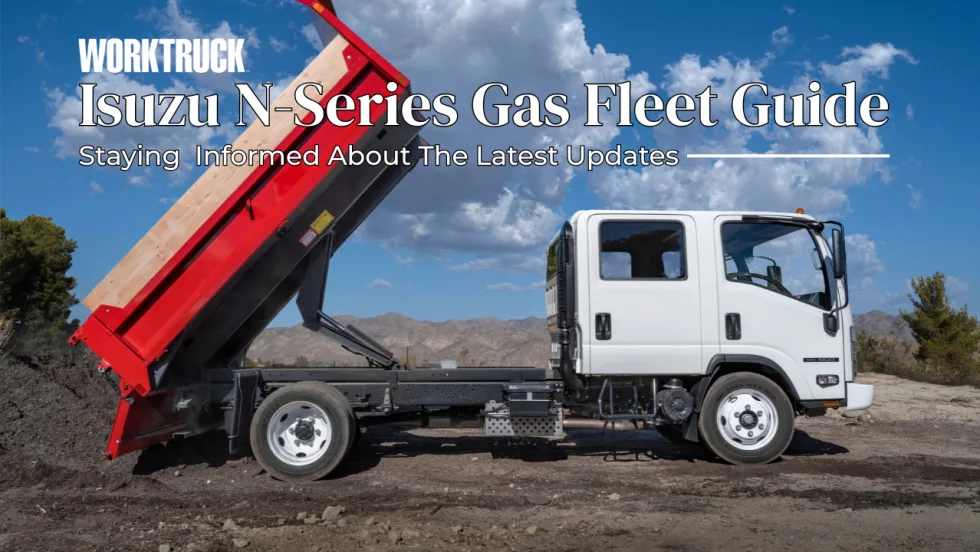
Isuzu N-Series Gas Fleet Guide: Specs, Capability and 2027 Model-Year Updates
Explore Isuzu Truck North America’s N-Series Gas fleet specs, engine performance, GVWR and payload capability, configurations, chassis dimensions, work-focused features, and 2027 model-year information.
Read More →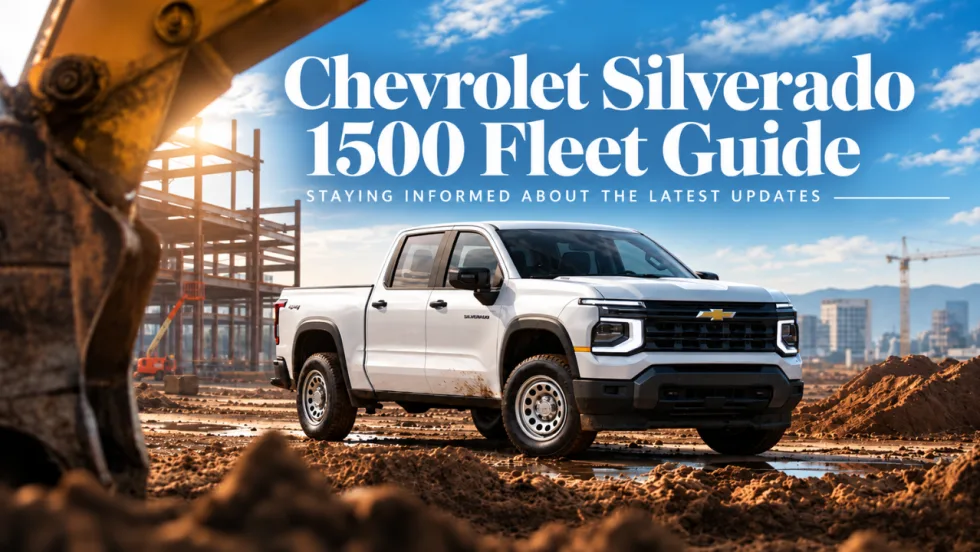
Chevrolet Silverado 1500 Fleet Guide Specs Capability and 2027 Model-Year Updates
The next-generation 2027 Chevrolet Silverado 1500 brings new V-8 engines, updated technology, expanded safety features, and a fleet-focused Work Truck. Here’s what commercial fleets need to know so far.
Read More →
Ram ProMaster City Fleet Guide Specs Cargo Capacity and 2027 Updates
Work Truck’s Ram ProMaster City Fleet Guide tracks the latest specifications, cargo capability, configurations, fleet technology, pricing, and model-year updates for Ram’s mid-size commercial van.
Read More →
Ford F-150 Fleet Guide Specs Capability and 2026 Model-Year Updates
Explore 2026 Ford F-150 fleet specs, engines, towing and payload capability, configurations, work features, technology, and model-year updates.
Read More →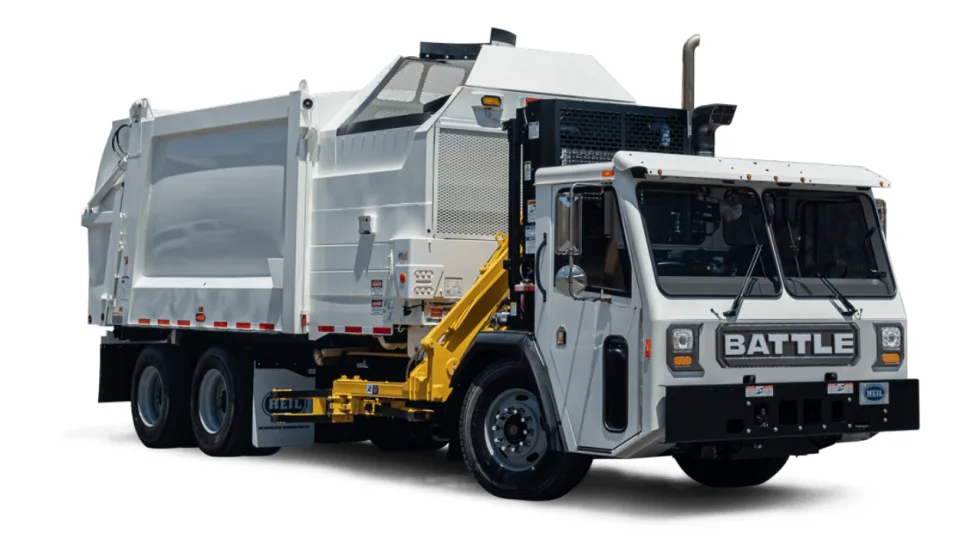
TCI Now Sells & Supports Battle Motors’ Vocational Trucks
Midwest truck dealer Truck Centers, Inc. (TCI) has expanded its transportation solutions with sales and service support for Battle Motors’ heavy-duty vocational trucks at locations in locations in Indiana, Illinois, and Missouri
Read More →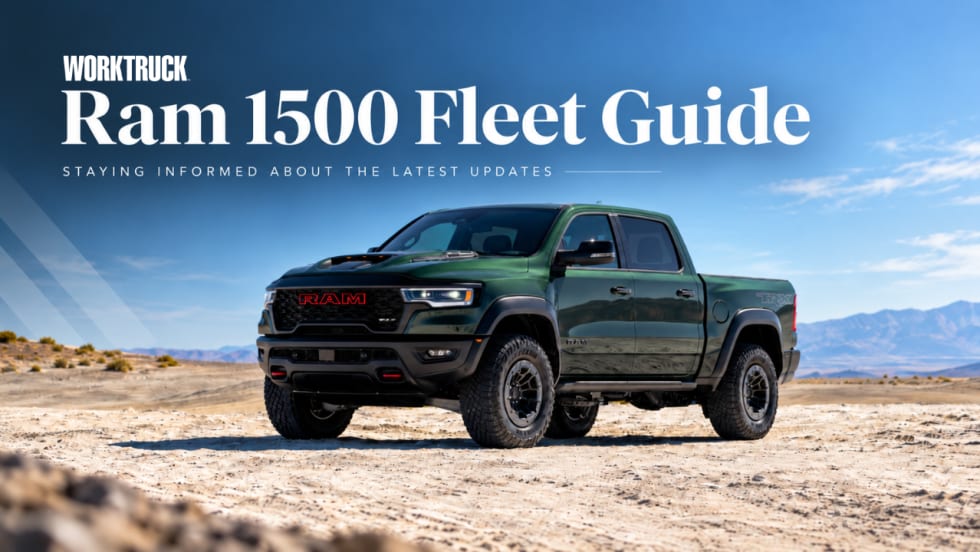
Ram 1500 Fleet Guide Specs, Capability and 2027 Model-Year Updates
Explore always up-to-date Ram 1500 fleet specs, engines, towing and payload capability, configurations, technology, pricing updates, and model-year changes.
Read More →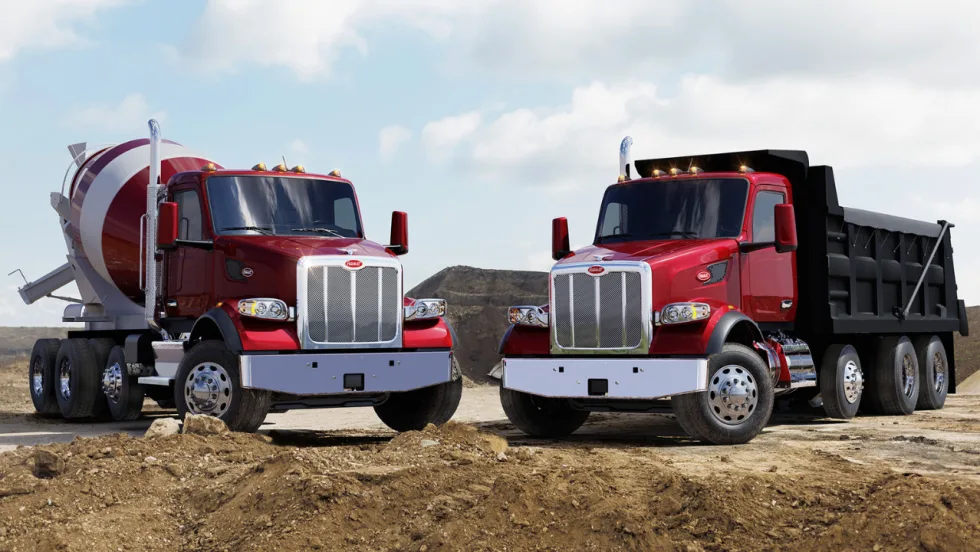
Peterbilt Trucks Equipped with Paccar TX-18 Pro Boost Efficiency for Maryland Fleet
Patuxent Companies is replacing aging trucks with the Peterbilt Model 567 and Model 589, specified with the Paccar TX-18 Pro 18-speed automated transmissions, and is reporting an 8% to 10% improvement in fuel economy.
Read More →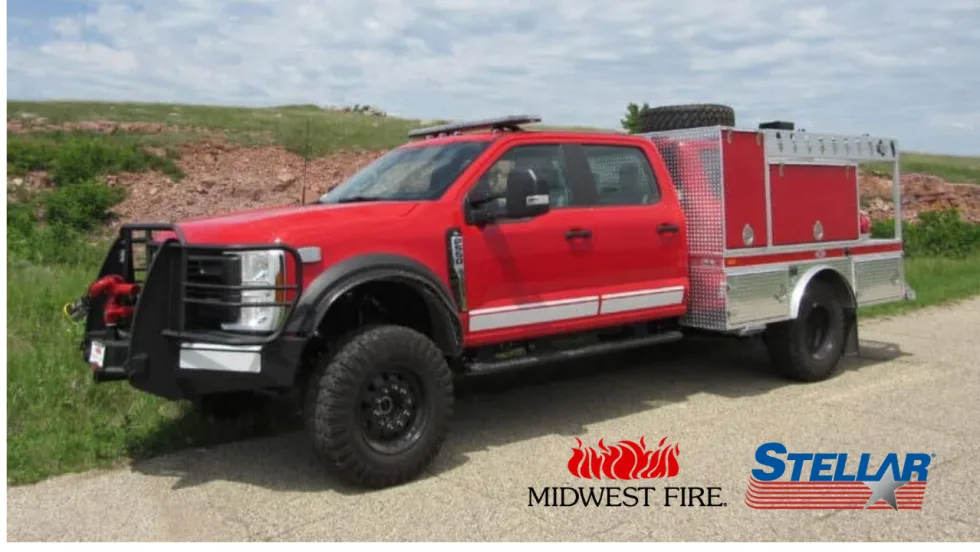
Stellar Expands into Fire Apparatus Market with Acquisition of Midwest Fire
Stellar Industries has acquired Midwest Fire, a custom fire apparatus manufacturer headquartered in Luverne, Minnesota, with nearly four decades of specialized apparatus experience.
Read More →
Recalls You Need to Know About in August 2026
If you have Altec, Chrysler, Ford, Heil, General Motors, International, Mack Trucks, Paccar, Rivian, Royal Truck, Toyota, US Truck Body, or Volvo Trucks vehicles in your fleet, you should check these important recalls issued by the National Highway Safety Administration.
Read More →