





Looking for the latest in disaster preparation and response for commercial and work truck fleets? Be sure to bookmark DisasterResponseGuide.com for all of the latest tips, insights, and more!
Taking a Long-Term Approach to Designing an Emergency Response Vehicle
The American Red Cross collaborated with volunteers, students, and a range of industry experts to design a new vehicle for its Disaster Response fleet.
September 18, 2013
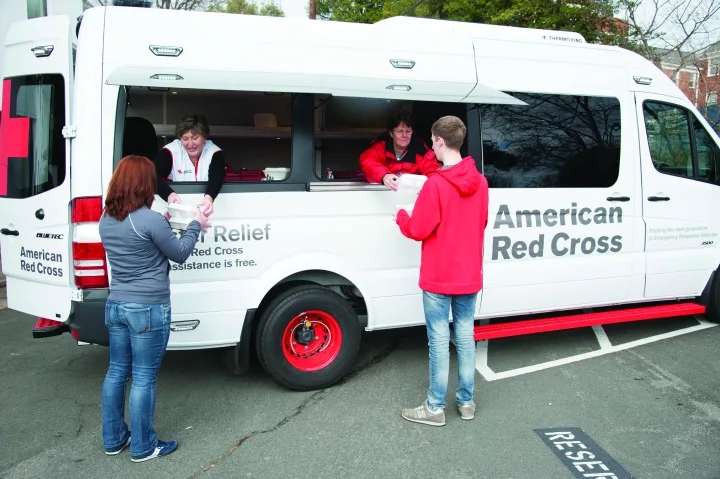
The American Red Cross is testing upfit Sprinter Vans (above left) for its new ERV. The upfit vans feature ergonomic seating and storage so volunteers can easily distribute supplies and food.
6 min to read
The American Red Cross recently completed piloting a new prototype emergency response vehicle (ERV) for its Disaster Services fleet. Unlike many fleet projects to select a new vehicle and upfit it to meet an organization’s needs, the Red Cross took a different approach. The company worked with students from the Arts Center College of Design, and involved a wide range of stakeholders, to develop the new ERV.
The Red Cross started the project because it determined its original ERV was getting “long in the tooth” and needed updating. The organization wanted to not only improve the ERV’s disaster response effectiveness, but also make it more ergonomic for volunteers. Work Truck interviewed Lauren Twohig, director, response services, about the process and the new vehicle’s features, and PHH Arval’s Tom Keilty, chief operating officer and senior vice president of customer & vehicle services, about the fleet management company (FMC)’s involvement.
Overview of Current Use
The current ERV is used for many mission types. It is a converted ambulance designed for feeding large groups of people during disasters and the large-scale distribution of supplies. Although this was the vehicle’s original design, Twohig explained the current vehicle is used most frequently at the local Red Cross chapter level, and that this was the opportunity for the company to improve the vehicle for the organization’s local field units. Most chapters respond to smaller scale, regional disasters, such as house fires and flooding, and use the vehicle for community engagement and education.
To make the next-generation ERV fit its missions and volunteers better, the Red Cross decided to engage in more of a “blue sky” design process to ensure the vehicle is effective not only in the near future but in the years to come.
“For the next generation [ERV], we’ve actually very intentionally designed it to be modular so it could fulfill a number of missions and seamlessly transition from the one mission to the next,” said the Red Cross’ Twohig. “We do that through a more intentional use of space and designing the interior around those mission sets versus taking something off the shelf in the model we currently have.”
The Design Process
The Red Cross took a different approach to designing the next-generation ERV. Twohig explained how the entire project got its start.
“The idea started with one of our local disaster responders in the Greater New York Chapter, a gentleman by the name of Sean Hart,” Twohig said. She said Hart is the co-lead for the Next Generation ERV project and a volunteer for the Red Cross. Hart is an industrial designer and CEO/owner of KBC Design/Build NYC: a design and fabrication company located in Brooklyn, New York. He noticed the organization had modified an existing vehicle, rather than designed it from the ground up, when it had created the original ERV.
“He approached the local emergency director who, a few months later, walked into my office when I was the national fleet manager, presented the idea, and recommended we take action,” Twohig said. “That was in the summer of 2010.”
From there, the Red Cross accepted a donation from the Art Center College of Design in Pasadena, Calif. The donation wasn’t the usual gift of funds but rather the Art Center’s students’ time. Two of its design classes determined their students’ project for the entire semester would be to design the next-generation ERV for the American Red Cross.
After the students finished their designs, Twohig said the Red Cross brought together approximately 70 stakeholders inside the organization, including volunteers who drive and maintain the vehicles. Next, the Red Cross narrowed down that group to 30 individuals and spent a week determining the minimum feature set the new ERV would need from an operational standpoint.
The Red Cross decided to select a new commercial van platform for the ERV and chose the Sprinter. PHH came into the picture when the Red Cross engaged the company after the students had their chance to design the new ERV from the ground up.
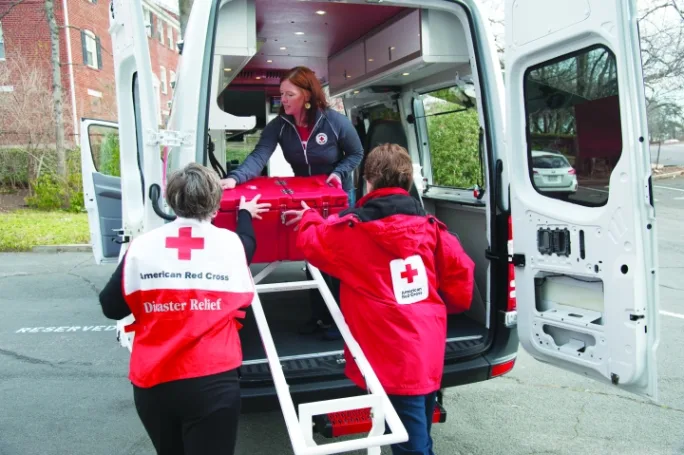
One new system in the ERV is designed to help volunteers safely and effectively load items, such as food containers. onto the vehicle.
PHH Arval’s Keilty said the FMC kept the OEMs’ production timetables in mind when selecting the new vehicle, as a number of new vans are slated to arrive in 2014. The Sprinter features a BlueTEC diesel engine that gets better fuel economy than the older Ford E-450 vans the Red Cross had used for years, according to Keilty. He added that a huge number of ideas came from the Art Center College of Design students’ work.
“The students from the college all had their own interpretation,” Keilty said. He added they had turned in design renderings of their ideas. “After eight hours in the conference room, we took a look at the key issues they were trying to address,” he said. “We chose key elements and pulled a final design together.”
Keilty said the interior shelving and storage, and seating is modular, so it can work with a range of vehicle platforms. That way, if another OEM donated vans to the Red Cross in the future, the organization could easily upfit the new models without going back to the drawing board. The Red Cross and the FMC also worked with a company called Classic Design Concepts to handle the actual upfitting process.
“It was collaborative across all three organizations,” the Red Cross’ Twohig said. “We worked directly with Classic Design Concepts and PHH helped us navigate that process. Over the course of two and a half years we’ve had more than 1,000 individuals participate in the process. We surveyed more than 800 of our volunteer drivers to identify what their needs and challenges were with the current vehicle so we could really design something that was the best tool possible for our volunteers who help us assist the American public in times of need.”
Taking an Overview of ERVs
The next-generation ERV features a range of improvements. Starting with cargo, the Art Center College of Design students, PHH, and the Red Cross found a new way to secure food, which is stored in 70-pound containers, and other items used during relief efforts and community outreach.
“For our volunteer demographic, the average ERV driver is a woman over the age of 50,” Twohig said. “One concern for us was the loading and unloading of the food containers.”
The food storage container racks have a four-by-two configuration, which means volunteers can put up to four containers on the shelves or underneath them, wherever a volunteer can best fit them. Also, the vehicle has a unique loading system mounted on the rear door. The food container shelves also allow volunteers to slide, rather than lift, the containers, making them safer and more ergonomic for volunteers to load and unload. For serving the food, the seats volunteers use can rotate, thereby reducing potential back strain.
Another key feature the ERV Sprinter provides is enough interior room for Red Cross volunteers in disaster response scenarios to meet with individuals, giving them privacy during difficult emotional situations.
PHH’s Keilty noted the vehicle has many safety systems designed to help drivers avoid collisions, for example in a disaster area. They include a backup camera, backup alarm systems, and various sensors. Other core features include two types of WiFi hotspots (to provide Internet access in a disaster area) and a “messaging” system (an LCD monitor, connected to a PC, on the vehicle’s driver’s side) that allows the Red Cross to display emergency and community outreach information.
Looking Down the Road
With prototype testing complete, the Red Cross is currently modifying the prototypes based on user feedback and finalizing the specifications for the production units. According to Twohig, the Red Cross’ goal is to raise funds to purchase 25 production units each year until the entire fleet is replaced. At that point the Red Cross will have replaced its entire Disaster Response fleet with the next-generation ERVs, a total of 320 vehicles.
Looking ahead, the Red Cross’ ultimate goal for the next-generation ERV is to make its Disaster Response fleet more effective for volunteers and the communities the organization serves.
Subscribe to Our Newsletter
More Upfitting
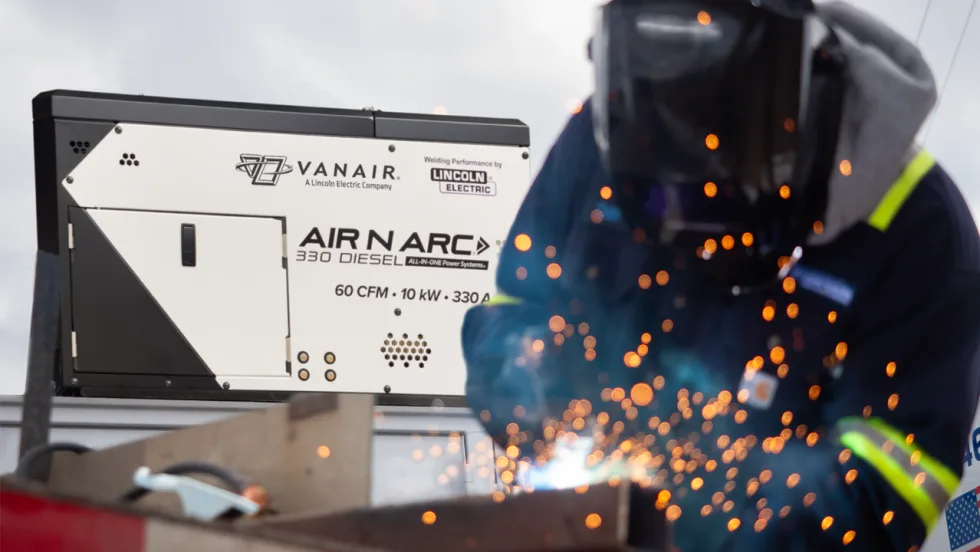
Multitasking: Vanair’s Air N Arc 330 Diesel 60 CFM All-In-One Power System
The Air N Arc 330 Diesel 60 CFM from Vanair consolidates a welder, generator, rotary screw air compressor, battery booster, battery charger, and EV charger into a single 750-pound enclosure driven by one 24.8-horsepower Kubota diesel engine.
Read More →
Buyers Products Awarded Sourcewell Cooperative Purchasing Contract for Snow & Ice Equipment
Buyers Products has been awarded a Sourcewell contract for a wide range of winter maintenance equipment and accessories, including snowplows, municipal plow systems, wing plows, spreaders, and more.
Read More →
Hilltip Introduces the SnowStriker SFT Flex Expandable Box Plow
Hilltip’s new SnowStriker SFT Flex expandable box plow features hydraulically extendable sections that allow operators to adapt the clearing width to changing conditions and applications on the go.
Read More →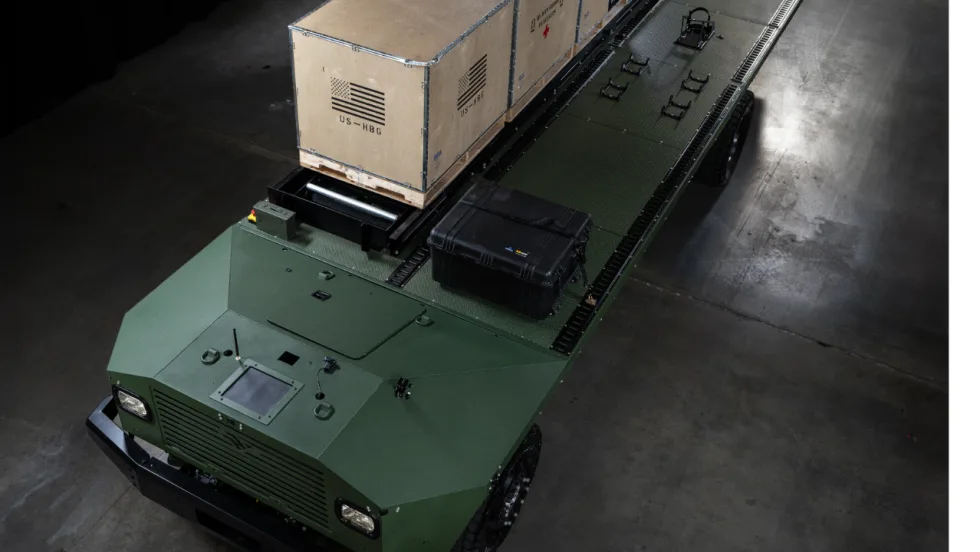
Harbinger Part of Effort to Deliver Autonomous Logistics Capabilities for U.S. Army
American Rheinmetall received an 18-month U.S. Army contract to deliver autonomous, hybrid-powered uncrewed ground vehicles. Harbinger is providing the truck platform for those vehicles.
Read More →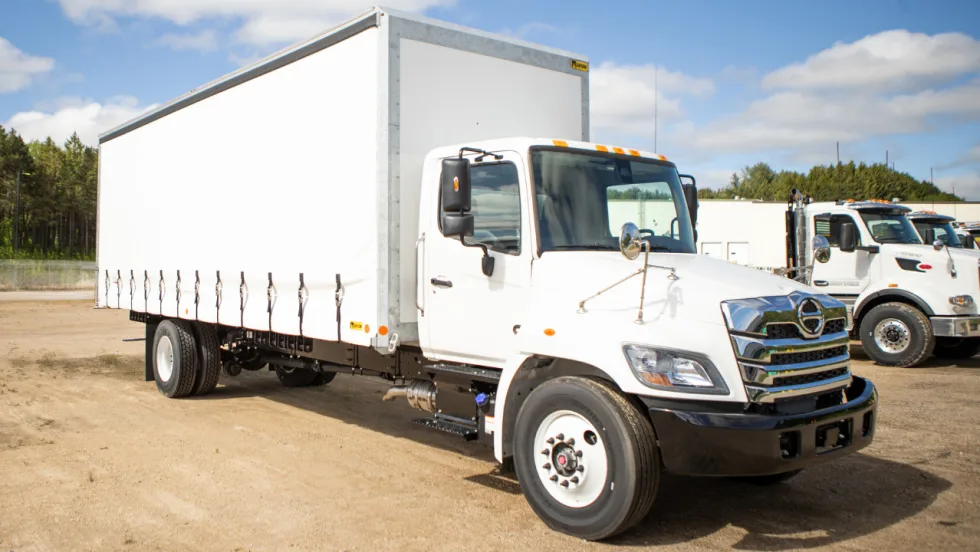
Thinking Outside of the Box: Choosing the Right Truck Body for Your Fleet
Choosing the right truck body can have a major impact on loading efficiency, cargo protection, downtime, and long-term operating costs. Here’s how dry vans, platforms, and curtainsiders compare, plus what fleets should consider before spec’ing their next truck.
Read More →
Fourth Annual Upfit Package of the Year Awards Open for 2027 Entries: One Month Left!
Think your upfit deserves industry recognition? Enter the 2027 Work Truck Upfit Package of the Year Awards before the Sept. 30 deadline. There is less than a month left to get your submissions in!
Read More →
Reading Truck Equipment & Masterack Unite as One of North America's Largest Commercial Vehicle Upfit Networks
Reading Truck Equipment and Masterack have integrated operations to create one of North America's largest and most comprehensive commercial vehicle upfit organizations.
Read More →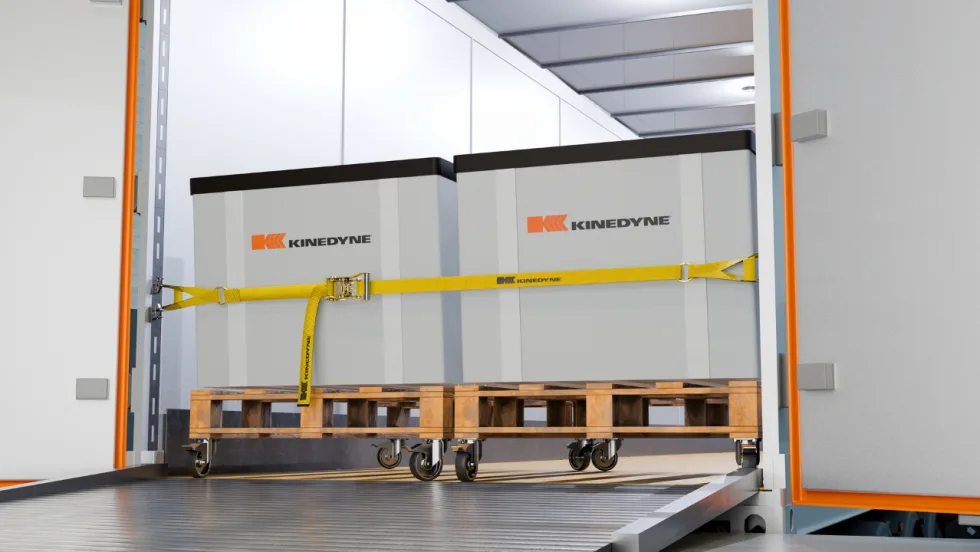
Kinedyne Launches Heavy Duty Logistic Shoring Strap
Kinedyne’s new Heavy Duty Logistic Shoring Strap features a patent-pending four-point design to deliver greater cargo stability, increased strength, and easier handling for rolling and shifting freight.
Read More →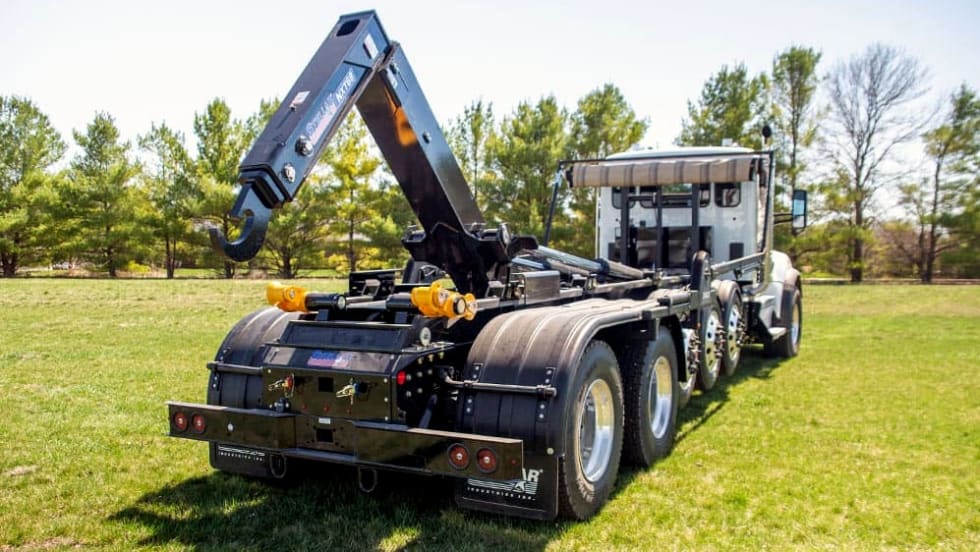
Hooklift Bumper Design from Stellar Showcases Strength & Versatility
Stellar Industries’ new bumper for the NZT Series Hooklifts come in two capacity options: the 20K, designed for Class 3 – 6 chassis with a 20,000-pound pull capacity, and the 90K, built for Class 7 and 8 chassis with a 90,000-pound pull capacity.
Read More →
Maxon Lift Awarded the Wabash Platinum Award for Supply Chain Performance
Maxon Lift, a liftgate manufacturer since 1957, received the Wabash Platinum Award for supply chain performance in 2025. Each year, Wabash presents awards to top suppliers for excellence in supply chain performance.
Read More →