




Standardizing Vehicle Specs to Slash Fleet Costs
While it is tempting to adopt a “more-the-merrier” approach to vehicle spec’ing, fewer specs can actually offer more options, netting happier drivers and fewer administrative headaches.


Standardizing vehicle specs can lead to significant savings.

Standardizing vehicle specs can lead to significant savings.
How can fleet managers squeeze more profit from their operations? One way is by standardizing vehicle specs across the entire organization.
In a nutshell, “spec standardization” is a strategy that identifies the fewest number of vehicle configurations that can meet the requirements of the widest range of business divisions and branches within an organization. The idea is to develop “core specs” for specific roles — such as service, sales, and estimators — while still allowing for slight variations, depending on the particular needs of each location (such as four-wheel drive for off-road conditions or higher drive axle ratios for mountainous terrain).
The Benefits of Centralizing and Simplifying the Approval Process
By centralizing — and simplifying — the vehicle approval process, fleets can achieve several financial and administrative benefits.
1. Simplified ordering. A few years ago, Mike DeCesare, national truck sales manager for fleet management company ARI, began working with a client that used 28 different vehicle selectors — just for one business unit.
“We found many of their specs were for almost the same vehicle, with very minor differences between the choices. This was creating the opportunity for a lot of mistakes to be made when it came time to purchase vehicles,” DeCesare said. “We studied the business, talked to the drivers, and were able to uncover opportunities to reduce the 28 vehicle configurations down to 12 common specs, with a few additional options we could add on.”
The result? “We were able to cut the company upfit cost, on average, by $500 per vehicle,” DeCesare said. “That doesn’t sound like a lot, but, when you’re ordering 700 vehicles per year, it adds up pretty quickly. In some cases, the company saved as much as $2,000 per vehicle, while, with other specs, we had to add some equipment. But, the net result was an average savings of $500 per vehicle.”
2. Increased buying power. If a fleet can bring more orders to one vehicle manufacturer and upfitter, it increases the leverage to negotiate greater discounts.
“The fleet needs to look at how many different ways it’s been dividing up chassis and upfit buys,” advised Jim Palin, senior truck applications engineer at GE Capital Fleet Services. “The more orders you place with any one manufacturer or upfitter, the better your pricing is going to be. You’re diluting buying power by spreading buys over multiple manufacturers.”
3. Consolidated parts inventory. Standardizing vehicle specs also directly impacts parts and repair costs.
“One of the best things about standardizing — if a fleet has its own repair shops — is the ability to reduce your parts inventory, where you’re only stocking for one truck and not across the OEM spectrum. You don’t have to stock different kinds of engines, wiring harnesses, and the whole nine yards,” said Steve Jansen, manager of regulatory compliance and truck services at Donlen. “By standardizing, a fleet can reduce its parts inventory, which lowers costs.”
4. Enhanced technician training. Through standardization, fleets can save money by focusing technician training on only a select few manufacturers, powertrains, and vehicle configurations. As technicians become more knowledgeable with fewer vehicles, they’re better equipped to accelerate repairs and improve equipment uptime.
“By training technicians on one type of truck, instead of across the whole spectrum, they become much more familiar with the idiosyncrasies of that particular vehicle, which could take a non-trained tech many more hours to uncover,” Jansen said. “The familiarity enables the tech to solve the problem much more quickly.”
5. Flexibility to shift assets across the organization. Developing common specs expands a fleet’s opportunities to move resources around as business needs might dictate.
“Standardization gives a company flexibility to adjust as the business climate changes,” said Steve Jastrow, manager of strategic consulting services at GE Capital Fleet Services.
DeCesare of ARI agreed. “In an ever-changing world, if a fleet has a vehicle that has been specialized for a certain region, like the snow belt or the Northeast, and business declines in that area, a standard spec vehicle will provide more flexibility in terms of redeployment,” he said.
6. Equitability across the driver base. Ken Gillies, manager of truck ordering and engineering for GE Capital Fleet Services, put it this way:
“Whatever the role, salesperson, service tech, etc., having them in the same kind of vehicle across the board lessens the potential for people to complain that drivers in another region have all these upgrades and they don’t. That turns into a bit of a headache for a fleet manager. It’s not just a cost issue; it has become an internal issue, because there is a perception that there is not fair treatment across the board.”
[PAGEBREAK]
7 Best Practices for Standardizing Vehicle Specs
How can organizations achieve these cost-saving benefits? Here are seven “best practices” to effectively execute a vehicle standardization strategy.
1. Centralize fleet management. “Decentralization (where each branch or division orders vehicles on its own terms, according to its own spec, from its own providers) is probably one of the biggest hindrances to spec standardization,” said Palin with GE Capital Fleet Services. “You need to break through the many silos that often exist in organizations to achieve centralized control, where a fleet manager has enough clout to say, ‘I understand that each of you has your own concerns about how your vehicle is used, but we need to move to thinking about the bigger picture impact of vehicle selection globally and not [exclusively] locally.’”
2. Distinguish “needs” from “wants.” Jansen with Donlen talked about one client that saved a few hundred dollars per truck simply by changing the bumper spec. “At one location, they always bought chrome bumpers, thinking it looked great with their color scheme,” Jansen said. “We posed the question: ‘The painted bumpers are going to save you $300 — do you really need chrome?’ For the standardized corporate spec, they decided to take the chrome bumpers off.”
Some other potential areas for savings include:
Cloth or vinyl seats instead of leather.
Bench seats instead of bucket seats.
Two-wheel instead of four-wheel drive.
Gasoline instead of diesel.
Extended Cab instead of Crew Cab.
Four-cylinder engine instead of six or eight cylinders.
Standard length pickup box instead of extended.
“If you’re buying three trucks for folks out in the middle of nowhere, and you’re just worrying about making these three drivers happy, it’s understandable to say, ‘Yeah, OK. Go ahead and put all the creature comforts on.’ But, when you start dealing with a few hundred trucks on a corporate level, and you can start saving $150 to $400 per truck, that’s mega dollars at the end of the day,” Donlen’s Jansen said.
Does this mean every vehicle should be stripped down? Not necessarily. A guiding principle, according to DeCesare, is to determine the “why” or business case behind any spec. For example, power windows and door locks are often considered non-essential. “But, if it means saving 30 seconds every time a driver gets out of the truck, that could add up in terms of efficiency and productivity.”
3. Conduct an annual spec review. This helps fleet managers uncover opportunities to improve specs fleet-wide and adjust, as necessary, depending on changes in the business.
“Inevitably the job for a particular vehicle has changed, and you need to make sure the spec reflects those changes,” said Gillies with GE Capital Fleet Services. “You have to determine what exactly the true need is, versus relying on what has been done in the past.”
DeCesare detailed his approach to determining need. “We look at the miles per gallon the vehicle is achieving. Do we have one area that, on average, is achieving 2 mpg better? If so, you have to investigate and do a good amount of research to find out the reason for that difference. We also look at maintenance costs. Are we seeing a 20- or 30-percent higher maintenance cost using a similar vehicle? If so, we ask, what can be done to reduce that?”
Evaluating maintenance records across a fleet is especially helpful, said Jansen with Donlen. He cited the example of a client who was dealing with an abnormally high number of broken axles on the company’s Ford F-450 service trucks.
“When they bought the trucks new, they weighed-out fine. But, when I asked them to show me how they were actually using the trucks, we discovered the trucks were being overloaded,” Jansen said. “When they originally developed the specs, there was an option available for a heavy-duty front axle, but they didn’t order that. We corrected that spec and they haven’t broken the axle on any of those trucks since. Deep diving into the repair metrics really helps you determine whether you’re spec’ing correctly. Take a look at the common parts having to be replaced prematurely, and adjust the spec to counteract that.”
4. Develop standards based on vehicle role and location. Think in terms of specific roles that are performed throughout the organization and write the spec to support those roles. For example, a fleet might develop one spec for a mechanic’s truck, equipped with a service body and heavy-duty crane; one spec for a parts delivery truck; and another for superintendents.
However, certain regions may require slight modifications for vehicle specs, such as trucks operating in mountainous terrain. In this case, the fleet manager may need to spec a deeper drive axle ratio to ensure sufficient pulling power up steep grades. Or, in harsh winter climates, the need may call for engine block heaters, four-wheel drive, or snowplow prep packages that warmer regions don’t require. In these cases, a fleet manager could offer these region- or terrain-specific options on top of the standard spec.
But, wouldn’t it be easier to just standardize the vehicle spec for a fleet’s “worst-case” scenario and make that the rule across the board? That approach may simplify the process, but that can prove costly in terms of the total cost of ownership, DeCesare cautioned. “Build a standard vehicle and then have the option for two-wheel or four-wheel drive, snow chains or no snow chains, and so forth,” he said.
5. Follow the “one-third” principle. This idea comes from DeCesare with ARI. If the chances are high that vehicle will eventually be transferred to another business unit, account for that possibility with the vehicle spec at the time of order by using the “one-third” principle.
“Suppose you have a division in the Northeast and, at that location, the employees are not allowed to tow anything. You wouldn’t include a hitch on the truck because if you do, you know they’re probably going to tow something. But, your company also may have a division in the South that not only allows towing, it’s required by the business unit,” DeCesare explained. “So, when ordering the truck for the Northeastern division, you wouldn't order the hitch, but if it is likely you might transfer the vehicle to the South, you might add a towing prep package without a hitch so it can be added later. Wiring labor after the fact can cost several hundred dollars, whereas it’s only an $80 or $100 option — about a third of the cost — at the time of build.”
The bottom line: “If there’s a good chance that you’ll eventually use the option, and you can get it at about a third of the cost at time of order, versus after the fact, you may want to consider adding that to the original vehicle order,” DeCesare concluded.
6. Consider the dealer network. Which OEM dealers are most conveniently located to each branch or division to have warranty repairs performed? “This is especially important for fleet locations in outlier areas,” Jansen said. “For instance, there may not be a Dodge dealer for 50 miles from a particular office, but there’s a GM dealer across the street. Flexibility with OEM selection based on location can help reduce costs.”
7. Garner “buy-in” at the local and driver levels. “There is going to be a lot of change management that needs to take place when standardizing specs,” said Gillies with GE Capital Fleet Services. “You need to think about the downstream effect on people.”
Palin of GE Capital Fleet Services agreed with his colleague. “You have to get down to the level of the people who are actually operating the vehicles,” he said. “If you begin [a standardization initiative] at the management level, the initiative usually fails. At some point, you have to get feedback from the actual vehicle user. Some fleets try to skip that piece because it takes more time and effort, but managers are not always in tune with what their drivers are doing. You can end up with a manager’s view of how things should be done, but this can create a lot of ill will with the actual users.”
Said DeCesare of ARI: “If the fleet manager is rolling out a standardization initiative — but didn’t get driver feedback — the first thing drivers will ask is, ‘Who was involved with this?’ If drivers aren’t involved, there’s usually pushback. So, getting the drivers involved from the get-go is definitely the best option.”
Originally posted on Automotive Fleet
More Vehicle Research
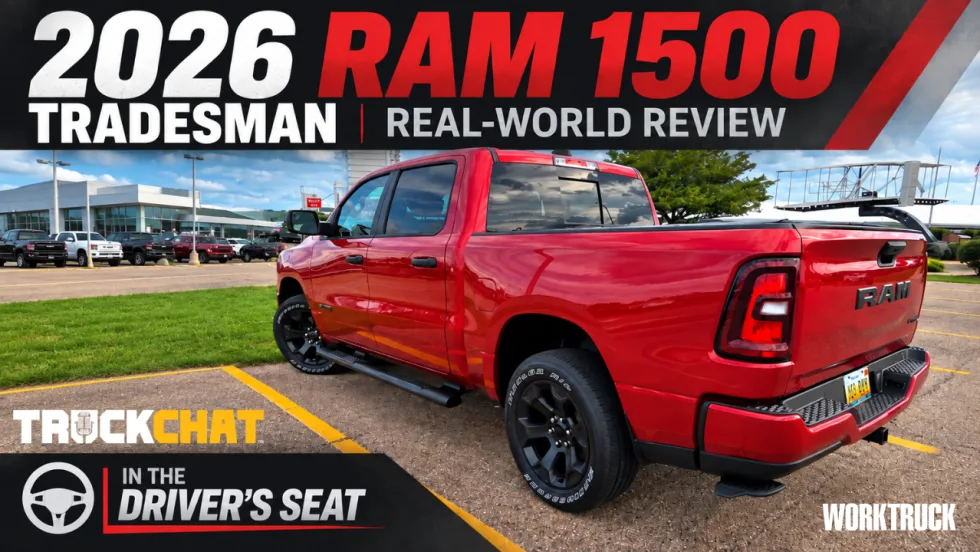
2026 Ram 1500 Tradesman Put to a Real-World Fleet Test
A few days behind the wheel of a 2026 Ram 1500 Tradesman turned into a test of visibility, parking, work-ready features, and even severe-weather driving.
Read More →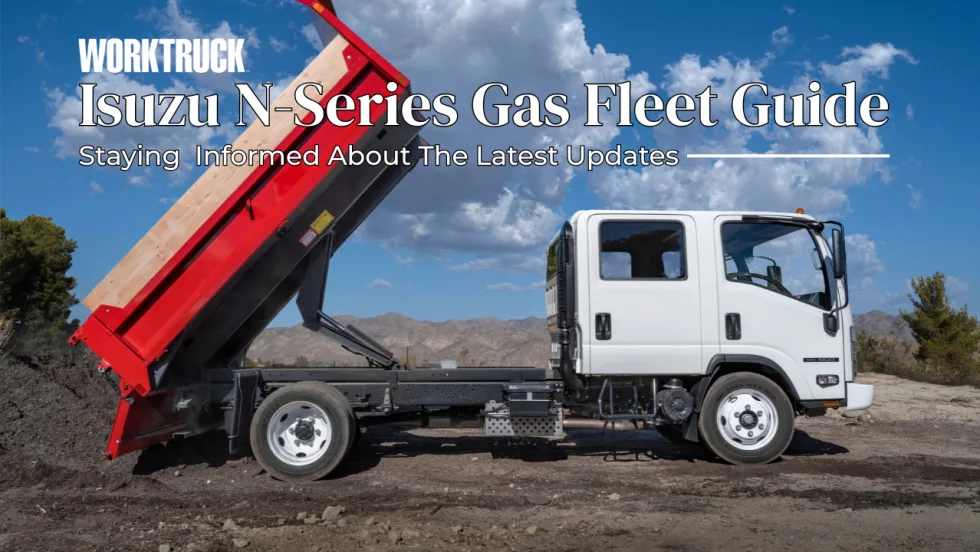
Isuzu N-Series Gas Fleet Guide: Specs, Capability and 2027 Model-Year Updates
Explore Isuzu Truck North America’s N-Series Gas fleet specs, engine performance, GVWR and payload capability, configurations, chassis dimensions, work-focused features, and 2027 model-year information.
Read More →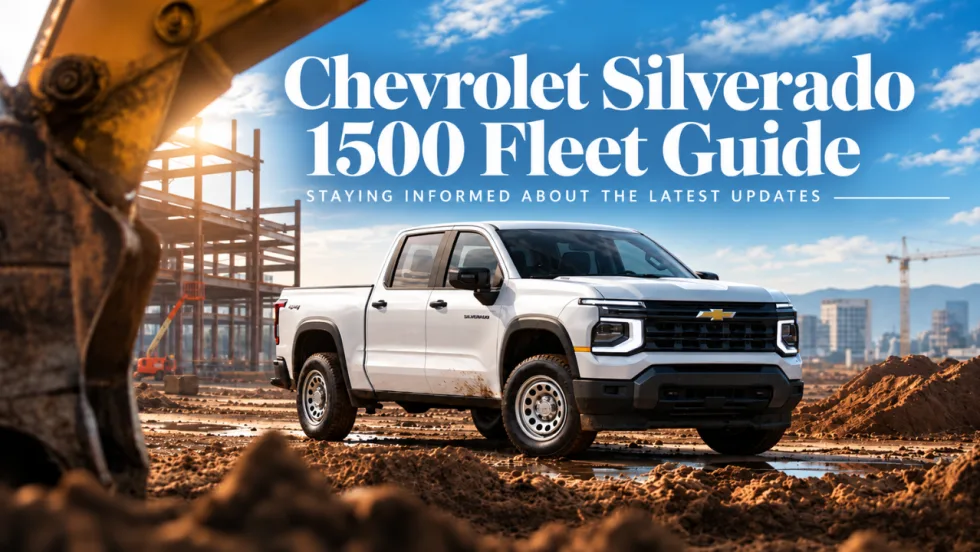
Chevrolet Silverado 1500 Fleet Guide Specs Capability and 2027 Model-Year Updates
The next-generation 2027 Chevrolet Silverado 1500 brings new V-8 engines, updated technology, expanded safety features, and a fleet-focused Work Truck. Here’s what commercial fleets need to know so far.
Read More →
Ram ProMaster City Fleet Guide Specs Cargo Capacity and 2027 Updates
Work Truck’s Ram ProMaster City Fleet Guide tracks the latest specifications, cargo capability, configurations, fleet technology, pricing, and model-year updates for Ram’s mid-size commercial van.
Read More →
Ford F-150 Fleet Guide Specs Capability and 2026 Model-Year Updates
Explore 2026 Ford F-150 fleet specs, engines, towing and payload capability, configurations, work features, technology, and model-year updates.
Read More →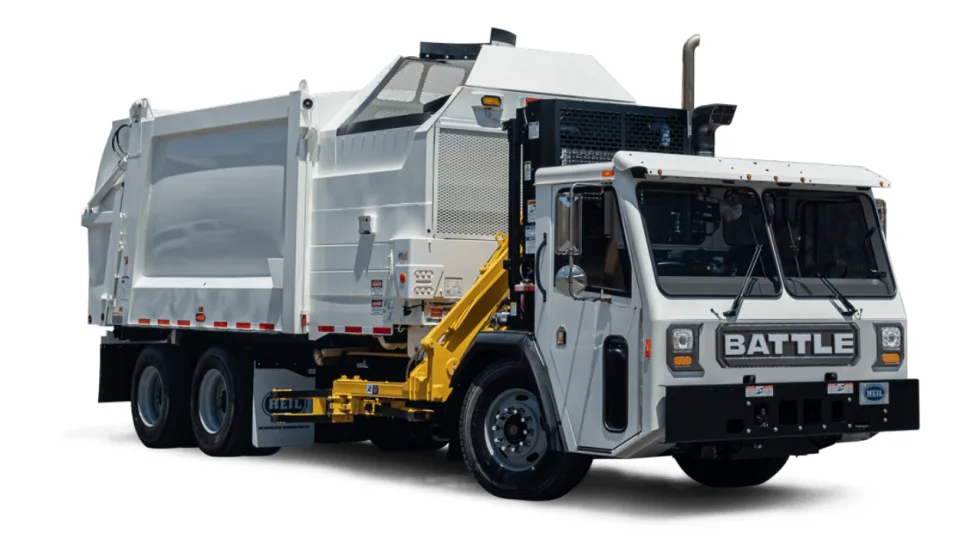
TCI Now Sells & Supports Battle Motors’ Vocational Trucks
Midwest truck dealer Truck Centers, Inc. (TCI) has expanded its transportation solutions with sales and service support for Battle Motors’ heavy-duty vocational trucks at locations in locations in Indiana, Illinois, and Missouri
Read More →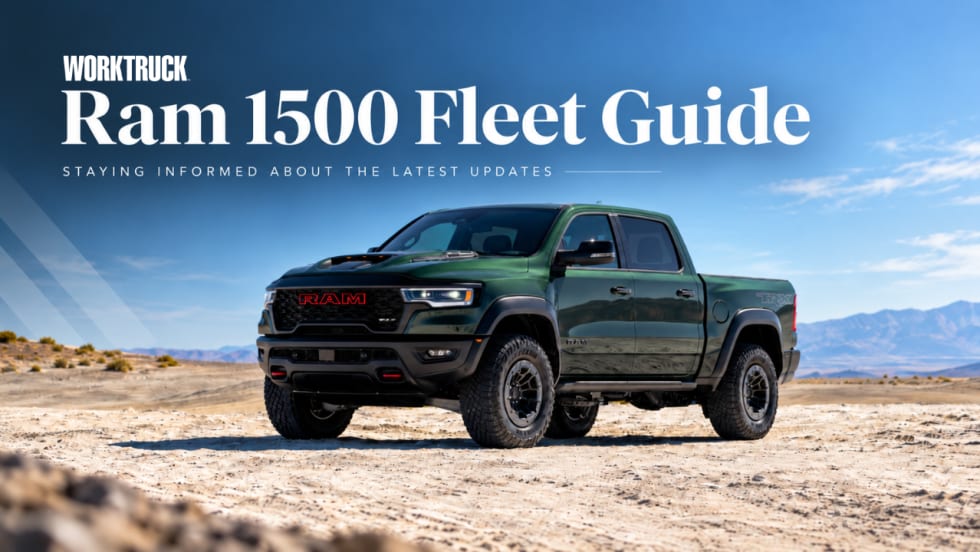
Ram 1500 Fleet Guide Specs, Capability and 2027 Model-Year Updates
Explore always up-to-date Ram 1500 fleet specs, engines, towing and payload capability, configurations, technology, pricing updates, and model-year changes.
Read More →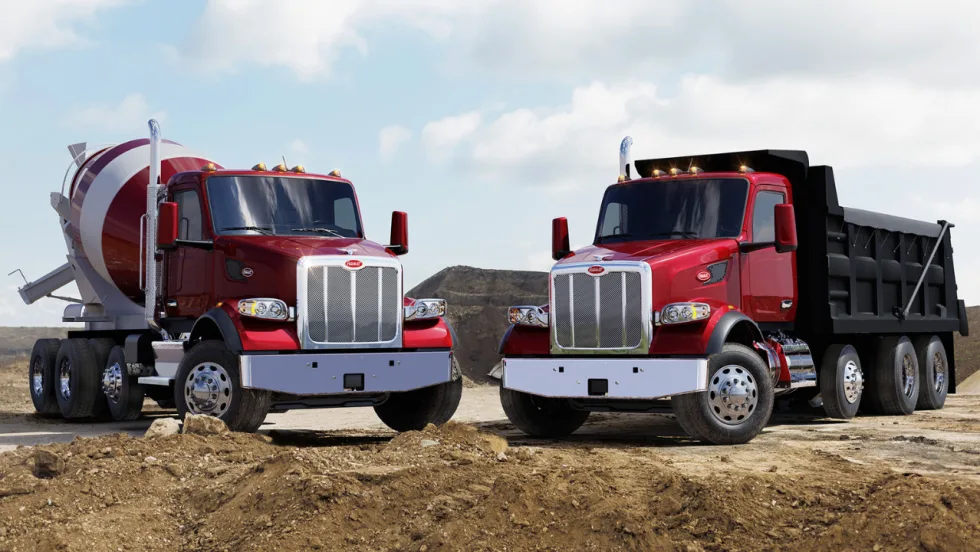
Peterbilt Trucks Equipped with Paccar TX-18 Pro Boost Efficiency for Maryland Fleet
Patuxent Companies is replacing aging trucks with the Peterbilt Model 567 and Model 589, specified with the Paccar TX-18 Pro 18-speed automated transmissions, and is reporting an 8% to 10% improvement in fuel economy.
Read More →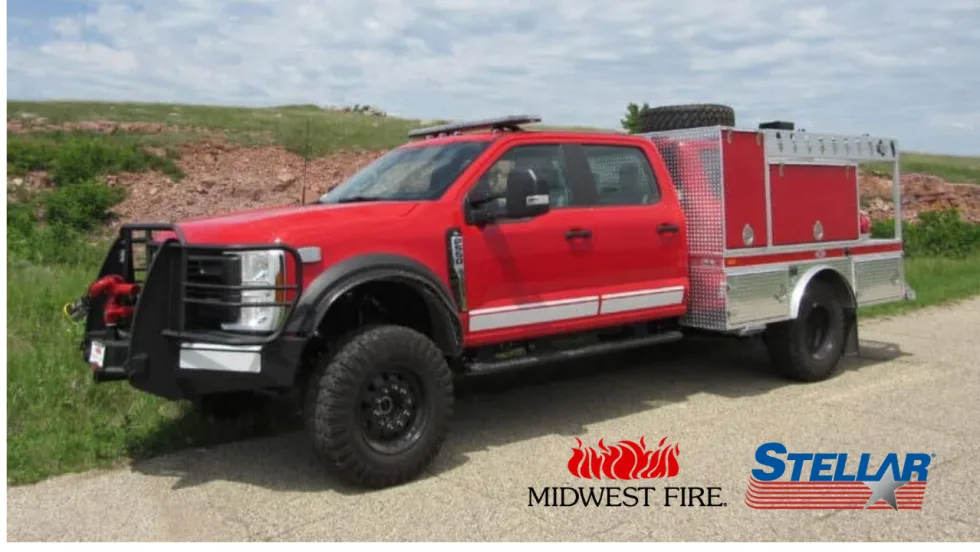
Stellar Expands into Fire Apparatus Market with Acquisition of Midwest Fire
Stellar Industries has acquired Midwest Fire, a custom fire apparatus manufacturer headquartered in Luverne, Minnesota, with nearly four decades of specialized apparatus experience.
Read More →
Recalls You Need to Know About in August 2026
If you have Altec, Chrysler, Ford, Heil, General Motors, International, Mack Trucks, Paccar, Rivian, Royal Truck, Toyota, US Truck Body, or Volvo Trucks vehicles in your fleet, you should check these important recalls issued by the National Highway Safety Administration.
Read More →