




Roof-Mounted vs. Interior Ladder Racks
When it comes to hauling ladders, which is the better way – carrying them inside or on top of a van? There are pros and cons for each method.
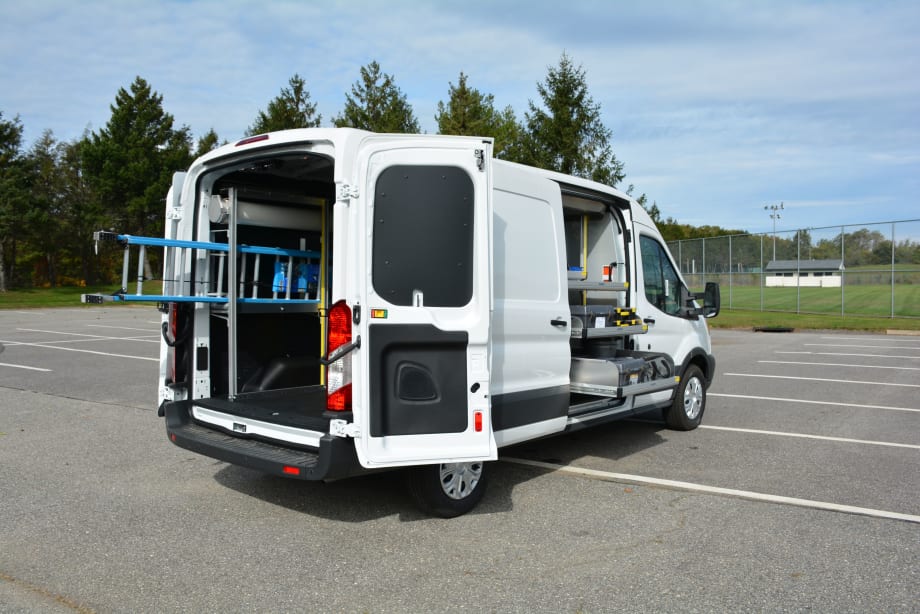
Photo courtesy of Dejana Truck and Utility Equipment.
Ladders can be critical to getting a job done. But, what's the best, most efficient, and safest way to transport them to a job site?
There is more than one way to move a ladder: Some fleets opt for roof-mounted ladder racks, while others choose to load them into their vans' cargo areas. Each has its advantages and disadvantages — so it's up to each fleet to decide which option is best.
Evaluating Roof-Mounted Ladder Racks
If a service technician has to haul a 40-foot ladder, roof-mounting is the only choice, since a ladder of that size won't fit in the interior of a van. Mounting it on the roof gives fleets plenty of space — and that means fleets don't have to spend money renting other equipment to reach high-up places.
"Being able to roof-mount a ladder lets the driver have the right equipment in the extreme cases they need to reach 40 feet up," said Jonathan Culp, director, fleet and leasing sales, Dejana Truck and Utility Equipment. "A 40-foot ladder offers some versatility to the field technician, and can help avoid the cost of renting or transporting a Genie or other lift. But, this cost is sometimes offset. Many fleets have a policy requiring a second technician to stabilize a ladder that tall for added safety."
The other upside of roof mounting is the encouragement for drivers to properly store ladders.
"Some companies prefer the cost of a roof-mounted rack to prevent drivers from stowing ladders on the floor or middle of the cargo area," Culp said.
While roof-mounting works well for large ladders, there are some drawbacks. For one, having a ladder on top of a van effectively raises the height of the van, affecting clearance, limiting access to parking garages or other drive-through facilities.
"In many cases, this can cause damage to the vehicle, equipment, or facility when a driver collides with an obstacle because they don't have enough clearance," Culp said.
Hidden costs can also come along with roof mounting. Roof-mounted ladders can increase wind resistance, which in turn has an impact on fuel economy.
"A major OEM conducted wind tunnel tests that show some vehicles suffer a 20-percent decrease in fuel economy once you add a ladder rack to the roof," Culp said.
Roof-mounted ladders can also have an effect on productivity. Because they are exposed to the elements, inclement weather, such as snow and ice, may require drivers to clean and dry a ladder before entering a commercial or residential account — and that means time lost for technicians. Equipment stored on the outside of the vehicle is also easier to steal, increasing the risk of dollars spent to replace equipment.
Culp noted safety can be an issue, too.
"Fiberglass ladders exposed to the UV radiation in sunlight degrade over time, increasing the possibility of a workplace accident due to equipment failure," he said. "In a medium- or high-roof van, and many low-roof vans, a fleet will need a drop-down ladder rack, which significantly increases the cost of the upfit. Failing to do so increases the possibility of workplace injury and degrades safety. Improperly secured ladders can also fall off, resulting in damage or injury."
Of course, downtime as a result of injury is yet another potential cost fleets should consider when deciding to install roof-mounted ladder racks.
Looking at Interior Storage
If the cons of roof-mounted ladders cause concern, the pros of interior hauling may address them. In terms of safety, a ladder can't fall off from inside a vehicle — and it's a lot less likely to be stolen.
Without a ladder on top of the van, wind resistance and height are both lower, each of which comes with advantages, Culp explained.
"Reduced wind resistance increases effective fuel economy," he said. "And, when the overall height of the vehicle is lower, drivers have greater flexibility and less potential for accidentally driving into something without enough clearance."
In terms of price, the cost of an interior ladder rack is less than a roof-mounted one, especially when installing drop-down ladder racks. Productivity-related costs can be better, too.
"Reduced productivity is a hidden cost," Culp said. "The few moments it takes to properly stow and secure a ladder on the roof of a van is an event repeated many times through the course of the day, especially if the technician has to clean and dry a ladder before using it on a service call. If technicians spend a couple minutes per stop, 10 times per day, multiplied by their hourly rate, the costs add up quickly. What if interior ladder storage gave the technician time to make one more billable call each day? The cumulative impact is incredible when you do the math. With interior storage, fleets can reduce their total cost of ownership by preventing loss, preventing reduced productivity, and reducing the cost of the upfit."
Interior storage has its drawbacks, too. Jobs that routinely need a very long ladder are simply not a good fit for the interior ladder rack.
"If you absolutely need a 40-foot ladder, it is going to have to go on the roof," Culp said. "The need of the field technician to properly perform their job responsibilities needs to come first."
Making the Right Call
When choosing between roof-mounted and interior ladder racks, the most important consideration is ensuring technicians have the right equipment to get the job done. One storage method may be cheaper or another easier, but those positives won't outweigh the negatives of decreasing worker productivity.
Culp said he encourages his customers to focus on three key considerations: storage capacity requirements, safety implications, and productivity.
"We help customers understand what's available to help them meet their job requirements, cost parameters, and any implementation challenges for any equipment they may need," he said.
Overall, Culp advises fleets to keep an open mind rather than make a choice simply because "they've always done it that way."
"I worked for a manager early in my career who had a quote framed on his wall that said: 'It is safe to assume not that the old way is wrong, but that there may be a better way.' It always stuck with me as good advice," he said.
More Upfitting
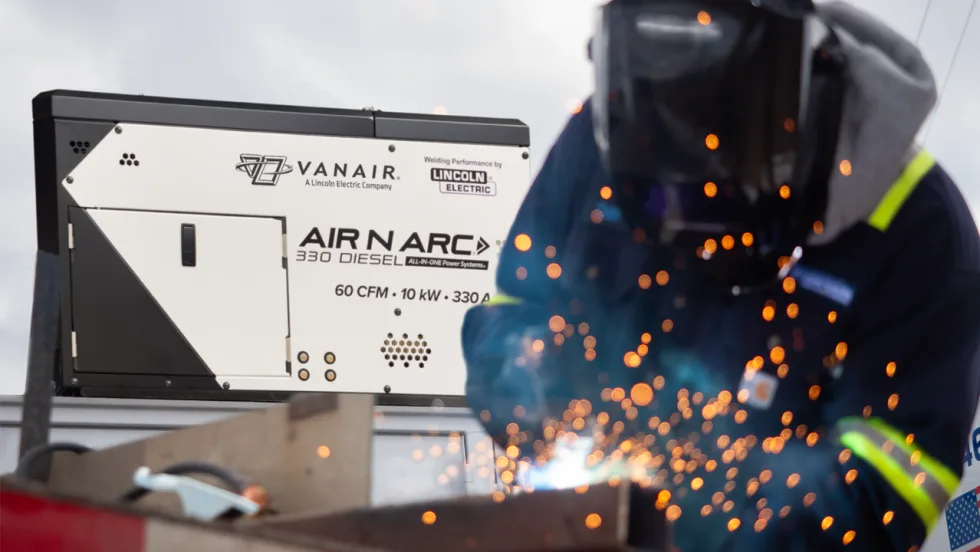
Multitasking: Vanair’s Air N Arc 330 Diesel 60 CFM All-In-One Power System
The Air N Arc 330 Diesel 60 CFM from Vanair consolidates a welder, generator, rotary screw air compressor, battery booster, battery charger, and EV charger into a single 750-pound enclosure driven by one 24.8-horsepower Kubota diesel engine.
Read More →
Buyers Products Awarded Sourcewell Cooperative Purchasing Contract for Snow & Ice Equipment
Buyers Products has been awarded a Sourcewell contract for a wide range of winter maintenance equipment and accessories, including snowplows, municipal plow systems, wing plows, spreaders, and more.
Read More →
Hilltip Introduces the SnowStriker SFT Flex Expandable Box Plow
Hilltip’s new SnowStriker SFT Flex expandable box plow features hydraulically extendable sections that allow operators to adapt the clearing width to changing conditions and applications on the go.
Read More →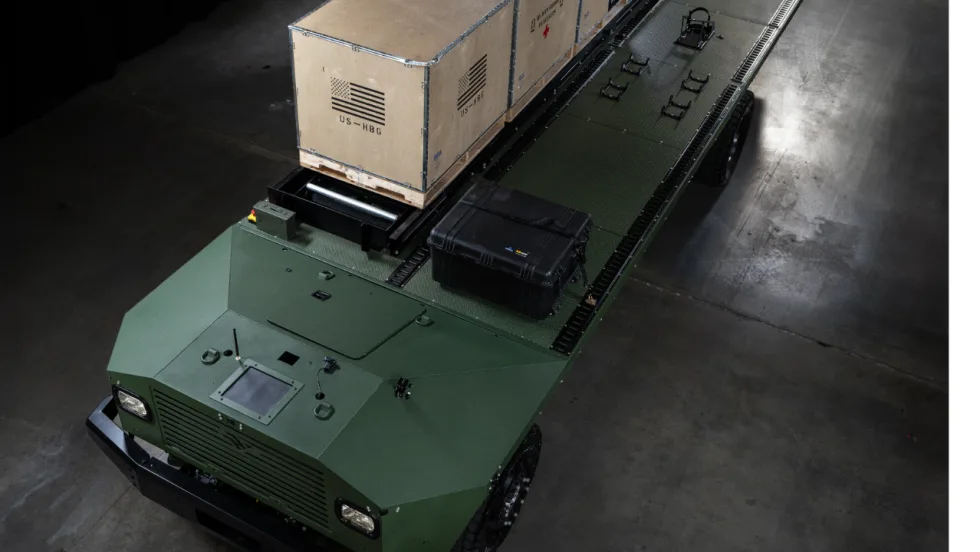
Harbinger Part of Effort to Deliver Autonomous Logistics Capabilities for U.S. Army
American Rheinmetall received an 18-month U.S. Army contract to deliver autonomous, hybrid-powered uncrewed ground vehicles. Harbinger is providing the truck platform for those vehicles.
Read More →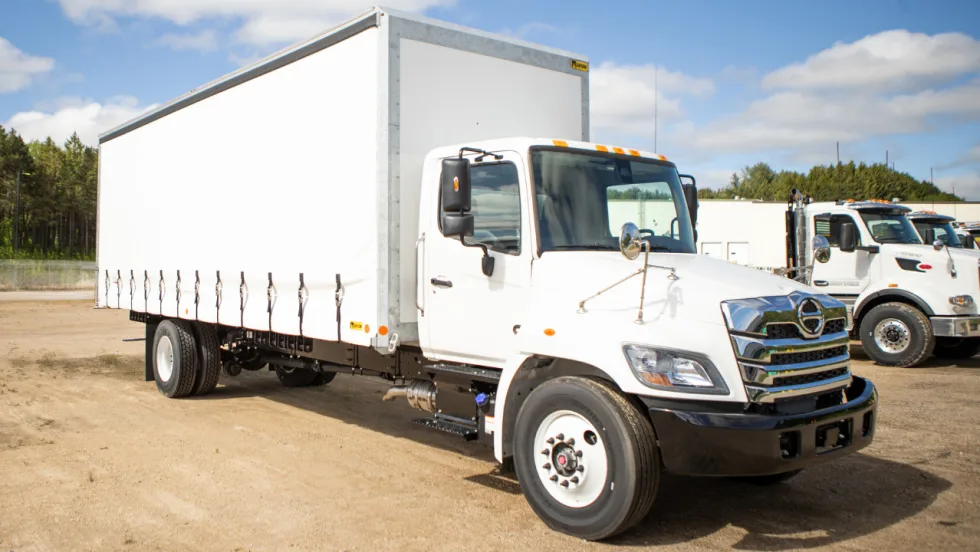
Thinking Outside of the Box: Choosing the Right Truck Body for Your Fleet
Choosing the right truck body can have a major impact on loading efficiency, cargo protection, downtime, and long-term operating costs. Here’s how dry vans, platforms, and curtainsiders compare, plus what fleets should consider before spec’ing their next truck.
Read More →
Fourth Annual Upfit Package of the Year Awards Open for 2027 Entries: One Month Left!
Think your upfit deserves industry recognition? Enter the 2027 Work Truck Upfit Package of the Year Awards before the Sept. 30 deadline. There is less than a month left to get your submissions in!
Read More →
Reading Truck Equipment & Masterack Unite as One of North America's Largest Commercial Vehicle Upfit Networks
Reading Truck Equipment and Masterack have integrated operations to create one of North America's largest and most comprehensive commercial vehicle upfit organizations.
Read More →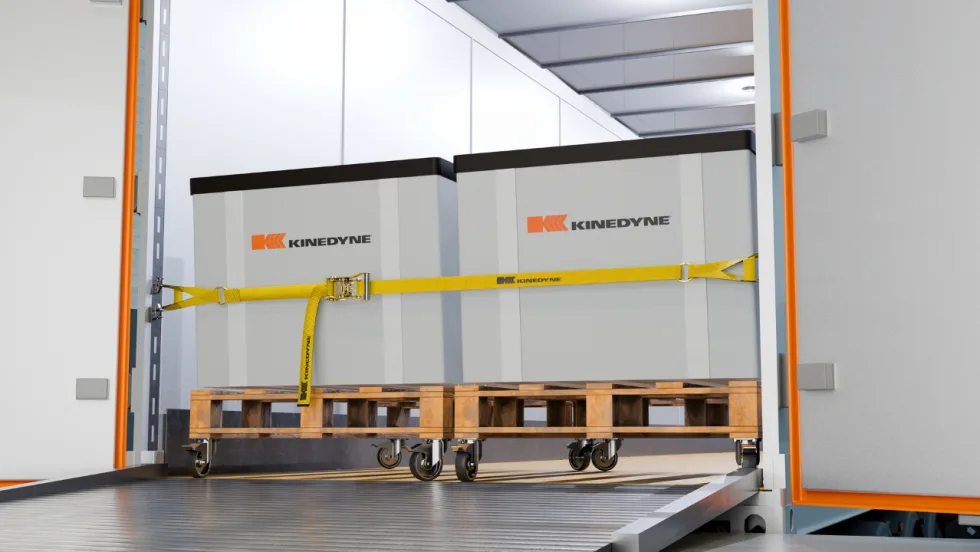
Kinedyne Launches Heavy Duty Logistic Shoring Strap
Kinedyne’s new Heavy Duty Logistic Shoring Strap features a patent-pending four-point design to deliver greater cargo stability, increased strength, and easier handling for rolling and shifting freight.
Read More →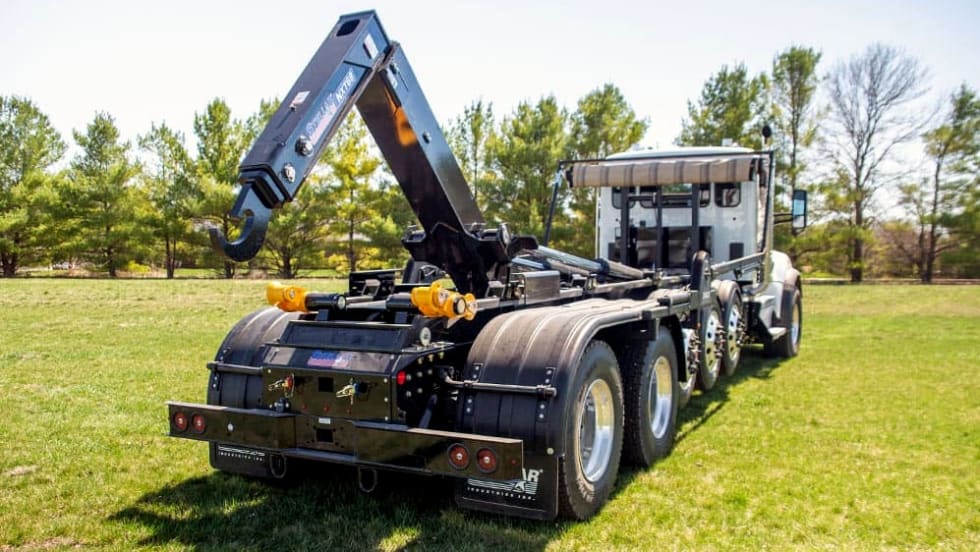
Hooklift Bumper Design from Stellar Showcases Strength & Versatility
Stellar Industries’ new bumper for the NZT Series Hooklifts come in two capacity options: the 20K, designed for Class 3 – 6 chassis with a 20,000-pound pull capacity, and the 90K, built for Class 7 and 8 chassis with a 90,000-pound pull capacity.
Read More →
Maxon Lift Awarded the Wabash Platinum Award for Supply Chain Performance
Maxon Lift, a liftgate manufacturer since 1957, received the Wabash Platinum Award for supply chain performance in 2025. Each year, Wabash presents awards to top suppliers for excellence in supply chain performance.
Read More →