





Fleet Facts: Did you know, it takes one TRU to feed 750 people annually? There are just under 100,000 TRUs operating in California on a regular basis. (Around 50,000 in-state and about 50,000 come into California from other states). Each TRU generates around 27 tons of noxious black carbon per year.
Revolutionizing Refrigeration: The SolarTechTRU Story
Discover how SolarTechTRU is transforming transport refrigeration with zero-emission technology, revolutionizing the industry and paving the way for a greener future.
July 8, 2024
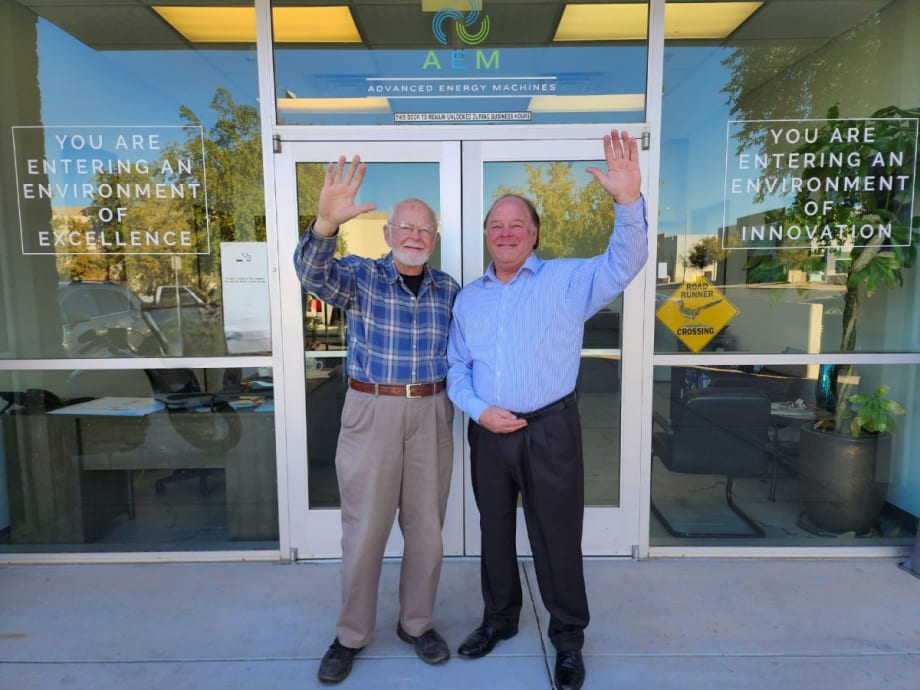
Brothers Dr. Robert Koelsch (left) and Ron Koelsch are the co-founders and inventors of the SolarTechTRU.
Photo: AEM
8 min to read
Refrigeration, a technology we often overlook, has a rich history. It's fascinating to think that until the early 1920s, our refrigeration needs were met by ice from frozen lakes. The development of the first automatic refrigerator system in the 1930s marked a significant shift. However, it wasn’t until the 1950s, with the advent of the interstate highway system, that the demand for refrigeration over longer distances truly emerged.
Traditional transport refrigeration units (TRUs) operate off the truck’s main engine, often meaning a diesel-powered truck will feature a diesel-powered TRU. While efficient, this setup has a significant environmental impact, contributing to air pollution and greenhouse gas emissions.
However, the world is evolving, and the demand for greener transportation solutions is escalating. SolarTechTRU, a zero-emission technology, is poised to revolutionize the transportation industry and offer a promising solution to our environmental challenges.
The idea for this technology was born during a meeting about a solar panel company merger, where two brothers recognized the urgent need for cleaner alternatives to the highly polluting diesel engines used by TRUs.
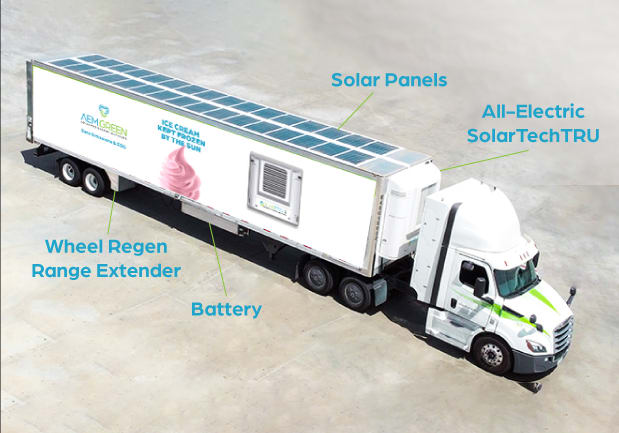
The SolarTechTRUs range extension with solar panels is DC-powered.
Photo: AEM
Solar TRUs Benefit Fleet & Trucking
Work Truck sat down with Robert Koelsch, co-founder of AEM and one of the developers of the SolarTechTRU, to learn how this tech is addressing an overlooked yet crucial area in transportation.
WT: Could you share with us the personal journey that led to the creation of SolarTechTRU? What inspired you and your brother to embark on this technological endeavor 15 years ago?
KOELSCH: We were looking for zero-emission technology to develop in the transportation industry. We looked at cars and we looked at trucks and said, ‘That will be a multi-billion if not trillion-dollar effort.’
While we were in a meeting discussing a solar panel company merger, a transport refrigeration unit (also called a reefer truck) blocked us in. When we studied the sector, we thought, ‘This sector needs zero-emission technology to replace dirty diesel.’
In TRUs, that dirty diesel is so bad that taking one of these transport refrigeration units off the road is like taking 129 internal combustion vehicles off the road. There's a lot of pollution associated with these, and that's what got us involved. We saw that nobody was paying any attention.
Two major players supply diesel solutions every day but do not have electrical zero-emission solutions. So, we decided to enter the sector.
WT: What specific performance data and real-world results have you gathered to demonstrate SolarTechTRU's efficacy and reliability over the years?
KOELSCH: The first thing that happens when you go into a site where people are using diesel is you must perform tests to prove that your cooling is as good or better than the diesel. We've spent thousands of hours at customer sites with which each customer has their own requirement.
One customer, for instance, Albertson's/Safeway, requires a 50-foot trailer at minus 20 degrees.
So, you've got a 50-foot-long ice cream trailer you're trying to keep at minus 20, which means you must deliver minus 35 degrees to it to maintain that box temperature when it's 100 degrees outside. That's one application. Then, you might have a Whole Foods application where they're shipping produce at 35 degrees.
Another application is a 53-foot trailer. Whatever the customer application, we must prove that we can cool as well as diesel. That's the proof that we've had to do.
Every year, we report to CARB as part of our CORE voucher program, providing the results of customer operations. This includes details on diesel elimination, carbon reduction, uptime, and downtime.
We have collected customer feedback for the past three years to improve our product. Our equipment has been continuously data logged every 60 seconds, resulting in hundreds of thousands of hours of data. This data is sent to a server via cell towers, providing a minute-by-minute performance snapshot of the equipment.
The data logging and reporting requirements have been very stringent. And we've done very well.
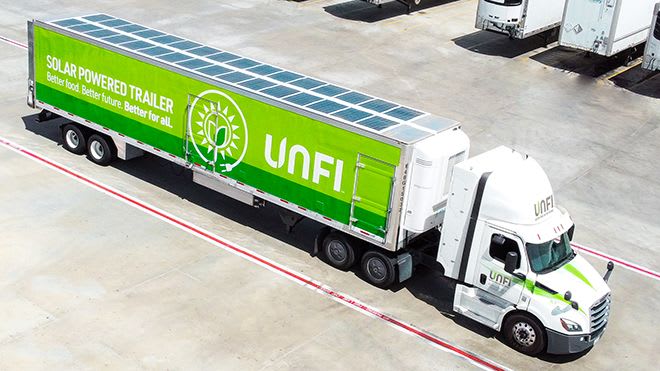
Drivers are paid to deliver their goods. Providing onsite support helps them feel more comfortable adopting new technologies like a solar-powered TRU.
Photo: AEM
WT: How does the low voltage DC power system in the SolarTechTRU contribute to safety and efficiency for fleet operations?
KOELSCH: We built our first system in 2009 as a high-voltage system, and it scared us so bad that we tore it apart and built it into a low-voltage DC system, just like forklifts.
We looked at the forklift industry and said, ‘Okay, forklifts have a very safe operating history, and the low voltage is safe for humans to be around.’
We chose to use low voltage for these trailers due to the frequent interactions with humans and the need to maintain food temperatures while plugged and unplugged. This decision ensures no risk of electrocution, fibrillation of anyone's heart, or any lockup electrocution or arc flashing events associated with low voltage.
That's why we are low-voltage, 46 volts in DC. This also lends to efficiency because your batteries and solar panels are all DC voltage. So, we only have to flip from high-voltage to low-voltage when we go on the grid. Now, when you decide whether you want to go with an electric TRU, the main question is what your range will be.
The efficiency of running DC on the road, away from the grid, away from your distribution center, is all DC. And your range extension with our momentum generator is a DC generator.
Our range extension with solar panels is DC-powered. And, of course, running the reefer with a DC battery pack is all DC on the road.
Max efficiency is obtained while you're away from your distribution center, which gives you maximum battery life expectancy and the longest range on the road just by being DC.
WT: How does your proprietary cordless AI-based charging system work, and how does it benefit fleet managers more than traditional plug-in systems?
KOELSCH: If you look at the data of trailers running every day, you’ll find that you average about a 10% downtime with human beings not plugging in the transport refrigeration units when they're supposed to be plugged in.
With automatic charging and AI and computer involvement in that process, you maximize your trailer fleet's uptime because the computer is doing the charging. You don't have to rely on Joe, who decided that he's got back pain this morning and can't bother himself with walking to the back of the trailer and plugging it in.
When you've got automatic charging, he just has to drive his truck, park the trailer, and pull away. There is no human interface. Based on 2 million hours of operating time, we know that switching to automated charging saves 10% in uptime. You're also increasing the life of your batteries because your pads and automatic charging give you more time on the charger.
Not only do you save 10% uptime, but you're also on the charger more and the computers, managing the charge more.
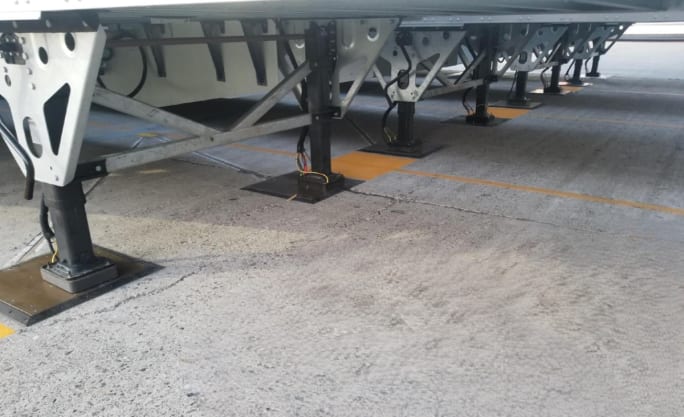
Switching to automated charging saves 10% in uptime and extends battery life. With 2 million hours of operating time, AEM has seen the difference it makes.
Photo: AEM
WT: AEM's technology creates microgrids for distribution centers. How does the system operate, and what are the key advantages for fleet operators?
KOELSCH: We would like fleets operating 100% off solar panels. It's just like your home when you think about it.
If you add energy storage to your home, you can capture more and more solar power as solar panels get more efficient or as you deploy more. With a microgrid, a lot of facilities are starved of grid power. And when you decide to bring in 20 more electric tractors, you can't do it because you have to pull power in from the utility into your facility.
Rather than doing that, we propose a microgrid where you put solar panels and energy storage to supply the energy our TRUs require. We can do that with TRUs because they don't require a lot of energy compared to a tractor.
You can do a hundred TRUs, compared to maybe 20 tractors, and gain 20 times or five times more pollution reduction for the same amount of power. TRUs are a great place to start, and when you combine the efficiency of a TRU with the advantage of using a microgrid and energy storage, you can stay off the California grid.
And if you look around the country and at all the whitepapers online, what's everybody talking about? The infrastructure can't handle these EVs. When you take solar panel microgrids with energy storage, you're no longer on the grid infrastructure.
That's the big advantage of combining automatic charging, the computer balancing of the battery packs, and the energy storage and solar panel microgrid. It makes a lot of sense for companies to Stay off the grid.
Drivers are paid to deliver their goods. Providing onsite support helps them feel more comfortable adopting new technologies like a solar-powered TRU.
Photo: AEM
WT: With your focus on California and hard-core carbon reduction, what has been the most significant environmental impact of the SolarTechTRU so far?
KOELSCH: A story we had at a grocery distribution company where the administrative assistant walked out and said, Oh, you're here for a meeting. What are you here for?
I pointed to the 40 electric zero-emission TRUs running and said, ‘I'm here where we operate all these electric TRUs.’ And she looked at me and said, ‘Oh, my goodness. I didn't realize that. I haven't had to sweep the black carbon soot off my artificial grass here for months at a time, and I used to have to sweep it off every few weeks.’
There's a real-world example of somebody understanding what the soot from black carbon emissions from diesel looks like. What wasn't mentioned was that employees haven't been breathing that in, either, over the months the systems have been operating.
As the public becomes more aware of what black carbon emissions from diesel look like, it will become not just that you don't have to sweep your artificial carpet up as often to clean the soot off. Still, you will breathe healthier air every day, and humanity's longevity will be improved because of it.
WT: What are AEM's main challenges in replacing diesel-powered TRUs with zero-emission TRUs? And how have you overcome them?
KOELSCH: You have to overcome it with onsite support. The people operating these systems are very uncomfortable with going electric versus the diesel they've been used to for decades.
Onsite support is very important, not only to keep the equipment up on a great basis but also to hold the hands of the people trying to integrate it every day because they don't get paid for integrating technology.
These drivers get paid for delivering food every day. They don't want to be bothered by something new. So, when a question comes up when you've got on-site support, people feel much more comfortable using the new technology.
Subscribe to Our Newsletter
More Green Fleet

Fleet Forward Conference Introduces One-Day Passes for 2026
New one-day registration gives fleet professionals the flexibility to attend Tuesday, Wednesday, or Thursday, with passes available for $199 through Sept. 18.
Read More →
CALSTART Rebrands as Catalyst Mobility, Will Combine with Forth in 2027
CALSTART has rebranded as Catalyst Mobility and will combine with Forth at the start of 2027. The new organization said it is poised to become one of the world's largest, strongest, and most impactful clean transportation nonprofits.
Read More →
Electric Truck and Charging Programs to Boost Sustainability at NY & NJ Ports
Together, the Port Authority of New York and New Jersey and CALSTART will electrify drayage and terminal operations serving the East Coast’s busiest container port. A pair of incentive programs totaling $45 million has launched to accelerate adoption of zero-emission drayage trucks and terminal tractors.
Read More →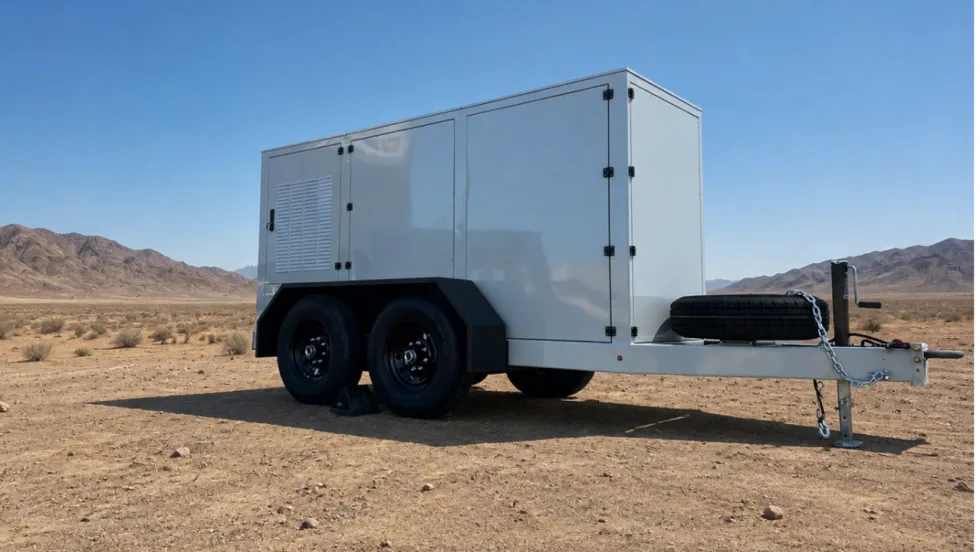
Xos Hub Surpasses One Gigawatt-Hour of Energy Delivered in the Field
A single Xos Hub has surpassed one gigawatt-hour of energy across more than 33,600 charging sessions in the field, demonstrating performance that supports Xos' expansion across new products and markets.
Read More →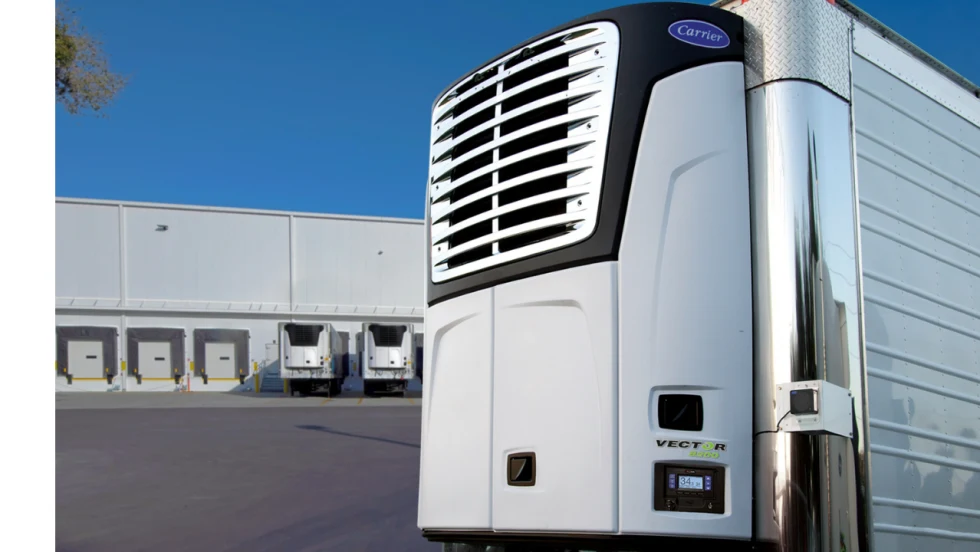
Carrier Transicold Launches All-Electric Vector 8200 TRU for Diesel-Free On-Site Cold Storage
Carrier Transicold’s first engineless multi-temperature TRU helps fresh- and frozen-food fleets add supplemental cold storage capacity during seasonal peaks.
Read More →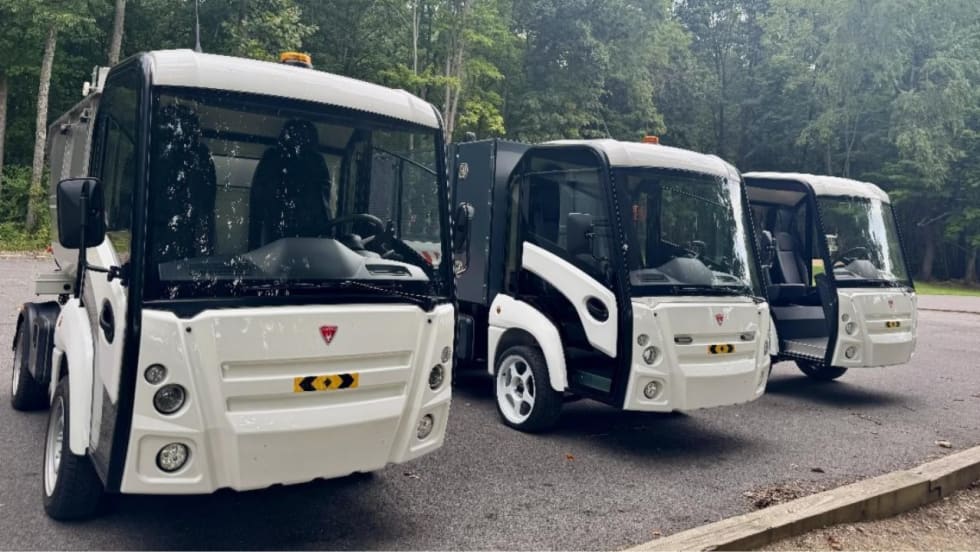
Narro Trucks Introduces Electric Utility Vehicle
Narro Trucks officially launched its operations on Aug. 20 and hosted a ride and drive to showcase its electric truck, which will be produced in Virginia.
Read More →
Samsung SDI Takes Full Control of GM Battery JV as Indiana Plant Pivots to Energy Storage
Samsung SDI is taking full control of its Indiana battery plant with GM, marking a major shift from the EV-focused joint venture Charged Fleet first covered in 2023.
Read More →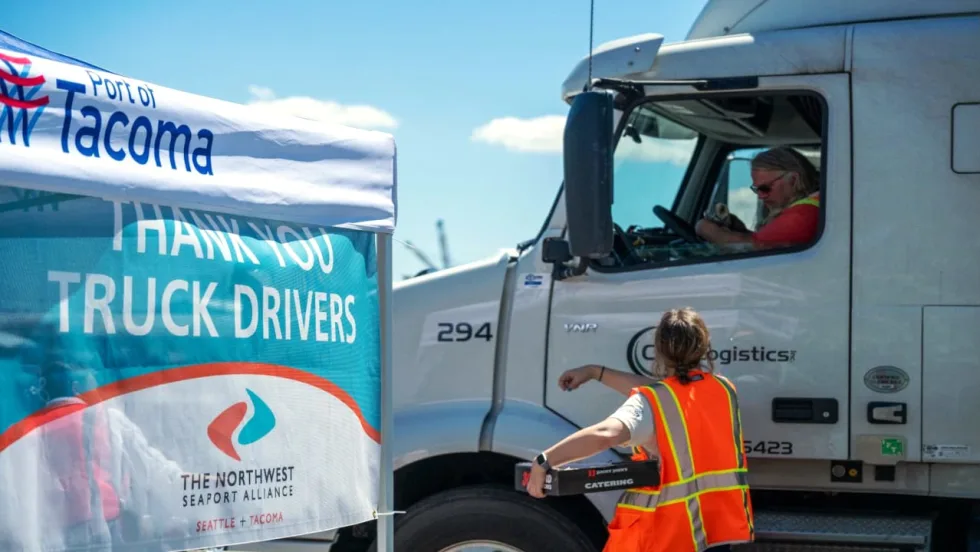
NWSA Taps CALSTART to Administer Zero-Emission Drayage Assistance Program
CALSTART will provide free technical assistance services to drayage fleets serving the Ports of Seattle and Tacoma and looking to transition to cleaner technologies and help decarbonize freight hubs.
Read More →
EV Fleet Reality Check: What Operators Wish They Knew Before Electrifying Their Work Vans
Electric work truck upfits bring new compatibility questions. Learn how parts availability, OEM guidance, power demands, and route planning can affect fleet performance.
Read More →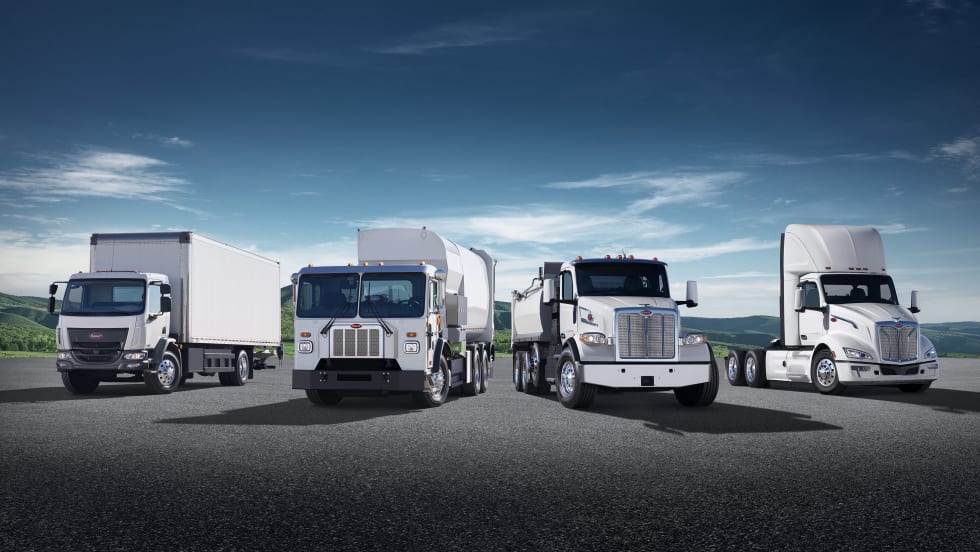
Peterbilt Expands Sourcewell Partnership with Electric Vehicle Lineup
Peterbilt Motors Company’s cooperative purchasing agreement with Sourcewell and its Canadian partner, Canoe Procurement Group, now includes including Peterbilt's battery-electric vehicle lineup.
Read More →