




Navistar's Engine Plans Include Cummins
The automaker is switching its emissions-reduction strategy, moving to selective catalytic reduction starting with the 12.4L MaxxForce 13 diesel.
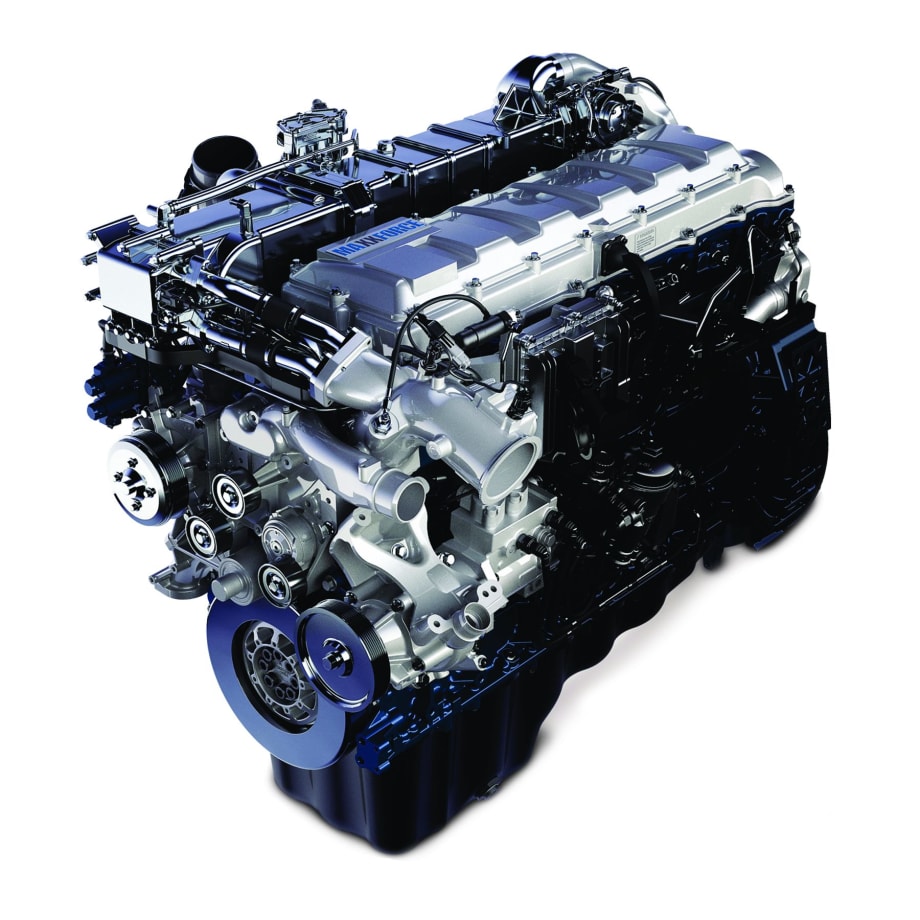
Photo: Navistar
Navistar International Corp. will switch its emissions-reduction strategy to diesel exhaust aftertreatment, as competitors have done, and will include liquid urea injection equipment that it will purchase from Cummins. The change follows two and a half years of trying to meet federal limits using only an “in-cylinder solution” that relies on exhaust-gas recirculation.
Switching to selective catalytic reduction (SCR) will begin early next year with its large-bore 12.4L MaxxForce 13 diesel, spreading to other models later in the year. Navistar gave few details in a pair of announcements July 5 and Aug. 2, except that medium-duty engines would continue with no changes well into 2013 because of emissions credits earned with cleaner-than-necessary engine models produced prior to 2010.
Using ICT+
The change comes amid heavy financial losses caused partly by higher warranty costs from troubles with some of its engines, along with a steadily sinking stock price that has angered stockholders. Pressure from major stockholders is thought to have caused Navistar Chairman, President, and CEO Daniel Ustian to abandon his steadfast insistence that the company’s in-cylinder solution would work.
Sales of International heavy trucks fell as customers became wary of the MaxxForce 13, Navistar’s principal large-bore diesel. Its Class 8 market share is now 17-18 percent and its Class 6-7 share is 35-36 percent, the company said.
Navistar will begin offering the Cummins ISX15 in certain heavy-truck models as part of the Cummins-reliant strategy switch. Navistar last used pre-2010-model Cummins ISX diesels in the first half of the 2010-CY as part of its transition to its own engines without urea injection.
MaxxForce diesel using Cummins urea injection equipment will be called In-Cylinder Technology Plus or ICT+. The new approach will meet the federal Environmental Protection Agency (EPA) 2010 limits on nitrogen oxide, which its advanced-EGR method could not attain. ICT+ and new truck models will restore Navistar’s fortunes, Ustian predicted.
“With the addition of ICT+ and an expanded model lineup, we expect to improve our market share in 2013,” Ustian said. “We expect to return to profitability in the fourth quarter and believe the company will be in a position to improve margins in 2013 as we realize the benefits of our integration and ongoing cost-reduction initiatives.”
Leveraging Advances
The announcement said that Navistar has arranged a five-year $1-billion loan from several banks to shore up its dwindling manufacturing capital and improve its financial flexibility.
“As previously announced, the introduction of ICT+ leverages the advances Navistar has made in clean engine technology, while also providing greater certainty for its customers, dealers, and other key constituents,” according to the company’s statement, which continued, “To accelerate delivery of ICT+, Navistar has entered into a non-binding memorandum of understanding, under which Cummins Emission Solutions would supply its proven urea-based aftertreatment system to Navistar. This would be combined with Navistar’s advanced in-cylinder engine to create ICT+.”
Production of medium- and heavy-duty trucks will continue as ICT+ is phased in on its engines, with the 12.4L MaxxForce 13 getting it first, in January 2013.
“During the transition to ICT+, Navistar will continue to build and ship current model EPA-compliant trucks in all vehicle classes using appropriate combinations of earned emissions credits and/or non-conformance penalties,” the statement said. “The company continues to have productive discussions with the EPA and the California Air Resources Board regarding its transition to ICT+.”
Ustian and other top executives spent about two years criticizing competitors’ use of SCR, claiming, among other things, that it put too much burden on customers who had to replenish supplies of diesel exhaust fluid on trucks to feed the urea injection equipment. International truck dealers followed suit. Soon, they’ll build and sell what competitors have been using since early 2010.
More Green Fleet

Fleet Forward Conference Introduces One-Day Passes for 2026
New one-day registration gives fleet professionals the flexibility to attend Tuesday, Wednesday, or Thursday, with passes available for $199 through Sept. 18.
Read More →
CALSTART Rebrands as Catalyst Mobility, Will Combine with Forth in 2027
CALSTART has rebranded as Catalyst Mobility and will combine with Forth at the start of 2027. The new organization said it is poised to become one of the world's largest, strongest, and most impactful clean transportation nonprofits.
Read More →
Electric Truck and Charging Programs to Boost Sustainability at NY & NJ Ports
Together, the Port Authority of New York and New Jersey and CALSTART will electrify drayage and terminal operations serving the East Coast’s busiest container port. A pair of incentive programs totaling $45 million has launched to accelerate adoption of zero-emission drayage trucks and terminal tractors.
Read More →
Xos Hub Surpasses One Gigawatt-Hour of Energy Delivered in the Field
A single Xos Hub has surpassed one gigawatt-hour of energy across more than 33,600 charging sessions in the field, demonstrating performance that supports Xos' expansion across new products and markets.
Read More →
Carrier Transicold Launches All-Electric Vector 8200 TRU for Diesel-Free On-Site Cold Storage
Carrier Transicold’s first engineless multi-temperature TRU helps fresh- and frozen-food fleets add supplemental cold storage capacity during seasonal peaks.
Read More →
Narro Trucks Introduces Electric Utility Vehicle
Narro Trucks officially launched its operations on Aug. 20 and hosted a ride and drive to showcase its electric truck, which will be produced in Virginia.
Read More →
Samsung SDI Takes Full Control of GM Battery JV as Indiana Plant Pivots to Energy Storage
Samsung SDI is taking full control of its Indiana battery plant with GM, marking a major shift from the EV-focused joint venture Charged Fleet first covered in 2023.
Read More →
NWSA Taps CALSTART to Administer Zero-Emission Drayage Assistance Program
CALSTART will provide free technical assistance services to drayage fleets serving the Ports of Seattle and Tacoma and looking to transition to cleaner technologies and help decarbonize freight hubs.
Read More →
EV Fleet Reality Check: What Operators Wish They Knew Before Electrifying Their Work Vans
Electric work truck upfits bring new compatibility questions. Learn how parts availability, OEM guidance, power demands, and route planning can affect fleet performance.
Read More →
Peterbilt Expands Sourcewell Partnership with Electric Vehicle Lineup
Peterbilt Motors Company’s cooperative purchasing agreement with Sourcewell and its Canadian partner, Canoe Procurement Group, now includes including Peterbilt's battery-electric vehicle lineup.
Read More →