




More Than a Seat at the Table: Why Fleet Voices Shape Smarter Industry Decisions
Advisory boards turn big fleet ideas into field-ready plans, surfacing rollout risks early so safety, tech, and EV strategies actually work in practice.
A seat at the table is only the beginning. Real progress happens when fleet perspectives shape what comes next.
Credit: Work Truck
Big ideas often sound simple in conference rooms. They rarely are in the field.
Across the fleet industry, new technologies, safety initiatives, and operational strategies are introduced with good intentions and strong potential. But between the whiteboard and the worksite, reality has a way of complicating even the most promising plans. That’s why the conversations happening inside advisory boards and industry councils matter more than many people realize. They’re not just discussion forums. They’re where implementation risk gets exposed before it turns into operational fallout.
These groups aren’t just professional networking circles or resume builders. At their best, they are where operational reality meets industry direction, and where fleet voices help shape solutions before they reach the field.
Different Fleets, Different Realities
I’ve had the opportunity to connect with professionals across many corners of the fleet industry, and one thing is clear: we may share broad challenges, but how those challenges show up can look very different.
A pharmaceutical fleet focused on product integrity and strict delivery windows operates under a completely different set of pressures than a service fleet balancing technician productivity and job-site readiness. Even within the same organization, priorities shift by geography, climate, and workforce needs. What works for one region (or one job function) can create friction in another. A fully upfitted service van might be perfect for a repair technician, while an install team may be more effective with a differently configured pickup.
From my own experience, I think about telematics and event recorder implementation. I’m a strong believer in these tools and their role in protecting both fleets and drivers. The safety benefits are real. The data can be incredibly valuable. But believing in technology and successfully rolling it out are two very different things.
When conversations with the field don’t happen early and often, even the best safety initiatives can face resistance: everything from skepticism and frustration to outright opposition and threats to leave. Not because drivers don’t care about safety, but because change without context can feel like surveillance or added pressure in an already demanding job.
Technology can be best-in-class, but success comes down to the rollout. Is the “why” clear? Are supervisors trained to answer tough questions? Do drivers understand how the data will (and won’t) be used?
Without that groundwork, adoption becomes a battle instead of a partnership. That gap between good intentions and real-world execution is exactly where advisory input proves its value.
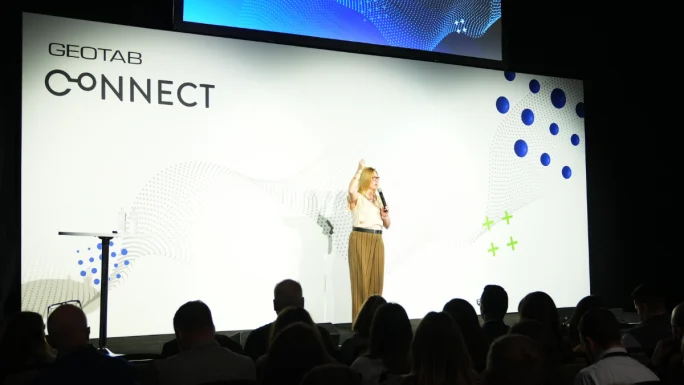
Industry voices come together where ideas are tested, challenged, and shaped before they reach the road.
Credit: Mikhaila Baldwin
Advisory Boards as an Operational Reality Check
Corey Woinarowicz, compliance account executive at Fleetworthy, often sees this disconnect, especially in safety and compliance efforts.
“The right solution can still fail if the fleet isn’t ready for it,” he said. “You need the right culture and the right mindset. If you’re missing any of that, it’s a struggle.”
Too often, safety strategies look solid on paper but stall in practice. The issue usually isn’t the tool; it’s whether the organization is prepared to support the change that comes with it.
“Strategy is one thing. Taking something from paper to action is the biggest step,” Woinarowicz explained. “How do you train? How do you communicate? How do you make it part of the daily routine instead of just another policy?”
Advisory groups help surface those realities early. By bringing different perspectives together, they expose blind spots before a rollout begins, highlighting training gaps, cultural barriers, and operational constraints that might otherwise derail a well-intentioned program.
“In safety, earlier is everything,” Woinarowicz added. “The sooner you identify a risk, the sooner you can build a plan to mitigate it.”
From Feedback to Real Influence
Advisory conversations don’t just pressure-test ideas. They help turn fleet experience into meaningful industry change. Lori Olson, CAFS, signature team lead for Geotab, sees this firsthand through her work with telematics customers and industry leadership roles.
“Fleet managers can’t operate in a silo, even within their own organization,” she said. “The more we connect, the more we learn what’s actually working and where the real gaps are.”
That exchange becomes especially important as fleets adopt more data-driven tools. Telematics platforms and AI-powered insights can promise big improvements in safety, maintenance, and productivity. But without a clear understanding of how fleets operate day-to-day, even powerful tools can miss the mark.
“Having the data is one thing. Having the insights is another,” Olson explained. “Fleet managers already have so much to manage. If we don’t help make the information intuitive and actionable, it just becomes more noise.”
Advisory settings help close that gap. Fleets share not just challenges, but outcomes, including what actually worked and what didn’t. Those stories influence product development, training resources, and how solutions are introduced across the industry.
“It becomes a full circle,” Olson said. “Customers learn from each other, and we take that information back internally to build better tools and refine how we support fleets.”

Behind every strategy is the real work: evaluating data, asking questions, and turning ideas into action.
Credit: Mikhaila Baldwin
Collaboration Without Competition
One of the quieter strengths of advisory boards is that they allow fleets and vendors to discuss shared challenges in a neutral environment. Issues like supply chain disruptions, technician shortages, and lifecycle delays don’t belong to one organization; they affect everyone.
Katie Cole, CAFS, regional sales director at Flexco, believes this collective perspective is essential.
“We have so much data in this industry. If we’re not learning from it, why have it?” she asked.
When diverse voices compare notes, patterns emerge earlier. Fleets learn from peers facing similar challenges in different industries or regions. Insights that rarely surface during day-to-day operations, when the focus is on solving immediate problems rather than identifying long-term trends.
What Effective Participation Really Looks Like
Advisory boards don’t work through attendance alone. They depend on candid conversation and a willingness to share both successes and struggles.
“Having actual conversations and sharing life experiences is so important,” Woinarowicz added. “The sooner you identify a risk, the sooner you can build a plan to mitigate it.”
Olson echoed that engagement benefits both individuals and the industry.
“Part of what makes advisory groups powerful is the ability of a diverse group of individuals to share their experiences across roles and industries,” Olson said. “No two fleets are alike.”
Just someone telling a group, “We try new things all the time, and sometimes we fail. The goal is to fail fast so we can move on and try the next thing that just might work,” can reframe an entire conversation.
“Sharing best and worst practices in these safe places allows everyone in the room to elevate their understanding and think differently about what’s next,” Olson said.
From my perspective, strong advisory participants are the ones willing to talk honestly about operational friction: rollout challenges, driver concerns, training gaps, and budget constraints. Not to complain, but to improve the outcome. The goal isn’t to slow innovation; it’s to make sure innovation actually works where it matters most.
Why Fleet Voices Matter More Right Now
The industry isn’t just evolving. It’s accelerating. EV adoption alone is forcing fleets to rethink infrastructure, routing, lifecycle planning, technician training, and total cost of ownership. What looks like a straightforward sustainability decision on paper quickly becomes an operational strategy that touches nearly every part of the business.
That’s where advisory boards matter.
They create space for fleets to compare real-world pilot results, share infrastructure lessons, and surface hidden costs before large-scale commitments are made. What does charging look like in colder climates? How does range impact productivity in rural service territories? What training gaps appear once vehicles hit the field? These are not theoretical questions; they’re operational ones.
Instead of each fleet solving these challenges independently, advisory conversations help identify patterns early. Vendors hear implementation friction directly. Peers share what worked... and what didn’t. Assumptions get challenged before capital is locked in.
“The biggest hurdle is step one,” Woinarowicz said. “Deciding on a path forward.”
Advisory boards help fleets take that first step with clearer visibility. They pressure-test strategy against execution and shape solutions with implementation in mind, not just innovation.
And through all of it, the objective remains steady:
“Make sure the driver gets home safely every night and can still do their job,” he said.
In a period of rapid change, advisory boards don’t slow progress. They make it smarter and far more executable.
The Cost of Not Listening
If advisory boards disappeared tomorrow, the industry wouldn’t just lose meetings, it would lose its feedback loop.
“We’d lose the voices of the people, the feedback, the pulse of the industry,” Cole said. “If they’re not in the room, assumptions happen.”
For fleets, those assumptions don’t stay theoretical. They show up in downtime, safety exposure, budget pressure, and operational strain.
That’s why staying engaged upstream matters. The conversations that happen in advisory settings help prevent downstream problems, the kind that cost time, money, and trust once they reach the field.
Advisory boards may not always be visible, but their impact is. When fleet voices are part of the conversation early, the industry moves forward with fewer surprises and with solutions that work not just in theory, but in practice.
More Operations
Family Ties Inside the Fleet Families Building Careers Across Generations
Three fleet families share what it really takes to work together, learn across generations, and keep business from following them home.
Read More →
Shades of Fleet Call for Voices: Fleet's Hidden Heroes
Fleet’s hidden heroes are often the ones keeping everything moving behind the scenes. September’s Shades of Fleet is looking for dispatchers, coordinators, parts specialists, and other support pros to share their stories.
Read More →
Truck Centers, Inc. Celebrates National Truck Driver Appreciation Week with $1,000 Fuel Card Giveaways
During National Truck Driver Appreciation Week, Truck Centers, Inc. is offering customers a chance to fuel up for free. Customers at all Truck Centers locations can enter to win one of four $1,000 fuel cards from Sept. 14 - 18.
Read More →
Fleet Guides, AI Time-Savers, Truck Tariffs & Fuel Strategy Lead the News
This week’s Truck Chat Cheat Sheet covers new fleet vehicle guides, practical AI use cases, U.S.-Canada truck production, mixed-energy strategy, and more.
Read More →
What Fleet Employers Are Missing When Hiring Veterans
What if some of the strongest candidates for fleet are already out there, but their experience is written in a language our industry does not always recognize?
Read More →
Automotive Fleet Opens 2026 Personal Use Survey for Commercial Fleet Managers
Less than two weeks left! Commercial and corporate fleet managers are invited to share how their organizations handle company vehicle personal-use policies, charges, and driver eligibility.
Read More →
What Resilient Fleets Do Differently When Conditions Change
Fleet resilience is about more than reacting to disruption. Lauren Fletcher talks with AP Fleet’s Alex Coveney about flexibility, planning, scaling, and what helps fleets adapt when business conditions shift.
Read More →
If We Want the Next Generation in Automotive, We Have to Give Them a Reason to Care
The automotive industry talks constantly about its workforce shortage. But before we can recruit the next generation, we may need to do a better job giving kids a reason to care about automotive in the first place.
Read More →
Ram ProMaster City Under $40K, Truck Tariffs, and AI Maintenance Lead the News
A sub-$40K commercial van, tariff questions, AI-powered maintenance, and a new EV production strategy headline this week’s Truck Chat Cheat Sheet.
Read More →
Bob Adamsky Shares the Fleet Lessons You Usually Learn the Hard Way
After more than 30 years in fleet, Arrow International’s Bob Adamsky has learned that the job is about far more than vehicles. He shares the lessons he wishes every fleet manager could learn a little earlier.
Read More →