




Is the Rising Trend in EVs Impacting Fleet Upfits?
What’s up with electric work trucks? What unique concerns do service fleets and those with truck upfit needs need to be concerned with?

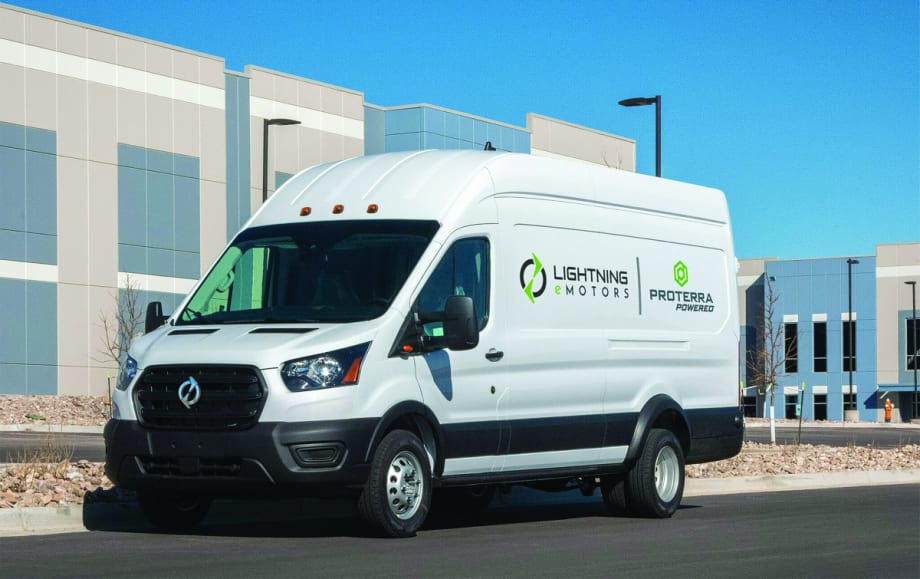
One adjustment fleets need to understand when working with electric vans is the anchoring points used for van interiors.
Photo: Lightning eMotors
Electric vehicles (EVs) have been all the rage in the consumer market. But, it’s taken a while for their larger counterparts to become more widely available for fleet use. These electric work trucks are now growing in availability and popularity for work truck fleet needs.
Because of the specialized needs of work fleets, many of these vehicles will need to be upfit. Work Truck chatted with a few subject-matter experts to find out about EVs impact on upfits and what can be done to mitigate any potential challenges.
Not Fully Electrified Yet
EV use in commercial fleets is growing, but a few experts noted that this growth is still in its infancy.
“With fully electric trucks just coming to market, I have not seen it impacting fleet upfits yet. However, it will have a major impact in the future. You can already see it with USPS getting push back on their next-gen delivery vehicle and Amazon’s push for electric delivery vehicles,” said Jason Buckles, sales account manager at BOLT Lock/STRATTEC Security. “With the extra features electric trucks can offer, for example, the F-150 Lightning offering 240V power in the bed, it will be something that fleets will be looking at in the future.”
Mike Bykowski, director of product management at Weather Guard, agreed that it’s coming, but not yet.
“We hear that the North American market will sit somewhere around $300 million in 2022 and can grow to $15 billion by 2030. Showing a massive CAGR of 54% U.S. Electric Truck Market,” Bykowski said. “With that outlook, Weather Guard sees massive potential to continue to sell its truck boxes, but also studies other insights that one might have with a new trim like the EV model.”
Miller Electric Mfg. noted that, on mechanic and service truck fleets, EVs haven’t impacted them at all yet.
“Most service fleets are taking a wait-and-see approach. The infrastructure is not available yet to support large, heavy-duty service truck fleets,” said Matt Sherrick – product manager at Miller Electric Mfg. LLC.
Electric is Coming
While not a major issue yet, several experts noted that this is coming. And, it’s always wise to be prepared.
“With an increasing number of EVs entering the market, it’s important for upfitters to understand the design and layout of the vehicle and where critical systems such as the batteries are located within the vehicle’s structure. With an EV, there are significantly more ‘no drill zones’ to work around,” said Jeeva Kumar, vice president and general manager, Walk-in Van Segment for Shyft Fleet Vehicles & Services.
EVs are the talk of many conversations with fleet customers these days. It was the buzzword of the year at Work Truck Week 2022.
“Many are interested because they want to move to an electric solution or know the industry is going there and don’t want to be left behind with any change. Range anxiety and work power consumption are huge considerations for end users, and they are trying to figure out what applications to use EVs. Right now, it is not a solution for all vocational work because of those limitations,” said Chris Weiss, vice president of Engineering at Knapheide.
What About Autonomous Trucks?
Autonomous trucks are also on the horizon, and conversations surrounding these vehicles can’t be put off much longer.
“Autonomous trucking is on the horizon, and it’s closer than we think. But with a smart tractor comes the need for a smart trailer. If you don’t have a driver in the cab, you can’t fully understand the health of your trailer with the use of smart trailer technology. Knowing that your trailer is healthy means dispatching a trailer confidently versus getting to the drop yard and being told you can’t drive away. But telematics can prevent this, helping your fleet avoid wasting time, money, and resources,” said Jessica Smith, VP of customer and data insight at Phillips Connect.
The rise in autonomous vehicles will critically impact the cargo control sector.
“The need for cargo securement offerings that accommodate driverless vehicles will increase substantially. From an unfitting perspective, this could mean introducing new and more complex cargo securement devices that could require additional consideration in trailer construction,” said Bob Dissinger, director of sales – U.S., for Kinedyne.
Upfitters are Preparing
Brent MacLean, vice president, sales, manufacturing & distribution for Holman, noted that he is seeing a growing number of businesses integrate EVs into their fleet mix.
“With that in mind, several factors need to be accounted for as fleet operators develop specifications for EV units. As a result, the upfitting supply chain is adjusting accordingly and will likely continue to do so for the foreseeable future,” MacLean noted.
Upfitters, like Holman, are coordinating closely with OEM partners to get as much information as possible on new models — technical specs, precise measurements, CAD diagrams, etc.
“Additionally, as new models are introduced, we work with manufacturers to get pilot units onsite as soon as possible so our team of engineers can get hands-on with the units and stay ahead of the changes, design products, and components, accordingly, develop strategies for installation, and ultimately, provide insightful recommendations to our customers,” MacLean added.
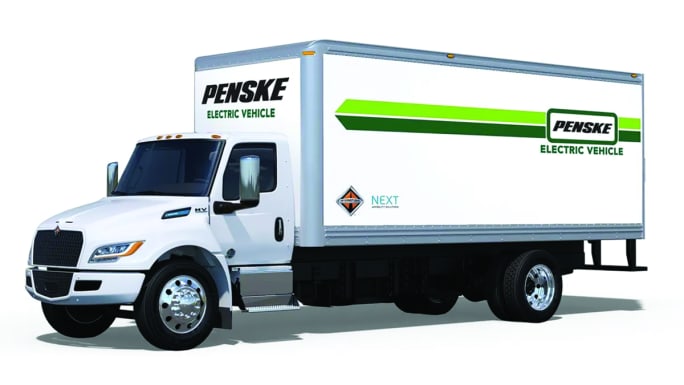
Vocational fleets will need to find the right balance of lightweight materials for duarability for upfitting. The weight of upfits is going to impact the rnage of electric vehicles, but the equipment still needs to be durable.
Photo: Penske Truck Leasing
EV Specific Upfit Concerns
MacLean of Holman also noted some range-related changes to cargo carrying needs.
“The range of the EV itself is influencing some specification strategies. A traditional ICE service van may only return to a company’s facility occasionally, so it might require additional storage capacity to hold parts, tools, and other equipment. Conversely, an EV service van may return to the facility each evening for charging and may not need nearly as much storage capacity, and fleet operators will likely want to keep payload to a minimum to help optimize range. In addition, EVs are shifting how some vehicles are utilized and the types of models (i.e., trucks versus vans) that are being used for a particular role,” said MacLean of Holman.
Another adjustment is the anchoring points used for many upfit components, particularly van interiors.
“Most EV units have no drill zones in the flooring due to the location of the batteries, so we’re adjusting techniques to avoid these areas. Also, it is important to be mindful of the center of gravity for EV units compared to traditional ICE vehicles. This comes into play when installing items such as ladder racks, toolboxes, service bodies, etc.,” MacLean added. “For vocational fleets, you need to find the ideal balance of lightweight materials and durability for upfitting, equipment, and other components. The weight will impact the range of electric vehicles but the equipment still needs to be durable to withstand the rigors of commercial fleet operations.”
One other variable Holman is closely monitoring is how typical upfitting packages will affect the longevity of electric vehicles.
“As more and more EVs hit the road, stay in service longer, and are used in a greater range of applications, the better we’ll be able to understand and forecast how particular specifications influence a unit’s lifecycle. Based on this data and a better understanding of precisely how EV models perform during a typical lifecycle, you’re likely to see the specification and upfit strategies continue to evolve to get the most out of these vehicles,” said Blake Heiser, fleet & strategic sales manager, manufacturing & distribution for Holman.
The Bottom Line
While electric truck use is growing in commercial fleet operations, it’s not necessarily smooth sailing for adoption from here.
“EV trucks will have to prove they can handle the everyday challenge of the commercial pro user. If there is one thing we know at Weather Guard, it’s productivity and how important that is for our customers. Meaning, no downtime,” said Bykowski of Weather Guard.
Bykowski questions how these will handle a basic truck application of a tow to the job and back, plus the time in the truck and on-site. What does that do to the overall range? Or, in the Midwest, it gets frigid, and running to the site, keeping the lights on at night, and keeping the truck warm in the winter will affect how far that truck can travel.
“We believe these are the challenges OEMs will have to prove to the commercial user,” Bykowski concluded.
Curious about current trends in work truck upfitting? Want to know more about what OEM changes will impact your upfit? Read more today!
More Upfitting
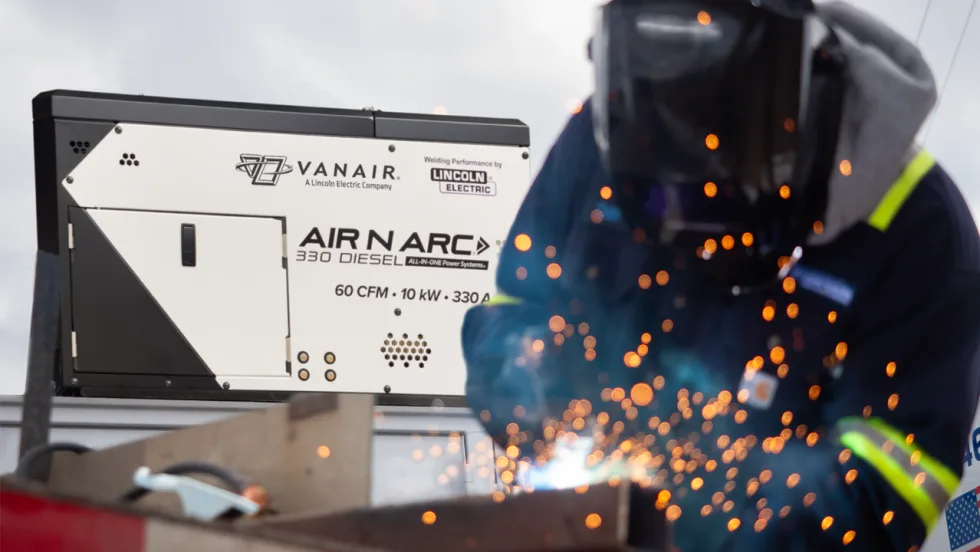
Multitasking: Vanair’s Air N Arc 330 Diesel 60 CFM All-In-One Power System
The Air N Arc 330 Diesel 60 CFM from Vanair consolidates a welder, generator, rotary screw air compressor, battery booster, battery charger, and EV charger into a single 750-pound enclosure driven by one 24.8-horsepower Kubota diesel engine.
Read More →
Buyers Products Awarded Sourcewell Cooperative Purchasing Contract for Snow & Ice Equipment
Buyers Products has been awarded a Sourcewell contract for a wide range of winter maintenance equipment and accessories, including snowplows, municipal plow systems, wing plows, spreaders, and more.
Read More →
Hilltip Introduces the SnowStriker SFT Flex Expandable Box Plow
Hilltip’s new SnowStriker SFT Flex expandable box plow features hydraulically extendable sections that allow operators to adapt the clearing width to changing conditions and applications on the go.
Read More →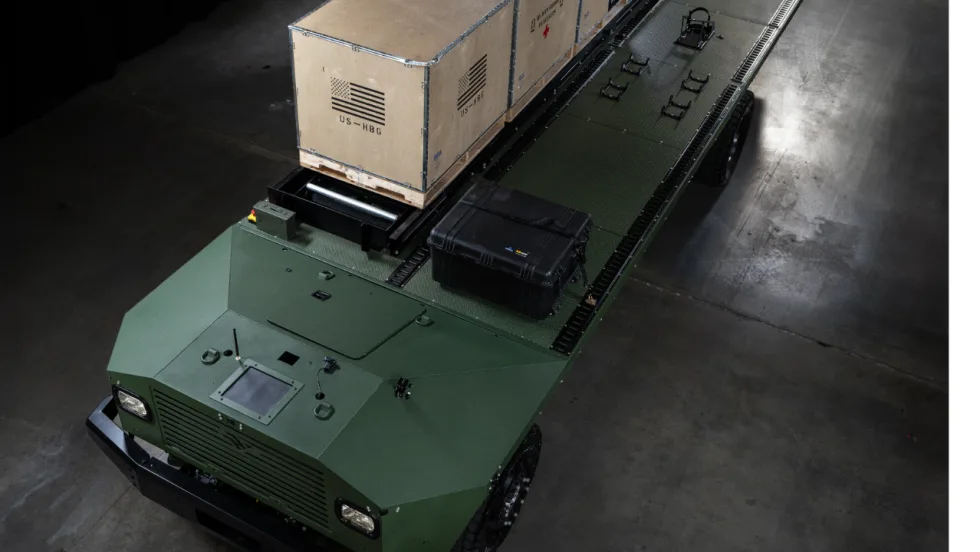
Harbinger Part of Effort to Deliver Autonomous Logistics Capabilities for U.S. Army
American Rheinmetall received an 18-month U.S. Army contract to deliver autonomous, hybrid-powered uncrewed ground vehicles. Harbinger is providing the truck platform for those vehicles.
Read More →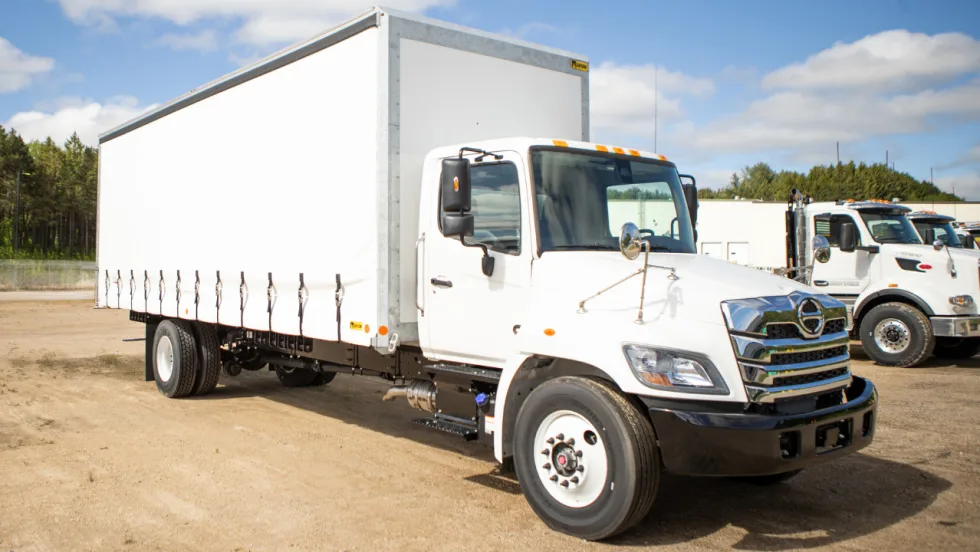
Thinking Outside of the Box: Choosing the Right Truck Body for Your Fleet
Choosing the right truck body can have a major impact on loading efficiency, cargo protection, downtime, and long-term operating costs. Here’s how dry vans, platforms, and curtainsiders compare, plus what fleets should consider before spec’ing their next truck.
Read More →
Fourth Annual Upfit Package of the Year Awards Open for 2027 Entries: One Month Left!
Think your upfit deserves industry recognition? Enter the 2027 Work Truck Upfit Package of the Year Awards before the Sept. 30 deadline. There is less than a month left to get your submissions in!
Read More →
Reading Truck Equipment & Masterack Unite as One of North America's Largest Commercial Vehicle Upfit Networks
Reading Truck Equipment and Masterack have integrated operations to create one of North America's largest and most comprehensive commercial vehicle upfit organizations.
Read More →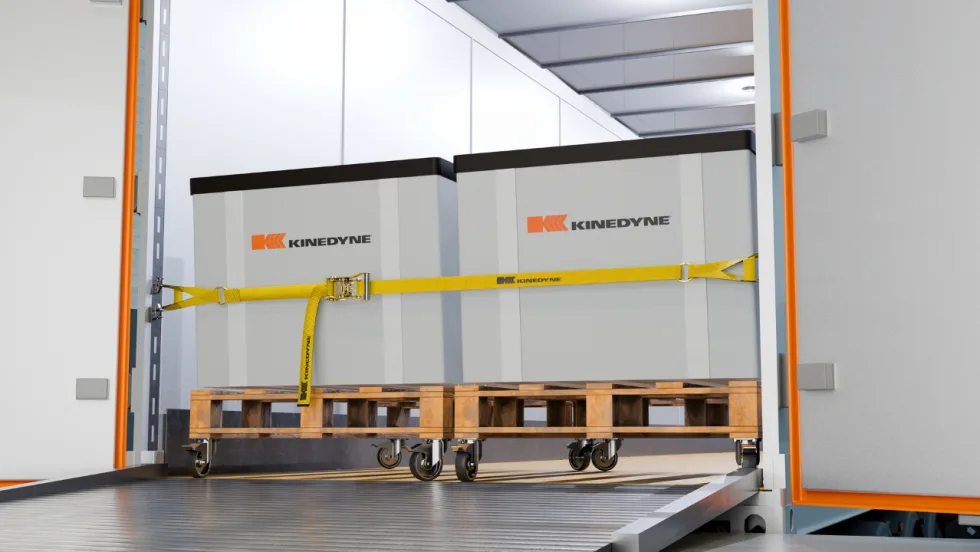
Kinedyne Launches Heavy Duty Logistic Shoring Strap
Kinedyne’s new Heavy Duty Logistic Shoring Strap features a patent-pending four-point design to deliver greater cargo stability, increased strength, and easier handling for rolling and shifting freight.
Read More →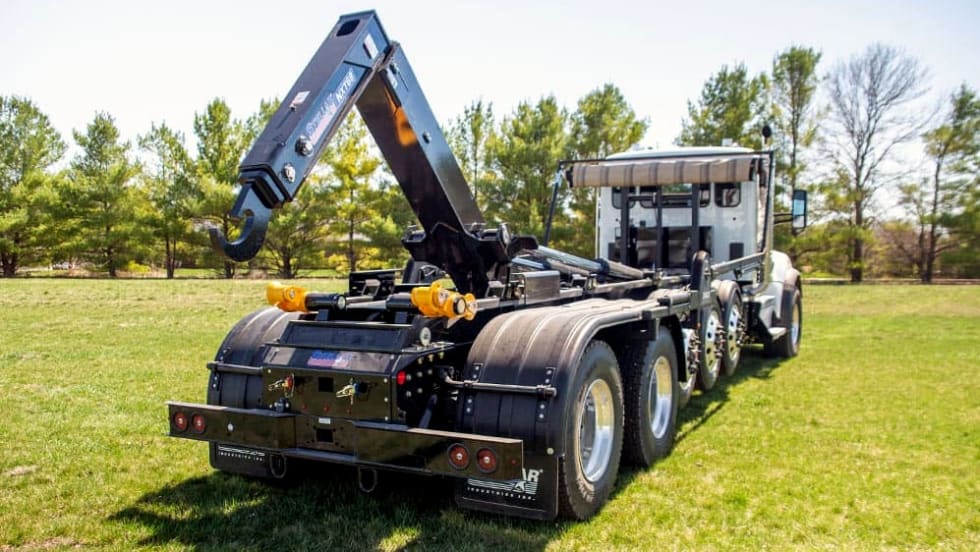
Hooklift Bumper Design from Stellar Showcases Strength & Versatility
Stellar Industries’ new bumper for the NZT Series Hooklifts come in two capacity options: the 20K, designed for Class 3 – 6 chassis with a 20,000-pound pull capacity, and the 90K, built for Class 7 and 8 chassis with a 90,000-pound pull capacity.
Read More →
Maxon Lift Awarded the Wabash Platinum Award for Supply Chain Performance
Maxon Lift, a liftgate manufacturer since 1957, received the Wabash Platinum Award for supply chain performance in 2025. Each year, Wabash presents awards to top suppliers for excellence in supply chain performance.
Read More →