




Read More: The Bright Future of the Internal Combustion Engine
ICE Technology Isn’t Dead — Look for These Gains Ahead
A new report provides a summary of comprehensive research focused on improving the internal combustion engine efficiency and emissions.
by Jose Tingson
November 9, 2022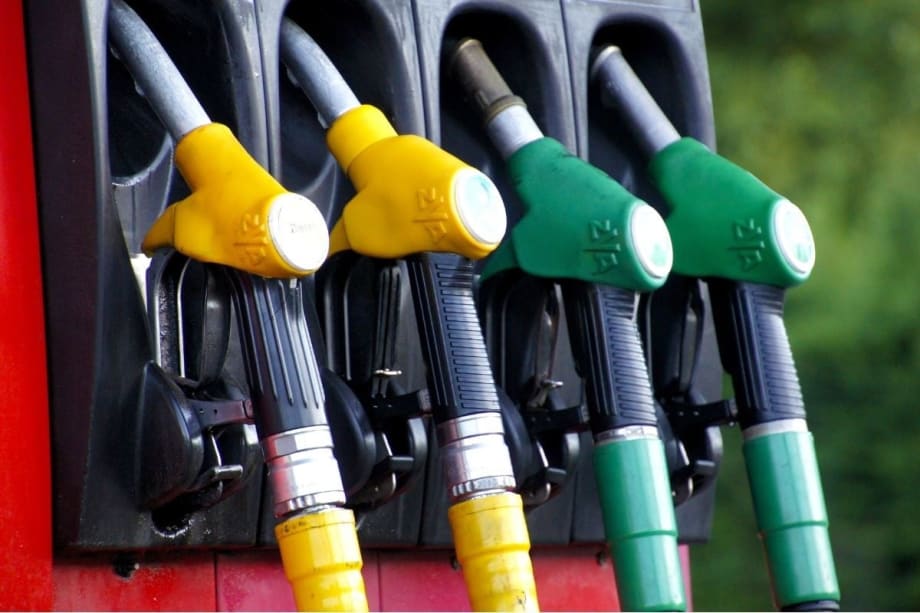
The automotive industry is advancing technologies around diesel compression ignition (CI) engines, biofuels, dual-fuel engines, and hydrogen ICE vehicles with hydrogen from renewable sources.
Photo: Canva
5 min to read
With about 300 million internal combustion engine (ICE) vehicles in the U.S. transportation sector, approximately 14 million are expected to be purchased by consumers in 2022. Despite the rapid increase in electric vehicle (EV) sales, the market will continue to be dominated by ICE vehicles for decades to come.
The Fuels Institute, which bills itself as a non-advocacy research organization that evaluates market issues related to vehicles and the fuels that power them, released a new report titled “Future Capabilities of Combustion Engines and Liquid Fuels.” The report presents a summary of research and development projects focused on improving ICE efficiency and emissions and reducing the carbon intensity of liquid fuels.
“Although some have reported that work on ICE technology has ceased and that no additional improvements can be had, this study found thousands of current citations pertaining to research that could yield significant improvements in the performance and environmental footprint of these vehicles,” says John Eichberger, executive director of the Fuels Institute.
Battery electric vehicles (BEVs) and hydrogen fuel cell vehicles (H2FCVs) are widely viewed as the most effective path to lower carbon emissions in the transportation sector. But even under aggressive strategies to electrify the transportation system, the marketplace will continue to rely on ICE vehicles, including the deployment of hybrid-electric vehicle (HEV) and plug-in hybrid-electric vehicle (PHEV) technology.
Light-Duty Vehicle Gasoline Engines
Passenger car ICE design has seen several fuel efficiency improvements over four decades, including variable valve timing and gasoline direct injection (GDI), gasoline engine turbocharging, and engine downsizing (number of cylinders).
GDI engines were installed in over 50% of 2019-MY gasoline vehicles and are projected to continue to increase, according to the Environmental Protection Agency (EPA). The EPA also says that vehicle engine downsizing is expected to continue with over 50% of 2019-MY gasoline vehicles equipped with four cylinders or fewer.
Additional ICE design improvements continue to be the subject of research efforts that include advancements with reported improvements in fuel consumption or thermal efficiency.
Heavy-Duty Vehicle Diesel CI Engines
Heavy-duty vehicles (Class 7-8), which carry large quantities of freight in the U.S., have generally relied upon diesel compression ignition (CI) engines for various reasons. Diesel engines operate at a higher efficiency than comparable spark ignition (SI) engines.
In addition, diesel fuel has a higher energy density than gasoline. Overall, diesel CI engines have been more cost-effective, leading to a lower cost of ownership. There are technology options for improving the fuel efficiency of heavy-duty CI engines, and implementing these technology improvements is expected to result in over 20% in fuel savings.
HEV Drivetrain Systems
The application of HEV technology to passenger cars has resulted in a real-world average fuel economy improvement of approximately 30%. Hybrid vehicle technology could be potentially applied to additional future light-duty vehicles depending on economic feasibility, since the production share of HEVs comprises only 6% to 7% of 2020-MY light-duty vehicles.
Research examining the conversion of the gasoline ICE portion of an HEV from SI to CI has found that gasoline compression ignition (GCI) hybrids reduce well-to-wheels (WTW) greenhouse gas (GHG) emissions by 7% to 43% versus unhybridized GCI and 26% to 55% versus conventional SI.
ICE Configured for Dual Fuels and Blends
Traditional dual-fuel engines operate on a primary fuel such as natural gas while using a small amount of diesel as the pilot ignition fuel. Commercial stationary dual-fuel engines are an established technology, but dual-fuel engines in transportation are under research and development while various fuel combinations and engine designs are being tested.
Future developments such as dual-fuel injectors and optimized nozzle designs are expected to provide higher overall efficiency. Research on fuel combinations has focused on the primary fuel and searching for alternatives with lower carbon levels than natural gas such as hydrogen and renewable natural gas (RNG).
Alternative ICE Fuels
More than 175,000 natural gas vehicles are already in operation in the U.S. The advantages of natural gas as an alternative fuel include its domestic availability, established distribution network, and reduced GHG emissions over conventional gasoline and diesel fuels, especially when using RNG, according to the Alternative Fuels Data Center.
Biofuels have been successfully used in the transportation sector for more than 20 years by blending with traditional petroleum fuels. According to a report by the International Renewable Energy Agency, “Liquid biofuels require little change in fuel distribution infrastructure or the transport fleet and can therefore be rapidly deployed, leading to much-needed reductions in greenhouse gas emissions.”
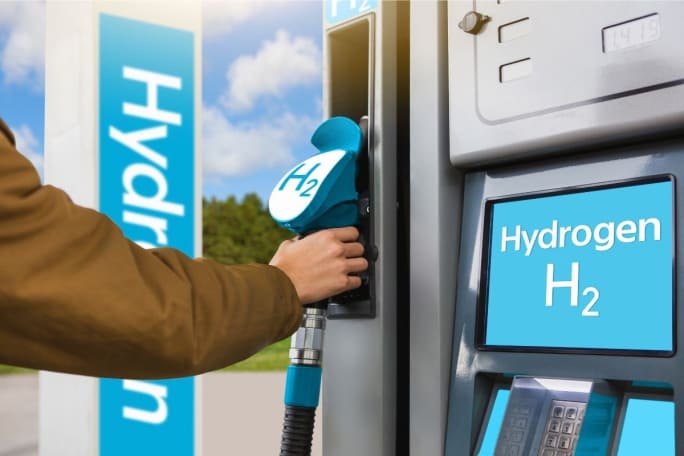
The National Academy of Sciences predicts that internal combustion engines will have a significant role in new vehicles fleets from 2025-MY to 2035-MY in ICE-only vehicles but will decrease in number due to the rapid increase in sales of battery electric vehicles and fuel cell electric vehicles.
Photo: Canva
ICE Zero-Emission Pathways
Most research papers have yet to demonstrate pathways to achieve carbon neutrality from a WTW GHG perspective regarding ICE vehicles using either liquid or gaseous fuels. A European consortium along with McKinsey & Company suggest possible carbon-neutral or near-carbon-neutral combinations, but these combinations are not yet commercially available.
Hydrogen ICE vehicles with hydrogen from renewable sources can potentially approach zero WTW GHG emissions. Hydrogen fuel cells have received much attention, but H2-ICE could also be a viable alternative with required engine modifications. Toyota has invested resources to develop hydrogen vehicles and has successfully converted a Toyota Corolla to an H2-ICE.
In a 2021 report, the National Academy of Sciences (NAS) encapsulates the continued predominance of ICE vehicles in the foreseeable future: “Internal combustion engines will continue to play a significant role in the new vehicle fleet in MY 2025-2035 in ICE-only vehicles, as well as in hybrid electric vehicles from mild hybrids to plug-in hybrids, but will decrease in number with increasing battery electric vehicle and fuel cell electric vehicle penetration.”
The NAS report also says, “In this period, manufacturers will continue to develop and deploy technologies to further improve the efficiency of conventional powertrains for ICE-only vehicles and as implemented in HEVs. Major automakers are on differing paths, with some focusing their research and development and advanced technology deployment more squarely on BEVs, and others more focused on advanced HEVs to maximize ICE efficiency.”
Topics:Engine Downsizingcarbon reductionPlug-In Hybrid Electric VehiclesBattery-Electric VehiclesAlternative FuelsSmall Fleet
Originally posted on Automotive Fleet
Subscribe to Our Newsletter
More Small Fleet


Developing Budget-Friendly Driver Safety Programs
From driver training and safety meetings to one-on-one coaching and incentive programs, several small fleets share how they have developed a safety culture with their drivers using low- to no-cost resources.
Read More →
Sponsored•March 9, 2026
Boosting Last-Mile Fleet Uptime, Safety, and Value with AI Vehicle Inspections
AI-powered inspections are transforming last-mile fleets by replacing manual checks with highly accurate automated scans that detect defects in seconds. By giving fleet operations visibility into the daily condition of their vehicles, you can identify trends over the vehicle’s lifecycle that enable improved procurement decisions, route management, driver training and accountability.
Read More →
Five Ways Seat Belts Help Prevent Injuries
There are five ways seat belts protect occupants from injuries, according to the Tennessee Department of Safety and Homeland Security.
Read More →
Sponsored•January 14, 2026
It’s here: The 2026 Fleet Technology Trends Report
What does AI mean for fleets? Get the answer — and learn other top tech trends.
Read More →
Small Fleets, Big Impact: How Independent Drivers Power Wreaths Across America
Check out how small fleets and independent drivers power Wreaths Across America each December and why their impact matters more than ever.
Read More →
VMS Survey Finds 65% of Small Fleet Managers Run Operations Alone
A new VMS survey shows small fleet managers are stretched thin, with most handling operations solo and eager to adopt digital tools for relief.
Read More →
Tips for Driving Safely on Halloween Night
This video features a reminder from the Connecticut Department of Transportation (DOT) and the Connecticut Police Chiefs Association, urging drivers to prioritize safety this Halloween.
Read More →
AI, Access, and Uptime: VMS’s Next Chapter with David Prusinski
VMS’s new Co-CEO, David Prusinski, shares how an AI-first approach will give small fleets and repair shops the tools to compete like big players.
Read More →
Fleet Managers Share Winter Prep Tips: It's Never Too Early!
Three fleets share best practices to prep vehicles for winter and prevent downtime when the cold sets in.
Read More →