





Miss This? 8 Challenges Upfitting Medium-Duty Trucks
How to Manage Cargo Effectively & Safely
Consulting end users - drivers, service techs, warehouse managers, etc. - is the first critical step in developing efficient, safe cargo management systems. They are the experts in how the cargo is used.
June 23, 2009

Standardizing the vans would improve work flow efficiency and safety, and provide a familiar work environment when vehicles were transferred, enhancing technician productivity.
Photo: Safelite
7 min to read
When John Beyer, director of risk, fleet, and travel management at Safelite Auto Glass, wanted to standardize the cargo system in the company's fleet of 4,000-plus service vans, he went directly to the people who knew that cargo best. He gathered a cross section of user groups, representing the geographic and functional range of Safelite's business - vehicle glass repair, replacement, and delivery. And he listened to their input.
In the past, Beyer recounted, "We sent vehicles out to the field; our techs did a lot of customizing. We provided a basic unit, but didn't provide all they needed to do their jobs."
Standardizing the vans would improve work flow efficiency and safety, and provide a familiar work environment when vehicles were transferred, enhancing technician productivity, Beyer explained.
"Techs use the vans everyday; they are the experts, and they know their own needs," he pointed out. "It's essential to spend a significant amount out in the field talking to techs and warehouse managers, getting their input and involvement."
"Spec'ing the vans wasn't difficult," said Beyer. The size of replacement windshields carried in the vehicle dictated the choice of Ford or Chevrolet models.
Prototype Field-Tested
With his fleet council's input, Beyer turned to upfitter Adrian Steel for additional guidance and to design the van's cargo management system.
"We gutted a van," said Beyer, and they rebuilt the interior to accommodate Safelite techs' particular tools, equipment, and servicing tasks. This prototype vehicle was tested in the field.
"It took 3-4 times to get it right," Beyer recalled.
The design had to meet certain objectives, including equipment organization, accessibility, safety, driver ergonomics, and work flow efficiency.
Tool and bin parts holders were specifically designed to provide "a place for everything and everything in its place," said Beyer. In particular, holders were created for the electronic cutting tools, with their sharp razor knives and blades, Safelite techs use in removing broken windshields.
"Adrian helped design tool holders to store these tools and keep them from bouncing around the floor or being in the way when the techs reach into the van," said Beyer.
Frequently used tools and equipment, including a vacuum, broken glass disposal unit, and 20-foot hoses, were relocated within easy reach.
"In the past, shelves were built on the far side of the van. They were moved to the front to avoid techs moving in and around the van," Beyer explained.
To improve the ergonomic impact on techs as they move windshields that can weigh as much as 60 lbs., storage racks were redesigned for better access and loading.
Noting "safety is always important," Beyer said the charging station used for battery-powered tools was moved "from the back of the van to the cockpit, away from fluids and water, and to provide easy access."
In addition, an LED system was installed in the van interiors, replacing the previously used dome lights. "The system lights up the inside, and our people can work safely, using all those sharp tools, in the dim lighting of a parking garage," Beyer noted.
Key to the design process, said Beyer, is "to approach it with an open mind. Forget about what you have. Don't spend time trying to improve a system; start from scratch. Design to what you need."
Get Key Employees Involved
Soliciting input from end users is a cargo management best practice at ValleyCrest, one of the nation's largest landscape development and maintenance companies, headquartered in Calabasas, Calif.
"Get your key employees involved; just because it looks good on paper does not always mean it will work out in the field," recommended Vicki Dahlquist, director of fleet and Stacy Bingel, senior fleet coordinator. "We have found when we involve our key employees, we've actually saved money in most cases because we come up with solutions that work for them and eliminate those that were not used or used improperly."
The ValleyCrest fleet includes nearly 4,000 light- and medium-duty trucks, vans, and SUVs, primarily Ford models.
In determining cargo management systems for ValleyCrest vehicles, Dahlquist and Bingel first review the vehicle's use and application.
They "go to the people using the current set-up to see what they like and don't like, look at the areas used and not used." Where the vehicle will be located "outside at a construction site or in a parking structure at a business park," is another consideration.
When spec'ing vehicles and upfits, Dahlquist and Bingel are cautious. "There are always changes in the cargo industry that bring new and innovative ways to store and secure items, but they may not always fit your current applications. Sometimes new is not always better," they noted.
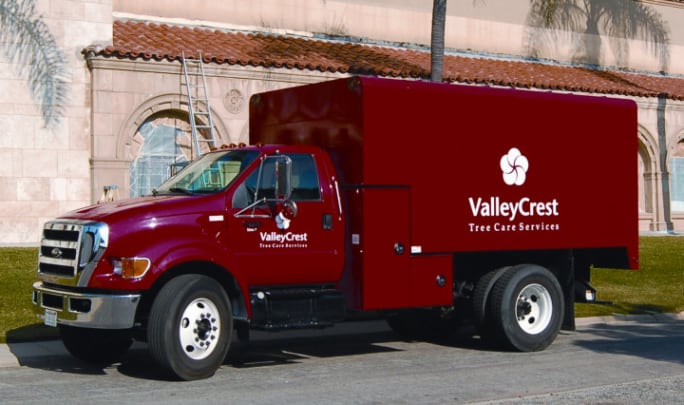
ValleyCrest is one of the nation's largest landscape development and maintenance companies.
Photo: ValleyCrest
Ease of use is a critical driver ergonomics factor in upfitting ValleyCrest vehicles. "We want access to be simple and minimize any potential safety issues," Dahlquist explained.
What should a fleet manager consider when developing vehicle or upfitting specs to accommodate cargo management issues? Safety is top of mind for the ValleyCrest fleet team in reviewing cargo loading tasks.
"The last thing we want is an employee getting injured. We look again at the application; do we need to load bags of soil conditioner or a flat of flowers? We want our cargo to be easily loaded and secured," said Bingel.
Upfitters Offer Expertise
Upfitting companies offer a wealth of expert advice and knowledge to fleet managers who want to design the most effective cargo management system to fit their particular vehicle applications. Many upfitting companies provide guidance through staff consultants or customer service centers.
At the outset, Adrian Steel staff members seek "a good understanding of what the company uses the vehicle for, the vocation of the vehicle," explained Todd Goldmeyer, Adrian Steel marketing manager.
"How many stops and service calls; what items do you need to get at the most? What [supplies and cargo] are you replenishing in the vehicle? You want to know that so you know which need to be most accessible," said Rich Payne, Adrian Steel fleet account executive, describing basic factors in cargo management.
Headquartered in Adrian, Mich., the upfitter provides cargo management solutions for pickups, box trucks, and vans, including "a newly finished system for Ford's Transit Connect," Goldmeyer noted.
Designing the systems is not "a cookie cutter process," according to Cindy Gippert, Adrian fleet account executive. Every fleet is different in application and needs.
The Adrian Steel account team offers to visit the fleet location, "to see exactly what they're loading, what they do, how they move and use their tools," said Gippert. "And we incorporate the company's risk management group."
Every Driver's Needs Unique
Each fleet driver has different needs in managing cargo, tools, equipment, and supplies, agreed John Stethem, national fleet director for Leer, a provider of aluminum and fiberglass truck caps, racks, tool boxes, and other work truck accessories.
"Plumbers are different from cable service trucks, and from all the different kinds of contractors," Stethem noted.
Key factors in cargo management are access and organization, allowing the driver to easily reach products and tools, said Stethem.
For example, he explained, "The single-most important element in truck caps are side access doors, which allow drivers to access the vehicle interior without climbing in."
A good cargo management system helps "companies save money, save time, and organize their cargo, tools, and equipment," increasing productivity and enhancing the company's bottom line, said Stethem.
Extend Vehicle Flexibility
New to the fleet segment, Bestop offers high- and low-end rail systems - BestRail and VersaRack - as well as bed extenders, steps, dividers, and slides. Headquartered in Broomfield, Colo., the company is best known for Jeep and Dodge aftermarket accessories.
Once the fleet vehicle's application is determined, review upfitting options to "extend the flexibility of the vehicles," advised Jim Chick, VP marketing and sales for Bestop.
For example, the Bestop rails systems can be configured a number of ways with or without a tonneau cover, said Chick. The systems also can be easily removed on weekends to allow personal use of the truck.
Products such as the company's BedStep, a frame-mounted assist, helps drivers avoid back injury while accessing cargo. Cargo slides provide the same easy access without physical strain to the driver.
10 Factors that Impact Cargo Management
Whether designing a cargo management system in-house or consulting with an upfitting specialist, accounting for the following factors will help fleet managers devise the a solution that best fits their companies' needs.
Vehicle function: service, delivery, repair, utility, etc.
Vehicle type: cargo van, pickup, box truck.
Cargo type, weight, size: tools, equipment, ladders, supplies, boxes, fragile material.
Security: protection against theft.
Driver ergonomics: accommodations to ease physical stress on drivers' bodies.
Safety: safeguards to protect drivers and employees from such hazards as shifting cargo, loose tools and equipment, heavy loading, etc.
Accessibility: ease of reaching cargo, frequently used tools, etc.
Loading and unloading methods: ramp, liftgate, forklift, etc.
Cargo stability: toolboxes, tie-downs, tracks, and other fastening methods to keep cargo in place.
Environment: weather and terrain conditions.
Subscribe to Our Newsletter
More Upfitting
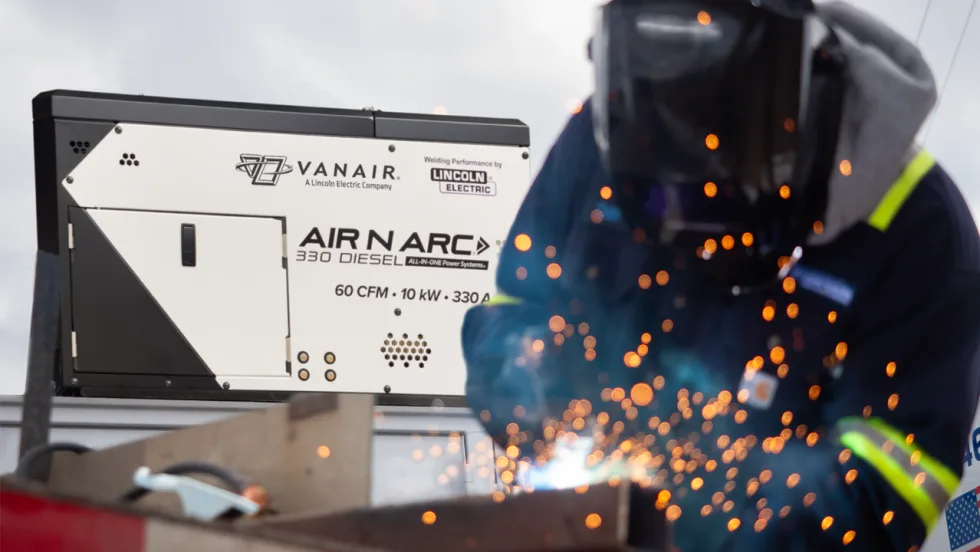
Multitasking: Vanair’s Air N Arc 330 Diesel 60 CFM All-In-One Power System
The Air N Arc 330 Diesel 60 CFM from Vanair consolidates a welder, generator, rotary screw air compressor, battery booster, battery charger, and EV charger into a single 750-pound enclosure driven by one 24.8-horsepower Kubota diesel engine.
Read More →
Buyers Products Awarded Sourcewell Cooperative Purchasing Contract for Snow & Ice Equipment
Buyers Products has been awarded a Sourcewell contract for a wide range of winter maintenance equipment and accessories, including snowplows, municipal plow systems, wing plows, spreaders, and more.
Read More →
Hilltip Introduces the SnowStriker SFT Flex Expandable Box Plow
Hilltip’s new SnowStriker SFT Flex expandable box plow features hydraulically extendable sections that allow operators to adapt the clearing width to changing conditions and applications on the go.
Read More →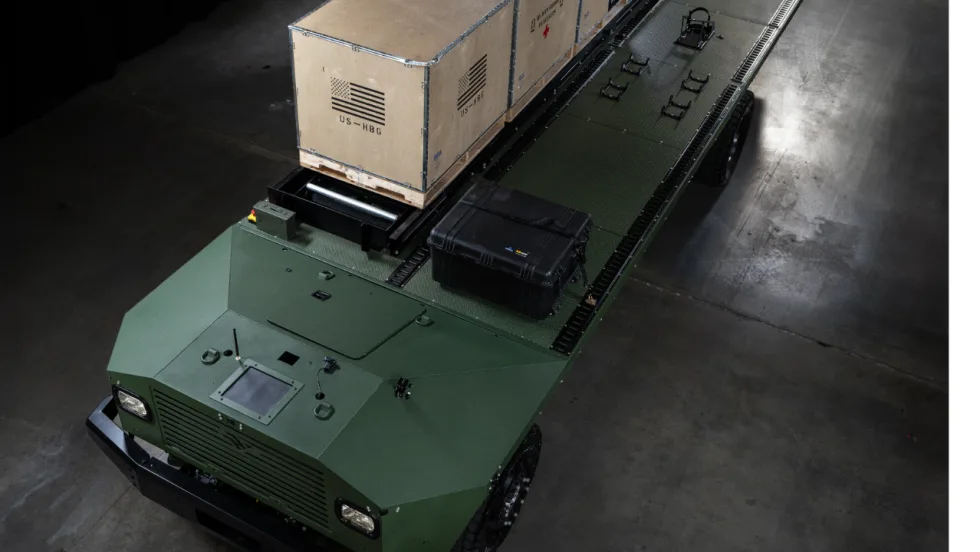
Harbinger Part of Effort to Deliver Autonomous Logistics Capabilities for U.S. Army
American Rheinmetall received an 18-month U.S. Army contract to deliver autonomous, hybrid-powered uncrewed ground vehicles. Harbinger is providing the truck platform for those vehicles.
Read More →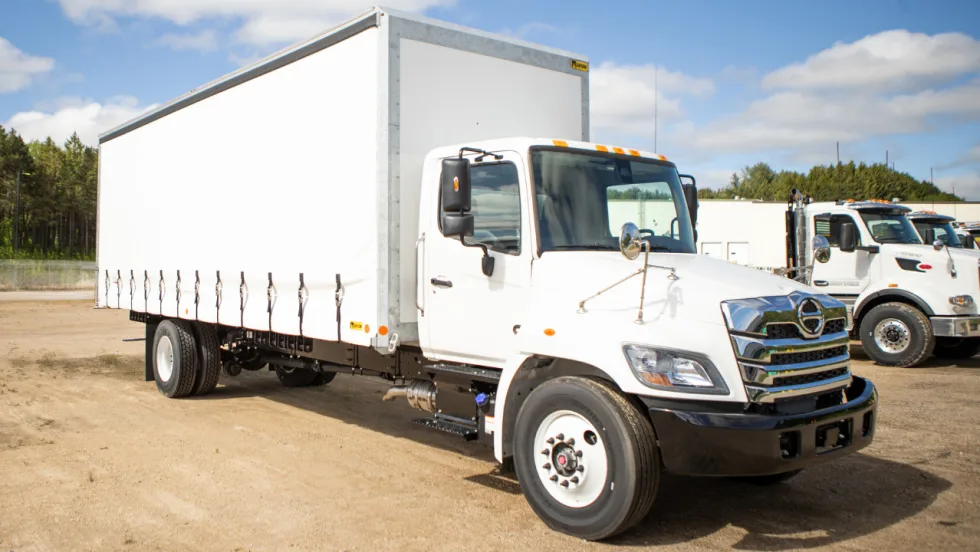
Thinking Outside of the Box: Choosing the Right Truck Body for Your Fleet
Choosing the right truck body can have a major impact on loading efficiency, cargo protection, downtime, and long-term operating costs. Here’s how dry vans, platforms, and curtainsiders compare, plus what fleets should consider before spec’ing their next truck.
Read More →
Fourth Annual Upfit Package of the Year Awards Open for 2027 Entries: One Month Left!
Think your upfit deserves industry recognition? Enter the 2027 Work Truck Upfit Package of the Year Awards before the Sept. 30 deadline. There is less than a month left to get your submissions in!
Read More →
Reading Truck Equipment & Masterack Unite as One of North America's Largest Commercial Vehicle Upfit Networks
Reading Truck Equipment and Masterack have integrated operations to create one of North America's largest and most comprehensive commercial vehicle upfit organizations.
Read More →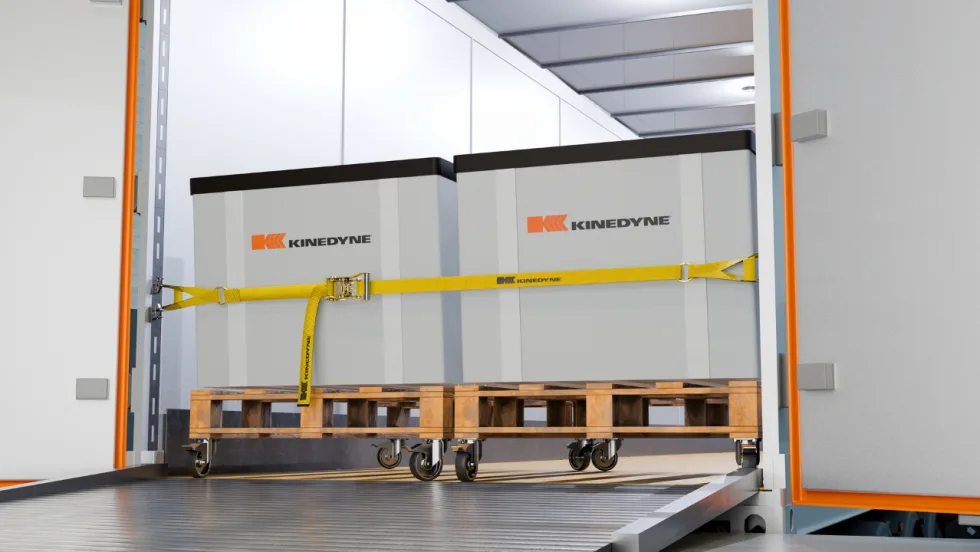
Kinedyne Launches Heavy Duty Logistic Shoring Strap
Kinedyne’s new Heavy Duty Logistic Shoring Strap features a patent-pending four-point design to deliver greater cargo stability, increased strength, and easier handling for rolling and shifting freight.
Read More →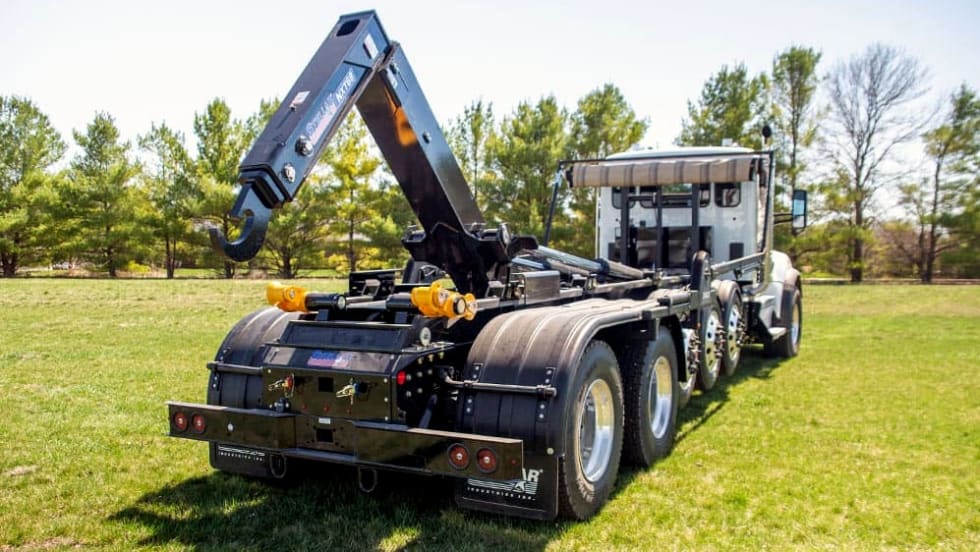
Hooklift Bumper Design from Stellar Showcases Strength & Versatility
Stellar Industries’ new bumper for the NZT Series Hooklifts come in two capacity options: the 20K, designed for Class 3 – 6 chassis with a 20,000-pound pull capacity, and the 90K, built for Class 7 and 8 chassis with a 90,000-pound pull capacity.
Read More →
Maxon Lift Awarded the Wabash Platinum Award for Supply Chain Performance
Maxon Lift, a liftgate manufacturer since 1957, received the Wabash Platinum Award for supply chain performance in 2025. Each year, Wabash presents awards to top suppliers for excellence in supply chain performance.
Read More →