




Going Green: Out With the Old, in With the New: Diesel Alternatives for Construction
How One Fleet 'Escalated' its Services During 2022
With supply chain restraints and pressure to go green as the new normal, one company shares its secrets to surviving 2022.

Hillary Weiss・Senior Editor
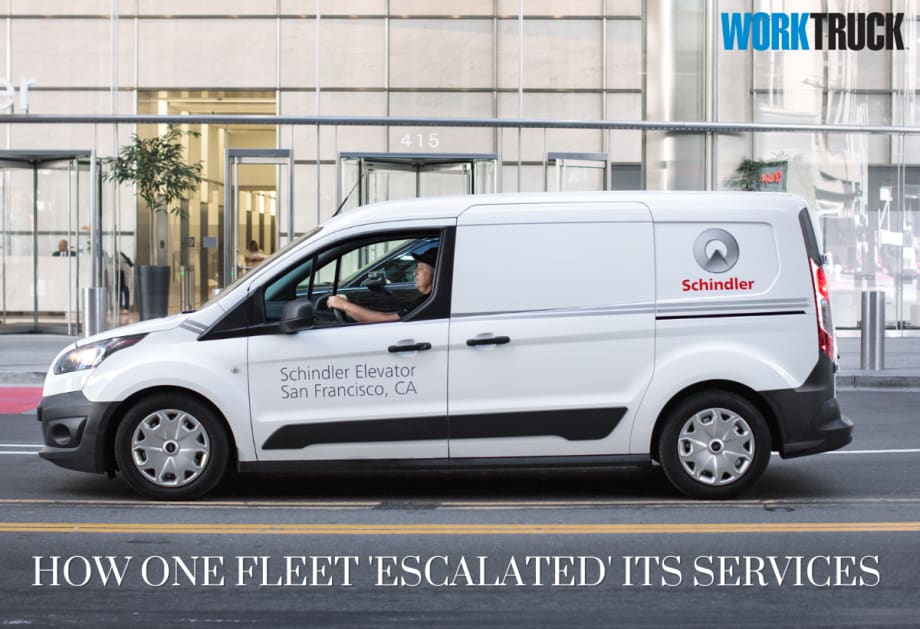
Schindler Elevator is transitioning toward net zero emissions by 2040.
Photo: Schindler Elevator
4 min to read
Moving toward a net zero emissions fleet is a huge task. The pressure is high for small and large fleets to utilize eco-friendly vehicles. Depending on the desired green fleet, a complete overall might be needed.
And once the plan is decided, fleet management also needs adjusting. Just some items to recalculate might be charging stations, maintenance techs, and route optimizations.
In the end, it’s worth the cost and maintenance overall. A 2020 Consumer Reports study showed that electric vehicle (EV) drivers tend to spend about 60% less each year on fuel costs compared to drivers of gas-powered cars.
And according to the U.S. Department of Energy, it is less expensive to fuel a truck with propane than with gas long term because propane-fueled trucks require less maintenance.
But a green fleet is not the only obstacle fleet managers have to deal with. At Work Truck, we’ve witnessed supply chain issues and delays for the past few years. Not to mention the day-to-day tasks of managing registrations, driver supervising, and more.
It’s safe to say fleet managers are going through the wringer in 2022.
Work Truck spoke with one such company navigating toward a green fleet on top of managing supply chain restraints and utilizing telematics.
Ted Chan, fleet manager of Schindler Elevator, shared how he adjusted his fleet to reduce CO2 emissions and handles ongoing supply chain issues.
Escalating a Fleet to Success
Schindler Elevator Corporation manufactures elevators, escalators, and moving walks and installs, maintains, and modernizes mobility solutions for almost every type of building requirement worldwide.
And it has over 6,000 employees in more than 160 locations in North America.
Founded in 1874 in Lucerne, Switzerland, by precision engineer Robert Schindler, its U.S. headquarters is in Morristown, New Jersey, and its Canadian headquarters is in Toronto, Ontario.
Chan manages a fleet of 3,800 vehicles that travel throughout North America to office buildings, airports, shopping centers, retail establishments, and specialty buildings.
Of the fleet vehicles, 90% are light-duty vehicles, and 10% are medium-duty. The vehicles are utilized for servicing and modernization of existing elevators/escalators and installing new elevators and escalators.
Chan likes to pay attention to “payload, and fuel efficiency when it comes to his fleet. We do not compromise safety and check all the boxes of options when possible.”
Tackling Fleet Obstacles
Throughout the nation, fleets are battling supply chain restraints. A shortage of materials such as microchips, raw materials, packaging, and even drivers heavily delays operations.
And those restraints and shortages extend to the elevator manufacturing industry also. Not only has it impacted delivery times, but Schindler’s has also seen an increase in supply prices, affecting net revenues.
Chan said one of Schindler Elevators’ top challengers is supply chain restraints. He and his team best handle it by “aggressively exploring all options and maintaining good relationships with our suppliers.” Without patience and good relationships, you might be out of a supplier.
Another obstacle to tackle is driver motor vehicle records. With a fleet of almost 4,000, it is a lot of paperwork to handle.
That’s why Chan transitioned the process from manual paperwork to an electronic and automated system. By engaging with his fleet management company to handle most of the heavy lifting, drivers can now enter their driver information online versus a paper system.
Once the shift is fully completed, more time will open for maintaining the overall fleet.
Transitioning to a Green Fleet
In 2021, President Biden set a greenhouse gas pollution goal. The plan is to reduce CO2 emissions to 50-52% less than 2005’s emissions by 2030.
According to the EPA, transportation is the most significant contributor to greenhouse gas emissions. For fleet managers across the U.S., considerable changes are required.
Schindler Elevator wants to be a part of that change and contribute to helping the environment. In 2020, it made the decision companywide to reduce its CO2 emissions.
The company has made a public commitment to be net zero emissions by 2040, and fleet is a massive contributor to this goal. Chan said the company is using a multi-phased approach to meet its goals.
“We are actively engaging with our OEM partners in converting our ‘ICE’ fleet to EVs where it makes sense. We are also actively looking into better ways to operate more efficiently, such as improved route planning and optimization,” Chan added.
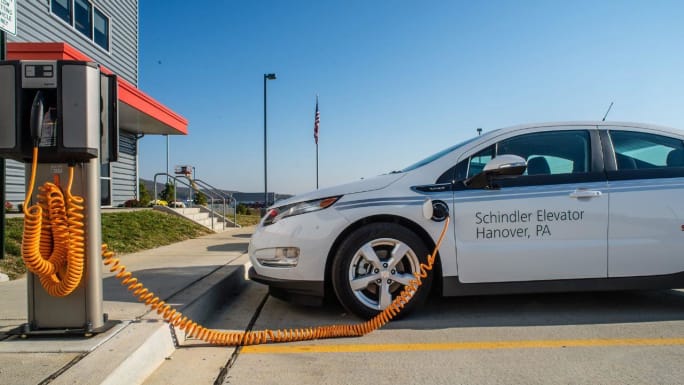
Schindler Elevator's fleet services, modernizes, and installs elevators and escalators.
Photo: Schindler Elevator
Optimizing the Fleet’s Overall Health
Aside from going green, Chan implemented other solutions to optimize the fleet’s overall health, such as rightsizing and telematics.
The best solution to maintaining an optimized healthy fleet is rightsizing. Chan said, “It goes without saying that a fleet manager’s responsibility is to constantly evaluate and rightsize their fleet for the job.”
This is the perfect way to curate the right amount of inventory needed for Schindler's Elevator’s requirements.
Another solution Chan recommends is utilizing telematics. The company has plans to take advantage of telematics in 2023 entirely. Telematics can help improve fuel costs, maintenance schedules, and route optimizations. Chan is most excited about the impact it can have on driver safety and ways it can allow drivers to compete for bragging rights within the company on who is the safest driver.
As Chan’s final advice to fleet managers, he said, “Be aware we are all in this together. Continue cultivating a good relationship with your suppliers and peers to navigate these difficult times.”
Subscribe to Our Newsletter
More Operations

Family Ties Inside the Fleet Families Building Careers Across Generations
Three fleet families share what it really takes to work together, learn across generations, and keep business from following them home.
Read More →
Shades of Fleet Call for Voices: Fleet's Hidden Heroes
Fleet’s hidden heroes are often the ones keeping everything moving behind the scenes. September’s Shades of Fleet is looking for dispatchers, coordinators, parts specialists, and other support pros to share their stories.
Read More →
Truck Centers, Inc. Celebrates National Truck Driver Appreciation Week with $1,000 Fuel Card Giveaways
During National Truck Driver Appreciation Week, Truck Centers, Inc. is offering customers a chance to fuel up for free. Customers at all Truck Centers locations can enter to win one of four $1,000 fuel cards from Sept. 14 - 18.
Read More →
Fleet Guides, AI Time-Savers, Truck Tariffs & Fuel Strategy Lead the News
This week’s Truck Chat Cheat Sheet covers new fleet vehicle guides, practical AI use cases, U.S.-Canada truck production, mixed-energy strategy, and more.
Read More →
What Fleet Employers Are Missing When Hiring Veterans
What if some of the strongest candidates for fleet are already out there, but their experience is written in a language our industry does not always recognize?
Read More →
Automotive Fleet Opens 2026 Personal Use Survey for Commercial Fleet Managers
Less than two weeks left! Commercial and corporate fleet managers are invited to share how their organizations handle company vehicle personal-use policies, charges, and driver eligibility.
Read More →
What Resilient Fleets Do Differently When Conditions Change
Fleet resilience is about more than reacting to disruption. Lauren Fletcher talks with AP Fleet’s Alex Coveney about flexibility, planning, scaling, and what helps fleets adapt when business conditions shift.
Read More →
If We Want the Next Generation in Automotive, We Have to Give Them a Reason to Care
The automotive industry talks constantly about its workforce shortage. But before we can recruit the next generation, we may need to do a better job giving kids a reason to care about automotive in the first place.
Read More →
Ram ProMaster City Under $40K, Truck Tariffs, and AI Maintenance Lead the News
A sub-$40K commercial van, tariff questions, AI-powered maintenance, and a new EV production strategy headline this week’s Truck Chat Cheat Sheet.
Read More →
Bob Adamsky Shares the Fleet Lessons You Usually Learn the Hard Way
After more than 30 years in fleet, Arrow International’s Bob Adamsky has learned that the job is about far more than vehicles. He shares the lessons he wishes every fleet manager could learn a little earlier.
Read More →