





Related: General Motors’ New EV Platform Will Support Fleet Vehicles
How GM’s New BrightDrop EV Business Will Work with Fleets
With BrightDrop, GM is creating a new business to develop the commercial electric vehicle ecosystem. This includes a new electric delivery vehicle and support for infrastructure, logistics, and service planning — as well as an entirely new sales and service network.
February 1, 2021
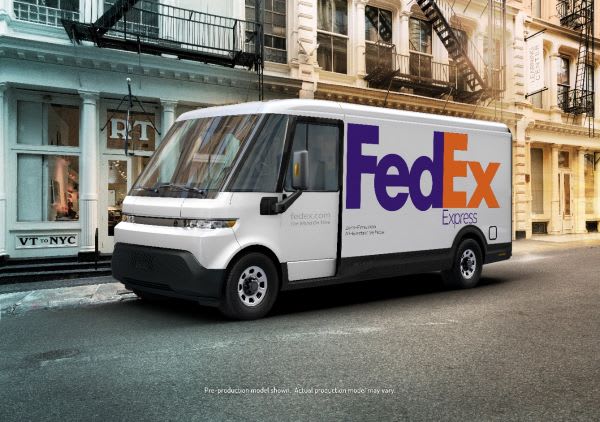
Later this year BrightDrop will start delivering 500 of its new EV600 delivery vans to Fedex, its first customer.
Photo: GM
6 min to read
When it comes to commercial vehicles and electrification, there is no hotter segment than the last-mile delivery market, and there is no shortage of announcements of new electric vehicles and platforms from major automakers and independent upstarts alike.
Other manufacturers have for the past two years teased their commercial EV plans through artist renderings, leaked test videos, and press conferences showcasing prototypes. Meanwhile, GM had been in stealth mode — until Mary Barras’ CES 2021 address, in which she introduced a new electric van and a completely new business, BrightDrop, which will focus specifically on commercial vehicle electrification for first-to-last-mile delivery.
Just when you thought GM was behind in the commercial EV market, it’s not. BrightDrop has ambitious near-term goals that will beat — or at least catch up to — its rivals. Later this year BrightDrop will start delivering 500 of its new EV600 delivery vans to Fedex, its first customer. What does this mean for fleets?
The BrightDrop Ecosystem
Travis Katz, BrightDrop’s new president and CEO, was hired from outside the automotive industry. Katz has entrepreneurial travel and technology roots, with previous C-suite positions at Redpoint Ventures, Skyscanner, and MySpace. He was the CEO of Trip.com and a cofounder.
The first thing Katz wants fleets to know is that deploying commercial electric vehicles will take an integrated ecosystem beyond the vehicle, and BrightDrop is ready to help. “What sets BrightDrop apart is that it’s designed to be a one-stop shop of products and services that end to end can help with virtually every aspect of delivery fleets’ needs,” Katz said.
BrightDrop’s ecosystem consists of an electric vehicle platform with one vehicle to start (EV600), an electric pallet, fleet and mobile asset management systems, and support to help fleets with parts and service, upfitting options, and planning charging infrastructure.

Photo courtesy of GM.
In a recent interview, Katz started with the e-pallet, BrighDrop’s first product to market and a CES-worthy tech tool. The EP1 is a motorized box that can carry up to 200 lbs. over short distances, such as from a truck at curbside to the front door or up an elevator. Think about what a propulsion-assisted pallet could do for a massive FedEx warehouse.
“The goal (of EP1) is to help reduce the number of package touch points, which reduces costs and improves security, but also reduces physical strain on the labor force,” Katz said. “This is becoming an increasing challenge as volumes of packages ramp up.”
As a result of the e-commerce boom and COVID-19, delivery fleets are tasked with moving higher and higher package volumes through increasingly complex urban environments and out into the suburbs. Delivery fleet operators will need a way to manage all the data coming from their new EVs.
That’s the job of BrightDrop’s fleet management systems, which will be accessible through a cloud-based software platform to help with route planning, asset utilization, and maintenance. As many fleets have embedded systems already, Katz said BrightDrop is working with telematics and other vendors to offer plug-and-play connectivity and API integrations.
Charging infrastructure is another underestimated challenge for fleets. While BrightDrop isn’t building its own charging network, its support services team will help fleets build out their charging infrastructure and find the right partners. Public charging isn’t a focus, as delivery EV fleets come back to base to charge. The EV600 will be able to juice up with 120-kW DC fast charging, the same gold standard as Tesla’s Superchargers.
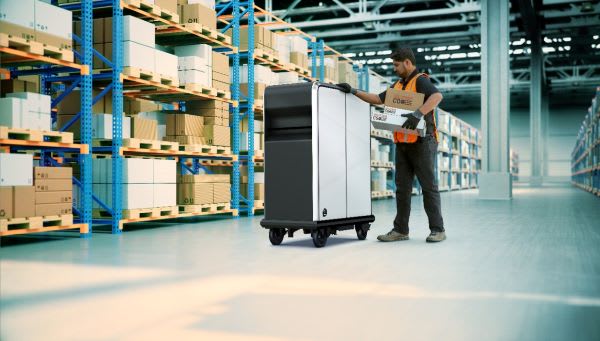
Photo courtesy of GM.
Range Excitement
The EV600 will be built on GM’s new Ultium platform that will eventually expand into other models. The BrightDrop website also lists a “rapid-load (passenger) vehicle concept,” though Katz is mum on what’s in the pipeline.
The EV600 will arrive at 10,000 lbs. GVWR with a (you guessed it) voluminous 600 cu. ft. of cargo space and a max payload of 2,200 lbs. BrightDrop is publicizing an eye-opening range of 250 miles.
Right now, automakers are throwing around a range of ranges when it comes to their not-yet-released commercial EVs, but it’s all theoretical without battery specs and real-world payload and towing tests. GM confirmed that the 250-mile range was calculated with 50% of the EV600’s estimated payload capacity.
Beyond payload and tow weight, range is dependent on many factors, from route type and driving style to ambient temperature, weather, and terrain. Yet as delivery routes are usually 150 miles or less, a max range of 250 miles will cover most of those variances with miles to spare. And delivery fleet operators will tell you they max out on cargo space before payload.
Range is an important differentiator for BrightDrop: Ford is targeting a range of only 126 miles for the e-Transit, that’s with a 67-kWh battery pack. However, the e-Transit offers a higher maximum payload of 3,800 lbs. for the low-roof cargo van and 4,290 lbs. for the cutaway.
Katz wouldn’t divulge EV600’s battery specs, though GM’s Ultium battery system, a joint venture with LG Chem, spans 50 kWh of available energy up to a massive 200 kWh, which theoretically offers 400 miles of range. “We're testing for a lot of different scenarios,” he said. “I can't get into a lot of detail right now, but we're very confident in the 250-mile range.”
Katz did stress that Ultium’s flexibility is unique to the industry. The Ultium battery cells can be stacked vertically or horizontally inside the battery pack. “These combinations can provide the energy for every segment on the road today, whether you're talking about a performance vehicle to a work truck to a small commuter vehicle,” he said.
New Sales Playbook
BrightDrop’s new ecosystem extends to the sales process as well. Compared to traditional vehicles, commercial EV sales require a holistic attention to that ecosystem of infrastructure, logistics, and service planning. “It's a much deeper sale,” Katz said.
BrightDrop will stand as its own business under the GM umbrella, with a new BrightDrop dealer network and a “BrightDrop solutions team” that will be “laser-focused on delivery customers.”
BrightDrop and its dealer network will be separate from GM’s corporate fleet sales. However, “We'll be working in concert with (the GM fleet team),” Katz said. “We've been very coordinated in terms reaching out to fleet customers to let them know BrightDrop was launching. They’ve been very helpful for us as we scale the business.”
Will customers enter a BrightDrop facility collocated with a GM fleet dealer, or a standalone building under a separate BrightDrop shingle? Is BrightDrop targeting certain areas of the country for first sales? “We'll have more to share about exactly how that's going to work at a later date,” Katz replied.
Katz made clear that in whatever iteration, GM will be backing this new sales and service structure to ensure customers are fulfilled not only during the initial vehicle sale but through the vehicle’s lifecycle — gauntlet thrown to upstart manufacturers.
Many questions are left to be answered, but Katz concluded with this: “We're open for business and we're talking to customers in all parts of the country. There's a lot of interest in the product.”
Topics:General MotorsElectric Delivery VehicleCharging InfrastructureBrightDropUltiumGreen FleetSmall Fleet
Originally posted on Automotive Fleet
Subscribe to Our Newsletter
More Green Fleet

Fleet Forward Conference Introduces One-Day Passes for 2026
New one-day registration gives fleet professionals the flexibility to attend Tuesday, Wednesday, or Thursday, with passes available for $199 through Sept. 18.
Read More →
CALSTART Rebrands as Catalyst Mobility, Will Combine with Forth in 2027
CALSTART has rebranded as Catalyst Mobility and will combine with Forth at the start of 2027. The new organization said it is poised to become one of the world's largest, strongest, and most impactful clean transportation nonprofits.
Read More →
Electric Truck and Charging Programs to Boost Sustainability at NY & NJ Ports
Together, the Port Authority of New York and New Jersey and CALSTART will electrify drayage and terminal operations serving the East Coast’s busiest container port. A pair of incentive programs totaling $45 million has launched to accelerate adoption of zero-emission drayage trucks and terminal tractors.
Read More →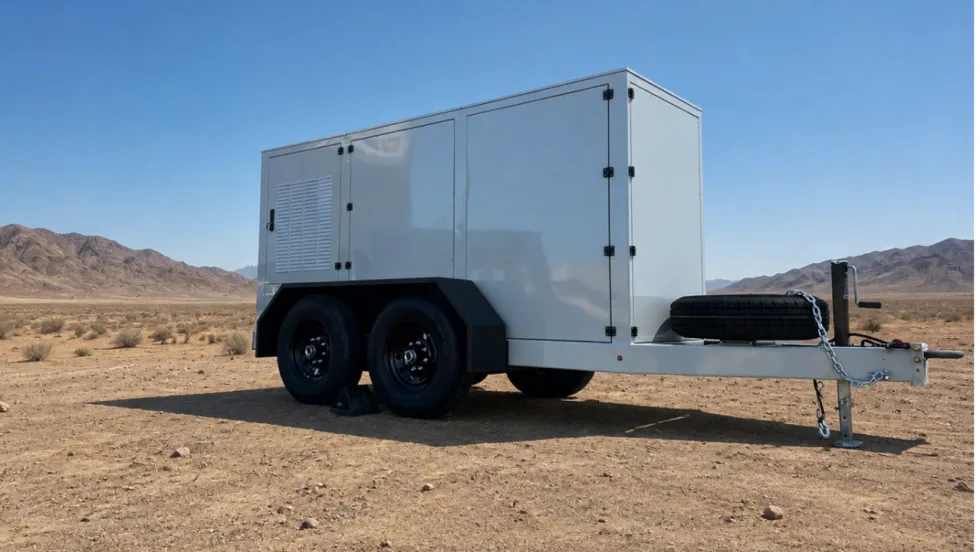
Xos Hub Surpasses One Gigawatt-Hour of Energy Delivered in the Field
A single Xos Hub has surpassed one gigawatt-hour of energy across more than 33,600 charging sessions in the field, demonstrating performance that supports Xos' expansion across new products and markets.
Read More →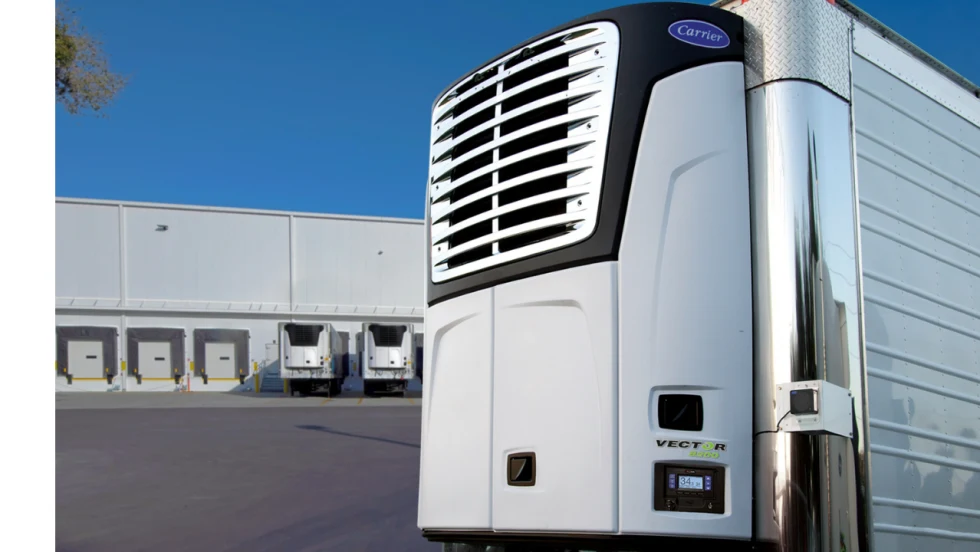
Carrier Transicold Launches All-Electric Vector 8200 TRU for Diesel-Free On-Site Cold Storage
Carrier Transicold’s first engineless multi-temperature TRU helps fresh- and frozen-food fleets add supplemental cold storage capacity during seasonal peaks.
Read More →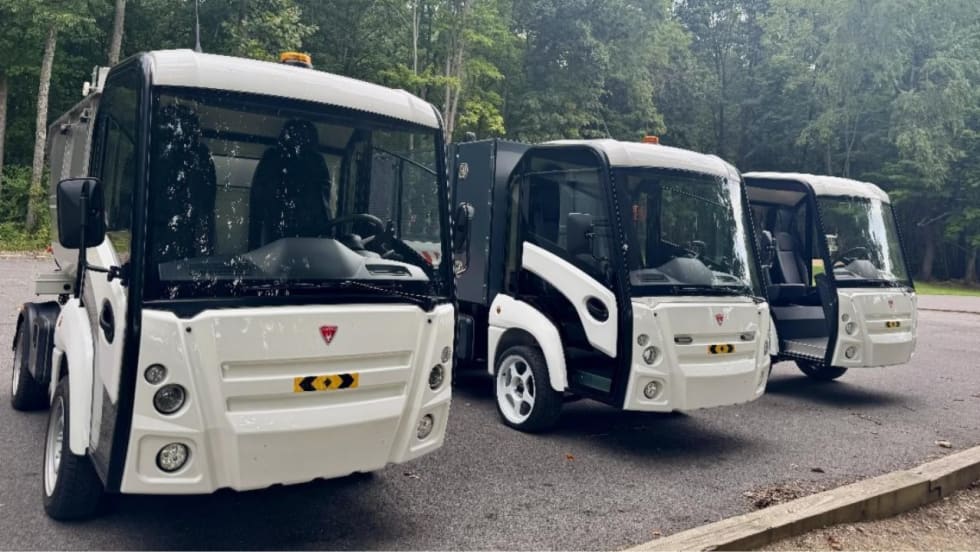
Narro Trucks Introduces Electric Utility Vehicle
Narro Trucks officially launched its operations on Aug. 20 and hosted a ride and drive to showcase its electric truck, which will be produced in Virginia.
Read More →
Samsung SDI Takes Full Control of GM Battery JV as Indiana Plant Pivots to Energy Storage
Samsung SDI is taking full control of its Indiana battery plant with GM, marking a major shift from the EV-focused joint venture Charged Fleet first covered in 2023.
Read More →
NWSA Taps CALSTART to Administer Zero-Emission Drayage Assistance Program
CALSTART will provide free technical assistance services to drayage fleets serving the Ports of Seattle and Tacoma and looking to transition to cleaner technologies and help decarbonize freight hubs.
Read More →
EV Fleet Reality Check: What Operators Wish They Knew Before Electrifying Their Work Vans
Electric work truck upfits bring new compatibility questions. Learn how parts availability, OEM guidance, power demands, and route planning can affect fleet performance.
Read More →
Peterbilt Expands Sourcewell Partnership with Electric Vehicle Lineup
Peterbilt Motors Company’s cooperative purchasing agreement with Sourcewell and its Canadian partner, Canoe Procurement Group, now includes including Peterbilt's battery-electric vehicle lineup.
Read More →