




Heavy-Duty Engine Oils Are Evolving, Here’s What That Means for Fleets
Next-generation engine oils will provide enhanced engine protection, improved compatibility with diesel particulate filters, and potential fuel-economy benefits for fleets. Here’s what you need to know.
New-generation heavy-duty engine oils are designed to balance efficiency and protection, helping fleets meet performance and emissions goals.
Photo: Work Truck
As you read this, industry stakeholders are hard at work developing the American Petroleum Institute’s (API’s) Proposed Category 12 (PC-12), the next performance category for heavy-duty diesel engine oils. Industry bodies, original equipment manufacturers (OEMs), oil marketers, and others are working toward a January 2027 first-license date for PC-12 to align with major shifts in emissions requirements for new-model equipment.
For heavy-duty trucking fleets and other operators of commercial diesel equipment, this means that the engine oils you use to service your vehicles regularly will soon deliver higher levels of performance across a broad range of performance requirements, including:
Enhanced engine protection
Greater compatibility with diesel particulate filters
Better fuel economy
And more. Importantly, PC-12 will be split into two subcategories, most likely to be named API CL-4 and API FB-4. The latter will further classify lower-viscosity formulations designed specifically to enhance fuel economy, delivering new value across the heavy-duty diesel landscape and significant potential savings for fleets. Here’s what trucking professionals need to know:
Understanding PC-12: The Next-Gen Diesel Engine Oil Standard
First, it’s helpful to understand the drivers behind PC-12’s development. In 2022, the U.S. Environmental Protection Agency (EPA) released stringent new emission standards, which will take effect for model-year 2027 diesel engines and include:
A 75% reduction in nitrous oxide (NOx) emissions.
A 50% reduction in particulate matter (PM).
Extended service life requirements for aftertreatment systems, from about 435,000 miles to 800,000 miles.
To meet these requirements, heavy-duty diesel OEMs have been busy overhauling engine and drivetrain hardware, especially aftertreatment devices. Simultaneously, they issued a request for a new engine oil performance category to help them meet such limits—thus the development of the PC-12.
Beyond simply enabling emissions requirements, PC-12 developers are also aiming to deliver new value to end users through enhanced engine protection, longer oil drain intervals, and improved fuel economy.
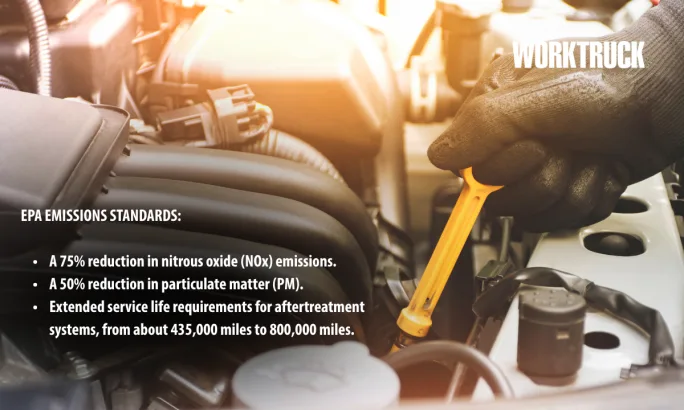
EPA’s 2027 emission standards are driving major changes in heavy-duty diesel engines, requiring cleaner operation and longer-lasting components.
Photo: Work Truck
How the New F Category Oils Could Boost Fleet Fuel Economy
As noted earlier, category developers will again introduce a new “F” category, which currently classifies lower-viscosity lubricants that can contribute to improved fuel economy.
The current low-viscosity category, FA-4, has not seen significant adoption by fleets and other end users. However, there is an expectation that the next category will see greater uptake.
Why? First, major OEMs have signaled greater willingness to approve the use of F-category lubricants in their new-model vehicles in 2027 and beyond. Second, the lack of OEM approvals for FA-4 lubricants was a significant reason why demand has remained low, but this may be changing for the next API category.
Servicing your vehicles with OEM-approved fluids and lubricants is essential for staying within warranty. But it is also important to remember that the new F category will represent the best that the heavy-duty diesel engine oil market has to offer.
F category lubricants and their next-generation counterparts must necessarily meet the same performance rigor as their C category counterparts under PC-12. This means OEMs and end users alike can be confident in excellent levels of wear protection, as well as the fuel economy benefits F category fluids can deliver.
And the benefits of choosing lower-viscosity oils are significant. Fleets can realistically expect fuel savings of 0.5%-1.5% by switching from 15W-40 to 5W/10W-30 engine oil. The savings from switching to fuel-efficient F variants are expected to add an additional 0.4%-0.7% in fuel efficiency. Throughout a lifetime of service, F category fluids can deliver significant operational cost savings.
Lower-viscosity fluids are also highly complementary to current trends in engine design. Modern engine hardware works very hard to deliver greater efficiency, and a thinner lubricant inherently reduces some engine stress by allowing it to move with less resistance.
Over the course of an engine’s life, that kind of stress can add up, and it means that lower viscosities can contribute to a longer useful life for an engine, all while delivering efficiency benefits. For any fleet, longer-lasting vehicles can make a big difference for the bottom line.
Do Lower-Viscosity Oils Protect as Well? Here’s the Proof
One source of hesitation in adopting and specifying lower-viscosity F category fluids has stemmed from an outdated perception of engine oil technology, that “thicker” is always better for wear protection.
Understandably, fleet operators want assurance that the lubricant will provide long-term engine protection. Equipment OEMs want the same. And low-viscosity fluids have now demonstrated reliable performance for many years across both new- and older-model engines in a broad range of applications.
To that end, Lubrizol has field-tested FA-4 lubricants in real-world engines from a variety of OEMs, accumulating over 86 million miles of testing. Findings were clear: Engines, old and new, are showing expected levels of wear up to 500,000 miles of service while achieving significant fuel-economy improvements. The fact is that viscosity is not a key indicator of protection. Proper formulation with the right additive technology is.
How Fleets Can Prepare for the Next Generation of Engine Oils
The widespread adoption of new technologies will be increasingly necessary as global initiatives to reduce emissions continue apace. F category lubricants represent one of those technologies, contributing to greater fuel economy while protecting new heavy-duty trucks for extended service lives.
For fleets, the benefits are clear. Adopting lower-viscosity fluids can lead to significant cost optimization through fleet-wide fuel-economy gains. It is worth opening the conversation with your lubricant suppliers to vet the options available.
Lubrizol's testing and development efforts show that wider use of advanced F-category lubricants can provide measurable benefits for both OEMs and fleet operators. These next-generation fluids support engine hardware in performing efficiently while helping fleets improve fuel economy. As emissions standards evolve and operating costs rise, the role of high-performance lubricants will only become more essential for heavy-duty applications.
More Maintenance
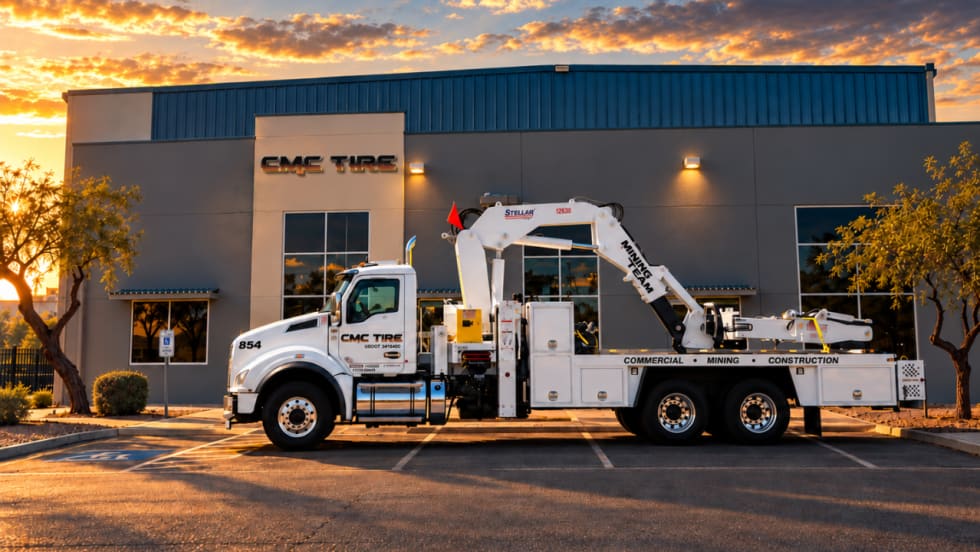
Les Schwab Expands Commercial Tire Footprint Into Arizona
Les Schwab Tires has expanded into Arizona with two commercial tire locations in Phoenix and Tucson, strengthening its fleet service footprint in the Southwest.
Read More →
Volvo Trucks’ 'Lock and Leave' Software Updates Go Live Across North America
Unattended over-the-air software updates are now available in Volvo trucks across the U.S. and Canada. The new capability lets trucks stay current with the latest software without interrupting operations or requiring a dealership visit.
Read More →
Why Technician Appreciation Can’t Be a Once-a-Year Thought
For fleets trying to keep skilled technicians, recognition cannot begin and end with Technician Appreciation Week. Learn what year-round appreciation really looks like and why the everyday technician experience matters just as much as pay when fleets are trying to keep good people.
Read More →
How Faster Driver Reporting Can Keep Small Truck Problems Small
When minor damage, warning lights, or equipment issues are reported late, small problems can quickly become bigger maintenance headaches. Conversational AI can help shorten the path from what a driver notices in the field to the person who can act on it.
Read More →
BendPak’s Ranger Wheel Service Equipment Achieves North American Safety Certification
BendPak’s full line of Ranger tire changers and wheel balancers has been ETL certified to UL and CSA standards to improve operator safety.
Read More →
Isuzu & U.S. Department of Labor Celebrate Milestone for Veterans Apprenticeship Program
The Isuzu Veterans Apprenticeship Program (IVAP) signing ceremony highlighted Isuzu’s long-term commitment to veterans, Isuzu dealers, and the skilled workforce supporting its customers and the commercial transportation industry.
Read More →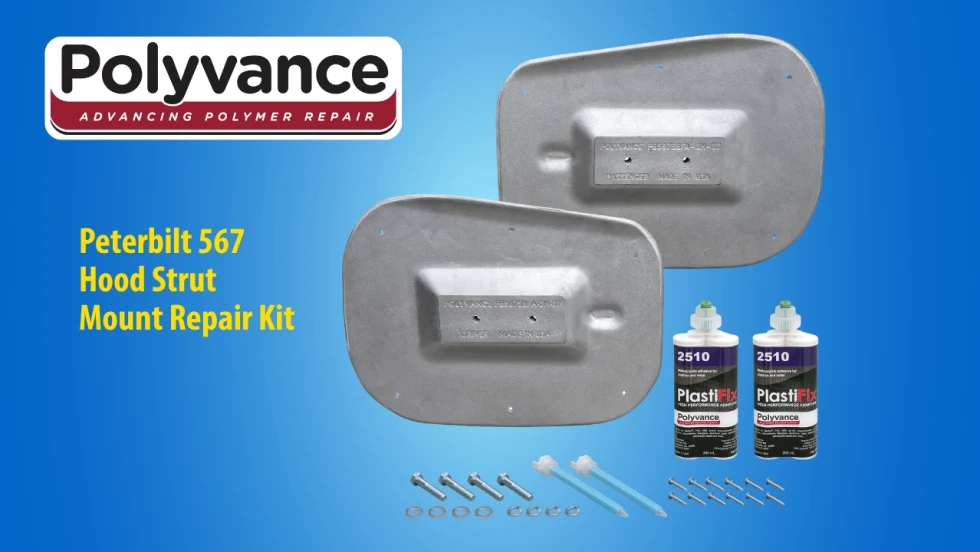
Polyvance Introduces New Peterbilt 567 Hood Strut Mount Repair Kit
Polyvance has launched a repair solution for Peterbilt 567 hood struts, helping truck owners and repair facilities avoid costly hood replacements.
Read More →
Cox Automotive Celebrates Technical Excellence at 2026 Top Tech Finals
The top technicians from Cox Fleet and Manheim tested their skills in Nashville, Tennessee, at Cox Automotive’s 2026 Top Tech Finals. The overall winners will advance to compete at the American Trucking Association’s TMC SuperTech competition.
Read More →
Grote Industries Appoints Vice President of North American Operations
Grote Industries has appointed Patrick Smith as vice president of North American operations as it celebrates 125 years of innovation and manufacturing excellence. He has more than 20 years of manufacturing leadership experience.
Read More →
Winter Fleet Prep: Expert Tips to Keep Vehicles Running Smoothly
Cold weather can expose weak batteries, tires, fuel systems, and maintenance gaps fast. Use this winter fleet checklist to prepare trucks and drivers before temperatures drop.
Read More →