




GM Offers Fuel-Saving Technology in Several 'Flavors'
A significant amount of research has been conducted to support the development of more fuel-efficient vehicles. Here is a look at a few of the directions GM is taking.

General Motors has been exploring ways for drivers to remain mobile while reducing or eliminating petroleum consumption. The result is technologies such as active fuel management and electric propulsion with an onboard generator to charge the batteries.
Active Fuel Management has been incorporated into many GM engines already on the market and will be added to more soon. Active Fuel Management enables the engine to automatically operate on half its cylinders under light load conditions, thereby improving fuel efficiency in some vehicles by up to 12 percent. When loads are light, the control system automatically closes both intake and exhaust valves of half the cylinders, cutting off air and fuel supply. Then, when needed for quick acceleration or hauling heavy loads, the fuel supply resumes and the valves are reopened to provide all-cylinder operation.
A sophisticated electronic engine controller determines when to deactivate cylinders, allowing the engine to maintain vehicle speed in lighter-load conditions such as highway cruising. The process is virtually imperceptible to the driver. Active Fuel Management technology is offered on several 5.3L V-8 engines and 6.0L V-8 engines. For the 2008 model-year, it’s been added to the 3.9L V-6 engine in some applications.
For many years, GM has offered hybrid vehicles, starting with mild hybrid systems. Their most recent hybrid models feature GM’s two-mode hybrid system, the result of a consortium between GM, BMW, Chrysler, and Daimler.
In the earlier mild hybrid systems, the gasoline engine did most of the work and was assisted by a small electric motor that added torque boost on acceleration. The gasoline engine could be shut down at traffic lights and other stops, so fuel was not consumed during idling. On deceleration, the electric motor helped recharge the battery, a process called regenerative braking. In slow traffic conditions, regenerative braking was all that was needed to decrease vehicle speed. Mild hybrid systems relied on engine power, such as power steering and air conditioning to help generate electric power, and continued to operate even if the gasoline engine was not running.
By the end of 2008, GM is expected to offer nine hybrid models in the United States, more than any other automaker. They include the Saturn VUE V-6 Two-Mode Hybrid, Saturn VUE four-cylinder Hybrid, Saturn AURA Hybrid, and Chevrolet Malibu Hybrid. GM’s two-mode hybrid technology is currently available in the Chevrolet Tahoe Two-Mode Hybrid and GMC Yukon Two-Mode Hybrid, and will be added later this year to the Cadillac Escalade Two-Mode Hybrid, Chevrolet Silverado Two-Mode Hybrid, and GMC Sierra Two-Mode Hybrid.
The two-mode hybrid system delivers highly efficient performance and full functionality. With the two-mode system, the vehicle can operate on electric power alone at speeds up to 30 mph. The gasoline engine is supplemented by two 55Kw electric motors that fit inside the transmission case.
Under light-duty operation, the transmission operates in a continuously variable transmission (CVT) mode. When more power is needed for climbing hills or towing a trailer, the transmission switches to the second mode which features four fixed-gear ratios.
So far, the SUVs GM has equipped with the two-mode hybrid system can benefit most from hybrid technology. These larger, heavier vehicles can offer the fuel economy of a smaller, lighter vehicle while maintaining both carrying or towing capacity.
Later this year, production of the front-wheel-drive Saturn VUE Two-Mode Hybrid will begin. It’s expected to deliver up to 50-percent greater combined city and highway fuel economy compared with the current non-hybrid VUE XR, based on current federal test procedures. It’s also the first V-6 powered vehicle, and the first front-wheel-drive vehicle to use the two-mode system. The driving range is more than 500 miles.
In addition, the VUE Two-Mode’s 3.6L VVT V-6 engine with direct injection technology means no trade-offs in performance or fuel economy. Acceleration time from 0-60 mph is expected to be around 7.3 seconds, and the maximum towing load will be 3,500 lbs.
[PAGEBREAK]
E85, a blend of 85-percent ethanol and 15-percent gasoline, is a mostly renewable fuel that can be made from corn or other grain products. In the future, it may be more economically produced from other biomass resources.
E85 reduces greenhouse gas emissions and is an excellent energy resource. That’s why GM already has more than 3 million FlexFuel vehicles on the road today in all 50 states. In addition, GM has partnered with the Governors’ Ethanol Coalition to create greater awareness and understanding of E85.
Every flexible-fuel vehicle has an engine control module that helps identify which fuel or blend of fuels the vehicle is running on, and automatically adjusts itself to run on that fuel type.
GM has been developing the Concept Chevrolet Volt. The Volt is a battery-powered, four-passenger, extended-range electric vehicle. A gasoline/E85 FlexFuel onboard engine is needed to create additional electricity to extend the vehicle’s range. The system is adaptable to other types of engines to provide electricity.
Some of the Volt’s technology is derived from GM’s previous experience in launching the EV1 in 1996. Many of the same engineers who worked on the EV1 are working on the Volt and E-Flex System.
The Volt uses a plug-in charger to charge the batteries from the power grid. When its lithium-ion battery is fully charged, the FlexFuel Volt is expected to deliver up to 40 miles of pure electric vehicle range. When the battery is depleted, a 1.0L, three-cylinder turbocharged engine will create enough additional electricity to provide triple-digit fuel economy. The Volt also can be fully charged by plugging it into a 110-volt outlet for about six hours.
According to GM Vice Chairman Bob Lutz, if you live within 30 miles of work (60 miles round trip) and charge your vehicle every night or during the day at work, you could conceivably get up to 150 miles per gallon.
In the event a driver forgets to charge the vehicle or travels beyond its normal electric range, the Volt would still get 50 mpg by using the engine to convert gasoline into electricity.
To reduce mass, the Volt is being designed with a relatively small fuel tank. Though much lighter, the tank will still accommodate enough fuel for a driving range of more than 400 miles.
Integral to making the E-Flex System a reality is a large, reliable, lithium-ion battery. In August, GM and A123Sytems Inc., entered into a contract to codevelop cells with A123System’s nanophosphate battery chemistry.
GM also has awarded two contracts for advanced development of battery packs to Compact Power Inc., a wholly owned subsidiary of Korean battery manufacturer LG Chem, and Continental Automotive Systems, a division of Continental A.G., a Tier I automotive supplier.
To accelerate durability testing of the advanced lithium-ion batteries, engineers at GM’s battery test facilities use an advanced computer program that duplicates real-life vehicle speed and cargo-carrying conditions.
According to Frank Weber, global vehicle chief engineer, Chevrolet Volt and E-Flex systems, “Production timing of the Volt is directly related to our ability to predict how this battery will perform over the life of the vehicle. The challenge is predicting 10 years of battery life with just over two years of testing time.” The batteries will soon be integrated into “mule,” or test, vehicles with other E-Flex system components.
The vehicle containing the batteries must be specially engineered to house the battery pack, which is roughly 6 feet long and weighs more than 375 lbs.
The T-shaped battery will be located down the center tunnel and under the rear seats. Simulation data indicates the center placement provides greater protection to the battery.
Weber noted that the battery also serves as a structural component affecting many other aspects of the vehicle that interacts with the thermal and safety systems and chassis components. The central placement of the battery presented interior design opportunities for improved aerodynamics and overall comfort. Seats have been moved closer to the vehicle sides, so the design team developed sections of the roof structure to provide adequate head room. The interior will accommodate a 6-foot-2-inch male passenger comfortably in both the front and rear seats.
Aerodynamic drag, or wind resistance, accounts for 20 percent of the energy generated by an average vehicle, adversely affecting fuel efficiency. GM’s aerodynamics lab is the center of expertise for optimizing airflow. In addition to fuel economy, range, emissions, and acceleration are all affected by aerodynamic drag. The cooling of such components as brakes is affected by airflow, as is cornering capability, crosswind response, directional stability, and on-center handling.
According to the National Highway Traffic Safety Administration (NHTSA), properly inflated tires can increase fuel economy by as much as 3.3 percent. Monitoring tire inflation pressure can help prevent accidents and actually extend tire life.
GM began installing tire pressure monitors in vehicles as early as 1987. The GM Tire Pressure Monitoring System (TPMS) uses separate sensors mounted in each wheel that use real-time monitoring that determines the pressure in each tire in real time. A warning light on the instrument panel or a message displayed on the driver information center, along with an audible warning, alerts the driver to check the tire air pressure.
NHTSA says tire safety studies have shown that maintaining proper tire pressure, observing tire and vehicle load limits, and inspecting tires for cuts, slashes, and irregularities are the most important things a motorist can do to avoid tire failure.
For several years, GM vehicles have been equipped with an onboard oil life monitoring system. This system warns the driver an oil change is needed. While fixed mileage amounts for oil changes can result in oil being changed too frequently, GM’s monitoring system takes into account not only mileage, but engine operating conditions and temperatures. The engine oil of a vehicle used in stop-and-go city traffic must be changed more often than the oil in a vehicle used for long highway cruises. Oil at the low or high extremes of operating temperatures must also be changed more frequently.
When the system determines a small percentage of oil life is left, it alerts the driver with a light or message on the instrument panel.
Originally posted on Automotive Fleet
More Vehicle Research
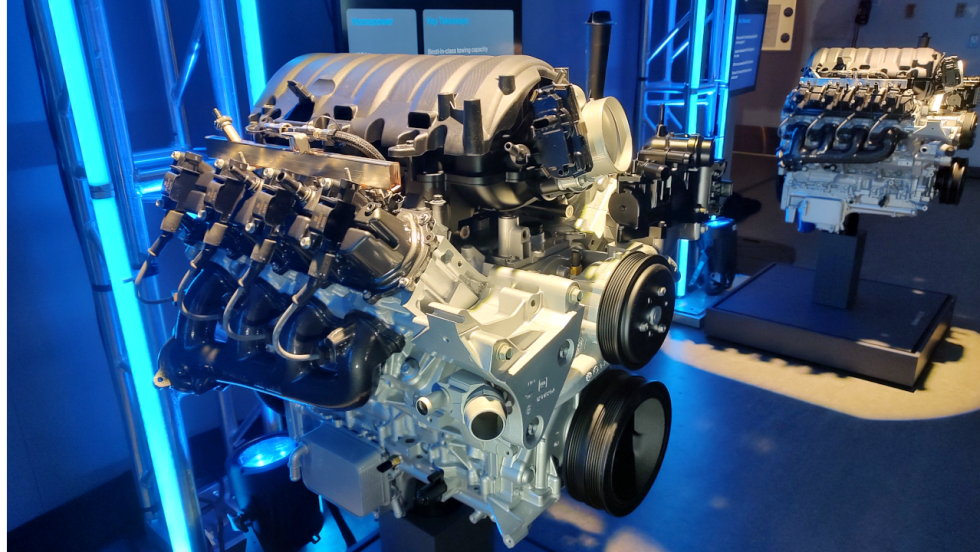
GM Unveils New Sixth-Generation Small Block Engines for 2027 Light-Duty Pickups
General Motors unveiled two new small-block engines, backed by extensive real-world validation and more than 70 years of small-block V8 manufacturing experience, as part of the engine portfolio for the 2027 Chevrolet Silverado 1500 and GMC Sierra 1500.
Read More →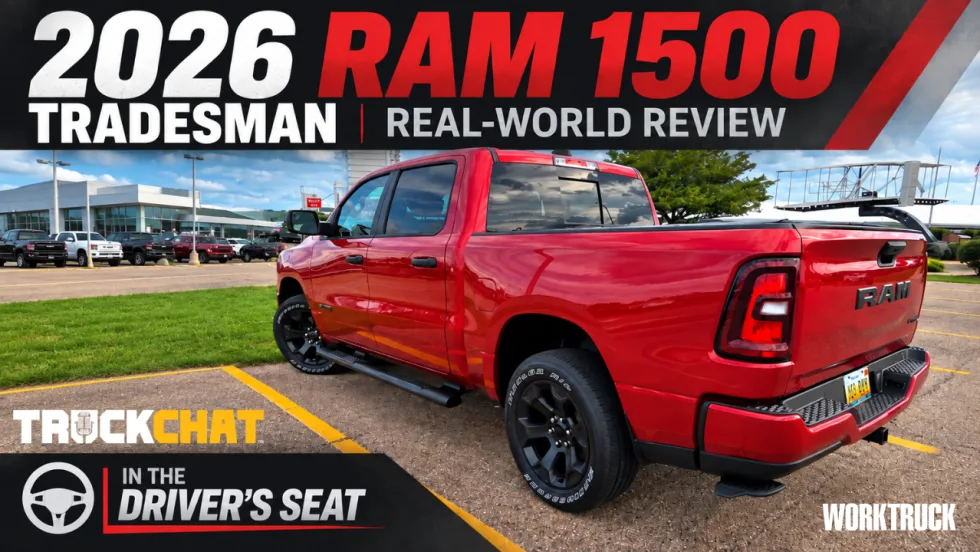
2026 Ram 1500 Tradesman Put to a Real-World Fleet Test
A few days behind the wheel of a 2026 Ram 1500 Tradesman turned into a test of visibility, parking, work-ready features, and even severe-weather driving.
Read More →
Isuzu N-Series Gas Fleet Guide: Specs, Capability and 2027 Model-Year Updates
Explore Isuzu Truck North America’s N-Series Gas fleet specs, engine performance, GVWR and payload capability, configurations, chassis dimensions, work-focused features, and 2027 model-year information.
Read More →
Chevrolet Silverado 1500 Fleet Guide Specs Capability and 2027 Model-Year Updates
The next-generation 2027 Chevrolet Silverado 1500 brings new V-8 engines, updated technology, expanded safety features, and a fleet-focused Work Truck. Here’s what commercial fleets need to know so far.
Read More →
Ram ProMaster City Fleet Guide Specs Cargo Capacity and 2027 Updates
Work Truck’s Ram ProMaster City Fleet Guide tracks the latest specifications, cargo capability, configurations, fleet technology, pricing, and model-year updates for Ram’s mid-size commercial van.
Read More →
Ford F-150 Fleet Guide Specs Capability and 2026 Model-Year Updates
Explore 2026 Ford F-150 fleet specs, engines, towing and payload capability, configurations, work features, technology, and model-year updates.
Read More →
TCI Now Sells & Supports Battle Motors’ Vocational Trucks
Midwest truck dealer Truck Centers, Inc. (TCI) has expanded its transportation solutions with sales and service support for Battle Motors’ heavy-duty vocational trucks at locations in locations in Indiana, Illinois, and Missouri
Read More →
Ram 1500 Fleet Guide Specs, Capability and 2027 Model-Year Updates
Explore always up-to-date Ram 1500 fleet specs, engines, towing and payload capability, configurations, technology, pricing updates, and model-year changes.
Read More →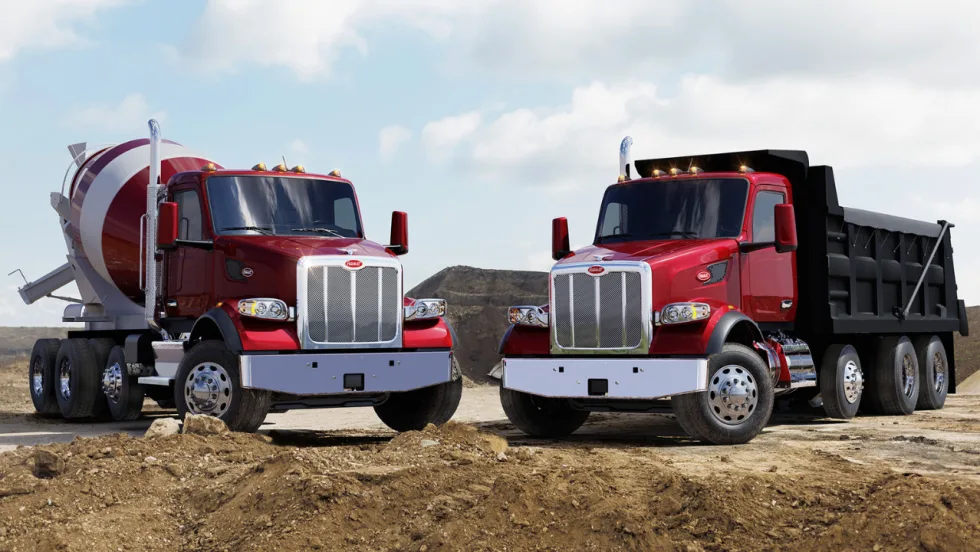
Peterbilt Trucks Equipped with Paccar TX-18 Pro Boost Efficiency for Maryland Fleet
Patuxent Companies is replacing aging trucks with the Peterbilt Model 567 and Model 589, specified with the Paccar TX-18 Pro 18-speed automated transmissions, and is reporting an 8% to 10% improvement in fuel economy.
Read More →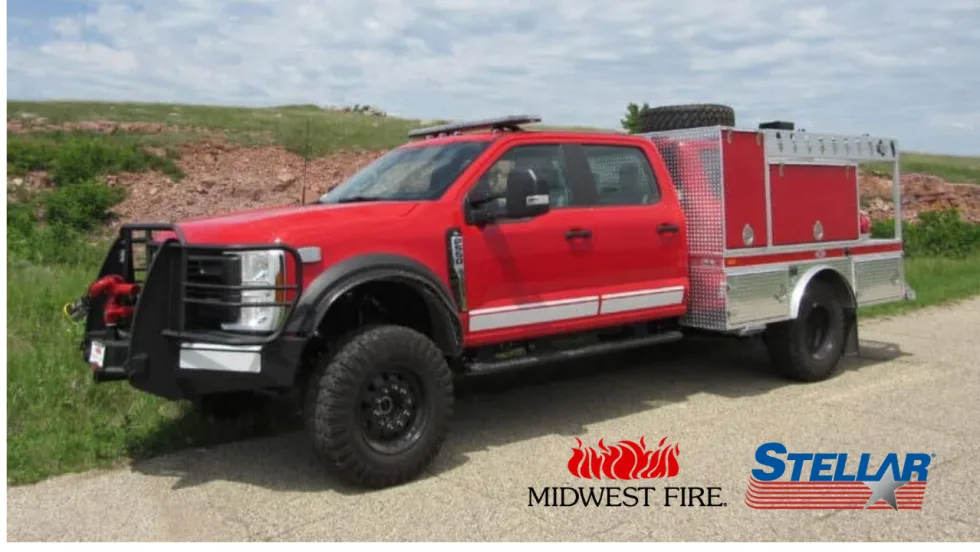
Stellar Expands into Fire Apparatus Market with Acquisition of Midwest Fire
Stellar Industries has acquired Midwest Fire, a custom fire apparatus manufacturer headquartered in Luverne, Minnesota, with nearly four decades of specialized apparatus experience.
Read More →