




Designing Better Truck Cabs for Women: What is Needed?
How can truck manufacturers design better cabs for women drivers? What are the key changes that are needed, and why are they important?

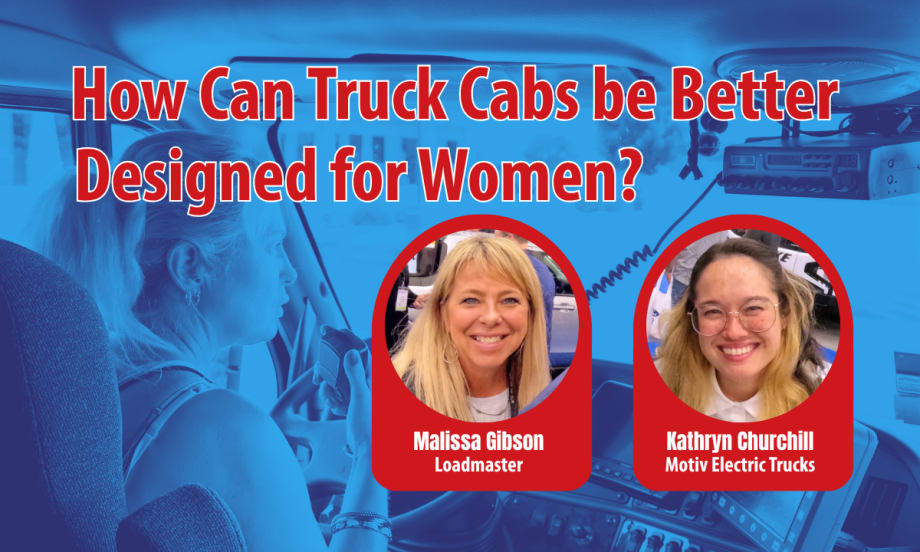
Two transportation industry professionals on a mission to make truck cabs work better for women share their insights about what features need to change or improve.
Photo: Work Truck/Wayne Parham
In a world with a constant need for CDL drivers, opportunity abounds for female drivers. However, truck cabs design can often pose challenges for women or even simply people of smaller stature. So, what features could be improved to make cabs better for women?
For Kathryn Churchill, a marketing professional at an electric truck company, the highlight of events and trade shows is climbing in and out of trucks. She is on a quest to see how every truck she ever meets could work better for women drivers.
Likewise, Malissa Gibson, a regional sales manager for Loadmaster, is also on a mission to learn what would make truck cabs better designed for women, and more inclusive for all drivers.
She co-chairs the National Waste & Recycling Association (NWRA) Women’s Council’s Cab for All Project and also serves on the NWRA & Together for Safer Roads Collaborative Project, a joint effort that has engaged a consulting firm to conduct a formal study aimed at developing a recommended standard for cab design that prioritizes inclusivity and safety.
Work Truck introduced the two mission-focused ladies and hosted a conversation to explore what truck cab design features pose challenges and where cab improvements could be made.
“Our mission on the Women's Council was to get more CDL drivers. And of course, being in a minority in the industry, women were our target. We were looking to get more drivers altogether and find a cab that's more conducive to all sizes,” explained Gibson, who has been in the industry for 18 years.
Churchill, who works at Motiv Electric Trucks, has been in the automotive space for about eight years. Prior to joining Motiv, she worked in the solar industry. She noted that solar, automotive, and trucking are primarily geared toward men.
“As driver pools start to dwindle, it seems like designing a better, more inclusive cab, whether it be for women, or for a variety of body types, is important,” Churchill said.
Truck Cab Challenges for Women
What are the features and attributes of truck cab designs that pose the key challenges for women drivers?
“As I was getting in and out of a bajillion cabs over the last couple of years, the biggest thing for me personally was reaching the pedals and ergonomics. The bare minimum is being able to put the gas pedal all the way down on the floor,” Churchill said. “As someone who's five feet and three-quarters of an inch, that seems like it would be an important one.”
She added that other challenges include ergonomics, like steering wheels that are “super big” and difficult to turn, or air vents that are harder for a shorter person to reach.
But safety also comes to mind.
“And then I would also say safety is a big one that is not considered while they designed these cabs, and I would call it like women-focused safety,” she added.
Churchill elaborated more on what she sees as safety challenges, including vulnerabilities while getting in and out of the cab when you may not be in the safest of areas, or when it’s dark. Typically, to maintain three points of contact, a driver will enter and exit while facing the cab. But, as Churchill pointed out, that means that when women do so, they have their backs turned to anything or anyone that could potentially become a threat.
In climbing in and out of trucks to check them out, Churchill once scrambled back down from a Class 7 cab facing outward, and the salesman noticed. He quickly told her she was doing it the wrong way.
Well, she explained her reasoning to him.
“I said, ‘Well, if it's dark out, I don't want to be with my butt back out to the dark area. Then on top of that, I'm climbing down and in a disadvantaged position, already going backwards, having to climb down without any visibility’,” she explained to the salesman. “I think these are things that people don't typically think about. “
Is it sometimes difficult for women when it comes to points of contact?
“I definitely value when there's at least two, if not three, points of contact,” Churchill said.
She shared how just a few weeks ago, she was getting into a cab, and since the grab bar was so high, her only grab point was the steering wheel. That left her wondering about any potential damage to the steering when it is continually used for a shorter driver to pull themselves up into the cab.
“There's all sorts of things that you know someone who's on the shorter side just wouldn't be able to reach, and so their immediate reaction is to make accommodations, and then you're now damaging the vehicle, or you're putting yourself at some kind of safety risk without having access to those things,” Churchill added.
Gibson said three topics always come up in all her groups when discussing more inclusive cab design.
Steps and points of contact for getting in and out
The layout of the cab
Seat, seatbelt, and pedal adjustability
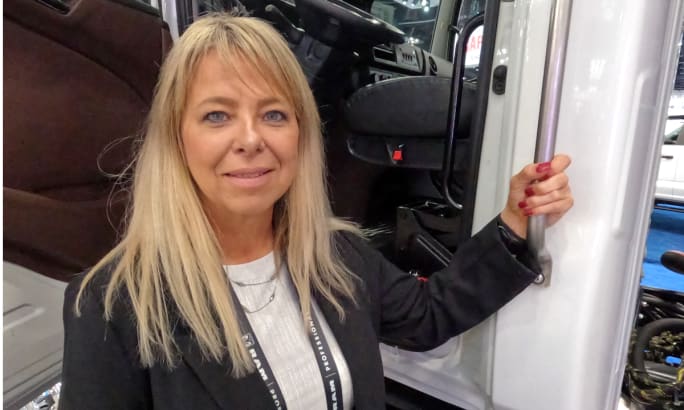
Malissa Gibson, of Loadmaster, showcases one of her company’s trucks at NTEA Work Truck Week 2025 and demonstrates a grab handle that is easily accessible for drivers on entry and exit of the cab.
Photo: Wayne Parham
Also, like Churchill shared, Gibson said that having one’s back turned while exiting a truck is a safety concern. But points of contact are also key concerns.
She pointed out how often there might be good handle placement when climbing into the cab, but the placement just doesn’t work as well for a point of contact when exiting the truck. She suggested that those grab handles could feature some adjustability, which would put them in the best position according to the varying sizes and heights of drivers.
However, accessing a cab is not just a challenge for women. Gibson pointed out that as drivers, men or women, age, it can become difficult to pull oneself up into the cab. Also, later in life, they may put on pounds, and cabs should be made more accessible for heavier drivers, too.
Churchill pointed out that truck manufacturers could design grab handles for a more inclusive placement or simply offer more of them.
Adjustability is Needed for Multiple Features
Adjustability in many of a cab’s features is needed, Gibson pointed out.
“The steering wheel is something we were talking about the other day. Not only is it large, but it's in front of the instruments. And because of the height of the females, if it were adjustable, you could see the instruments better,” she explained.
The steering wheel is not the only place truck cabs should have adjustability.
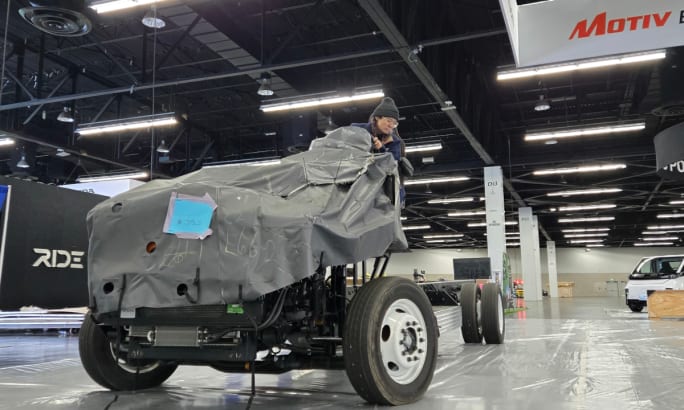
Kathryn Churchill, of Motiv Electric Trucks, drives a Motiv chassis into a show exhibit space.
Photo: Kathryn Churchill
She pointed out that while most seats offers some adjustability forward, or back, up, or down, there is still some needed improvement. However, the pedals should also offer adjustability. Additionally, seatbelts should offer more adjustability. Plus, she said, seatbelts need to have more adjustability.
“The seatbelt tends to go across a woman's throat, or a shorter person's throat, rather than fit properly. So often they won't wear it, or they'll move it to the side,” Gibson said.
“There's some kind of combination where you'll be able to reach the floor pedal, plus all of your AC vents, plus your mirrors, and you have to give them that option. There's one seat that I get into very frequently where I am not strong enough even to pull the handle to move the seat forward,” Churchill added.
Magic Wand: What Would You Change Immediately?
If Churchill and Gibson could have a magic wand and have all truck OEMs instantly make changes to trucks, what would they wish for?
“Visibility, making sure that we can see. Visibility is a big one, safety for sure, and just the general ergonomics,” Churchill answered
Along with visibility, she would want easier mirror adjustments. Sometimes, she finds mirrors difficult to reach or even hard to push or pull to adjust.
While Gibson admits she wouldn’t want to limit herself to just three design improvements, she did put comfort for the driver and safety at the top of her wish list. For her, safety also has ties to visibility.
She shared how the NWRA is focusing on safety in its research. The group has studied the distance at which a truck driver sees, or cannot see, a pedestrian in the truck's path. When there is the potential for a blind spot in front of the cab, Gibson said there are some technology-driven aftermarket options, such as 360-degree camera systems.
However, the placement of these aftermarket options needs to be where the driver can see and operate these controls safely without taking their eyes off the road.
“A big concern we're finding, for women, is to be a safe driver. They tend to be typically safer drivers than men, and these things stress them more,” Gibson added.
Such camera systems not only can increase safety for pedestrians, but also for others who may be working around the exterior of the truck, such as in the refuse industry, and can give drivers better situational awareness before exiting the cab.
“You can see more that's around the truck on all sides of it in one view if you have a bird's eye type view on your monitor. So, if you have to get out and possibly move a trash can so you can pick it up or something of that sort, or check some issue on the truck, you can see what's around all sides of the truck first, before you exit the vehicle,” Gibson added.
Are refuse, waste, and recycling truck manufacturers starting to tap into such camera technology?
“Amazon and Ryder are two companies that have done a lot of studies on safety, whether it's lights or cameras,” Gibson explained. “But actual chassis manufacturers, a few of them, started taking on some of these ideas and have some projects that should come out.”
“Like Kat said, the mirrors are not adjustable from inside, and usually you have to get out and use a tool. So, there are other options where we, as a body manufacturer, when we're installing a camera system, sometimes we will hang a camera underneath or beside the mirror so that you can move that camera to see traffic or see down the side of your truck.”
Advice for Women Who Want to Work in Transportation
Churchill said that, with a political climate changing as a result of a new administration entering the White House, some companies are removing Diversity, Equity, and Inclusion (DEI) pages from their websites. However, she points out that just because those companies may not be taking as public a stance in favor of DEI moving forward, that does not mean they no longer take pride in diversity.
“They still very much take pride in their diversity. They just can't publicly show it for whatever reason,” Churchill explained.
Her advice to women or anyone of a different stature or body type is to simply apply for the jobs they want.
“Just apply, and keep applying,” she said. “Because the right organization is going to find value in having a diverse working pool. They're going to scoop you up regardless of what's going on, and they're not going to question anything, or make you prove yourself.”
“I would just apply, and keep applying, and find the right place that welcomes you. They exist,” added Churchill.
Gibson also knows what it is to work in a male-dominated industry and suggests that women should not be afraid of it.
“Know yourself, your capabilities. As they're taking the DEI out of there, look at the companies that still focus on culture. They're looking for the differences. They're not looking at you as a male, female, ethnic group, or whatever. They're looking to be inclusive, and they will mentor you and value you,” Gibson said.
“Know your value, know what you can bring, and just have the confidence to try, and you will find your place,” she added.
Gibson also suggested that women in the transportation or trucking industries get involved in women’s groups or other groups specific to their interests. These groups provide a good support group, which will help build you up and incorporate you into the group’s mission.
Additional Insights: Recruiting Younger Generations
As the driver pool continues getting smaller as drivers age out, what will fleets do?
Churchill poses that question and wonders how fleets will get the Gen Z’s and other younger generations interested in careers as drivers.
“I think bringing in fancy new technology, or electric trucks, is going to bring in a lot of the new, younger drivers, giving them more options, and giving them the tools that make them feel like they're doing something for the environment,” Churchill said.
Sustainability is important for Churchill; it has been the focus of her career up to this point, first with a solar company and now with Motiv Electric Trucks. She stays informed on research about renewables and sustainability, and points out that studies show Gen Z and Millennial consumers are more likely to pick a sustainable brand over a non-sustainable brand.
She thinks those interests will carry over to where they seek employment as they shape out a career.
“So, as you are recruiting the younger generations, providing them sustainable options is also going to just give you a leg up,” she added, explaining how these younger workers might gravitate more to EVs than internal combustion engine (ICE) trucks.
Gibson continued with the theme of recruiting the younger generations, and pointed to the development of apps, such as voice-activated ones that allow drivers to control truck functions.
She said the chassis manufacturers will likely find that the tech they are now rolling out will be more engaging for younger drivers.
“So, if a light comes on for engine trouble, it will tell you if you can keep driving. Do you need to go somewhere? It'll find a place for you to go. It’ll tell you if they have the parts in stock, and things like that, so you don't have to worry about getting out and wrenching on your truck. That kind of technology is, it's happening. And for the younger people, they love it,” Gibson said.
The Future of Women in Trucking
The future of women in trucking, transportation, and all related industries is bright as long as professionals like Churchill and Gibson keep preaching the message and shaping change.
The momentum is there, as is the support from groups like the National Waste & Recycling Association Women’s Council, Women In Trucking, and others.
But past just talking about drivers, the industry is wide open for women who want a fulfilling career. And, they can choose from a wide range of roles.
And as Churchill said, “Just apply, and keep applying, and find the right place that welcomes you.”
More Vehicle Research
2026 Ram 1500 Tradesman Put to a Real-World Fleet Test
A few days behind the wheel of a 2026 Ram 1500 Tradesman turned into a test of visibility, parking, work-ready features, and even severe-weather driving.
Read More →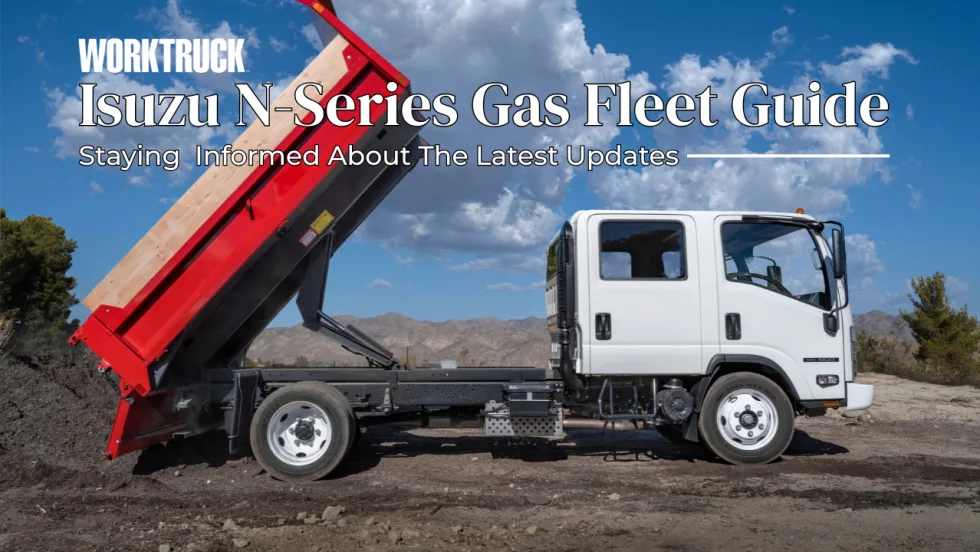
Isuzu N-Series Gas Fleet Guide: Specs, Capability and 2027 Model-Year Updates
Explore Isuzu Truck North America’s N-Series Gas fleet specs, engine performance, GVWR and payload capability, configurations, chassis dimensions, work-focused features, and 2027 model-year information.
Read More →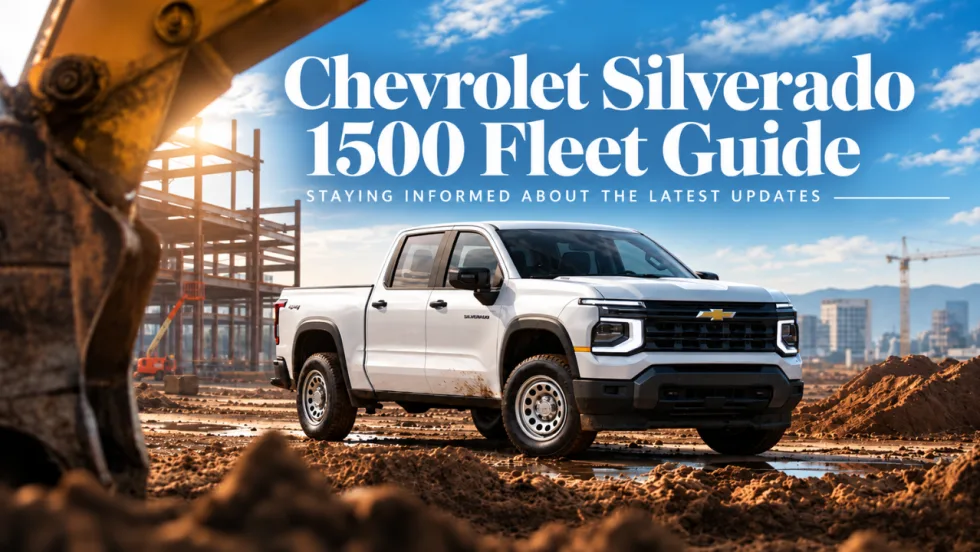
Chevrolet Silverado 1500 Fleet Guide Specs Capability and 2027 Model-Year Updates
The next-generation 2027 Chevrolet Silverado 1500 brings new V-8 engines, updated technology, expanded safety features, and a fleet-focused Work Truck. Here’s what commercial fleets need to know so far.
Read More →
Ram ProMaster City Fleet Guide Specs Cargo Capacity and 2027 Updates
Work Truck’s Ram ProMaster City Fleet Guide tracks the latest specifications, cargo capability, configurations, fleet technology, pricing, and model-year updates for Ram’s mid-size commercial van.
Read More →
Ford F-150 Fleet Guide Specs Capability and 2026 Model-Year Updates
Explore 2026 Ford F-150 fleet specs, engines, towing and payload capability, configurations, work features, technology, and model-year updates.
Read More →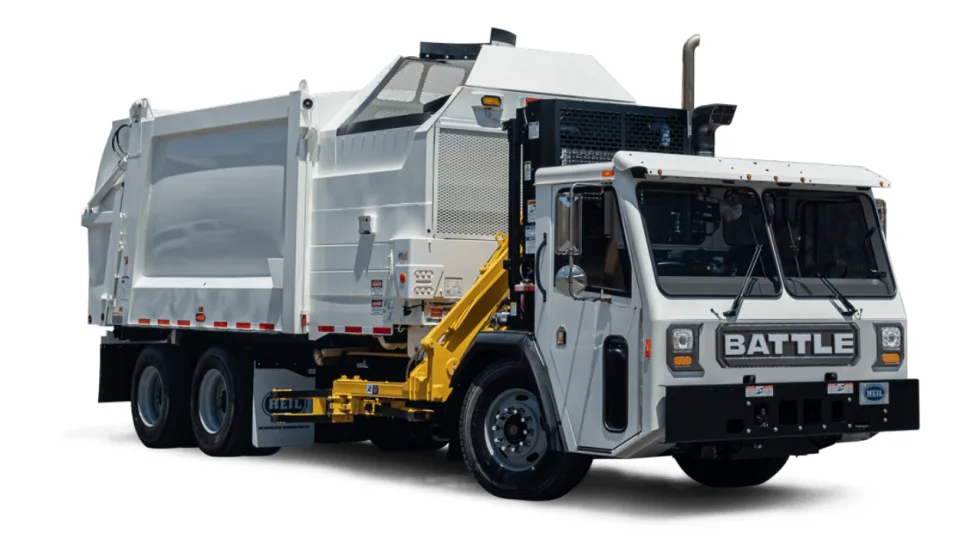
TCI Now Sells & Supports Battle Motors’ Vocational Trucks
Midwest truck dealer Truck Centers, Inc. (TCI) has expanded its transportation solutions with sales and service support for Battle Motors’ heavy-duty vocational trucks at locations in locations in Indiana, Illinois, and Missouri
Read More →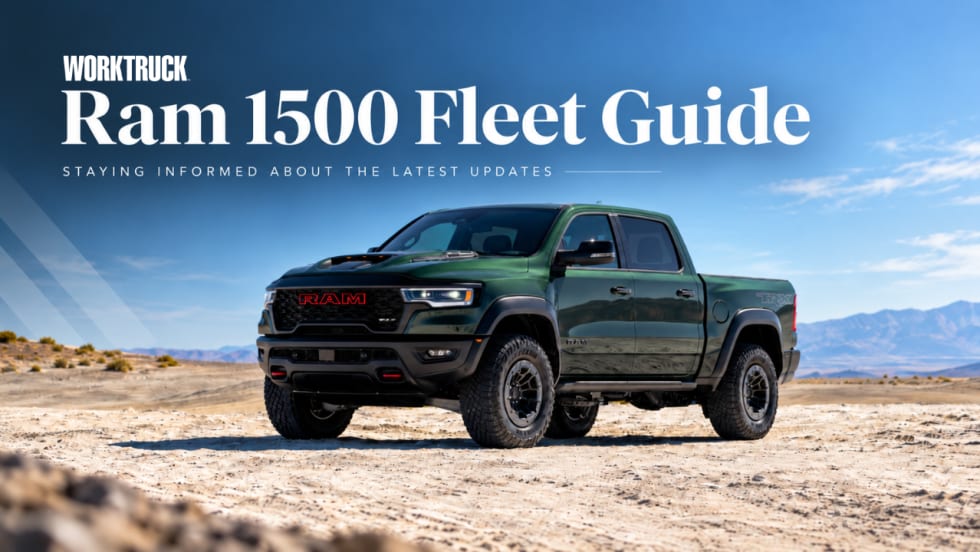
Ram 1500 Fleet Guide Specs, Capability and 2027 Model-Year Updates
Explore always up-to-date Ram 1500 fleet specs, engines, towing and payload capability, configurations, technology, pricing updates, and model-year changes.
Read More →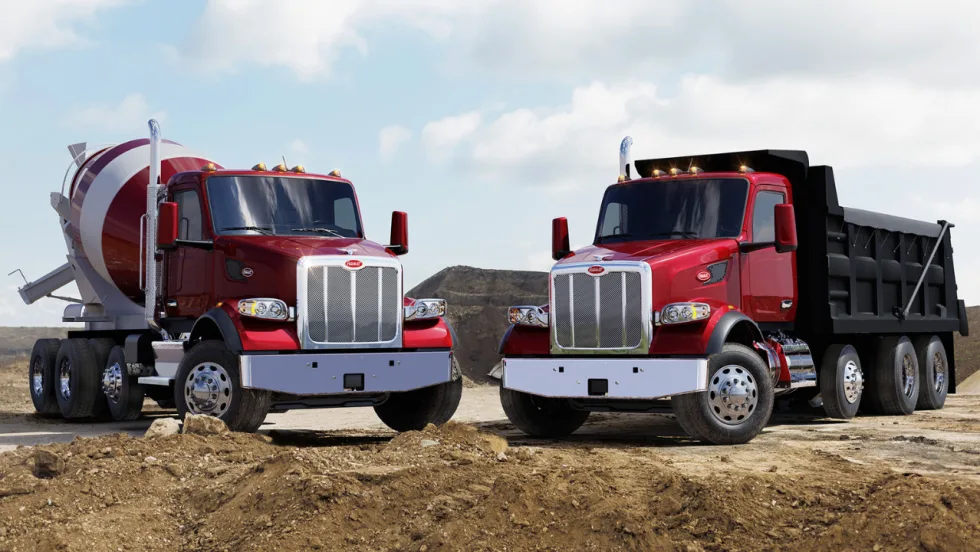
Peterbilt Trucks Equipped with Paccar TX-18 Pro Boost Efficiency for Maryland Fleet
Patuxent Companies is replacing aging trucks with the Peterbilt Model 567 and Model 589, specified with the Paccar TX-18 Pro 18-speed automated transmissions, and is reporting an 8% to 10% improvement in fuel economy.
Read More →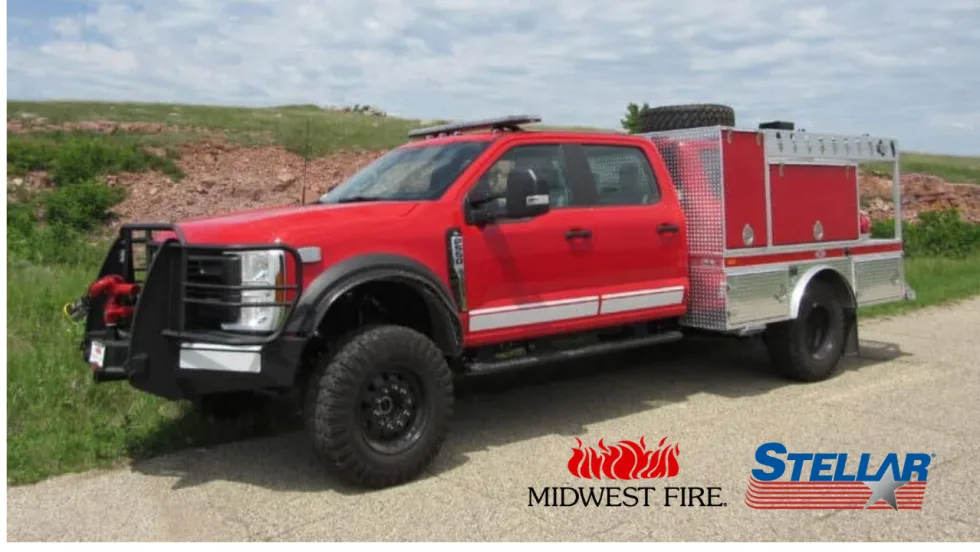
Stellar Expands into Fire Apparatus Market with Acquisition of Midwest Fire
Stellar Industries has acquired Midwest Fire, a custom fire apparatus manufacturer headquartered in Luverne, Minnesota, with nearly four decades of specialized apparatus experience.
Read More →
Recalls You Need to Know About in August 2026
If you have Altec, Chrysler, Ford, Heil, General Motors, International, Mack Trucks, Paccar, Rivian, Royal Truck, Toyota, US Truck Body, or Volvo Trucks vehicles in your fleet, you should check these important recalls issued by the National Highway Safety Administration.
Read More →