





Related: Fewer Railcar Constraints but Transporter OTD Issues Persist
Chassis Shortages & COVID Infections Impact Upfitter OTD
Upfitters experienced a whipsaw effect of robust fleet orders straining their pre-pandemic production capacity and within the space of a month were struggling with chassis shortages due to the suspension of vehicle production.
September 29, 2020
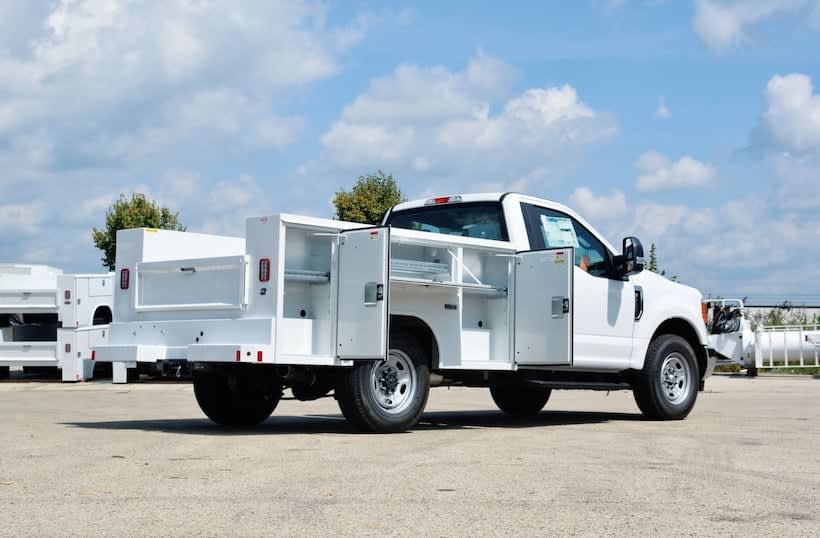
Photo: Auto Truck Group
5 min to read
Prior to the pandemic, business was very robust for fleet upfitters, sometimes straining their normal production capacity. Strong demand for light- and medium-duty trucks in the pre-pandemic 2020 model-year was a case of good news/bad news.

[EMPTY CREDIT]
The good news was that the upfitter business was strong. The bad news was that the increase in the volume of chassis requiring upfitting sometimes caused jobs to back up, lengthening order-to-delivery (OTD) times.
“During the pre-pandemic period, we saw some delays in getting vehicles picked up from the upfitter when utilizing ship-thru. We were also impacted significantly as the OEMs continue to have issues with missing the ship-thru destinations,” said Tim Cengel, senior procurement manager for Wheels Inc.

[EMPTY CREDIT]
This assessment was also shared by ARI. “Prior to COVID, there were no major upfitter-related supply chain issues to address. Some production schedules had minor delays due to a brief work stoppage in late November, and a temporary shutdown due to isolated storm damage,” said Ted Davis, vice president, North American supply chain for ARI. “The extensive delays began as upfitters began to emerge from the initial COVID-19 pandemic response.”
This observation was likewise cited by Enterprise Fleet Management. “Many AME (aftermarket equipment) vendors saw increased volume that resulted in longer lead times,” said Angie Lauer, assistant vice president of vehicle acquisition for Enterprise Fleet Management. “We also saw an uptick in the number of missed ship-thrus and increased dwell time at AME ramps as we waited for OEMs to pick up vehicles and have them re-enter the OEM shipping and logistical system.”
OEMs Suspend Production
Upfitter throughput of completed units began to slow tremendously as COVID infections began to spread and as OEM plants temporarily suspended new-vehicle production.

[EMPTY CREDIT]
“Upfitter timeframes had seemed to have leveled off prior to COVID, but still a bit on the longer side but consistent,” said Matt Miller, vehicle status specialist for Donlen. “After COVID there seemed to be disruptions that could be two-pronged. One end could be disruptions due to labor shortages from actual COVID positive cases and/or potential exposure and quarantine. The other impact could be from delays in commodities and/or parts supplies due to COVID disruptions.”
During the March to May timeframe, there was a noticeable lengthening in order lead times for upfitted units.
When the OEMs suspended new-vehicle production in mid-March 2020, there quickly emerged a shortage of truck and van chassis, which brought some upfit work to a halt.

[EMPTY CREDIT]
“Throughout much of April and May, the pandemic forced most upfitters to alter their business operations rather significantly. Whether it was overcoming furloughs, adjusting to operational shifts being eliminated, or accommodating reduced/staggered staffing due to social distancing guidelines, virtually all upfitters dealt with some form of reduced production capacity,” said Davis of ARI. “And while several upfitters were able to work through pre-COVID production backlogs, many production lines came to a standstill as upfitters awaited chassis from the manufacturers.”
In addition, there were delays in getting vehicles built at OEM assembly plants in Mexico because they resumed production later than their U.S. and Canadian counterpart assembly plants.

[EMPTY CREDIT]
“There were some delays with the upfitter for Dodge ProMasters in Saltillo, Mexico. The OEM and the upfitter were slower to come online than the rest of the plants in the U.S.,” said Troy Peterson, vice president operations – vehicle management for LeasePlan USA.
Despite the shortage of chassis, some upfitters remained open during the COVID infections and the suspension of new-vehicle production. These upfitters took advantage of this time to build out their backlog of vehicles.
“Not all upfitters shut down during COVID and for those that did, they shut down for less time than the OEMs,” said Cengel of Wheels Inc. “This meant upfitters were completing vehicles while the OEMs were not shipping, creating a backlog of vehicles that needed to be put into OEM traffic once the plants opened back up.”

[EMPTY CREDIT]
Merchants Fleet also cited improved delivery of upfit units because larger upfitters remained open during the pandemic. “They did not create roadblocks or delays for delivery of vehicles. Because many of the upfitters we worked with stayed open as much as they could during the pandemic, it helped to keep almost 50% of our vehicles moving through the order-to-delivery timeframe on normal schedules,” said Candice Groth, director of operations, fleet acquisitions for Merchants Fleet.
“During the pandemic, OEMs and upfitters communicated extraordinarily good allowing FMCs to keep clients up to date in real-time. Though the plants were shutdown for two months the impact of the shutdown was not as significant as we anticipated. I believe the reason was because the OEMs allowed car haulers to continue to load vehicles and deliver them to upfitters and/or dealerships,” added Groth.
However, a number of upfitters struggled during the temporary suspension of new-vehicle production, in particular smaller regional upfitters.
“Smaller local upfitters, where our vehicles were drop-shipped, struggled more so to keep within realistic timeframes to complete vehicles timely. Reasons provided were lack of supplies, short staffed due to social distancing in the shop, or they were simply closed,” said Groth of Merchants Fleet.

[EMPTY CREDIT]
OEMs Resume Production
Even after the reopening of assembly plants there was a lag before upfitters began receiving newly built chassis.
“Regional upfitter closures existed beyond the mid-May OEM reopening. Additionally, those upfitters that maintained operations throughout the pandemic did so by eliminating contingent labor, reducing total labor force, scaling back operational capacity, and working in shifts all while continuing to maintain appropriate social distancing,” said Eric Miller, director – stock ordering & order fulfillment for Element Fleet Management. “While these measures were effective in allowing for continued operations, they had a detrimental impact on total wing-to-wing cycle time.”

[EMPTY CREDIT]
The delivery of chassis resumed in May 2020, and the demand for truck and van products continues to remain high, which continues to constrain production throughput. “Due to the extremely high demand for vans, the upfit network is still very overwhelmed with work. There are many large groups of orders going through the system, and the ability to hire and retain quality employees is a challenge,” said Steve Armstrong, manufacturer relations manager for Mike Albert Fleet Solutions. “The upfitter groups are in the same position as the OEMs with new safety protocols and employee absence due to COVID. This slows the process down even more, makes it difficult to manage the workload, and is then very hard to set expectations to the client/FMC.”
The fleet industry anticipation is that longer lead times will continue. “While many upfitters were able to adapt quickly and OEM production continues to ramp up, the reality is that there’s likely to be a bottleneck for the foreseeable future, which will likely result in longer-than-normal lead times over the next several months,” said Davis of ARI.
Originally posted on Automotive Fleet
Subscribe to Our Newsletter
More Upfitting
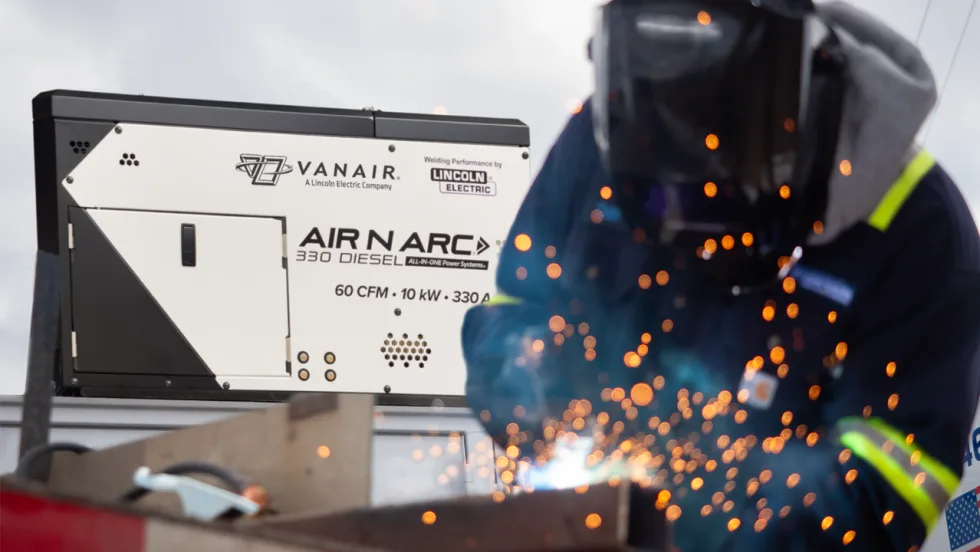
Multitasking: Vanair’s Air N Arc 330 Diesel 60 CFM All-In-One Power System
The Air N Arc 330 Diesel 60 CFM from Vanair consolidates a welder, generator, rotary screw air compressor, battery booster, battery charger, and EV charger into a single 750-pound enclosure driven by one 24.8-horsepower Kubota diesel engine.
Read More →
Buyers Products Awarded Sourcewell Cooperative Purchasing Contract for Snow & Ice Equipment
Buyers Products has been awarded a Sourcewell contract for a wide range of winter maintenance equipment and accessories, including snowplows, municipal plow systems, wing plows, spreaders, and more.
Read More →
Hilltip Introduces the SnowStriker SFT Flex Expandable Box Plow
Hilltip’s new SnowStriker SFT Flex expandable box plow features hydraulically extendable sections that allow operators to adapt the clearing width to changing conditions and applications on the go.
Read More →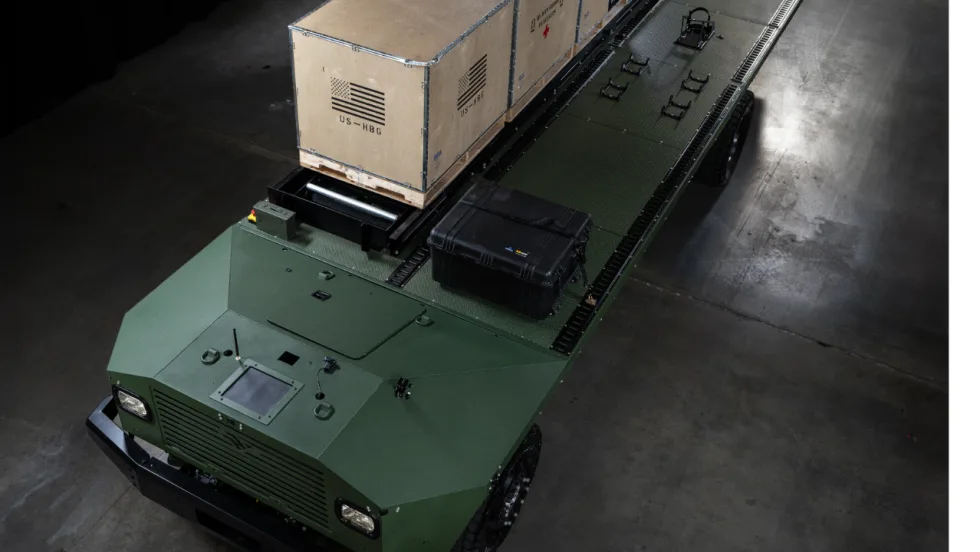
Harbinger Part of Effort to Deliver Autonomous Logistics Capabilities for U.S. Army
American Rheinmetall received an 18-month U.S. Army contract to deliver autonomous, hybrid-powered uncrewed ground vehicles. Harbinger is providing the truck platform for those vehicles.
Read More →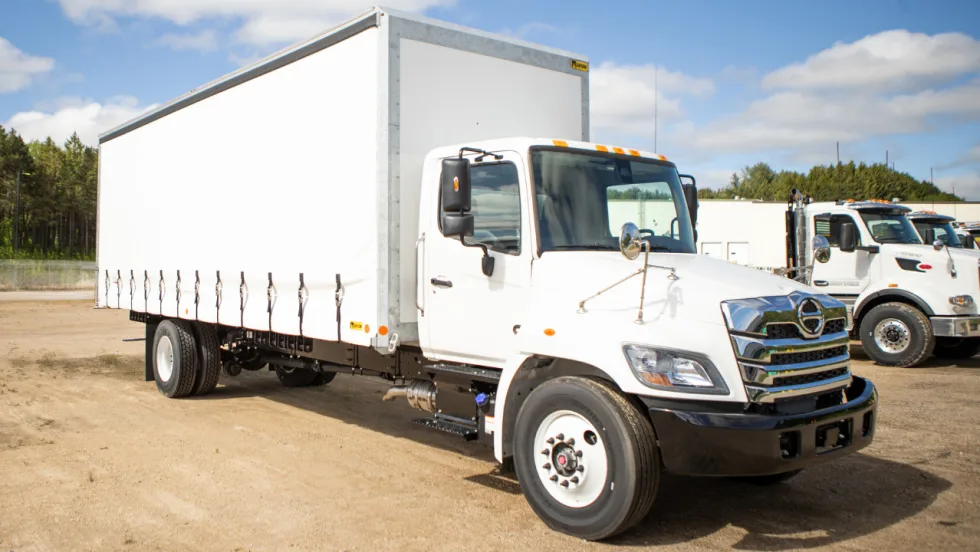
Thinking Outside of the Box: Choosing the Right Truck Body for Your Fleet
Choosing the right truck body can have a major impact on loading efficiency, cargo protection, downtime, and long-term operating costs. Here’s how dry vans, platforms, and curtainsiders compare, plus what fleets should consider before spec’ing their next truck.
Read More →
Fourth Annual Upfit Package of the Year Awards Open for 2027 Entries: One Month Left!
Think your upfit deserves industry recognition? Enter the 2027 Work Truck Upfit Package of the Year Awards before the Sept. 30 deadline. There is less than a month left to get your submissions in!
Read More →
Reading Truck Equipment & Masterack Unite as One of North America's Largest Commercial Vehicle Upfit Networks
Reading Truck Equipment and Masterack have integrated operations to create one of North America's largest and most comprehensive commercial vehicle upfit organizations.
Read More →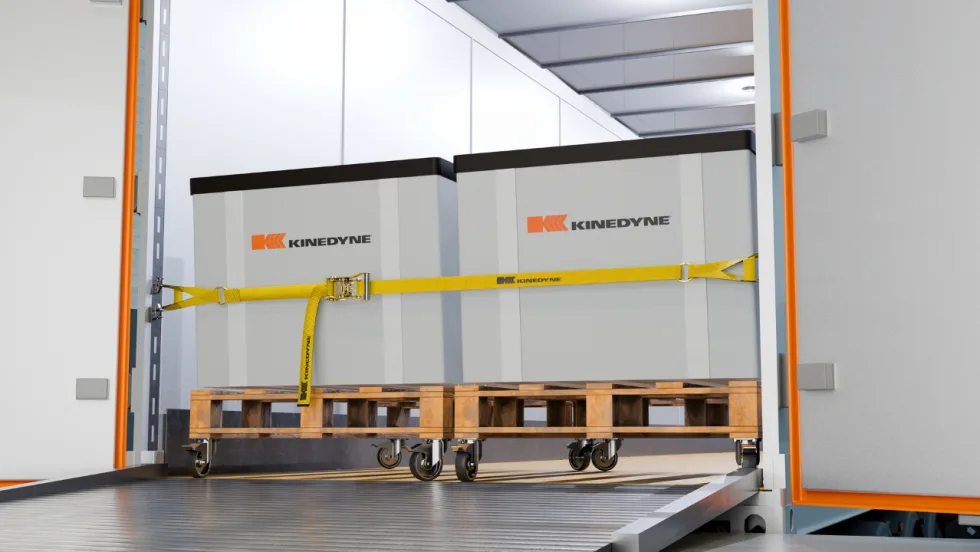
Kinedyne Launches Heavy Duty Logistic Shoring Strap
Kinedyne’s new Heavy Duty Logistic Shoring Strap features a patent-pending four-point design to deliver greater cargo stability, increased strength, and easier handling for rolling and shifting freight.
Read More →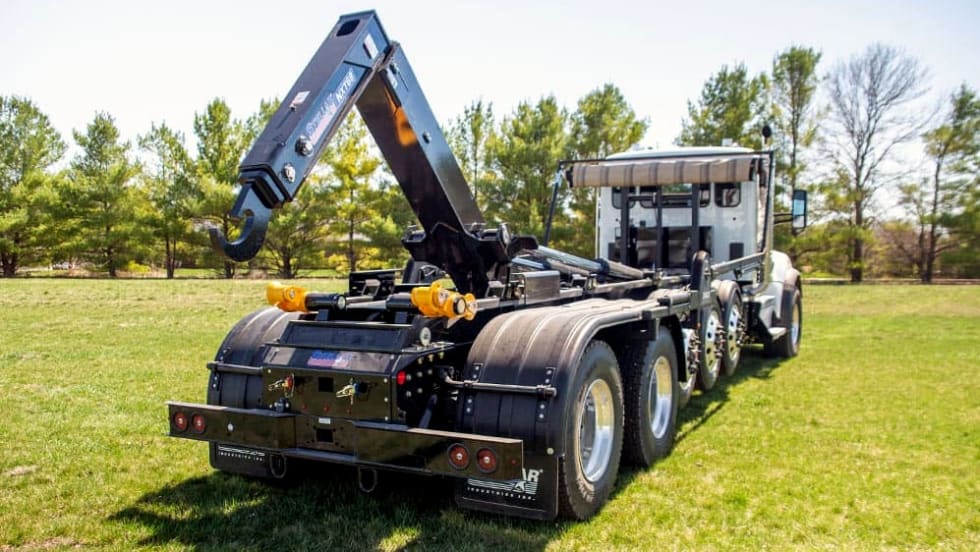
Hooklift Bumper Design from Stellar Showcases Strength & Versatility
Stellar Industries’ new bumper for the NZT Series Hooklifts come in two capacity options: the 20K, designed for Class 3 – 6 chassis with a 20,000-pound pull capacity, and the 90K, built for Class 7 and 8 chassis with a 90,000-pound pull capacity.
Read More →
Maxon Lift Awarded the Wabash Platinum Award for Supply Chain Performance
Maxon Lift, a liftgate manufacturer since 1957, received the Wabash Platinum Award for supply chain performance in 2025. Each year, Wabash presents awards to top suppliers for excellence in supply chain performance.
Read More →