





Related Article: Mastering the Details to Create Reliable EV Charging
Charging Strategies Crucial to Deploying Electric Fleet Vehicles
Whether plugging in EVs at work, at home, or in public, a fleet operation must take the steps and do the research to determine the most efficient and time-saving balance of infrastructure.
December 22, 2021

The route to successful and lasting fleet electrification is to link the components of the entire EV value chain, including the right EVs for fleet usage, charging infrastructure, energy management, software, telematics, computers, and batteries.
Photo: Penske
8 min to read

Most fleets will need some directed combination of charging -- at work facilities, at employee homes, and/or at public access points.
Photo: The Climate Group
One lesson fleet managers learn quickly with new electric vehicles is you don’t just plug them in for eight hours a night at a workplace like sleeping dogs and then see them bounce and ready to roll the next morning.
That may work for a perfectly scheduled fleet with daily regimented duty cycles and drivers who report to their job sites, but the reality of a diversified company with various transportation needs dictates otherwise.
Most fleets will need some planned combination of charging — at work facilities, at employee homes, and/or at public access points. This is even more relevant in a pandemic era when many employees and drivers are based out of their homes or at satellite offices and sites.
A panel at the November 2021 Fleet Forward Conference armed with data insights and fleet experience explored how to find the right charging strategy among the three leading options of work, home, and public depots. Panelists included: Muffi Ghadiali, head of Ford Pro Charging for Ford Motor Co.; Elise Benoit, head of marketing and commercial communications for Enel X — North America; and Aleece Beaulieu, senior program manager of transportation at Genentech.
EV-Charging Connectivity
“With electrification, we're in a whole new world,” Ghadiali told the audience. “EVs and charging go hand-in-hand now that we have a new infrastructure that needs to be deployed.”
Setting up an electric vehicle and accessing an electric source can be done by anyone, he said. “You can fill up your vehicle anywhere you have electricity at home, on a public station, or even at depots. That creates some interesting opportunities but problems as well. One thing going for all of us is the fact everything is connected and can be tracked, monitored and analyzed.”
Ever-advancing telematics systems are opening up data to help fleet operations plan usage and duty cycles, Ghadiali said. Among questions to consider: How do you minimize the energy cost with the benefit of telematics and geo-location? What is the state of charging and how much energy does your fleet need for the next day?
Most EVs will be connected to data and monitoring tools, along with the charging stations, Benoit of Enel X added. “It allows fleet managers to not only optimize the number of cars they need and where they will be charging, but also how sustainably they are charging, because one of the goals of electrification is sustainability.”
Charging stations connected to the internet can help fleet managers pinpoint the best locations and times that will ensure vehicles are ready, she said. “They can support different use cases and routes, while figuring out where and when to charge to make sure the electricity being used is as clean as possible.”
Utilities Ease Charging Set Ups
The first thing to do when electrifying any fleet is to see how that fleet operates now, based on duty cycles, usage, telematics data, and GPS, Benoit said. Then engage with the utility as soon as possible to determine local energy capacity, such as available transformers, and see which charging option and regimen works best. Overall, utilities offer many incentives to support electrification with programs to help set up infrastructure for fleet operations.
“The ability to take advantage of all these incentives is very important,” Benoit said. “That’s one of the main reasons to start talking to your utility quickly. They usually have certification programs for charging equipment.” Smart charging stations are the ones most likely to qualify because they can use data to distribute the power flow most efficiently.
“Utilities are very willing to work with fleet managers for that reason,” Benoit said. “They are key to electrification.”
The 3,300 utilities across the U.S. vary in EV-related advancements and charging management, Ghadiali said. They generally see EVs and electrification as a net positive for them because it’s an opportunity to increase their base and become more valuable to their customers while growing their business. Most now have sustainability and fleet programs as well.
“Fleets considering any form of electrification should make sure they think beyond the vehicle,” he said. “The vehicle actually will be the easy part. They’ll show up in large numbers. It's the infrastructure, utility engagement, and energy management where the focus should be.”
Charging @ Home
At Genentech, Beaulieu manages a field fleet where about 85% of charging is done at employee homes. Since the vehicles are in service most of the time at a small campus with many different activities and resting at night, Level 2 charging fits best, she said.
For Genentech, moving to an all-electric fleet to halve the company’s overall emissions by 2030 was straightforward, Beaulieu said. The challenge was to get home chargers to the salesforce.
Among the questions to consider: “What planning and approvals are needed? How do you execute it?” she asked. “You need to plan for this. Some of those first things we did to plan was an analysis of the economic and technical feasibility of going electric, for our site and fleet. It really varied by geography if people were able to go fully electric or plug-in electric or if it just didn't work and they had to be in a hybrid. We went to the leadership and said we think this is the right thing to do.”
After deciding on Level 2 home chargers, the company had to find a supplier and figure out how to get chargers to the employees. They also had to assess each employee home’s location and flexibility, and the preference for charging options.
One challenge with home chargers is whether to install them at rented homes, either on single lots or in complexes. Shared meters require more attention for figuring out reimbursements while fleet operations should consider how long someone will be living in a home. Chargers also depreciate over time and need replacing. And EVs that charge nightly need dedicated parking spots.

A Fleet Forward Conference panel on charging strategies and options included experts (L to R) Elise Benoit, head of marketing and commercial communications for Enel X — North America; Muffi Ghadiali, head of Ford Pro Charging for Ford Motor Co.; and Aleece Beaulieu, senior program manager of transportation at Genentech. Bobit content director Martin Romjue (far left) moderated the panel.
Photo: Ross Stewart, RMS3Digital
Getting Smarter with Charging Data
One challenge for electrified fleets is to find the best resource for integrated data, so electric consumption and costs can be accurately tracked and analyzed. Public, depot, and home charging depends on specific use cases. The duty cycles will determine the mix of charging infrastructure.
“It’s not one or the other, it’s all of the above. In terms of data, we're going to get data from smart chargers and from telematics,” Beaulieu said.
When you have different chargers, you can charge on different networks and use the data from them. The ability to set up home charged fleets supplemented with apps to use at public charging spots will support many EV use cases and smooth out access hurdles, Beaulieu said.
Enel X has aggregated more than 63,000 public charging stations accessible via growing networks, Benoit said. “The point here is that fleets are in the business of running their business. They are not in the business of charging vehicles or owning and maintaining those vehicles. And the same is true with home charging.”
A turnkey program with home chargers, installation, and maintenance operations can reduce friction points and ease the transition to electrification, Benoit added. “The way we think about this is you want to create that easy button. You as a fleet manager don't have to worry about piecing all this together. This problem is across the board. It’s a matter of stepping back and looking at what are the missing pieces of putting them together?”
The route to successful and lasting fleet electrification is to link the components of the entire EV value chain, Ghadiali said. Those include the right EVs for fleet usage, charging infrastructure, energy management, software, telematics, computers, and batteries.
“You are a data stream coming into the cloud. You've got lots of cloud computing to process all the data. The value of the innovation is going to be around how you put these solutions together in a way that makes sense for the fleet manager and for the fleet customer.”
Meshing telematics and mapping with charging data will yield more insights to efficient operations. “All of the pieces are already there,” Ghadiali said. The real value will be how to put it all together in a seamless manner.”
Benoit cited Enel X’s example of smart chargers, a software that manages them, and then an IoT platform that gathers data so the chargers can be responsive to the power grid. “There's no big breakthrough. A lot of the technology is there. Now it's execution, and then ensuring you’re making it easy for people who are charging and for fleet managers to implement.”
Electrified Cost Savings
Ghadiali noted that as OEMs commit to more sustainable vehicles, they are creating easier and more unified EV and charging options for drivers that go beyond the luxury class of vehicles.
Among total cost of ownership (TCO) savings, Beaulieu cited 15,000 miles a year on average will generate about $2,000 in fuel savings. “We’re expecting as people return to work and get out there in the field, they will start realizing more savings.” Genentech also measured drivers with chargers versus those without them and found employees with Level 2 home chargers are getting 13 more “miles per gallon” that those without.
Benoit added that while savings can vary based on utility rates and location, the aggregate data shows about a 40% savings on the fuel side. Aside from running cleaner, EVs also need fewer moving parts which reduces maintenance and repair costs. Savings can range about $6,000 to $10,000 per year for light duty EVs.
Not many EV users argue about savings since it’s been proven and dissolved doubts, she said. “Not a single customer we talked to needs convincing that they need to move to electric vehicles. It's a question of how fast, when and where.”
Topics:Fleet Forward ConferenceEV Charging Stationscharging infrastructureFleet electrificationGreen Fleet
Originally posted on Charged Fleet
Subscribe to Our Newsletter
More Green Fleet

Fleet Forward Conference Introduces One-Day Passes for 2026
New one-day registration gives fleet professionals the flexibility to attend Tuesday, Wednesday, or Thursday, with passes available for $199 through Sept. 18.
Read More →
CALSTART Rebrands as Catalyst Mobility, Will Combine with Forth in 2027
CALSTART has rebranded as Catalyst Mobility and will combine with Forth at the start of 2027. The new organization said it is poised to become one of the world's largest, strongest, and most impactful clean transportation nonprofits.
Read More →
Electric Truck and Charging Programs to Boost Sustainability at NY & NJ Ports
Together, the Port Authority of New York and New Jersey and CALSTART will electrify drayage and terminal operations serving the East Coast’s busiest container port. A pair of incentive programs totaling $45 million has launched to accelerate adoption of zero-emission drayage trucks and terminal tractors.
Read More →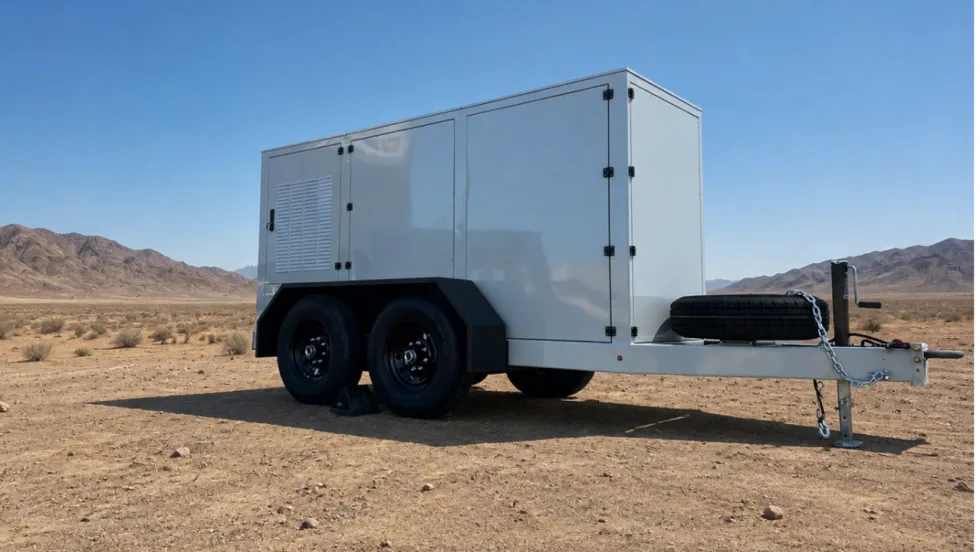
Xos Hub Surpasses One Gigawatt-Hour of Energy Delivered in the Field
A single Xos Hub has surpassed one gigawatt-hour of energy across more than 33,600 charging sessions in the field, demonstrating performance that supports Xos' expansion across new products and markets.
Read More →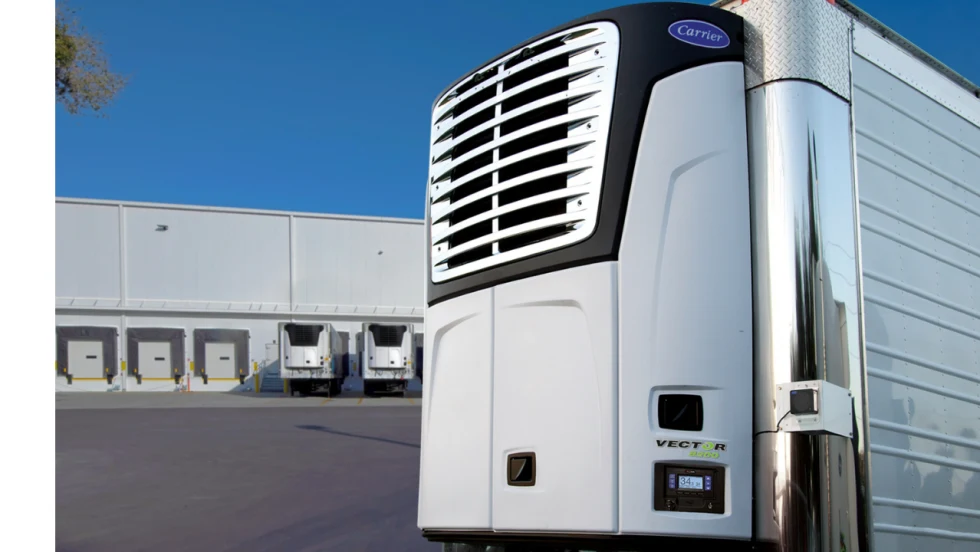
Carrier Transicold Launches All-Electric Vector 8200 TRU for Diesel-Free On-Site Cold Storage
Carrier Transicold’s first engineless multi-temperature TRU helps fresh- and frozen-food fleets add supplemental cold storage capacity during seasonal peaks.
Read More →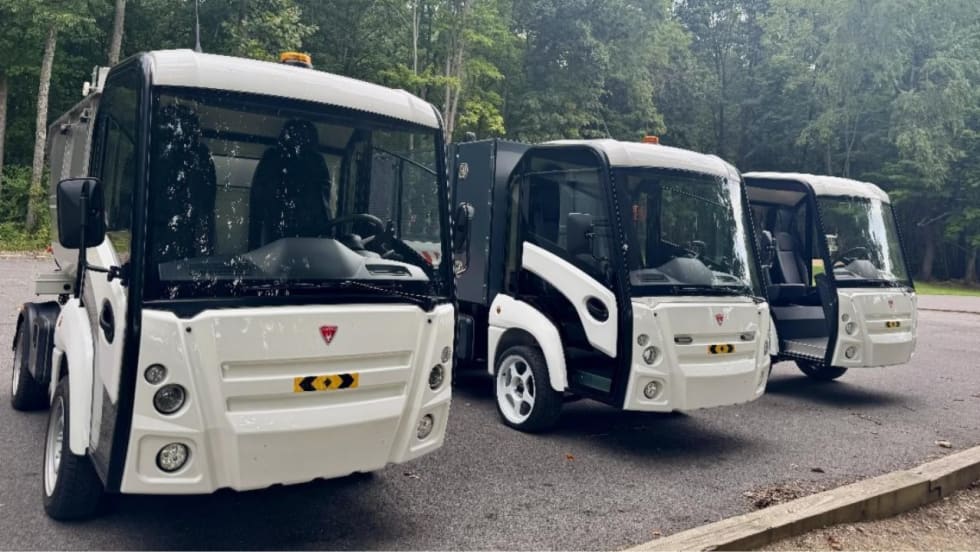
Narro Trucks Introduces Electric Utility Vehicle
Narro Trucks officially launched its operations on Aug. 20 and hosted a ride and drive to showcase its electric truck, which will be produced in Virginia.
Read More →
Samsung SDI Takes Full Control of GM Battery JV as Indiana Plant Pivots to Energy Storage
Samsung SDI is taking full control of its Indiana battery plant with GM, marking a major shift from the EV-focused joint venture Charged Fleet first covered in 2023.
Read More →
NWSA Taps CALSTART to Administer Zero-Emission Drayage Assistance Program
CALSTART will provide free technical assistance services to drayage fleets serving the Ports of Seattle and Tacoma and looking to transition to cleaner technologies and help decarbonize freight hubs.
Read More →
EV Fleet Reality Check: What Operators Wish They Knew Before Electrifying Their Work Vans
Electric work truck upfits bring new compatibility questions. Learn how parts availability, OEM guidance, power demands, and route planning can affect fleet performance.
Read More →
Peterbilt Expands Sourcewell Partnership with Electric Vehicle Lineup
Peterbilt Motors Company’s cooperative purchasing agreement with Sourcewell and its Canadian partner, Canoe Procurement Group, now includes including Peterbilt's battery-electric vehicle lineup.
Read More →