




From the Archives: How Poor Driver Behavior Costs Fleets
Capturing Robust Service Data Improves Fleet Operational Cost Analysis
Learn how fleets can use historical service data to improve operational cost analysis, extend vehicle lifespan, and plan for procurement challenges.
by Rachael Plant, Fleetio
June 3, 2024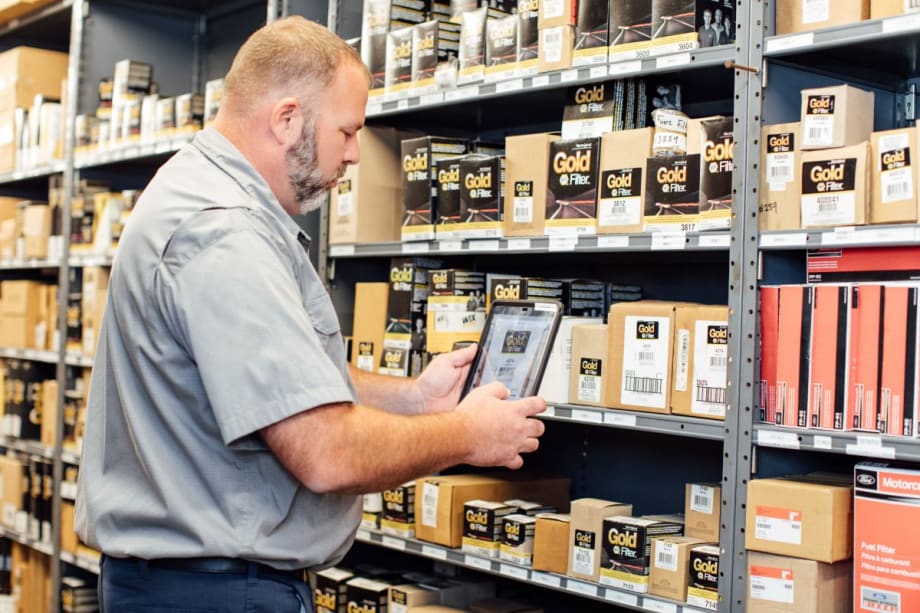
Optimizing service processes based on OCA findings helps extend asset lifecycles and reduces overall service spend — and parts inventory overhead — to provide flexibility in the budget for procurement.
Photo: Fleetio
6 min to read
It's becoming increasingly important for fleets to maximize their assets' useful life these days, and not just for good return. Between high-interest rates and global economic uncertainty, cost and lead times influence future vehicle acquisitions.
Fleets can use detailed historical service data to help create an operational cost analysis for strategic vehicle lifespan extension and procurement planning.
Understanding Cost and Procurement Challenges
The pandemic kicked off a string of supply chain issues, causing lengthy delays in procuring both new vehicles and replacement parts; however, these issues are now exacerbated by multiple global conflicts. Port obstructions have played a significant role in delays and increased costs in the Middle East.
According to The Harvard Gazette, Adel Hamaizia, a research fellow in the Middle East Initiative of the Kennedy School's Belfer Center for Science and International Affairs, explains that "roughly 30% of global shipping has been affected [due to a maritime chokehold caused by aggressions in the Red Sea], resulting in a 43% drop through the Suez Canal and a 60% increase around Cape of Good Hope, a longer and vastly more expensive route."
In addition to port issues abroad, the Francis Scott Key Bridge incident is also likely to affect lead times. According to the Bureau of Transportation Statistics, "The Port of Baltimore is among the top 20 ports in the United States by tonnage and number of containers handled [...] and is a major hub for the import and export of motorized vehicles."
Aside from the physical movement of goods, economic sanctions and crude oil access play a major role in asset procurement costs. Despite new and previous sanctions on Russia by the U.S. and E.U., the country's economy has not suffered. This may be partly due to Russia selling oil at higher prices with OPEC+ members extending voluntary output cuts.
According to Spiegel Business, "Russia was able to sell its oil last year at significantly better prices than the planned cap of $60 per barrel. One factor for this was the capping of production volumes decided jointly by Saudi Arabia and Russia." On top of that, the U.S. Energy Information Administration now forecasts "significantly less global oil production than world oil consumption through the first half of 2024, requiring draws on world petroleum stocks [which] tend to increase oil prices."
All of these factors coordinate to directly impact the pricing and availability of goods that the U.S. imports. Because it relies on other countries for certain natural resources, materials, and manufacturing, the U.S. effectively depends on those nations' energy. In short, if the nations the U.S. trades with are paying higher oil prices, that translates to higher prices for imported goods, including vehicles, equipment, and parts.
What is an Operational Cost Analysis and How Do You Use It?
Performing an operational cost analysis (OCA) on the fleet allows businesses to better plan for future procurement costs and lead times by extending the useful life of current assets.
According to a recent benchmarking report, service costs comprise about 20% of a fleet's budget, a slice of the pie only outsized by fuel costs. An OCA helps fleets surface high-cost or high-fail issues that can be corrected through more precise preventive maintenance (PM), improved asset inspection compliance, and early issue detection using sensor data.
When performing an OCA, historical service data is a valuable metric, as it can highlight core issues related to maintenance — like increased fuel consumption. When performing an OCA, consider including such service data as:
- Labor costs.
- Parts costs and valuation.
- Downtime, including scheduled, unscheduled, drop-off/pick-up delays, and shop delays.
- Fuel consumption.
- Usage rates.
Optimizing service processes based on OCA findings helps extend asset lifecycles and reduces overall service spend — and parts inventory overhead — to provide flexibility in the budget for procurement.
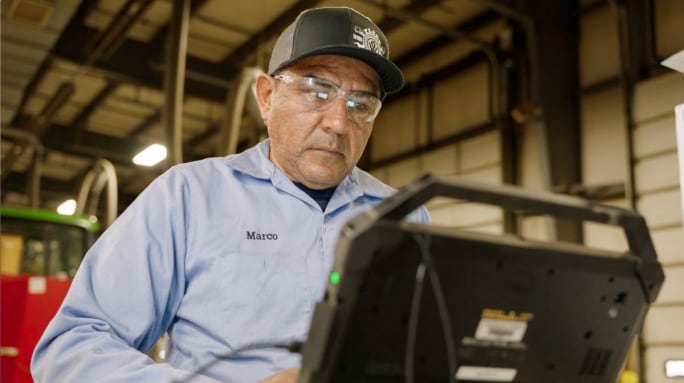
Using an FMS's integration and public application programming interface (API) features allows fleets to see all relevant data on a single platform with a customizable dashboard so crucial metrics are always front and center.
Photo: Fleetio
Historical Service Data in Fleet Software
Performing a thorough OCA means analyzing multiple interconnected data points, which can be difficult and time-consuming when done manually or when utilizing data spread across several platforms. Fleets can use integrated fleet solutions, like fleet management software (FMS), to automatically collect, consolidate, and aggregate service data and fleet-wide data, including from other fleet and business solutions.
Using an FMS's integration and public application programming interface (API) features allows fleets to see all relevant data on a single platform with a customizable dashboard so crucial metrics are always front and center. When it comes to service histories, methods of data capture in FMS include:
- Work orders: Digital work orders host a wealth of service data beyond the standard line items, such as work order status updates, including open, pending, completed, needs approval, or approved. This allows fleets to see where avoidable, cost-incurring delays occur. When integrated with telematics, FMS also provides sensor data, which can proactively catch issues before they happen, and from which fleets can take a "snapshot" and attach to work orders for quicker issue resolution. This reduces excess costs associated with shop-related downtime and repairs.
- Inspections: Digital inspections in FMS automatically alert fleets to failed inspection items in real-time, allowing individuals submitting them to attach images and comments for greater detail. This will enable managers to assess the priority of the failed item better; is it critical, or rather something that can wait until off hours? Having these insights helps fleets cut down on costly productivity loss, while inspection histories highlight recurring issues that can be mitigated through improved PM.
- Parts flow: For fleets with in-house parts inventories using FMS, adding a part to a work order automatically updates the inventory. Fleets can set low-stock thresholds to ensure parts are reordered as needed to avoid part-related shop delays. Historic inventory data can help determine optimal inventory counts and which parts have the longest lead times for strategic procurement planning. FMS also offers parts inventory valuation options for more accurate service cost reporting.
Robust service data consolidated with other total cost of ownership (TCO) data collected by FMS, such as capital, insurance, registration, fuel spend, etc., allows for precision OCA at the individual asset level and fleet-wide.
Identifying specific high-cost assets and determining exactly why they are running up the bill can inform fleets about changes that need to be made, whether that's improving PM, replacing an asset, or even avoiding specific make model years that are underperforming. With this information at hand, fleets can better plan procurement strategies and timelines and add a bit of budgetary flexibility in the face of economic uncertainty.
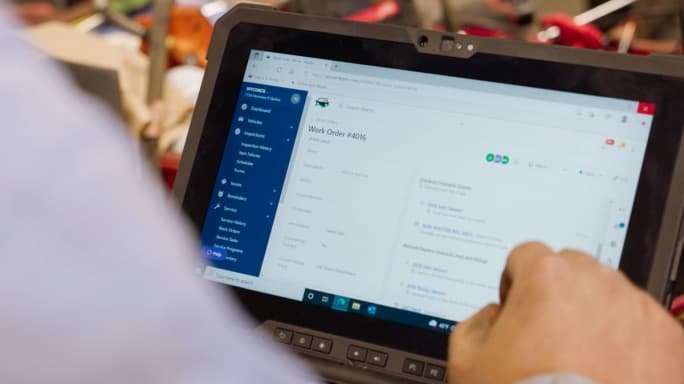
Identifying specific high-cost assets and determining exactly why they are running up the bill can inform fleets about changes that need to be made.
Photo: Fleetio
About the Author: Rachael Plant is a senior content marketing specialist for Fleetio, a fleet management software company that helps organizations track, analyze, and improve their fleet operations. This article was authored and edited according to Work Truck editorial standards and style. Opinions expressed may not reflect that of Work Truck.
Subscribe to Our Newsletter
More Technology & AI
Geotab Data Shows Regional Trucking Growing Faster as Last Mile Routes Get Denser
Geotab's first U.S. supply chain report finds stable long-haul activity, stronger regional freight movement, tighter hub-and-spoke utilization, and more last-mile trips on shorter routes.
Read More →
When Fleet Technology Helps and When It Just Adds Complexity
New technology can help fleets work smarter, but only if it solves the right problem. Lauren Fletcher talks with AP Fleet’s Alex Coveney about innovation, AI, data, and knowing when a new solution is actually worth adopting.
Read More →
Volvo Trucks’ 'Lock and Leave' Software Updates Go Live Across North America
Unattended over-the-air software updates are now available in Volvo trucks across the U.S. and Canada. The new capability lets trucks stay current with the latest software without interrupting operations or requiring a dealership visit.
Read More →From Our Partners
Basic Tracking vs Next Generation Fleet Technology
Sponsored by AT&T Business

5 Facts Every Fleet Manager Should Know About Embedded Telematics
Sponsored by Stellantis/Mobilisights

How AI Video Telematics Boosts Driver Safety and Helps to Avoid Unnecessary Costs
Sponsored by Verizon Connect

Charting the 8 Bottom-Line Benefits of Workforce Optimization
Sponsored by Verizon Connect


GM Brings New Truck Focused Interface to 2027 Silverado and Sierra
GM's new pickup interface puts trailering data, camera views, vehicle controls, and smartphone integration closer to the driver in the 2027 Silverado and Sierra.
Read More →
Samsara Driver Perks Expands Rewards Beyond the Long Haul Driver
Samsara’s new driver rewards program was built with a broader professional driver in mind, including employees who split their day between driving, job sites, service calls, and other work.
Read More →
AI Service Advisor Aims to Cut Fleet Repair Downtime
Fleetio said its AI Service Advisor can help fleets cut repair downtime by an average of 2.5 hours per repair while reducing manual maintenance work.
Read More →
Verra Mobility Launches AI-Driven Title & Registration Solution
Verra Mobility has launched a new AI-driven Title & Registration platform to help fleets move vehicles from acquisition to the road the same day while reducing compliance risk.
Read More →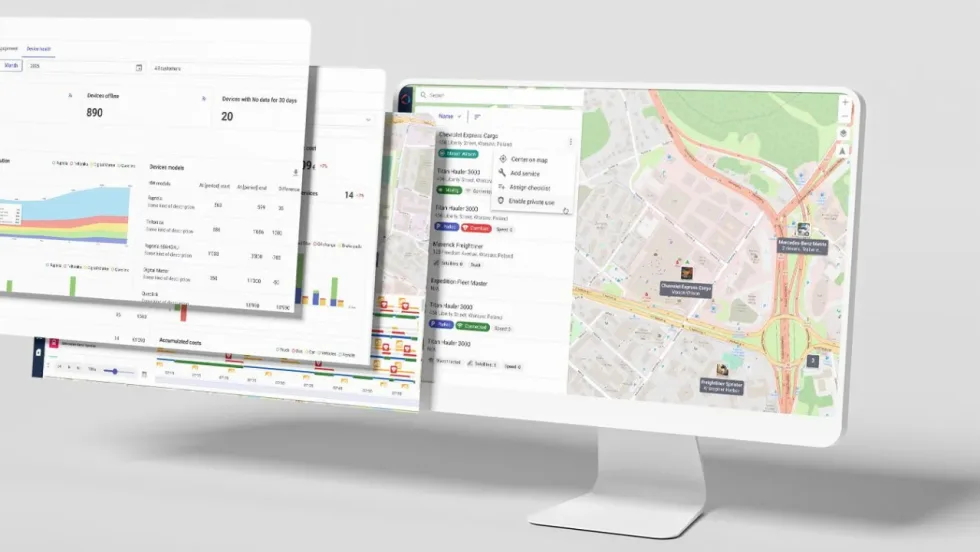
Wialon Unlocks OEM Data to Give Fleet Owners Data Ownership & Operational Clarity
Wialon has introduced hardware-free OEM integration as the EU Data Act accelerates the shift in vehicle data access across the fleet industry in many countries.
Read More →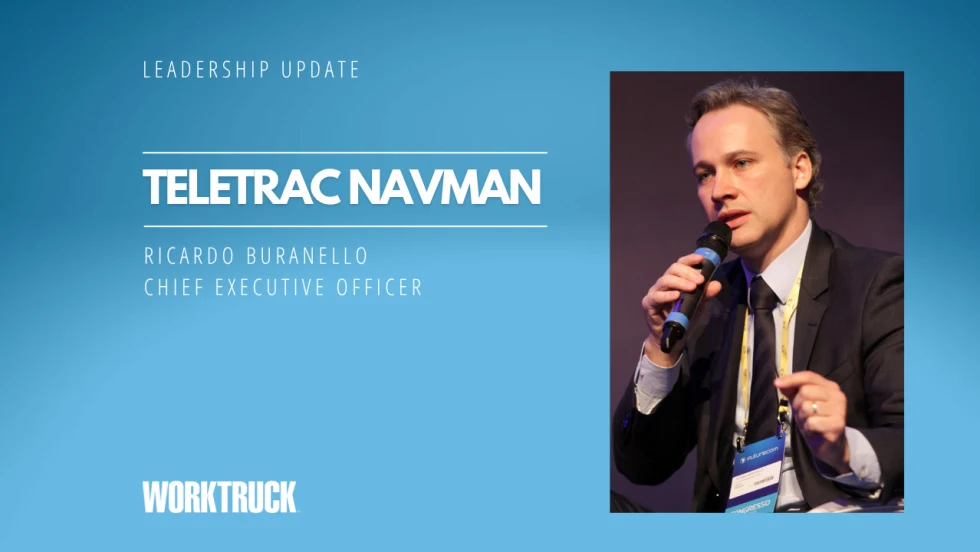
Teletrac Navman Promotes New CEO from Within
Teletrac Navman’s next CEO, Ricardo Buranello, has served as the company’s chief financial and operating officer. He brings deep financial and operational expertise, a strong strategic orientation, and an intimate knowledge of the business to his new role.
Read More →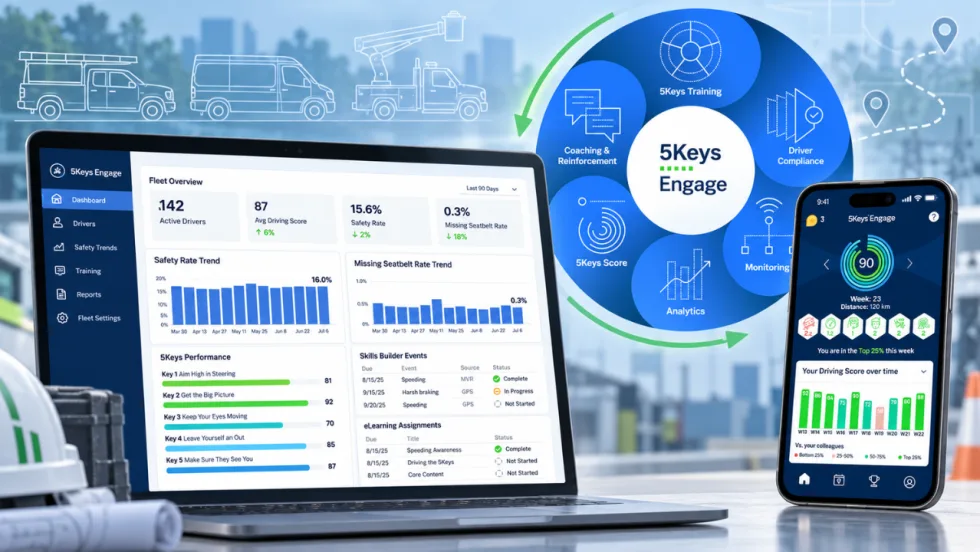
Smith System Wants Work Truck Fleets to Look Beyond the Driver Alert
Smith System’s new Driver Risk Management program is built to help mixed work truck fleets turn telematics alerts and observations into specific behaviors, coaching actions, and measurable follow-up.
Read More →