




Bridging the Gap: Propane Autogas
Fleet managers are constantly looking at ways to incorporate alternative fuels, like propane, into their fleets. Propane autogas can offer many benefits to a fleet, but it also comes with challenges.

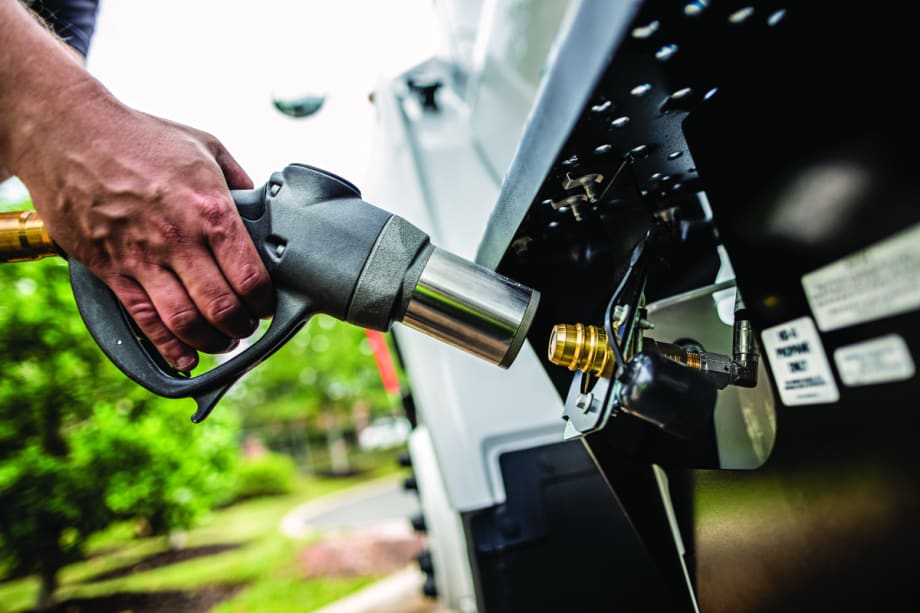
Propane autogas is domestically produced and readily available. Roush likes propane for its sustainability, among other factors.
Photo: PERC
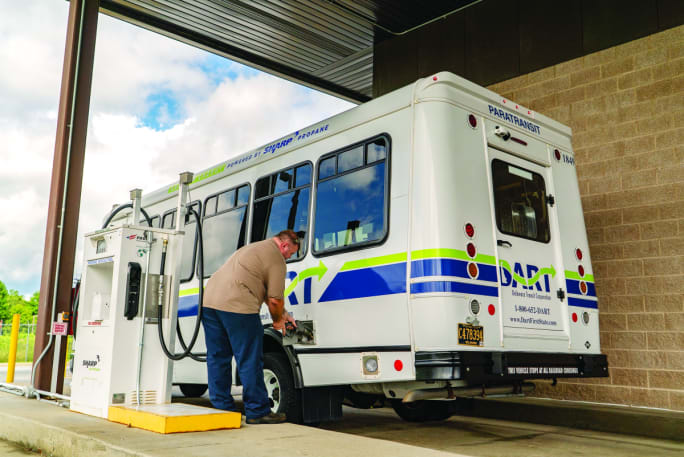
Fleet managers must understand every aspect of their fleet before transitioning to propane and know how to work with suppliers.
Photo: PERC
Fleets must take a bridge to get from using all traditional fuels and arrive at utilizing alternative fuels, either in a portion of their fleet or their entire fleet.
It’s fair to say challenges will arise along the journey to incorporating propane autogas in a fleet, but some benefits also come along with it.
According to Roush CleanTech, propane autogas costs about 40% less than gasoline and 50% less than diesel per gallon. Since the fuel runs cleanly through the engine, fleets report savings of 30 to 50% on filters and fluids, according to Roush.
According to the U.S. Department of Energy, propane is a three-carbon alkane gas, and it is stored under pressure inside a tank as a colorless, odorless liquid. The liquid propane vaporizes as pressure is released and turns into gas used in combustion. According to the World LP Gas Association, vehicles fueled by propane autogas also emit 96% fewer nitrogen oxides than diesel and 68% less than gasoline.
Work Truck dives into all the benefits of a transition to propane autogas, the challenges, and what owners and operators can do to cross this bridge successfully.
Top Propane Autogas Challenges for Commercial Fleets
It’s not always a clean transition to clean fuel. Fleets need to be aware of what goes into switching to propane autogas instead of traditional fuels.
Stephen Whaley, director of autogas business development with the Propane Education & Research Council (PERC), said minimizing downtime during the transition is one challenge fleets can encounter.
“Many fleets need to keep moving to complete the routes they run, and any change to that schedule is a disruption,” Whaley said. “While this will be a challenge for any fuel type, propane autogas suppliers are working with fleet owners to overcome obstacles.”
Propane autogas is a portable energy source. This means fleet owners can start transitioning their fleet even before they have a permanent on-site infrastructure.
“For instance, fleet owners can work with their propane autogas supplier to install affordable infrastructure at a centralized location,” Whaley said. “If fleets need fuel before it is fully installed, propane autogas suppliers will work with owners to develop a temporary refueling setup, ensuring fleets continue to run routes.”
Of course, costs and situations will vary with this option, so Whaley insisted on checking with the propane supplier for details and pricing.
Another challenge fleets may face: getting vehicles or parts. Supply chain constraints are making it tough for fleets to upgrade their vehicles.
Whaley offered another option for fleets currently running gasoline vehicles.
“Owners can convert their existing gasoline fleet vehicles to propane autogas without the wait,” Whaley said. “EPA certified bi-fuel systems operate on propane autogas as the primary fuel but still have a reserve tank of gasoline for added resiliency.”
An increasing number of high-demand light- and medium-duty trucks, vans, and car models can be converted to operate on a bi-fuel system, according to Whaley.
“Half of the propane autogas vehicles on the road today were converted with a certified aftermarket bi-fuel system,’ Whaley said. “Certified conversion system partners across the U.S. can assist with converting existing fleets to propane autogas.
Todd Mouw, executive VP of sales and marketing for Roush, echoed the same challenge fleets will face when making the transition. It’s all about planning.
“The biggest speed bump is just allowing enough time for planning — from ordering the base chassis with the right specs, our fuel system, fueling infrastructure, tech training, etc.,” Mouw said. “Everything just takes longer in our world today to implement; be sure to include your trusted partners up front in the planning process.”
Making a Successful Alternative-Fuel Switch
While downtime needs to be minimized, knowledge of the fleet needs to be maximized.
“The most important thing is to understand how the asset is being used, how much range it needs, how much payload it needs, does it come back to a central spot each night, preferred service methods, etc.,” said Mouw of Roush CleanTech.
Roush has developed a checklist of items to go through with its fleet partners to ensure the transition is as seamless as possible.
The company also has a small fleet that moves parts from warehouses to different production sites around its campus. They also integrate propane into as many of those applications as possible, according to Mouw.
“We absolutely want to practice what we preach and be as environmentally responsible as possible in our operations.”
In the case of energy sources, one size doesn’t fit all. This is why fleet managers need to know every aspect of their fleet before transitioning to propane.
“There is no one energy source that is going to be able to meet the needs of every fleet owner,” said Whaley of PERC. “In fact, every energy source has specific markets it can best serve. For propane autogas, that’s medium-duty (Class 3-7) fleets that need to consider range and performance in addition to lowering their emissions. Fleet owners that want to learn more should talk with their peers who have already adopted propane autogas, OEMs that supply propane autogas solutions, and propane suppliers to learn what options are available. “Fleet managers can also work with their local chapter of the Clean Cities Coalition.
“These groups are in most states to assist fleet owners interested in learning how to transition to an alternative fuel,” Whaley said. “They can provide information that will steer fleet owners in the right direction to meet a fleet’s duty cycle.”
According to Whaley, fleet owners should be asking how the new energy source will benefit the fleet from an operational, financial, and environmental standpoint.
What are the Top Benefits of Propane Autogas?
Fleet managers can see the benefits of propane autogas in four areas: environmental, financial, operational, and availability.
Propane autogas engines are more than 90% cleaner than any standards mandated by the Environmental Protection Agency (EPA), according to PERC’s Whaley.
Fleets can also save money as propane autogas vehicles have the lowest total cost of ownership compared to electric, gasoline, natural gas, and diesel-fueled vehicles.
“Fleets can save up to 50% on fuel costs compared to conventional fuels,” Whaley said. “Plus, it’s highly likely that fleets adding propane autogas vehicles won’t need to make costly modifications or upgrades to maintenance or garaging facilities, as can be the case with other alternative fuels like CNG.”
According to a 2020 survey of users in the State of Sustainable Fleets report, most respondents found the affordability of propane autogas vehicles to be equal to or better than diesel and gasoline based on fuel cost (82%), maintenance cost (68%), and total cost of ownership (67%).
Operationally, Whaley said propane autogas vehicles perform similarly to gasoline or diesel vehicles without compromising range.
In terms of availability, propane autogas is domestically produced and readily available.
“There is a large network of propane retailers that can provide professional support for fleets, including assistance with the selection and installation of refueling infrastructure to fit the specific needs of each fleet,” Whaley said.
Roush likes propane for the sustainability of the energy, both environmentally and economically.
“Right now, gasoline and diesel prices are very high, but even when they are low, there is still a great business case to make the transition to propane,” Mouw said. “As emissions regulations tighten in the work/vocational truck segment, the cost and complexity of diesel will only increase.”
The Future of Propane Autogas
It’s hard to predict what the other side of the bridge will look like once crossed, but it will be defined by new technology and innovations.
“There’s no need for special equipment to take advantage of this low-carbon option,” said Whaley of PERC. “Renewable propane is compatible with any existing propane autogas engine or propane autogas infrastructure.”
Propane autogas engine technology has evolved in the last decade to bring fleet owners performance comparable to gasoline or diesel.
“The new Cummins B6.7 Propane is a 6.7L displacement engine that will provide fleet owners with performance with a projected power rating of up to 360 hp and 860 lb.-ft. of torque,” Whaley said.
While battery-electric technology will play a role in certain aspects of transportation, so will propane, natural gas, and likely hydrogen.
“We will need all of these technologies to make the emissions impact desired in the required time frame,” said Mouw of Roush CleanTech. “It is such an exciting time to be in transportation. The pace of innovation and change we will see in the next decade will rival what we saw the first 100 years in the industry.”
More Green Fleet

Fleet Forward Conference Introduces One-Day Passes for 2026
New one-day registration gives fleet professionals the flexibility to attend Tuesday, Wednesday, or Thursday, with passes available for $199 through Sept. 18.
Read More →
CALSTART Rebrands as Catalyst Mobility, Will Combine with Forth in 2027
CALSTART has rebranded as Catalyst Mobility and will combine with Forth at the start of 2027. The new organization said it is poised to become one of the world's largest, strongest, and most impactful clean transportation nonprofits.
Read More →
Electric Truck and Charging Programs to Boost Sustainability at NY & NJ Ports
Together, the Port Authority of New York and New Jersey and CALSTART will electrify drayage and terminal operations serving the East Coast’s busiest container port. A pair of incentive programs totaling $45 million has launched to accelerate adoption of zero-emission drayage trucks and terminal tractors.
Read More →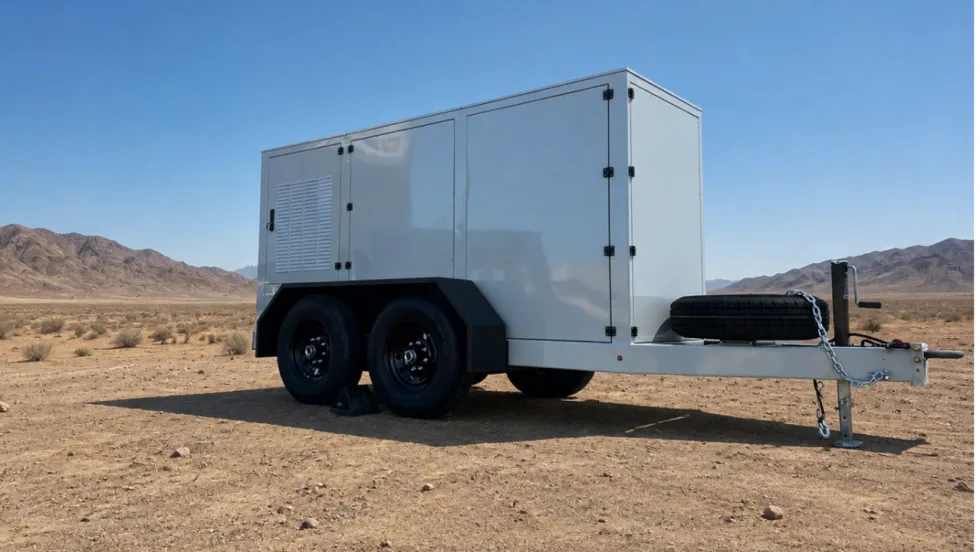
Xos Hub Surpasses One Gigawatt-Hour of Energy Delivered in the Field
A single Xos Hub has surpassed one gigawatt-hour of energy across more than 33,600 charging sessions in the field, demonstrating performance that supports Xos' expansion across new products and markets.
Read More →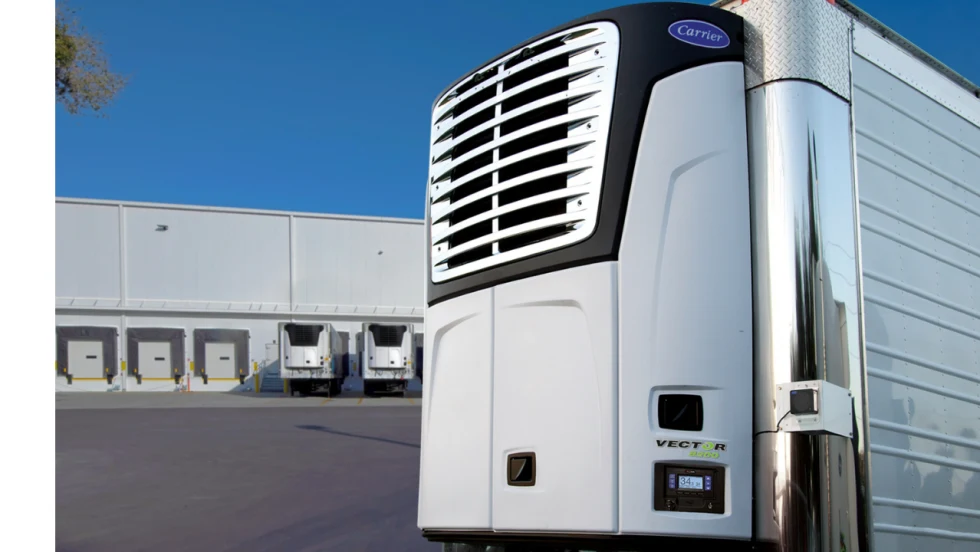
Carrier Transicold Launches All-Electric Vector 8200 TRU for Diesel-Free On-Site Cold Storage
Carrier Transicold’s first engineless multi-temperature TRU helps fresh- and frozen-food fleets add supplemental cold storage capacity during seasonal peaks.
Read More →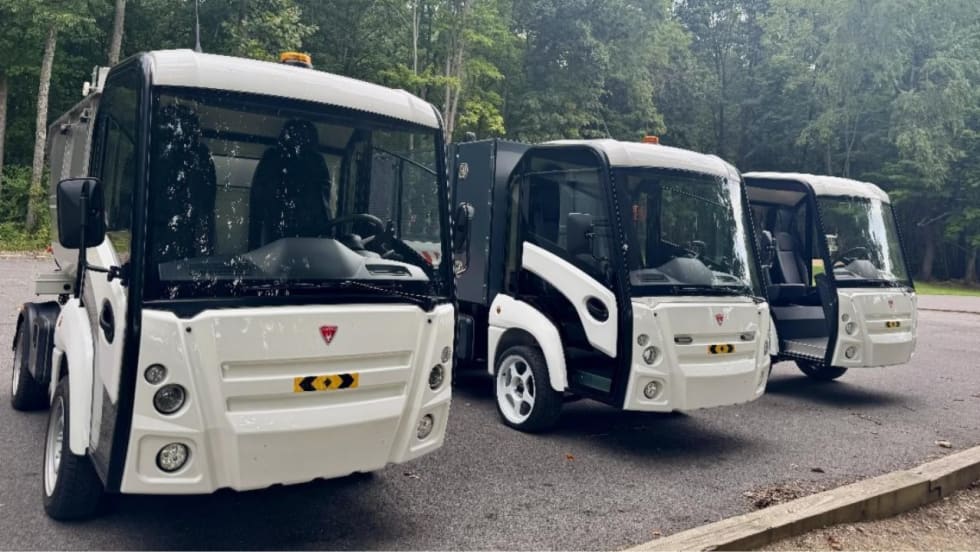
Narro Trucks Introduces Electric Utility Vehicle
Narro Trucks officially launched its operations on Aug. 20 and hosted a ride and drive to showcase its electric truck, which will be produced in Virginia.
Read More →
Samsung SDI Takes Full Control of GM Battery JV as Indiana Plant Pivots to Energy Storage
Samsung SDI is taking full control of its Indiana battery plant with GM, marking a major shift from the EV-focused joint venture Charged Fleet first covered in 2023.
Read More →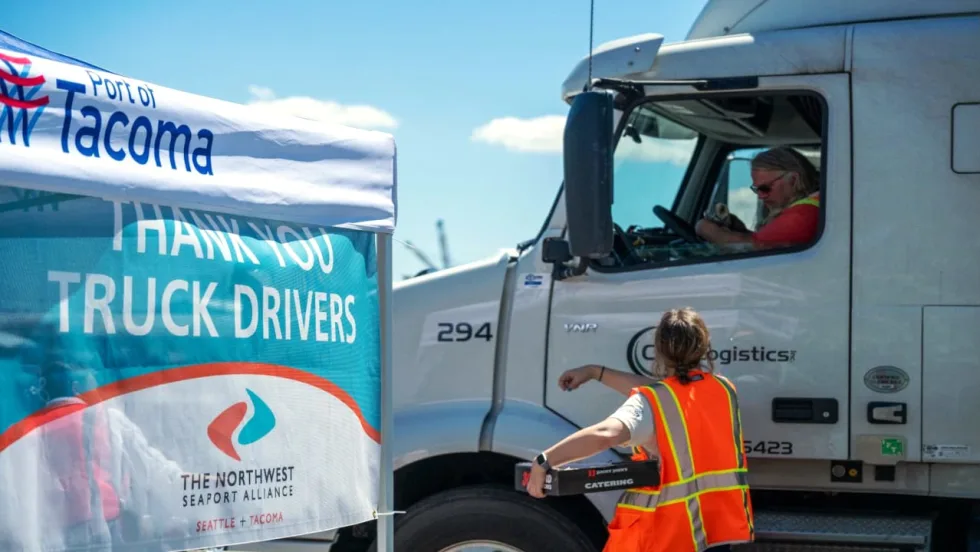
NWSA Taps CALSTART to Administer Zero-Emission Drayage Assistance Program
CALSTART will provide free technical assistance services to drayage fleets serving the Ports of Seattle and Tacoma and looking to transition to cleaner technologies and help decarbonize freight hubs.
Read More →
EV Fleet Reality Check: What Operators Wish They Knew Before Electrifying Their Work Vans
Electric work truck upfits bring new compatibility questions. Learn how parts availability, OEM guidance, power demands, and route planning can affect fleet performance.
Read More →
Peterbilt Expands Sourcewell Partnership with Electric Vehicle Lineup
Peterbilt Motors Company’s cooperative purchasing agreement with Sourcewell and its Canadian partner, Canoe Procurement Group, now includes including Peterbilt's battery-electric vehicle lineup.
Read More →