




Are Compact Pickups an Endangered Species?
A fleet mainstay for more than several decades, compact pickups appear to be going the way of the dodo thanks, in part, to less expensive and more efficient full-size pickups and utility vehicles.


With once perennial small truck bestsellers Ford Ranger and Dodge Dakota recently put out to pasture in the U.S. market and with no near-term replacements in sight, this once robust segment is teetering on the brink of extinction.
Photo: Canva/Work Truck
You’d expect rising demand for smaller pickup trucks in an era of high fuel prices. After all, when it comes to boosting fuel economy, smaller is better — right?
Apparently not for the U.S. compact pickup market, which has seen sales plummet 66.8 percent in almost a decade, from 868,794 units in 2002 to 288,136 in 2011. And, 2012 year-to-date numbers don’t show any change in that downward trajectory (See Chart: “Compact Truck Segments”).
“You have automakers turned off by the compact truck segment right now,” said Ivan Drury, senior analyst for Edmunds.com. “They’re asking themselves, ‘How much money are we going to have to spend in a dying segment?’ They look at the full-size trucks in their lineup, selling thousands upon thousands every single month. The way the market is declining, it’s hard to justify pouring more money into it.”
With once perennial small truck bestsellers Ford Ranger and Dodge Dakota recently put out to pasture in the U.S. market and with no near-term replacements in sight, this once robust segment is teetering on the brink of extinction. This trend has substantial implications for fleets that operate compact pickups because it directly impacts resale values and vehicle availability.
Drivers of Decline
What has caused such a precipitous drop in compact truck sales? Here are four key drivers of decline, according to the experts.
Aging platforms. Compact truck platforms have been allowed to become outdated, requiring high costs to retool and justify remaining in the market. “Some of these platforms are finally getting a major overhaul by OEMs — but for the global market. Automakers seem to be reluctant to proceed with testing and approval for the U.S. market,” said Rob Baran, department head, vehicle acquisition services, ARI – Automotive Resources International.
Diminishing price gap between compact and full-size trucks. “With the incentives manufacturers are offering on full-size trucks, fleets could get a full-size pickup for the same or less cost than a compact,” Baran said. Drury agreed. “If the price is close, I’ll just go with the larger, more capable trucks,” he said.
Newer engine options in full-size pickups offer comparable fuel efficiency. For example, the full-size 2012 Ford F-150 with the 3.5L V-6 EcoBoost engine offers a 2-mpg advantage over a 4.0L V-6 equipped 2011 Ford Ranger, 22 mpg versus 20 mpg respectively on the highway.
Expanded number of non-truck options. The rise of affordable and fuel-efficient compact vans, such as Ford’s Transit Connect, and car-based crossover vehicles have been taking market share away from the small pickups, offering both fleet and retail customers more options for applications that were once served exclusively by the compact pickup.
Peering into the Crystal Ball
What does the future hold for the compact pickup market? Will the segment rebound or continue its decline? The industry experts peered into their crystal ball to discover some potential answers.
Rick Shick, vice president of vehicle acquisition and strategic services for Donlen, sees fleets doing what they’ve always done when the market changes: adapt to the change.
“I believe the compact pickup market will continue to shrink and customers will find alternative vehicles to support their business needs, whether it be a Ford Transit Connect-type alternative, a full-size pickup, or some other alternative,” Shick said. “I do not see the market rebounding unless there is a dramatic change in retail demand, which I do not foresee. The price point and fuel savings between the compact and full-size pickup would have to be substantial enough to warrant considering the compact truck for a retail buyer.”
Baran of ARI believes the ball is squarely in the OEMs’ court. They will ultimately determine if the compact pickup will be making its final drive into the sunset.
“The future of the compact pickup, as it pertains to fleet, hinges entirely on the truck OEMs and what they are willing to bring to the North American market. With CAFE requirements and increasing demand for fuel-efficient company vehicles, we see a need for these vehicles both for the OEMs and for fleet customers,” Baran said, noting there still is a place for compact pickups in fleet applications.
“Although we have had many customers that were able to utilize car-based hatchbacks to accommodate certain job functions, in some cases, they were forced to start utilizing 1/2-ton pickups to haul larger cargo and heavier loads. Another consideration is fleets that must operate in metropolitan areas but cannot use a passenger vehicle or SUV for their needs. A compact pickup, in size alone, has a unique advantage over its full-size competition,” Baran said. “We believe that if the OEMs offer fuel-
efficient compact pickups that have similar payload and cargo capacity to the Ranger and Colorado, there will be a healthy fleet demand for these vehicles.”
The Bottom Line
Some fleet applications, such as pest control, tend to favor the compact pickup because of its maneuverability and capability to keep harmful chemicals outside the cab of the truck. Regardless of plummeting retail demand, fleets that operate compact trucks are experiencing the overall best retention values in this segment as of press time.
For instance, according to Black Book, the Ford Ranger saw a value increase of $350 for the MY-2009 models and as much as $725 for the MY-2008 models from the end of May. Long term, fleets who want to continue operating with a compact pickup vehicle may have to consider alternative OEMs who are still building small trucks or different vehicle types — such as vans or crossovers.
More Vehicle Research
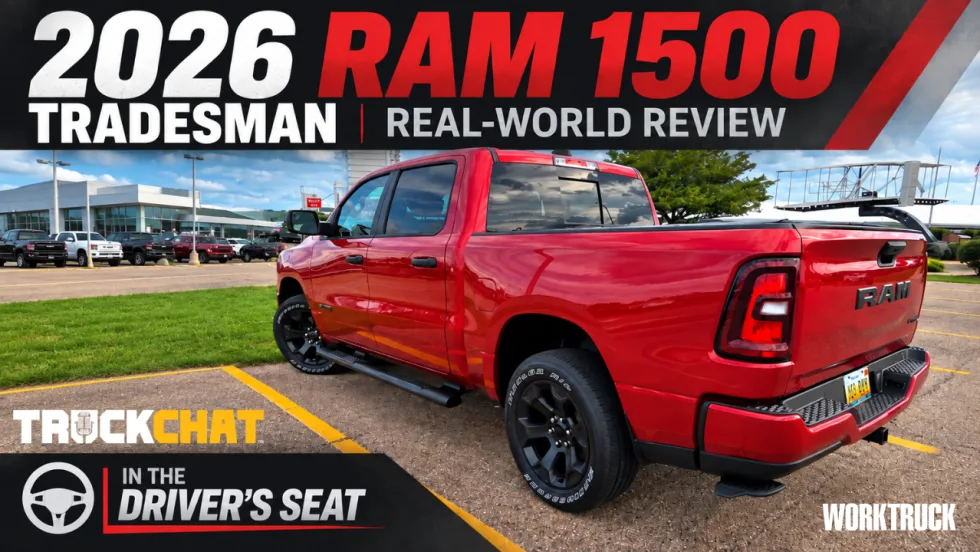
2026 Ram 1500 Tradesman Put to a Real-World Fleet Test
A few days behind the wheel of a 2026 Ram 1500 Tradesman turned into a test of visibility, parking, work-ready features, and even severe-weather driving.
Read More →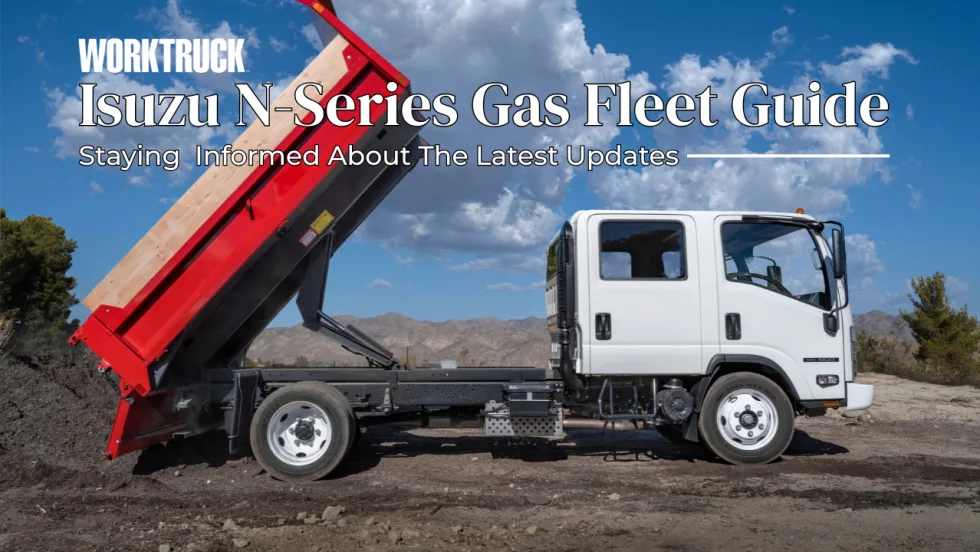
Isuzu N-Series Gas Fleet Guide: Specs, Capability and 2027 Model-Year Updates
Explore Isuzu Truck North America’s N-Series Gas fleet specs, engine performance, GVWR and payload capability, configurations, chassis dimensions, work-focused features, and 2027 model-year information.
Read More →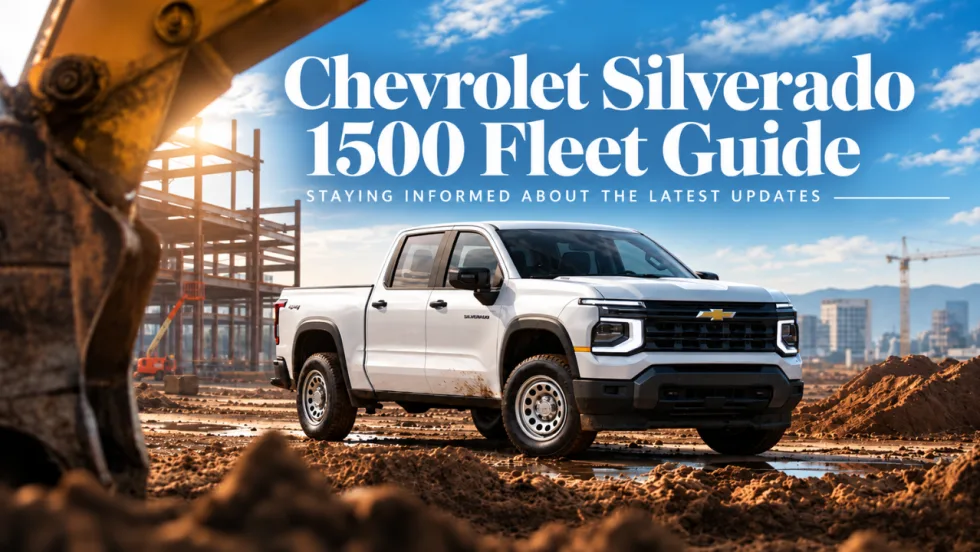
Chevrolet Silverado 1500 Fleet Guide Specs Capability and 2027 Model-Year Updates
The next-generation 2027 Chevrolet Silverado 1500 brings new V-8 engines, updated technology, expanded safety features, and a fleet-focused Work Truck. Here’s what commercial fleets need to know so far.
Read More →
Ram ProMaster City Fleet Guide Specs Cargo Capacity and 2027 Updates
Work Truck’s Ram ProMaster City Fleet Guide tracks the latest specifications, cargo capability, configurations, fleet technology, pricing, and model-year updates for Ram’s mid-size commercial van.
Read More →
Ford F-150 Fleet Guide Specs Capability and 2026 Model-Year Updates
Explore 2026 Ford F-150 fleet specs, engines, towing and payload capability, configurations, work features, technology, and model-year updates.
Read More →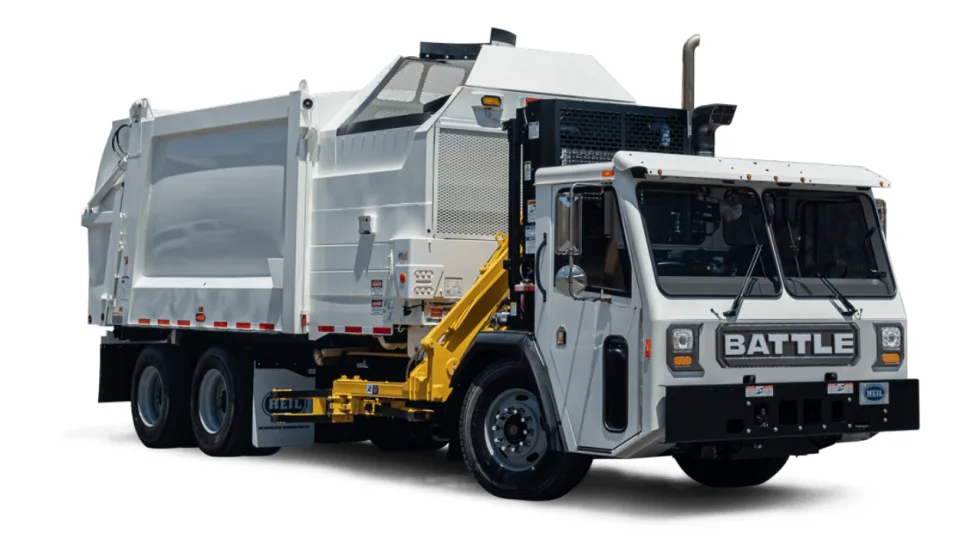
TCI Now Sells & Supports Battle Motors’ Vocational Trucks
Midwest truck dealer Truck Centers, Inc. (TCI) has expanded its transportation solutions with sales and service support for Battle Motors’ heavy-duty vocational trucks at locations in locations in Indiana, Illinois, and Missouri
Read More →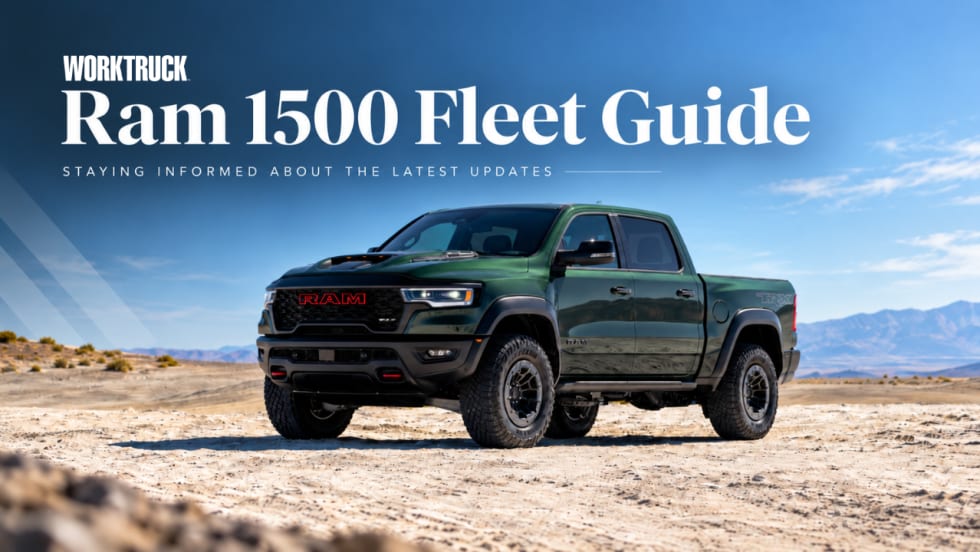
Ram 1500 Fleet Guide Specs, Capability and 2027 Model-Year Updates
Explore always up-to-date Ram 1500 fleet specs, engines, towing and payload capability, configurations, technology, pricing updates, and model-year changes.
Read More →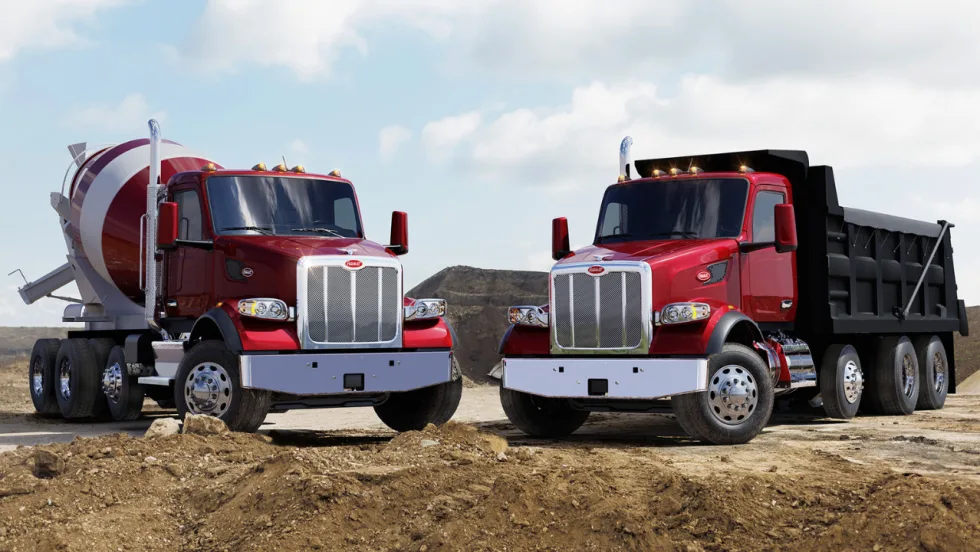
Peterbilt Trucks Equipped with Paccar TX-18 Pro Boost Efficiency for Maryland Fleet
Patuxent Companies is replacing aging trucks with the Peterbilt Model 567 and Model 589, specified with the Paccar TX-18 Pro 18-speed automated transmissions, and is reporting an 8% to 10% improvement in fuel economy.
Read More →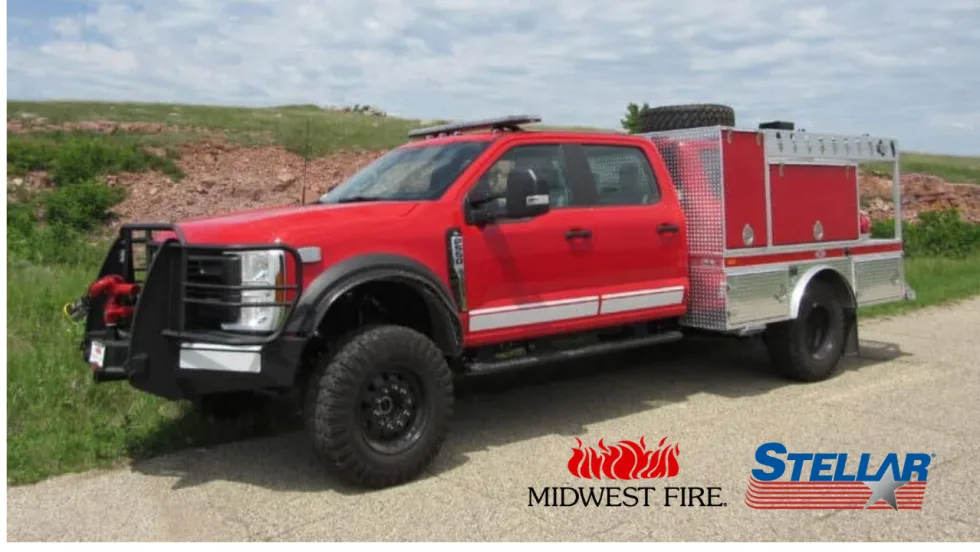
Stellar Expands into Fire Apparatus Market with Acquisition of Midwest Fire
Stellar Industries has acquired Midwest Fire, a custom fire apparatus manufacturer headquartered in Luverne, Minnesota, with nearly four decades of specialized apparatus experience.
Read More →
Recalls You Need to Know About in August 2026
If you have Altec, Chrysler, Ford, Heil, General Motors, International, Mack Trucks, Paccar, Rivian, Royal Truck, Toyota, US Truck Body, or Volvo Trucks vehicles in your fleet, you should check these important recalls issued by the National Highway Safety Administration.
Read More →