




7 Questions to Ask When Spec'ing a Service Body
Service technicians utilize a variety of tools and equipment that must be kept organized and within reach. With the multitude of available options, these seven questions will help narrow the field.

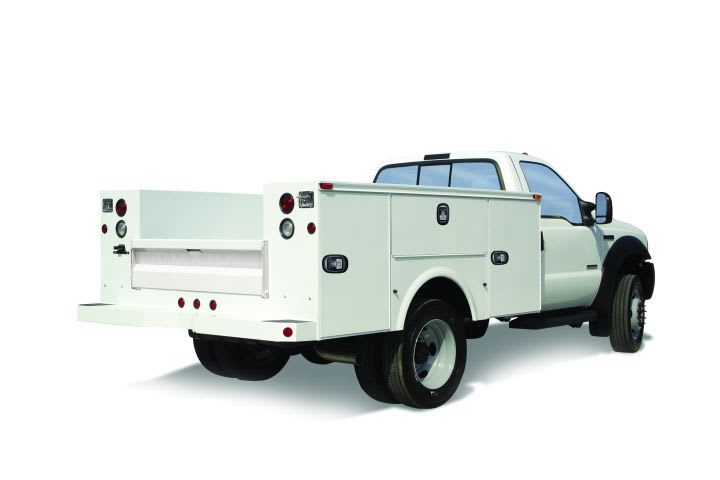
Also consider body material. The standard material used in service bodies is steel; however, some body manufacturers offer lighter weight materials, such as aluminum and fiberglass.
Photo: Omaha Standard Palfinger
Service bodies, also known as utility beds, are essentially heavy-duty toolboxes on wheels. They are available in a full range of configurations, sizes, materials, and other options, enabling service technicians to haul tools, equipment, and parts they need - organized for quick and easy access - to maximize jobsite productivity. Service bodies enable employees to focus time on doing the job, instead of fumbling through cluttered piles of parts to find the right one.
Typical industries that use service bodies include electrical, plumbing, mechanical, heating and air, mobile equipment service, and general construction. However, chances are, whatever the industry, if tools and parts of any kind are hauled in fleet trucks and vans, a company either utilizes service bodies or has at least looked into them.
What steps should be taken to spec a service body that's right for fleet? Use these seven questions as a guide.
1. What equipment will be hauled in the body?
Create a list of what a full load would contain, including estimated quantities and weight per unit. Include equipment, tools, parts, materials - whatever will be placed in the truck.
The list will dictate what compartment configuration will work best. Also ask an upfitter about bins, trays, and other options offered to determine how best to organize equipment for maximum productivity.
2. What will be hauled outside the body?
Will the vehicle haul ladders? Pipes? Conduit? A crane? Compressor? Auxiliary fuel tank? This will impact payload and whether racks and/or reinforcement are needed for the body to support the equipment.
"If you're going to mount a crane, for example, you need a heavier duty body," said Jim Brown, product manager for Omaha Standard Palfinger. "The body moves away from a standard service body and moves into a crane body, where the body can take the abuse of the day-to-day crane operations."
Whether or not equipment is mounted on top of the body also determines if a flip top can be spec'ed, which offers greater accessibility to tools and parts due to the ability to open the side box from the top. If equipment will be installed on top of the side compartments, the flip top won't work, requiring a standard solid top.
3. Will the vehicle's payload require an enclosed body for more space, or protection from the elements and theft?
A standard service body is open in the center with a tailgate, similar to a pickup bed. If materials can be thrown in the back of a truck without concern of corrosion or theft, an enclosure is not necessary. However, if extra hauling capacity with greater security and protection is necessary, consider enclosure options, which typically include a low-profile sliding roof or high roof available in several heights.
4. What will the anticipated maximum load weigh?
This will drive payload requirements and chassis selection. A body supplier will be able to take the anticipated maximum load weight and help determine what gross vehicle weight rating (GVWR) chassis best matches fleet needs.
If the projected total weight of chassis, body, and payload is less than 10,000 lbs., for example, the most likely candidate is a single-rear wheel ¾- to 1-ton chassis. Over that mark, a dual-rear wheel 1-ton or larger chassis is required.
Also consider body material. The standard material used in service bodies is steel; however, some body manufacturers offer lighter weight materials, such as aluminum and fiberglass that may allow the ability to drop to a smaller chassis for improved fuel economy and a lower truck price, without sacrificing payload. The pricing advantage upfront is for steel. Aluminum and fiberglass will range $1,000-$3,000 more for a comparable body.
Chassis selection, whether single-rear or dual-rear wheel, impacts available body width and length. A dual-rear wheel chassis offers a wider body with deeper compartments and more length options, from 56-in. cab-to-axle (CA) for an 8-ft. service body to 60-in. (for 9-ft. body) to 84-in. (11-ft. body) and longer for a medium-duty chassis. Single-rear wheel is only available with a 56-in. CA.
5. Will the truck be operated off road?
This determines whether a four-wheel drive chassis and any modifications to the body to handle off-road conditions are required.
"If you're off road, you might need a spring-mounted body kit," Brown from Omaha Standard Palfinger advised. "This allows the body to basically float on the chassis. There are two springs mounted on the front of the body that attach to the front of the chassis and allow the body to flex going up over curves and down through ditches."
6. Will the truck pull a trailer? If so, what is the total weight of the trailer and its payload?
The answer will help calculate the gross combination weight rating (GCWR) chassis necessary to fit an application. GCWR is the maximum allowable weight (as certified by the truck manufacturer) of the chassis, body, and payload combined with the fully loaded weight of the trailer and its contents.
Overlooking this question is a common mistake fleet managers make, said Brown of Omaha Standard Palfinger. For example, a single-rear wheel ¾-ton chassis may work fine with the current body payload, but if the vehicle will be towing 12,000 lbs. with a full load in the service body, the GCWR will be exceeded. If a trailer is pulled in this instance, a larger chassis will be needed.
Ensure the company's vehicle upfitter knows the unit will be towing a trailer, how much weight it will tow, and whether it will tow with full payload in the service body. This way, the upfitter can help select the right capacity.
7. Will the truck be operated in a region prone to corrosion?
This is especially important if the truck is operated in the northern snowbelt regions that use corrosive road salts or in coastal areas with salty air. Aluminum and fiberglass tend to hold up better in these conditions.
If steel is selected, look at the manufacturing quality. Inspect for crevices in the body that could collect moisture and cause premature corrosion. Most steel service body manufacturers use some form of corrosion-resistant coating (e-coat, etc.) to protect truck bodies.
The Bottom Line
With the answers to these seven questions, a fleet manager can be prepared to collaborate with service body manufacturers or distributors to design and build a service body that's right for fleet.
More Upfitting
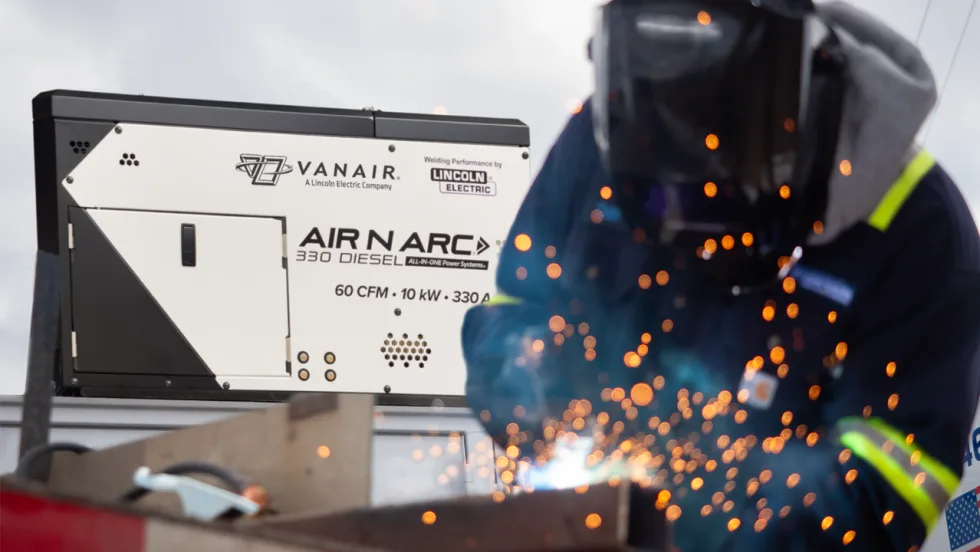
Multitasking: Vanair’s Air N Arc 330 Diesel 60 CFM All-In-One Power System
The Air N Arc 330 Diesel 60 CFM from Vanair consolidates a welder, generator, rotary screw air compressor, battery booster, battery charger, and EV charger into a single 750-pound enclosure driven by one 24.8-horsepower Kubota diesel engine.
Read More →
Buyers Products Awarded Sourcewell Cooperative Purchasing Contract for Snow & Ice Equipment
Buyers Products has been awarded a Sourcewell contract for a wide range of winter maintenance equipment and accessories, including snowplows, municipal plow systems, wing plows, spreaders, and more.
Read More →
Hilltip Introduces the SnowStriker SFT Flex Expandable Box Plow
Hilltip’s new SnowStriker SFT Flex expandable box plow features hydraulically extendable sections that allow operators to adapt the clearing width to changing conditions and applications on the go.
Read More →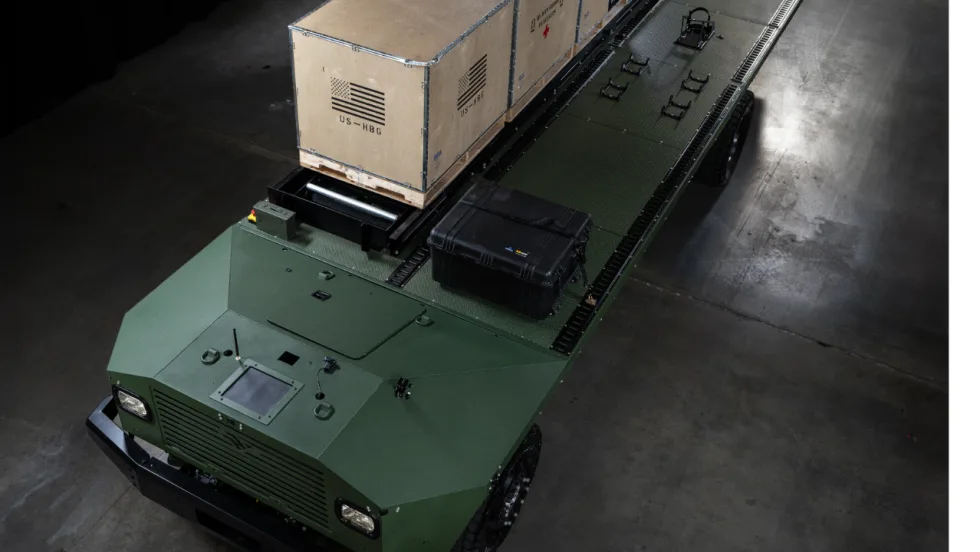
Harbinger Part of Effort to Deliver Autonomous Logistics Capabilities for U.S. Army
American Rheinmetall received an 18-month U.S. Army contract to deliver autonomous, hybrid-powered uncrewed ground vehicles. Harbinger is providing the truck platform for those vehicles.
Read More →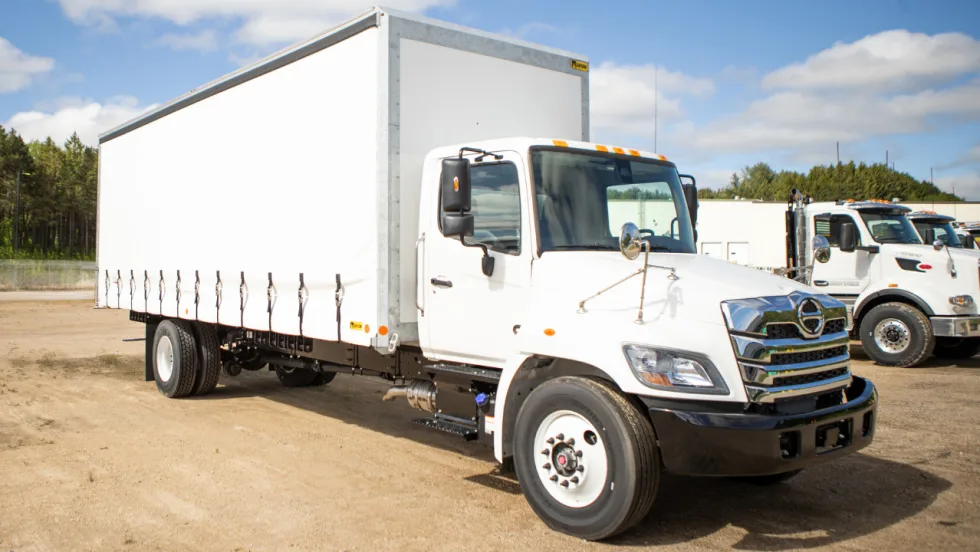
Thinking Outside of the Box: Choosing the Right Truck Body for Your Fleet
Choosing the right truck body can have a major impact on loading efficiency, cargo protection, downtime, and long-term operating costs. Here’s how dry vans, platforms, and curtainsiders compare, plus what fleets should consider before spec’ing their next truck.
Read More →
Fourth Annual Upfit Package of the Year Awards Open for 2027 Entries: One Month Left!
Think your upfit deserves industry recognition? Enter the 2027 Work Truck Upfit Package of the Year Awards before the Sept. 30 deadline. There is less than a month left to get your submissions in!
Read More →
Reading Truck Equipment & Masterack Unite as One of North America's Largest Commercial Vehicle Upfit Networks
Reading Truck Equipment and Masterack have integrated operations to create one of North America's largest and most comprehensive commercial vehicle upfit organizations.
Read More →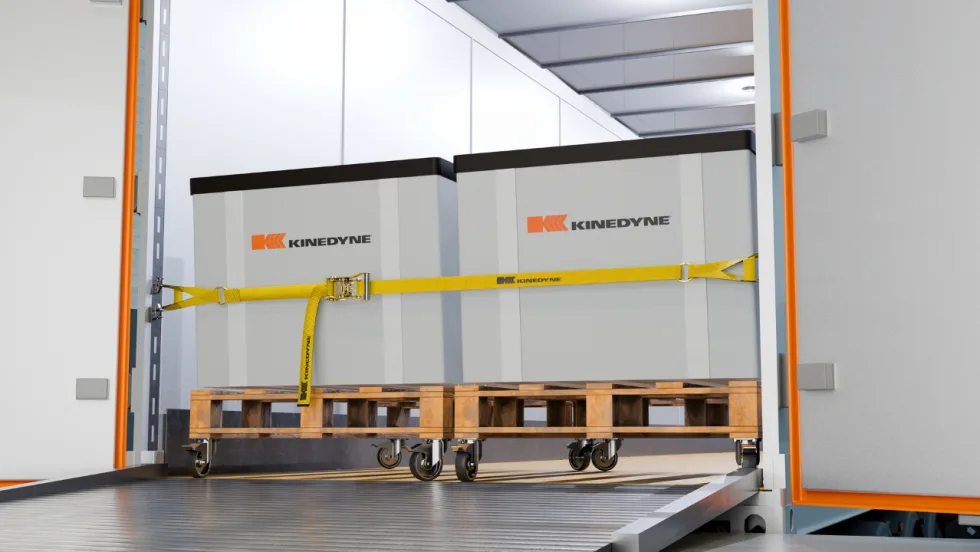
Kinedyne Launches Heavy Duty Logistic Shoring Strap
Kinedyne’s new Heavy Duty Logistic Shoring Strap features a patent-pending four-point design to deliver greater cargo stability, increased strength, and easier handling for rolling and shifting freight.
Read More →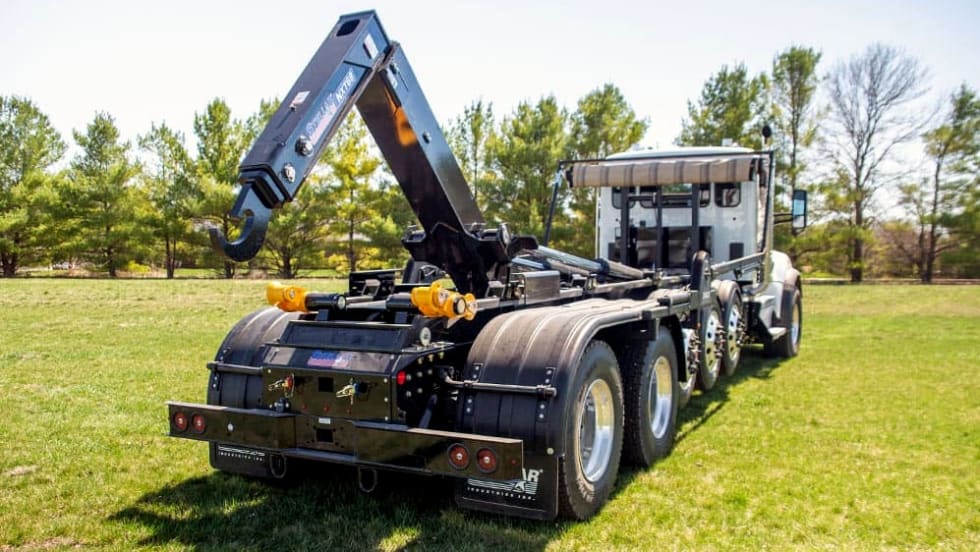
Hooklift Bumper Design from Stellar Showcases Strength & Versatility
Stellar Industries’ new bumper for the NZT Series Hooklifts come in two capacity options: the 20K, designed for Class 3 – 6 chassis with a 20,000-pound pull capacity, and the 90K, built for Class 7 and 8 chassis with a 90,000-pound pull capacity.
Read More →
Maxon Lift Awarded the Wabash Platinum Award for Supply Chain Performance
Maxon Lift, a liftgate manufacturer since 1957, received the Wabash Platinum Award for supply chain performance in 2025. Each year, Wabash presents awards to top suppliers for excellence in supply chain performance.
Read More →