




10 Factors in Spec’ing Drive-Axle Ratios for Medium-Duty Trucks
There is a wide range of drive-axle ratios for medium-duty trucks. Considering drive-axle ratio impacts a truck’s top-end speed, load-pulling ability, and overall fuel economy, fleet managers must choose carefully.


The gear ratio selected for the drive axle impacts the truck's available top-end speed, ability to haul or pull heavy loads, and overall fuel economy.
Photo: GE Capital Fleet Services
When it comes to spec'ing light-duty work trucks and vans, the process of selecting a drive-axle ratio (also known as rear-axle ratio in rear-wheel-drive trucks) is relatively simple - there are only two to three ratios to choose from.
Medium duties, however, especially those in the 19,500 pounds to 26,000-pound gross vehicle weight rating (GVWR) range, complicate the process. There are often more than a dozen options to choose from, with drive-axle ratios ranging from as low as 2.69:1 to as high as 7.17:1 - with 10-12 ratios in between - depending on the truck class, make and model, and rear-axle capacity.
Considering that the drive-axle ratio impacts a truck's available top-end speed, ability to pull heavy loads, and overall fuel economy, fleet managers must choose carefully.
However, with numerous axle ratio options available with medium-duty trucks, how does a fleet manager determine which is right for the application?
Tips to Understand Drive-Axle Ratios
The starting point is to understand the drive-axle ratio and how it affects truck performance.
The drive-axle ratio represents the relationship between driveshaft revolutions (driven by the transmission) and drive-axle revolutions. Usually a whole number and decimal fraction, the drive-axle ratio is a comparison of the number of gear teeth on the ring gear of the rear axle and the pinion gear on the driveshaft.
For example, a 4.11:1 ratio means there are 4.11 teeth on the axle's ring gear for each tooth on the driveshaft's pinion gear. Or, put another way, the driveshaft must turn 4.11 times to turn the rear wheels one full revolution.
What does this ratio mean in practical, performance terms?
Here's the typical rule of thumb: The higher the numerical ratio, the slower the gear will be. This higher ratio gives a truck greater pulling power, but since the engine must work harder to spin the driveshaft more times for each turn of the rear wheels, top-end speed and fuel economy is sacrificed.
The inverse also holds true. When the numerical ratio is lowered, the available top-end speed is increased. Since the engine doesn't have to work as hard to turn the wheels faster, fuel economy improves. The downside is that pulling power diminishes.
How can a fleet manager strike the right balance between speed, pulling power, and fuel economy to best fit a truck's application? Ken Gilles, truck operations manager for GE Capital Fleet Services, recommends fleet managers consider these 10 factors when spec'ing drive-axle ratios:
1. Know the Average Truck Speed
What is the desired maximum road speed for this work truck? What is the average speed expected?
"Look at where the truck spends the most time from a speed perspective. What does that mean in terms of where my engine RPM [revolutions per minute] is at in top gear? How does that translate in rear axle ratio?" Gilles said. "What we're after is to ensure the torque and horsepower curves are at the right spot for that particular engine so the truck is operated predominantly in its optimal operating conditions - e.g., is the truck spending most of its time on urban roads at 40-60 mph? Try to gear the rear axle to run the engine in that RPM range."
2. Understand Average Gradeability
"This means the ability to maintain specific road speed on X-percentage grade [incline]," Gilles explained. For example, if the truck is in Texas, the biggest thing you have to deal with is a freeway overpass grade. That's easy, but if you're operating the truck in constant steep-grade conditions in the Appalachian Mountains, that's a different matter. You need to gear [the drive axle] for a lower speed to perform in mountainous terrain."
3. Impact of Increasing, Diminishing, or Constant Loads
Is the truck's load increasing, diminishing, or constant? What percentage of time is spent at what percentage GVWR?
"If you have a diminishing load, that takes us down the path to allow for a slightly faster gear in the truck since it's going to get lighter during the day," Gilles said. "If it is constant load - like a service truck that has a crane mounted on it, weighed down with tools, compressor, and so forth - then it's always at its max or close to its max from a GVW standpoint. If the truck is operating like that, then you need to back off on the maximum road speed availability and look more at where it's going to deliver the best start-ability and fuel economy under the constant load."
4. Towing & Trailer Needs and Requirements
What is the trailer and load weight? What is the size and length of the trailer? What percentage of time will the truck be towing?
"Depending on what percentage of time you're operating the truck in a tow scenario, you might need to gear the axle slightly lower from a handling standpoint," Gilles advised. "If you're pulling a trailer as much as 20% of the time, that is enough to perhaps gear it slightly lower and give up some of that maximum road speed for the truck to handle a greater load."
5. Impact of Average Terrain Traveled
"If there is some off-road use, then we want to know what the road surface is," Gilles said. "And if the trucks are off-road, at what speed do they operate? Is it 5-10 mph while negotiating rough terrain to get to a specific jobsite? Or are they spending significant time on improved conditions where they're going 30, 40, even 50 mph on crushed stone or hard-packed clay or dirt, or whatever it might be? Given the fact they are going to be spending significant amounts of time at 30-40 mph, where does that put us in terms of engine RPMs and what that looks like for drive-axle ratio?"
6. Impact of Aerodynamics
"This goes into air drag, especially if the truck spends a large percentage of time in freeway travel," Gilles said. "Any time you're above 55 mph, the wind drag just gets exponentially crazy. You need to ask: Do I need to drop deeper in terms of axle ratio to push that much air? Or how much can we offset [the wind drag] with aerodynamic enhancements as simple as a nose cone or as involved as skirting and wind fairings and so forth?"
7. Truck Tire Sizes Matter
"We want to make sure and understand if this truck is going to operate with 19.5-inch tires at 600 [revolutions] per mile or with 22.5-inch [tires] with 440 revs per mile. This affects axle ratio because as tire circumference narrows, that tends to make the drive axle act as if it has a lower numerical ratio, compared to the larger tire [with the same ratio]," Gilles explained.

The drive axle ratio is a comparison of the number of teeth on the ring gear on the drive axle and the pinion gear on the drive shaft.
Photo: GE Capital Fleet Services
8. Manual vs. Automatic Transmissions
"If you spec an automatic transmission, for example, the truck has the gains of a torque converter where you can get away with, in some cases, a little bit lower numerical axle ratio. This gives you the ability to start out with a load and not have to give up much speed on the top end," Gilles advised.
9. Keep Resale in Mind
How much a truck resales for at the end of its service life is very important when spec'ing.
"Depending on what you've done from an axle ratio perspective, if you've gotten exotic and gone too far on the ends of the [drive-axle] spectrum, either gearing the truck very slow or very fast, that can narrow your audience of prospective buyers," Gilles warned. "This can drop the value of the truck by $50, $100, $500, or whatever it takes to sell it. In a one-truck deal, that doesn't feel so bad. But in our case, with a large fleet customer, they're moving many vehicles, and that starts to add up very quickly. That's real bottom-line impact for the customer."
10. Truck GVWR Choices
A truck's GVWR directly impacts what it can accomplish.
"Lower GVWR trucks tend to offer fewer choices," Gilles said. "In some cases, there's little or no variability in rear-axle ratio options."
For instance, an Isuzu NPR cab-over rated at 14,500-lbs. GVWR with diesel and automatic transmission offers one ratio: 5.125:1. The conventional cab Ford F-550 provides just a handful of ratios to choose from, ranging from 4.30:1 to 4.88:1 with the diesel.
Moving up to Class 6 and 7 trucks (up to 26,000 lbs. GVWR), drive-axle ratio options increase substantially, depending on the manufacturer.
Rear-Axle Ratio Spec Guidelines
In medium-duty trucks, gear ratios range from as low as 2.69:1 to as high as 7.17:1, depending on the truck class, make and model, and rear-axle capacity. How does a fleet manager determine what's right for an application and start the process for load distribution calculations?
Consider the following general guidelines:
High numerical ratios. This is for maximum towing and payloads and on hilly terrain with steep grades.
Mid-range numerical ratios. Spec this ratio when the truck requires flexibility for operating on varied terrain with moderate towing and payloads.
Low numerical ratios. This makes sense for flat terrain, lighter loads, and running at consistent highway speeds.
Drive-Axle Ratio Checklist
Ask the following questions to help define the parameters that guide drive-axle ratio selection.
What is the target top-end road speed for the truck?
Will the truck operate primarily on flat or hilly terrain?
Will the truck's load be increasing, diminishing, or constant throughout the day?
Will the truck pull a trailer? If so, what size and weight? What percentage of the time?
Will the truck operate off-road? If so, what percentage of time? What type of surface? What speed range will the truck travel in those conditions?
The Risks with Drive-Axle Specs
What happens when the drive-axle ratio is mismatched with the truck's application? Consider the risks:
Poor performance with mountainous terrain, towing, or fuel economy.
Reduction in engine life as a result of operating at a higher-than-necessary RPM.
Negative impact on resale value due to extreme ratio selection that limits the pool of potential buyers.
The Bottom Line
The drive-axle ratio spec is often treated as an afterthought by fleets, but when considering the ratio's impact on truck performance, fuel economy, and resale value, it pays to get it right. Keep the 10 factors discussed in mind to increase the likelihood that the drive-axle ratio selected aligns with a truck's application.
More Vehicle Research
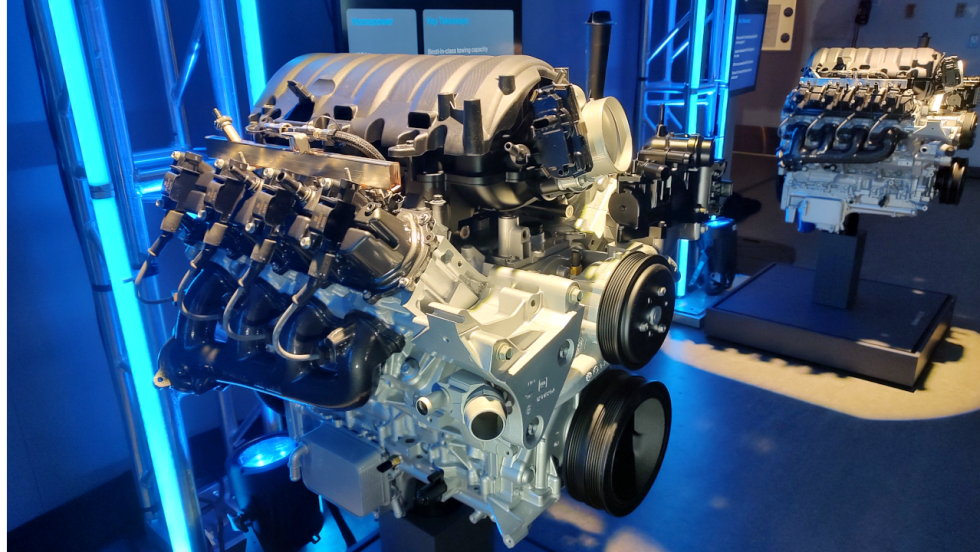
GM Unveils New Sixth-Generation Small Block Engines for 2027 Light-Duty Pickups
General Motors unveiled two new small-block engines, backed by extensive real-world validation and more than 70 years of small-block V8 manufacturing experience, as part of the engine portfolio for the 2027 Chevrolet Silverado 1500 and GMC Sierra 1500.
Read More →
2026 Ram 1500 Tradesman Put to a Real-World Fleet Test
A few days behind the wheel of a 2026 Ram 1500 Tradesman turned into a test of visibility, parking, work-ready features, and even severe-weather driving.
Read More →
Isuzu N-Series Gas Fleet Guide: Specs, Capability and 2027 Model-Year Updates
Explore Isuzu Truck North America’s N-Series Gas fleet specs, engine performance, GVWR and payload capability, configurations, chassis dimensions, work-focused features, and 2027 model-year information.
Read More →
Chevrolet Silverado 1500 Fleet Guide Specs Capability and 2027 Model-Year Updates
The next-generation 2027 Chevrolet Silverado 1500 brings new V-8 engines, updated technology, expanded safety features, and a fleet-focused Work Truck. Here’s what commercial fleets need to know so far.
Read More →
Ram ProMaster City Fleet Guide Specs Cargo Capacity and 2027 Updates
Work Truck’s Ram ProMaster City Fleet Guide tracks the latest specifications, cargo capability, configurations, fleet technology, pricing, and model-year updates for Ram’s mid-size commercial van.
Read More →
Ford F-150 Fleet Guide Specs Capability and 2026 Model-Year Updates
Explore 2026 Ford F-150 fleet specs, engines, towing and payload capability, configurations, work features, technology, and model-year updates.
Read More →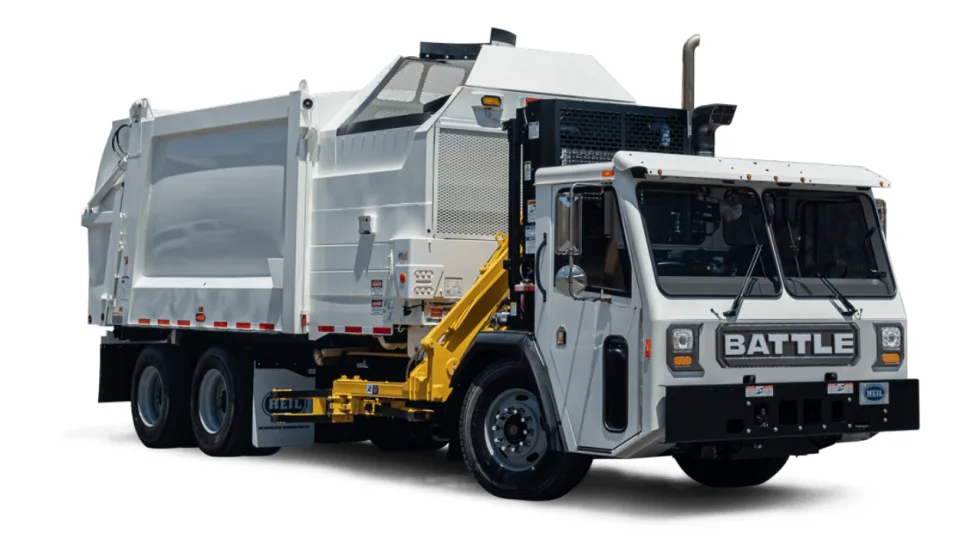
TCI Now Sells & Supports Battle Motors’ Vocational Trucks
Midwest truck dealer Truck Centers, Inc. (TCI) has expanded its transportation solutions with sales and service support for Battle Motors’ heavy-duty vocational trucks at locations in locations in Indiana, Illinois, and Missouri
Read More →
Ram 1500 Fleet Guide Specs, Capability and 2027 Model-Year Updates
Explore always up-to-date Ram 1500 fleet specs, engines, towing and payload capability, configurations, technology, pricing updates, and model-year changes.
Read More →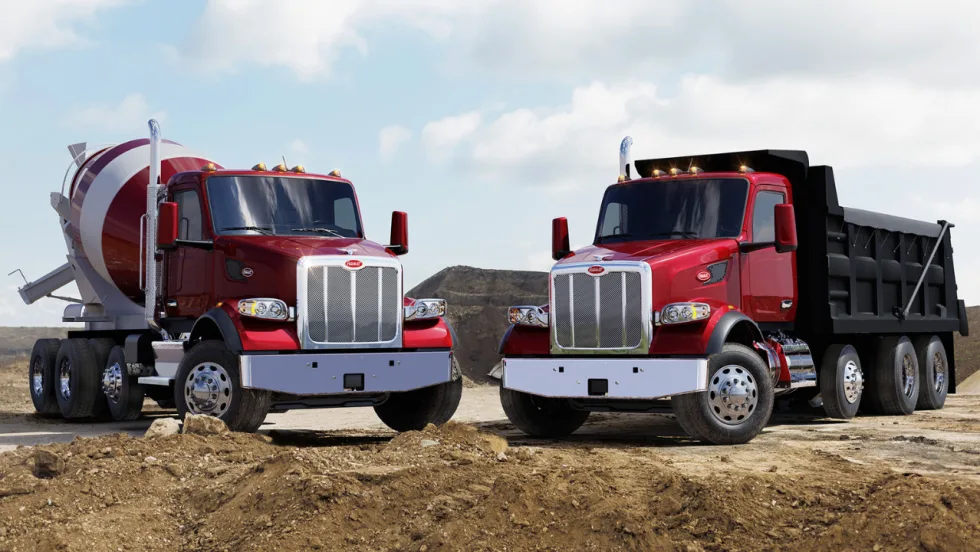
Peterbilt Trucks Equipped with Paccar TX-18 Pro Boost Efficiency for Maryland Fleet
Patuxent Companies is replacing aging trucks with the Peterbilt Model 567 and Model 589, specified with the Paccar TX-18 Pro 18-speed automated transmissions, and is reporting an 8% to 10% improvement in fuel economy.
Read More →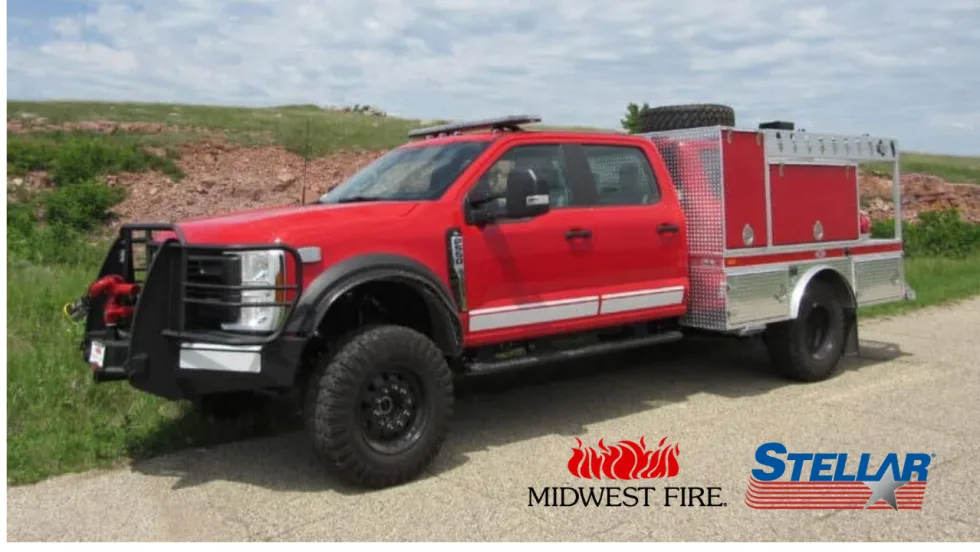
Stellar Expands into Fire Apparatus Market with Acquisition of Midwest Fire
Stellar Industries has acquired Midwest Fire, a custom fire apparatus manufacturer headquartered in Luverne, Minnesota, with nearly four decades of specialized apparatus experience.
Read More →