




Top 5 Questions on DOT Crashes
CMV crashes capture the nation’s attention and perpetuate the stereotype that commercial trucks cause or are involved in more fatal accidents than others. To mitigate risk and shatter this misconception, your team should be familiar with what is required of them and how a crash affects the motor carrier.

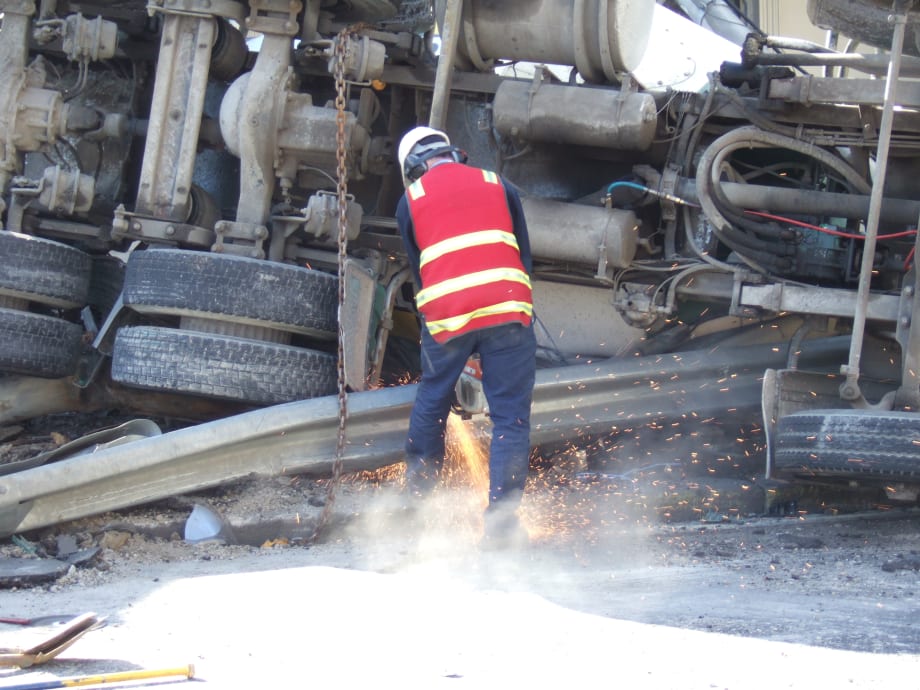
Image courtesy of wikimedia commons
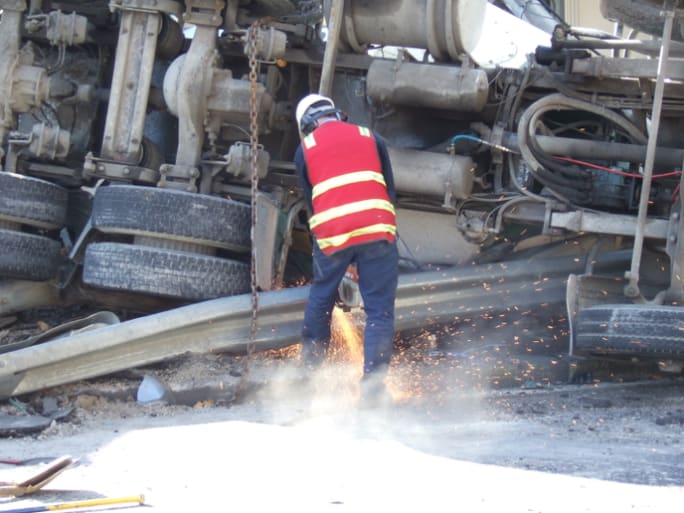
[EMPTY CREDIT]
Accidents involving at least one large truck accounted for 11.2% of all fatal crashes in the United States in 2015, according to the Federal Motor Carrier Safety Administration (FMCSA).
Proportionally, commercial motor vehicles (CMVs) are involved in far fewer deadly accidents than the motoring public, but CMV crashes capture the nation’s attention and perpetuate the stereotype that commercial trucks cause or are involved in more fatal accidents than others.
To mitigate risk and shatter this misconception, your team should be familiar with what is required of them and how a crash affects the motor carrier. Following are commonly asked questions on the topic of accidents:
1. What is a DOT Crash?
Specific criteria must be met — based on the definition of accident in Section 390.5 — before a crash is defined as a “DOT accident.”
First, it must occur in a CMV as defined in Section 390.5, which includes a variety of vehicle types. Next, the CMV must be operated on a highway in interstate or intrastate commerce, and at least one of the following occurs as a result of the crash:
Fatality.
An injury requiring immediate treatment away from the scene.
Disabling damage to one of the vehicles, requiring towing.
Minor occurrences, such as fender benders and damage at loading docks, do not qualify, regardless of an insurance claim.
2. When is a DOT Post-Accident Test Required?
The criteria in Section 382.301 requiring DOT post-accident testing are similar to the definition of accident in Section 390.5, but include the following differences:
DOT testing is only permissible when operating a CMV requiring a commercial driver’s license (CDL). Operation of a non-CDL CMV does not qualify.
A fatality as a result of the crash requires testing automatically while towing or an injury requires that your driver is tested only if he/she received a traffic citation.
If the criteria are met, the driver must be tested as soon as practicable, but no longer than eight hours following the crash for alcohol and 32 hours for drugs. If the initial circumstances do not warrant post-accident tests, the driver must be readily available for testing. This is in case criteria are met after the fact but within the allowable times for testing. Examples include a fatality or a traffic citation (i.e., towing or injury criteria have already been met). Also, your driver must refrain from alcohol consumption for eight hours following the crash in case a test is requested.
3. Does FMCSA Take Fault into Account for the Crash Indicator BASIC?
An accident meeting the federal definition in Section 390.5 will be scored using the Compliance, Safety, Accountability (CSA) methodology regardless of fault or preventability. Preventability is only taken into consideration in the event the motor carrier is investigated. Fault is never examined by FMCSA, as this is determined by a court during litigation.
Due to concerns over the CSA methodology used for the Crash Indicator BASIC (Behavior Analysis Safety Improvement Category), an FMCSA crash preventability study began Aug. 1, 2017, and it is expected to last two years. Motor carriers with qualifying crashes may participate in the study by submitting DataQs requests.
4. What DOT Recordkeeping is Required?
Motor carriers must create an accident register in accordance with Section 390.15, which must be kept for at least three years and be presented during audits. It must contain details of the crash including date, location, driver, injuries, fatalities, and release of hazardous materials (other than fuel), along with copies of all accident reports.
5. What is Expected of the Driver at the Scene of a Crash?
The federal regulations only address securing the scene using, first, the four-way flashers, followed by the placement of warning devices. The CMV is required to be equipped with a fire extinguisher that is fully charged and accessible, but there is no guidance on when or if it is to be used.
About the Author
Kathy Close is a transportation editor at J. J. Keller & Associates, Inc. Her areas of expertise include transportation security, DOT drug and alcohol testing, and driver qualification. For more information, e-mail transporteditors@jjkeller.comtransporteditors@jjkeller.com.
More Safety
When Work Trucks Under 26,001 Pounds Need IRP Registration
Think trucks under 26,001 pounds are automatically in the clear when it comes to IRP? Not always. Learn where lighter vehicles can still run into trip permit, apportioned registration, and IFTA compliance requirements when crossing state or provincial lines.
Read More →
Volvo Trucks Releases New Safety Recommendations for Traveling with Pets
One of the most important recommendations for professional drivers traveling with pets is to ensure pets are properly restrained while the truck is moving. Other tips are available in the new guide from Volvo Trucks North America and Center for Pet Safety.
Read More →
API Issues Refueling Safety Guidelines
The American Petroleum Institute offers a list of safe vehicle refueling guidelines, including ways to avoid potential problems with static electricity discharges in fall, winter, and early spring.
Read More →
Winter Fleet Prep: Expert Tips to Keep Vehicles Running Smoothly
Cold weather can expose weak batteries, tires, fuel systems, and maintenance gaps fast. Use this winter fleet checklist to prepare trucks and drivers before temperatures drop.
Read More →
When a Work Truck Breaks Down, the Job Can Stop, Too
A work truck breakdown can stop more than the vehicle. Discover how payloads, jobsites, and specialty equipment change the roadside response.
Read More →
What Stronger Long-Term Fleet Service Partnerships Actually Require
Fleet service partnerships rarely fall apart all at once. Learn the three warning signs that trust is eroding and what fleets and providers can do before downtime, frustration, and lost revenue follow.
Read More →
Applause & TRUCE Software Partner to Improve Driver Safety Through AI-Powered Telematics & Employee Performance Management
Applause has integrated TRUCE driving metrics directly into its employee-first performance and safety platform that transforms mobile devices into AI-powered telematics.
Read More →
How Detroit Assurance with Active Brake Assist Works
Do you want to see what it is like to experience Detroit Assurance’s Active Brake Assist? In this video, Work Truck will put you in the cab to see how it all works and then hear more details from DTNA’s Mike Young.
Read More →
Get Left of Loss: A 5-Step Workplace Violence Prevention Framework for Fleet Operators
Violence risks do not stop at the driver’s door. Learn five practical steps fleets can take to spot threats early and protect workers before loss occurs.
Read More →
How Better Visibility Cut Speeding Violations by 48%
Fleet leaders don't need more data, they need clearer visibility into what the data is saying. This case study explores how one utility replaced speeding-event counts with a single metric — miles driven in violation — to strengthen safety and significantly reduce speeding violations.
Read More →