





RELATED: What's Wrecking Your Tires?
How to Maximize Commercial Truck Tire Life
While tires are depreciating equipment, fleet managers can control how fast tire value drops. The best way is to write, communicate, and enforce a tire management and maintenance program.
March 1, 2007

During the testing/evaluation period, fleet managers should consider various metrics, such overall tire life, cost-per-mile, retreadability, warranty, and price.
Photo: Work Truck
9 min to read
Given their high cost, maximizing tire life can provide fleet operators significant savings. “Think of tires as depreciating equipment,” says Curtis Decker, national manager of field engineering for Continental Tire North America. “Granted, their intrinsic value will drop, but you want to control how fast it drops,” Decker added.
According to tire company officials, the best way to do this is to write, communicate, and enforce a tire management and maintenance program.
Truck Spec'ing vs. Truck Selection
Commercial tires are optimized for specific categories of operation, and selecting the right kind of tire application is a primary consideration. This requires a good working knowledge of the fleet’s activities and its drivers’ routes. On- versus off-road, inner city versus primarily highway driving — the choices often seem obvious. However, the obvious choice can also be deceptive.
The Class 4 through Class 6 truck segment, for example, may use a “slip sheet” driver setup when the truck is constantly on the move. The trucks may require steer axle tires designed for a regional application but, depending on the geographic range of their deliveries, they may also require a line/long-haul tire.
As a result, the fleet manager must look at total mileage over an extended period to get a good reading on the cut-and-chip resistance, traction, and other tire specification requirements a fleet needs. As a precaution in spec’ing, some tire company experts suggest trying two or three specifications in small amounts to see how they run/wear before making a large-scale purchase of one specification.
During this testing/evaluation period, fleet managers should consider various metrics, such overall tire life, cost-per-mile, retreadability, warranty, and price.
Extending Tire Life with Retreads
Retreads provide a cost-effective way of extending tire life.
“Fleet use of a retreaded tire three or four times is very common,” says Tim Miller, Goodyear Tire and Rubber marketing communications manager.
For example, many fleets buy brand-new all-position tires for steer axle tires, and subsequently, have them retreaded for use on the drive axle. They may then have them retreaded a third time for use on either the drive axle or their trailers.
On- and off-highway operation typically requires even more retreads because tire wear is quicker in a high scrub situation.
“Overall, there’s no set limit on how many times a tire can be retreaded, provided its casing is in good shape and it meets the retreader’s requirements,” says Doug Jones, customer engineering support manager for Michelin North America.
“Retreads themselves are very dependable,” adds Bill Vande Water, manager of consumer products, sales engineering, Bridgestone Firestone North American Tire.
“Those tire pieces you sometimes see on the side of a road are not retreads. They are new tires that ended up throwing tread because of poor maintenance,” Vande Water says.
One reason many fleets keep their own casing molds to have retreads made is they know the tire’s history - that it has been properly maintained and not driven underinflated.
Ultimately, a fleet must run its own evaluation and determine the cost-effectiveness of retreads, tire officials point out.
“The whole issue of how tires flow through the fleet — whether to use retreads, how many times a tire will be retreaded, and at what point it should be retreaded — really needs to be clearly defined as part of a good tire management program,” said Michelin’s Jones.
Causes of Irregular Truck Tire Wear
Most commercial tires wear out prematurely as a result of irregular wear, i.e., the tread wearing unevenly across the face of the tire.
Typically, this results from improper inflation, misalignment, failure to rotate the tires properly, or out-of-balance tires.
Proper Tire Inflation
A critical factor in tire maintenance is proper inflation, which impacts the safety, as well as financial, issues.
Overinflation causes premature/irregular wear at the tire center and, at the extreme, can lead to tire blowouts.
Underinflation, the most common culprit, causes excessive wear on tire shoulders. Severe underinflation weakens the sidewalls, placing stress on the carcass. It can lead to structural failures, including zipper cuts, sidewall ruptures, or tread separations, posing real driving dangers.
The Occupational Safety and Health Administration (OSHA) requires a tire operating at less than 80 percent of its recommended pressure be taken off the road, inspected, and put in a safety cage when being re-inflated.
The OSHA figure pertains to whatever pressure the fleet has set for load-carrying requirements.
When determining optimum pressure requirements (based on tire manufacturer load and inflation tables or engineering specification) fleets “should set the pressure for the worst-case-scenario load they’re carrying,” advises Michelin’s Jones.
Underinflation results from various causes. Even under normal conditions, air permeating through the sidewall will cause a tire to lose one PSI monthly and one PSI for approximately every 10-degree drop in outside temperature. Opinions about the frequency and manner of checking tire pressure vary.
If a fleet requires a pre-trip inspection and sends drivers out daily, daily air-pressure checks should be done, says Jones. “If the guy is a professional driver and has a commercial driver’s license, that’s part of the requirement,” he adds.
For most fleets, weekly inspections may be more realistic. “If you wait longer, you’re risking a costly item,” says Continental’s Decker. “It could be anything from a weakened sidewall to irregular tire wear to damage to the leads, if the load is heavy. You can save a lot of money by catching problems before they cause damage.” Many factors could shorten overall life and make a tire less a candidate for retread, he concluded.
Tests have shown drivers can be very effective in visually determining bulges, cuts, or scraps by kicking or thumping a tire with a tire thumper. Tire experts recommend having maintenance people do the checks.
Proper Tire Rotation
A tire’s wear tendencies are determined, in part, by its position on the vehicle. Front or steer tires have a tendency to wear on the shoulders, for example, while drive tires are more prone to wear in the center. Typically, rear tires will wear more quickly than the fronts because of their tendency to get scrubbed.
While the benefits of proper rotation are obvious, a fleet must consider how to rotate its tires and determine the optimum rotation times required to keep the tire healthy without adding unnecessary cost. Decker says, “At a commercial level, every time the fleet touches a tire — whether using a dealership with a service truck or hiring its own technicians — cost is added.”
Most fleets aren’t inclined to bring a truck in just to rotate tires. They typically try to time rotations with service intervals, when brakes and other mechanical are checked.
“The first two rotations,” says Bridgestone Firestone’s Vande Water, “are really the most important because that’s when the tire is trying to set up its wear pattern. When the tire is new, you have this really tall tread depth and after it’s shortened up a bit, it becomes a little more stable and is not as susceptible to that wear pattern.”
Longevity is heightened with subsequent rotations, “but the first two really give you the most bang for the buck,” Vande Water concludes.
Aligning Truck Tires for the Application
It’s natural to assume a standard alignment setup works for all conditions, and very often operators are inclined to align the wheels to the center of the tolerances.
However, a standard alignment may not be necessarily accurate. Very often, medium-duty trucks, such as trash haulers, which have a very tight turning radii and are constantly turning to the right, require their scrub set at a higher level.
“You need to align the truck to best it your application,” says Decker. You want to monitor the tires for toein/toe-out, even though the necessary corrections may take you to one side of the tolerance.”
Adds Goodyear’s Miller, “Most people will check the steer axle (frontend toe-in, and caster and axle alignment), but you don’t want to overlook the drive axle alignment. If the drive axle is misaligned, the truck wants to go straight down the road, but you’ll end up dog-tracking and wear out the front tires more quickly.”
Some tires have a visual alignment indicator in the 5/32s of the tread, for example, with special sights to identify whether they wear faster on one side or the other, alerting operators to specific toe-in concerns.
Proper Tire Balance
Assuming the wheel weights have been properly attached and the tire properly balanced and mounted, rarely do tires become out of balance after being mounted on the vehicle.
The exception might be if the lead weights were affected in some manner, causing them to slip on the tire rims.
Still, says Miller, “it’s not a bad idea at some point, halfway through a steer tire’s life, to take it off and do a rebalance.”
Why You Shouldn't Neglect Inside of Dual Wheels
Tire experts also point out that, when it comes to maintenance, inside tires on dual assemblies are often neglected because checking inflation is not easy.
“You have to be very careful to check for any significant differentiation that may show up in dual tires,” Decker says.
In Summary, a few tips to help keep tire costs low and driver's safe include:
Keep Tires Clean. Tires also frequently pick up chemicals, mud, and debris that cause the rubber to deteriorate. Experts recommend washing the tires while the vehicle is washed. Here again, special care should be taken to include the inside dual tires, which are commonly ignored.
Avoid Aggressive Driving. Aggressive driving, including sudden stops and starts, produces excessive wear not only on tires, but also on other truck components. It shows up on tires as flat spots and/or locked-up brakes. At the end of the day, such driving behavior can cut into profits in many ways. Attempts to deliver more goods and deliver them faster actually result in a more expensive way to run a business.
Keep Tab on Costs. A good tire maintenance program should also include calculating tire cost-per-mile, keeping good records, and doing a scrap tire analysis, if necessary.
“Management should have some way of examining every tire that comes out of service and knowing why it’s out of service,” says Jones. “They need to keep records to make sure they’re getting their money’s worth out of the tires. If they’ve bought the wrong tire for the application or are
Create Lasting Relationships with Tire Companies
Good relationships with tire manufacturer representatives or dealers can be highly beneficial in procuring and maximizing tire investments.
“I’ve seen many fleets jump from manufacturer to manufacturer, dealer to dealer, and buy on price alone without actually saving money,” says Decker.
“Every reputable manufacturer has a customer service department, and contrary to popular belief, that service department really wants to help. It’s in the manufacturer’s best interest to help customers because so much of this business depends on repeat purchases,” Decker concludes.
Subscribe to Our Newsletter
More Maintenance

Volvo Trucks’ 'Lock and Leave' Software Updates Go Live Across North America
Unattended over-the-air software updates are now available in Volvo trucks across the U.S. and Canada. The new capability lets trucks stay current with the latest software without interrupting operations or requiring a dealership visit.
Read More →
Why Technician Appreciation Can’t Be a Once-a-Year Thought
For fleets trying to keep skilled technicians, recognition cannot begin and end with Technician Appreciation Week. Learn what year-round appreciation really looks like and why the everyday technician experience matters just as much as pay when fleets are trying to keep good people.
Read More →
How Faster Driver Reporting Can Keep Small Truck Problems Small
When minor damage, warning lights, or equipment issues are reported late, small problems can quickly become bigger maintenance headaches. Conversational AI can help shorten the path from what a driver notices in the field to the person who can act on it.
Read More →
BendPak’s Ranger Wheel Service Equipment Achieves North American Safety Certification
BendPak’s full line of Ranger tire changers and wheel balancers has been ETL certified to UL and CSA standards to improve operator safety.
Read More →
Isuzu & U.S. Department of Labor Celebrate Milestone for Veterans Apprenticeship Program
The Isuzu Veterans Apprenticeship Program (IVAP) signing ceremony highlighted Isuzu’s long-term commitment to veterans, Isuzu dealers, and the skilled workforce supporting its customers and the commercial transportation industry.
Read More →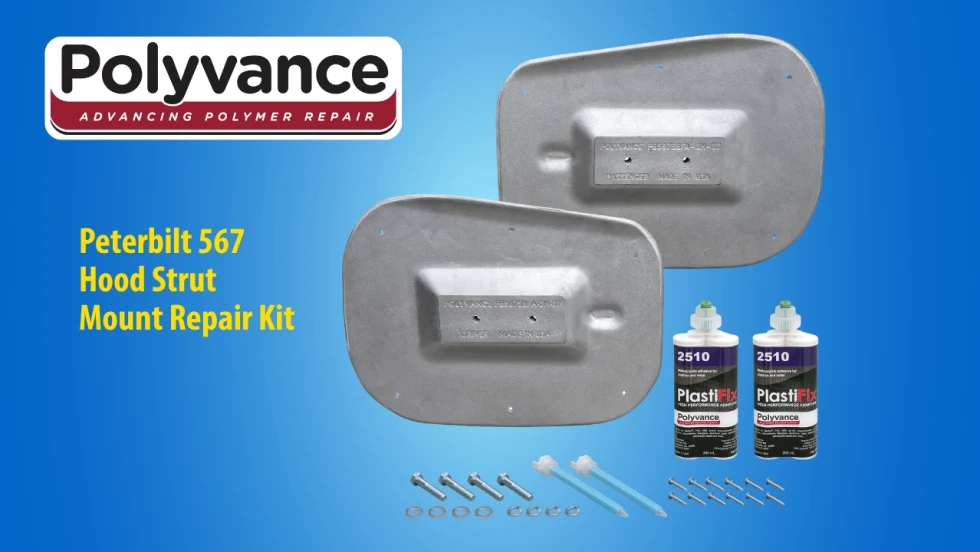
Polyvance Introduces New Peterbilt 567 Hood Strut Mount Repair Kit
Polyvance has launched a repair solution for Peterbilt 567 hood struts, helping truck owners and repair facilities avoid costly hood replacements.
Read More →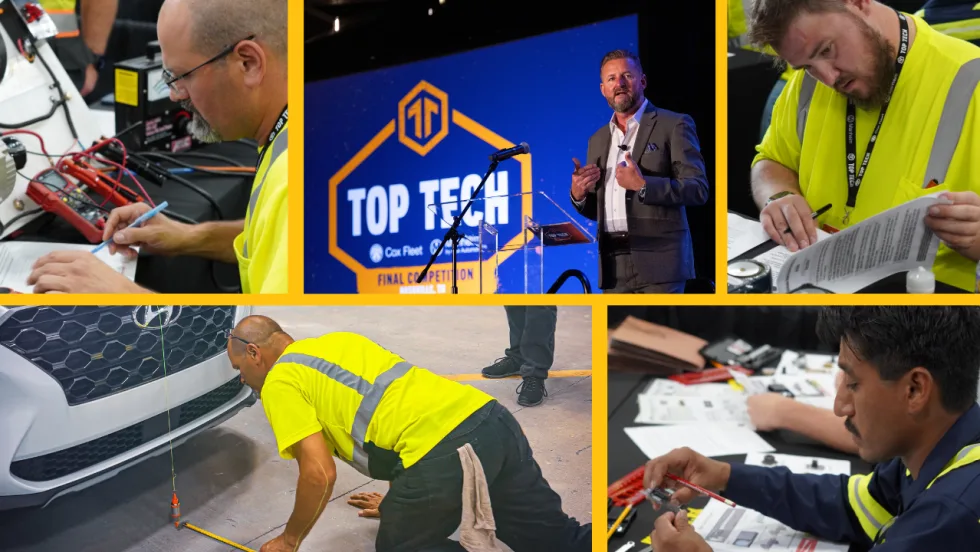
Cox Automotive Celebrates Technical Excellence at 2026 Top Tech Finals
The top technicians from Cox Fleet and Manheim tested their skills in Nashville, Tennessee, at Cox Automotive’s 2026 Top Tech Finals. The overall winners will advance to compete at the American Trucking Association’s TMC SuperTech competition.
Read More →
Grote Industries Appoints Vice President of North American Operations
Grote Industries has appointed Patrick Smith as vice president of North American operations as it celebrates 125 years of innovation and manufacturing excellence. He has more than 20 years of manufacturing leadership experience.
Read More →
Winter Fleet Prep: Expert Tips to Keep Vehicles Running Smoothly
Cold weather can expose weak batteries, tires, fuel systems, and maintenance gaps fast. Use this winter fleet checklist to prepare trucks and drivers before temperatures drop.
Read More →
Lubrizol CV1700 Heavy-Duty Engine Oil Additive Available Well Ahead of API CL-4 First License
Lubrizol CV1700, Lubrizol’s additive solution for the American Petroleum Institute’s (API’s) next heavy-duty diesel engine oil specification, is available now and enables high performance across a broad range of base oil stocks and viscosity grades.
Read More →