



GM’s Tonawanda Plant Retooled for High-Tech Engines
Some of General Motors’ advanced manufacturing techniques to produce the all-new, Gen 5 Small Block engine family are microscopic, but they have a huge impact on the 75-year-old Tonawanda Engine Plant, where about 1,500 jobs have been created and retained since 2009.
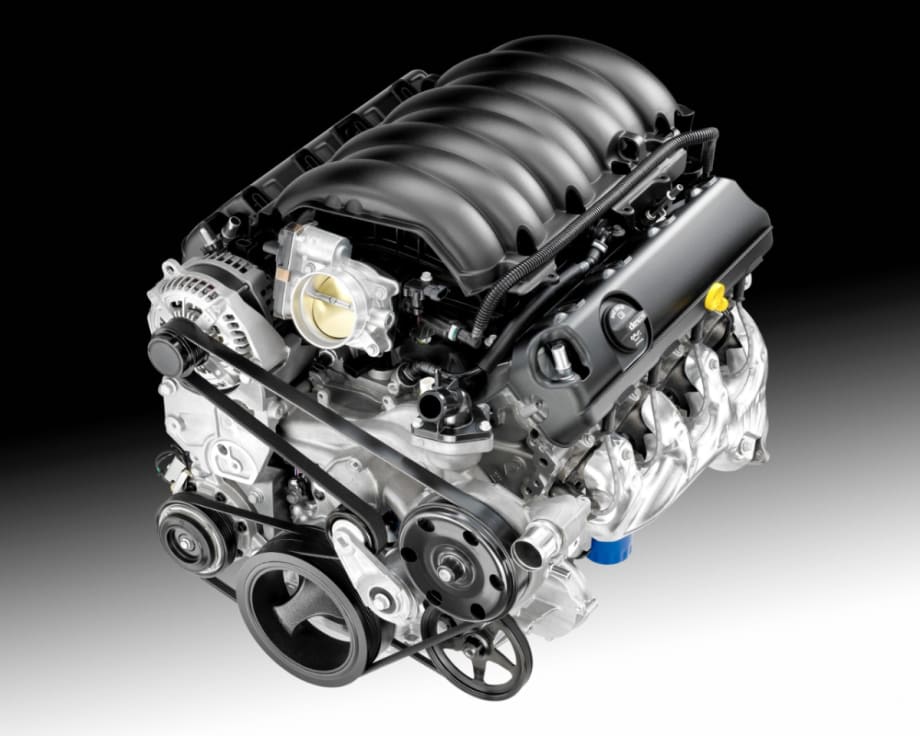
2014 Small Block Gen 5 5.3L V-8 AFM VVT DI (L83) for Chevrolet Silverado and GMC Sierra.
Some of General Motors’ advanced manufacturing techniques to produce the all-new, Gen 5 Small Block engine family are microscopic, but they have a huge impact on the 75-year-old Tonawanda Engine Plant, where about 1,500 jobs have been created and retained since 2009.
As a result of GM’s $400 million investment, Tonawanda will eventually produce four versions of the Gen 5 Small Block – a 4.3L V-6, 5.3L V-8 and two variants of a 6.2L V-8. When the plant is at full production, it will produce more than 1,000 engines daily. The new family of engines will power nine GM models by 2015, starting with the all-new 2014 Chevrolet Silverado and GMC Sierra pickups, and the all-new 2014 Chevrolet Corvette Stingray.
2014 Small Block Gen 5 5.3L V-8 AFM VVT DI (L83) for Chevrolet Silverado and GMC Sierra.
“The Gen 5 Small Block is a cornerstone of GM’s powertrain strategy and its production at Tonawanda affirms the commitment to one of the highest-skilled workforces in the industry,” said Steve Finch, plant manager. “We have invested 40,000 hours and $1.8 million in training the workforce to build these engines with uncompromising quality, and we’ve added some of the most flexible equipment ever used in the industry to make sure we can meet market demand.”
Said Bob Coleman, shop chairman of UAW Local 774: “We have hired more than 1,000 people in the last year. They are trained by a joint team and learn the Tonawanda culture during an intensive two-week orientation. I believe we have the finest engine builders in GM. Receiving almost $1 billion of new investment since 2010 proves that GM has the confidence in this workforce, as do I.”
Manufacturing highlights include:
New coordinate measuring machines that check machining with greater speed and accuracy, including a Zeiss position check machine that examines more than 11,000 data points within 2.5 microns and a Hummel surface finish machine that checks surface finish textures at less than a micron – less than 0.001 millimeter or 0.000039 inch
A new Track and Trace system that collects all machining and assembly data for each engine, helping ensure top quality builds.
A new, smart automated cylinder head assembly system helps ensure more precise assemblies. It can assemble 48 parts in 40 seconds.
A fuel system connection inspection that uses helium to detect even the most minute of leaks – less than one part per billion – for the high-pressure direct injection system on each engine
The capability of boring any number of cylinders through the same machine without stopping
A new machine featuring three synchronistic robots that performs inspections and checks simultaneously for any engine – including thread check, plug assembly and leak test. Previously, checks were handled one at a time and separate lines were required for six- and eight-cylinder engines.
The technologies and training enable Tonawanda to build all Gen 5 variants on the same assembly line. All feature advanced technologies – including direct injection, Active Fuel Management, continuously variable valve timing and an advanced combustion system – which enable the engines to make more power with greater efficiency.
The new 5.3L V-8 offered in the 2014 Silverado and Sierra trucks, for example, is the most efficient V-8 in the segment, rated at 23 mpg on the highway (2WD), while the 455-horsepower 6.2L LT1 V-8 found in the 2014 Corvette Stingray makes it the most efficient sports car on the market, with an EPA-estimated 29 mpg on the highway. Gen 5 Small Block engines are marketed as EcoTec3 in trucks.
“The Gen 5 Small Block engines are among the most advanced and high-tech in the world and Tonawanda is now one of the most technologically advanced manufacturing facilities to support them,” said Finch. “From the machining operations and the flexibility for building variants on the same line to state-of-the-art quality advances, Tonawanda’s manufacturing capabilities are second to none.”
Construction on the Tonawanda facility started in 1937 and production began on March 22, 1938. It is known throughout automotive collector and enthusiast circles as the birthplace of some of the most historic high-performance engines for vintage Chevrolet muscle cars and Corvettes. It is also the birthplace of the Small Block engine, which went into production in 1955. Tonawanda this year will build its 71-millionth engine. The start of Gen 5 production has contributed to the workforce more than doubling in size from its low in 2009.
More Operations

What Fleet Employers Are Missing When Hiring Veterans
What if some of the strongest candidates for fleet are already out there, but their experience is written in a language our industry does not always recognize?
Read More →
Automotive Fleet Opens 2026 Personal Use Survey for Commercial Fleet Managers
Less than two weeks left! Commercial and corporate fleet managers are invited to share how their organizations handle company vehicle personal-use policies, charges, and driver eligibility.
Read More →
What Resilient Fleets Do Differently When Conditions Change
Fleet resilience is about more than reacting to disruption. Lauren Fletcher talks with AP Fleet’s Alex Coveney about flexibility, planning, scaling, and what helps fleets adapt when business conditions shift.
Read More →
If We Want the Next Generation in Automotive, We Have to Give Them a Reason to Care
The automotive industry talks constantly about its workforce shortage. But before we can recruit the next generation, we may need to do a better job giving kids a reason to care about automotive in the first place.
Read More →
Ram ProMaster City Under $40K, Truck Tariffs, and AI Maintenance Lead the News
A sub-$40K commercial van, tariff questions, AI-powered maintenance, and a new EV production strategy headline this week’s Truck Chat Cheat Sheet.
Read More →
Bob Adamsky Shares the Fleet Lessons You Usually Learn the Hard Way
After more than 30 years in fleet, Arrow International’s Bob Adamsky has learned that the job is about far more than vehicles. He shares the lessons he wishes every fleet manager could learn a little earlier.
Read More →
Why Fleet Leaders Have to Keep Asking Why
What if the biggest fleet improvements start with one simple question? After decades managing budgets, policies, technology, teams, and some of the largest fleet operations in the business, Jeff Hurrell shares why fleet leaders should keep asking “why” before deciding what comes next.
Read More →
Drones, EV Reality, Truck Production & Smarter Fleet Operations Lead This Month
August’s biggest work truck stories go beyond the vehicle, from disaster-response drones and EV reality checks to truck production, roadside uptime, and smarter fleet operations.
Read More →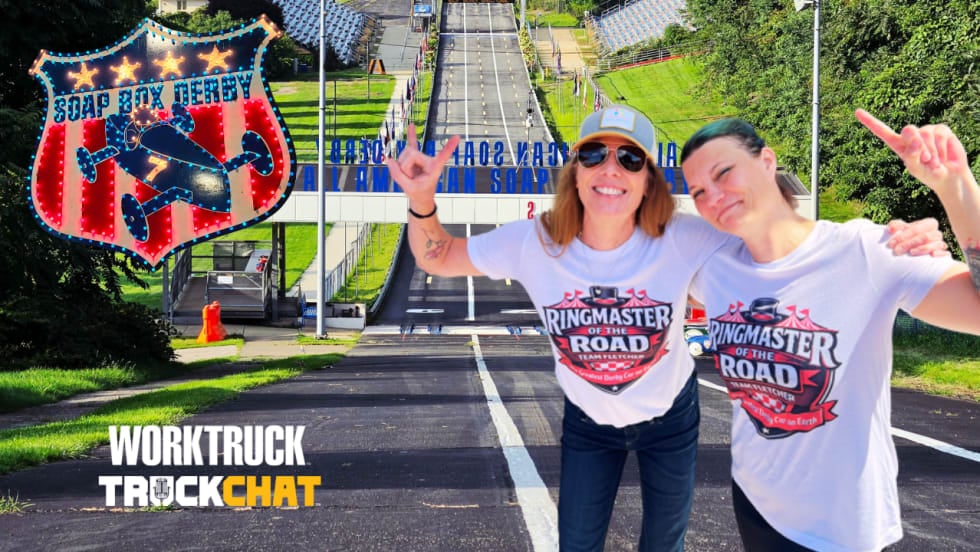
Team Fletcher Takes 2nd Overall at the Corporate Soap Box Derby
Team Fletcher came to Akron as a rookie and left with a win over Team Brown, a second-place overall finish, and $22,000 raised for The Hourglass Foundation. See how race day unfolded.
Read More →
Shades of Fleet Call for Voices: Fleet's Hidden Heroes
Fleet’s hidden heroes are often the ones keeping everything moving behind the scenes. September’s Shades of Fleet is looking for dispatchers, coordinators, parts specialists, and other support pros to share their stories.
Read More →