





Keep Reading: How 250 Years of American Progress Led to the Work Trucks We Rely on Today
Mercedes-Benz Marks 130 Years of Trucks with a Look Back
Mercedes-Benz Trucks Classic kicks off its 130-year anniversary with the world’s first truck recreation and exhibits reaching to today’s eActros 600 Safety Truck.
February 12, 2026
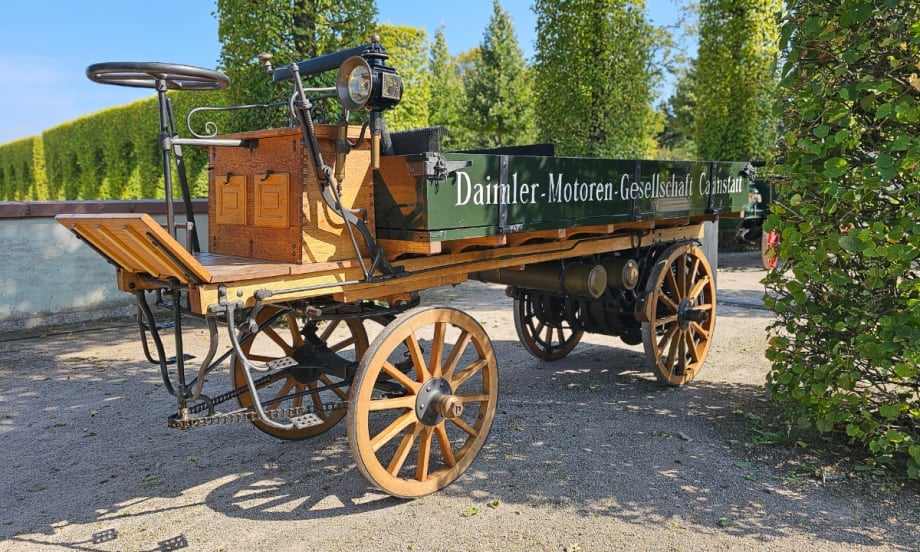
The reconstructed 1896 Daimler motorized truck marks the starting line of commercial transport, introducing engine-powered freight long before fleets were even a concept.
Credit: Mercedes-Benz Trucks
5 min to read
If you manage work trucks for a living, it’s easy to focus on what’s next. Telematics upgrades. EV adoption. Safety mandates.
But every once in a while, it’s worth looking in the rearview mirror.
In 2026, Mercedes-Benz Trucks is doing just that. The company is kicking off its “130 Years of Trucks” anniversary with a showcase at Retro Classics Stuttgart, highlighting a timeline that stretches from the world’s first motorized truck to today’s battery-electric heavy-duty models.
For fleet managers, it’s a reminder that the tools we rely on every day were once radical experiments.
The First Truck and the Blueprint for Modern Heavy Duty
The centerpiece of the anniversary display is a reconstruction of the 1896 Daimler motorized truck, widely considered the first of its kind.
It was powered by a two-cylinder “Phoenix” engine producing four horsepower. The engine sat at the rear, driving the axle through a belt system. Steering was controlled by chains. Solid iron tires rolled over uneven roads. The driver perched on a coach-style bench.
Primitive by today’s standards. Revolutionary for its time.
What’s especially interesting for modern fleets is that one key principle still in use today was already present: a planetary hub-reduction axle, a design still common in heavy-duty applications. Even at the dawn of motorized transport, engineers were thinking about torque, durability, and load handling.
Within two years, the layout evolved. The engine moved beneath the driver’s seat and eventually forward of the front axle, paving the way for increased payload capacity and higher performance. Daimler tested early trucks under real-world conditions at a brickworks before moving into production. Sound familiar? Field testing has always been part of the job.
By the turn of the century, trucks were already moving beyond Germany into England, France, and even the U.S., establishing the foundation for global commercial vehicle operations.

A mid-20th century Mercedes-Benz flatbed reflects the era when trucks became true vocational workhorses, built for durability, payload, and everyday fleet service.
Credit: Mercedes-Benz Trucks
From Mechanical Muscle to Electronic Brains
Fast forward a century to another milestone fleet managers know well: the launch of the Mercedes-Benz Actros in 1996.
For many in the industry, that truck marked the shift from a primarily mechanical workhorse to a digitally integrated platform. The first-generation Actros introduced:
A CAN data bus system
Electronically controlled braking
Integrated safety systems
The MegaSpace cab focused on driver comfort
That move toward electronics reshaped how fleets manage uptime, safety, and diagnostics. A decade later, features like Active Brake Assist pushed active safety even further.
Today’s Actros lineup, including the Actros L and battery-electric eActros 600, reflects three decades of continuous evolution. For fleets, that progression mirrors the broader transformation of commercial vehicles into connected, data-rich assets.
Safety, Then and Now
Comparing the 1896 truck to a modern electric heavy-duty platform shows just how far the industry has come in safety.
The original model relied solely on mechanical steering, basic suspension, and the driver’s skill. Contrast that with the latest eActros-based Safety Truck, which incorporates:
270-degree sensor fusion
Advanced emergency braking systems
Sideguard assistance technology
Integrated electronic control systems
Where early trucks were essentially motorized wagons, today’s platforms are layered with technology designed to prevent crashes or reduce severity. For fleets navigating rising insurance costs and stricter regulations, that safety evolution is more than historical trivia. It’s an operational reality.
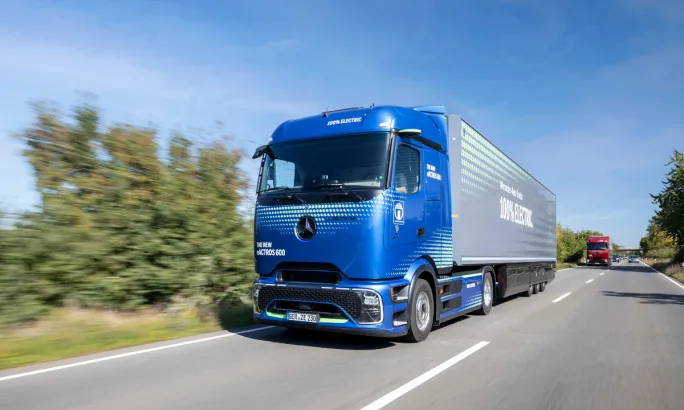
The battery-electric eActros 600 represents today’s chapter in truck evolution, combining zero-emission capability with modern safety and connectivity systems.
Credit: Mercedes-Benz Trucks
Alternative Fuels Are Not New
One exhibit featured in the anniversary lineup highlights something many fleet managers might find relatable: alternative propulsion isn’t new.
A 1937 Mercedes-Benz L 1500 equipped with a wood-gas generator illustrates a period when fuel shortages prompted operators to seek unconventional solutions. Until the 1950s, wood-gas systems were common in parts of Europe.
Sound familiar? Fleets today are again balancing operational needs with new energy sources, whether that’s electric, hybrid, CNG, or renewable fuels. The tools change, but the problem-solving doesn’t.
Unimog, Setra, and Post-War Growth
The anniversary also spotlights other long-standing nameplates that shaped vocational and specialty markets:
Early and late-generation Unimog models mark 80 years of production
Post-war trucks from the 1960s that supported economic rebuilding
A 1950s Setra integral bus representing 75 years of self-supporting bus design
For fleets in municipal, construction, and specialty sectors, these vehicles represent the roots of many configurations still in use today.
What 130 Years Really Means for Fleets
Anniversaries can feel ceremonial. But in this case, the timeline tells a story fleet managers live every day.
In 1896, the focus was proving a motorized truck could replace horse-drawn freight.
In the mid-20th century, it was durability and rebuilding economies.
In the 1990s, electronics and safety systems redefined the cab.
Today, connectivity, electrification, and advanced driver assistance systems are rewriting expectations again.
Through it all, three constants remain central to fleet operations: reliability, progress, and partnership. Those themes have shaped truck development from the first belt-driven axle to today’s emission-free heavy-duty platforms.
For work truck fleets, the takeaway isn’t nostalgia. It’s perspective. And it's not just trucks Mercedes-Benz has disrupted; the Sprinter Van celebrated 30 years in 2025, moving people and goods around the world.
The next major shift in commercial vehicles may feel disruptive. But if history tells us anything, it’s that the industry has always evolved through bold engineering, real-world testing, and a relentless focus on moving goods more efficiently and safely.
One hundred and thirty years ago, a four-horsepower truck started it all.
Today’s fleets are running platforms that engineers from 1896 could hardly imagine. And if the past century is any guide, what’s coming next will once again redefine what a “work truck” means.
More Vehicle Research
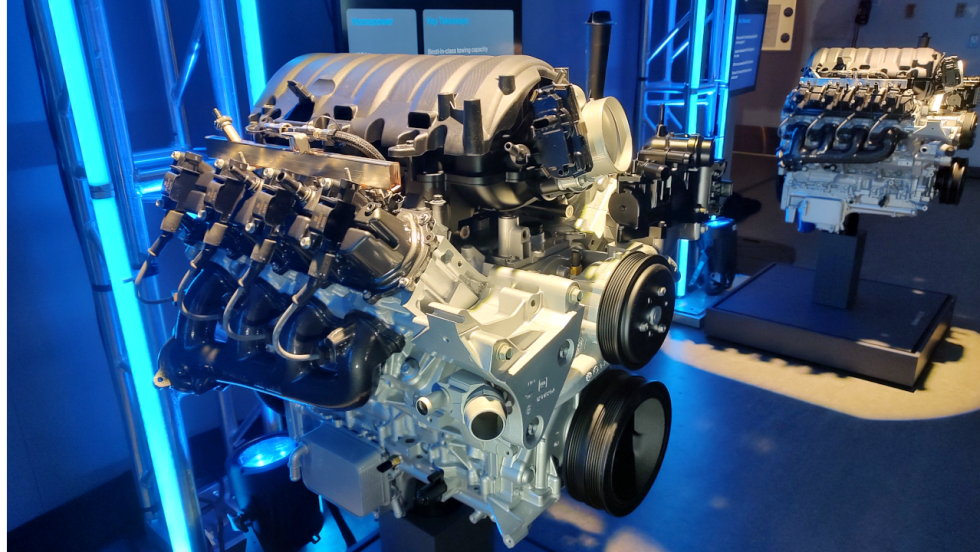
GM Unveils New Sixth-Generation Small Block Engines for 2027 Light-Duty Pickups
General Motors unveiled two new small-block engines, backed by extensive real-world validation and more than 70 years of small-block V8 manufacturing experience, as part of the engine portfolio for the 2027 Chevrolet Silverado 1500 and GMC Sierra 1500.
Read More →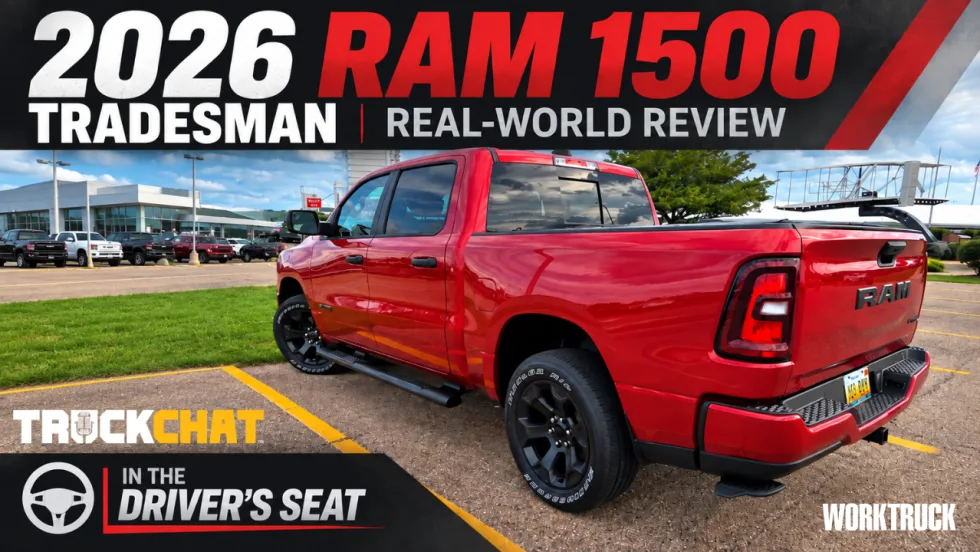
2026 Ram 1500 Tradesman Put to a Real-World Fleet Test
A few days behind the wheel of a 2026 Ram 1500 Tradesman turned into a test of visibility, parking, work-ready features, and even severe-weather driving.
Read More →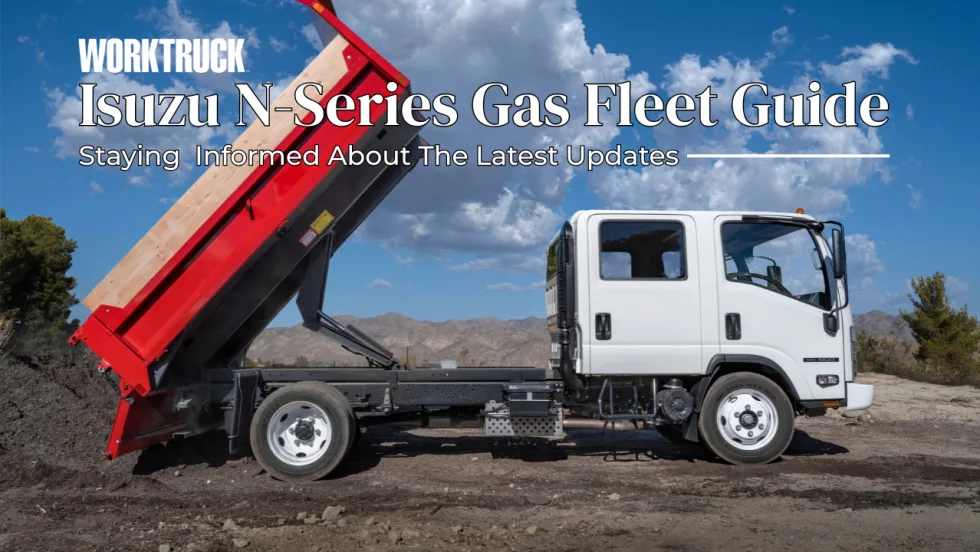
Isuzu N-Series Gas Fleet Guide: Specs, Capability and 2027 Model-Year Updates
Explore Isuzu Truck North America’s N-Series Gas fleet specs, engine performance, GVWR and payload capability, configurations, chassis dimensions, work-focused features, and 2027 model-year information.
Read More →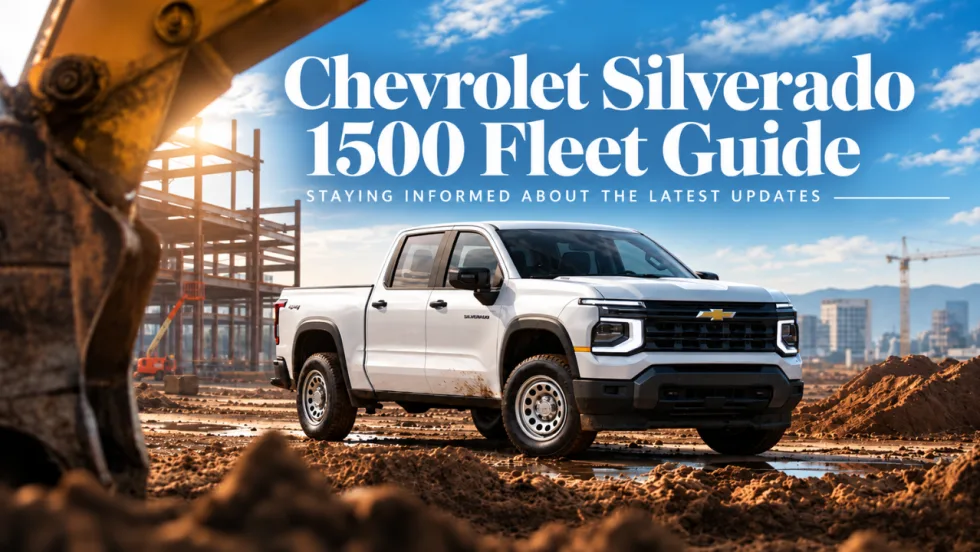
Chevrolet Silverado 1500 Fleet Guide Specs Capability and 2027 Model-Year Updates
The next-generation 2027 Chevrolet Silverado 1500 brings new V-8 engines, updated technology, expanded safety features, and a fleet-focused Work Truck. Here’s what commercial fleets need to know so far.
Read More →
Ram ProMaster City Fleet Guide Specs Cargo Capacity and 2027 Updates
Work Truck’s Ram ProMaster City Fleet Guide tracks the latest specifications, cargo capability, configurations, fleet technology, pricing, and model-year updates for Ram’s mid-size commercial van.
Read More →
Ford F-150 Fleet Guide Specs Capability and 2026 Model-Year Updates
Explore 2026 Ford F-150 fleet specs, engines, towing and payload capability, configurations, work features, technology, and model-year updates.
Read More →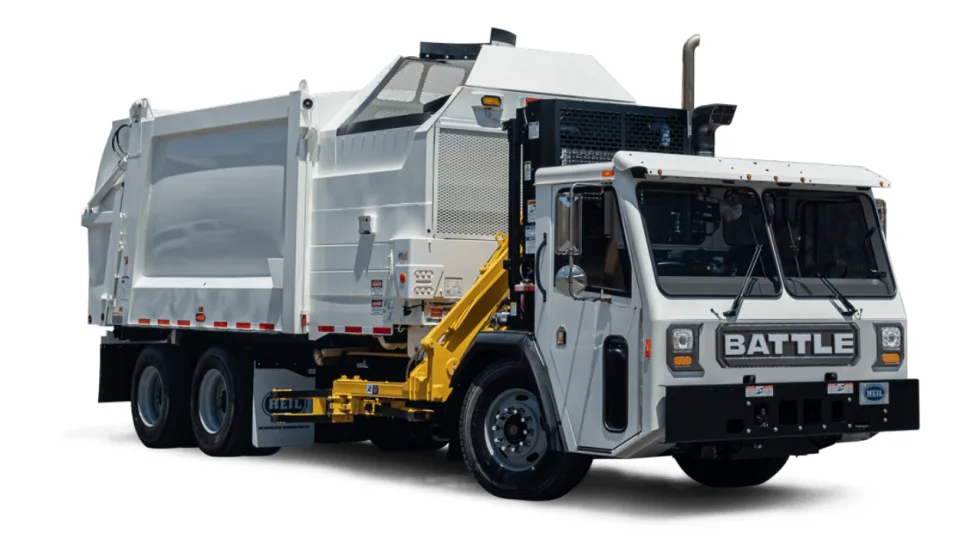
TCI Now Sells & Supports Battle Motors’ Vocational Trucks
Midwest truck dealer Truck Centers, Inc. (TCI) has expanded its transportation solutions with sales and service support for Battle Motors’ heavy-duty vocational trucks at locations in locations in Indiana, Illinois, and Missouri
Read More →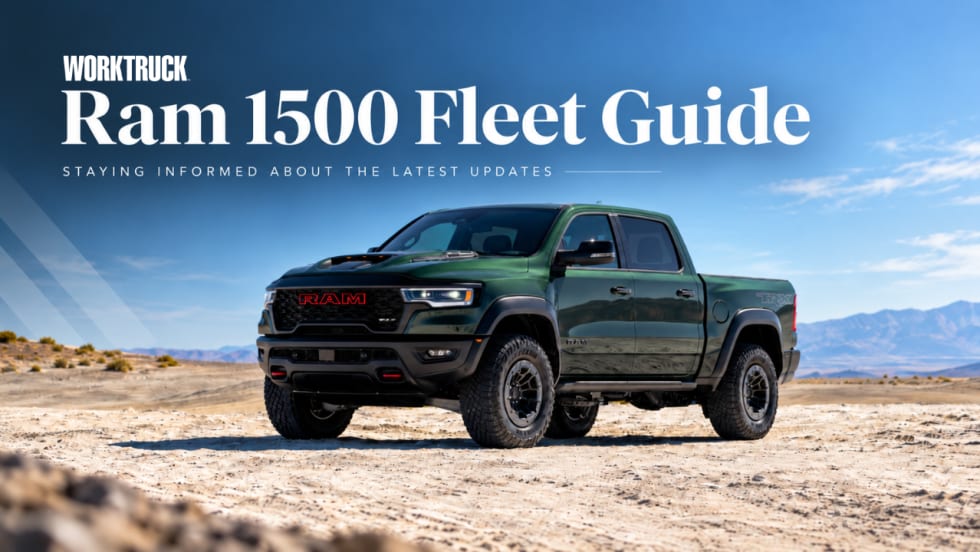
Ram 1500 Fleet Guide Specs, Capability and 2027 Model-Year Updates
Explore always up-to-date Ram 1500 fleet specs, engines, towing and payload capability, configurations, technology, pricing updates, and model-year changes.
Read More →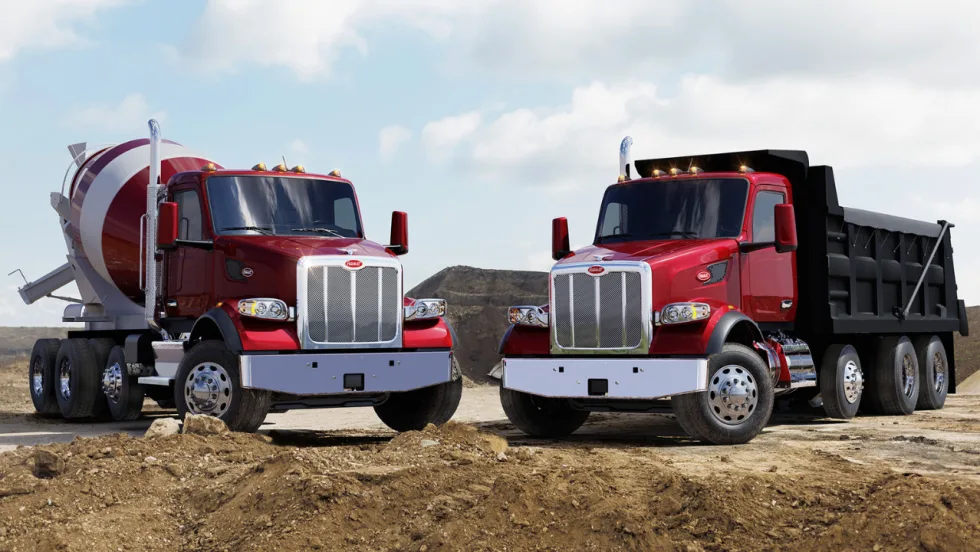
Peterbilt Trucks Equipped with Paccar TX-18 Pro Boost Efficiency for Maryland Fleet
Patuxent Companies is replacing aging trucks with the Peterbilt Model 567 and Model 589, specified with the Paccar TX-18 Pro 18-speed automated transmissions, and is reporting an 8% to 10% improvement in fuel economy.
Read More →
Stellar Expands into Fire Apparatus Market with Acquisition of Midwest Fire
Stellar Industries has acquired Midwest Fire, a custom fire apparatus manufacturer headquartered in Luverne, Minnesota, with nearly four decades of specialized apparatus experience.
Read More →