




Keep Reading: Mercedes-Benz Marks 130 Years of Trucks with a Look Back
A Photo Tour of 130 Years of Mercedes-Benz Trucks
This photo gallery captures more than a milestone anniversary. It’s a visual timeline of how commercial trucking has evolved over 130 years, from the earliest motorized platforms to today’s battery-electric heavy-duty models. Each vehicle shown represents a turning point in how freight gets moved and how truck design has continuously adapted to real-world work.
The story starts in 1896 with a reconstruction of the original Daimler motorized truck. With a rear-mounted two-cylinder engine, belt-driven axle, chain steering, and wooden wheels, it was a major step away from horse-drawn transport. It produced just 4 horsepower, but it introduced engineering ideas that still appear in heavy-duty design, including early hub-reduction concepts. For fleet managers, it’s a reminder that the work trucks we rely on today began as bold experiments.
By 1899, the technology was already advancing, with early shaft-drive developments pointing toward drivetrain layouts that would shape truck engineering for the next century. These early vehicles show how quickly innovation accelerated once motorized freight proved it could handle the job.
Moving into the mid-20th century, the gallery highlights trucks that reflect an era when durability and serviceability were everything. Post-war flatbeds and vocational platforms represent the kind of straightforward, mechanical workhorses that helped rebuild industries and keep goods moving. For many fleets, those decades built the baseline expectation for reliability that still influences how trucks are evaluated today.
The gallery also nods to a chapter that feels surprisingly modern: alternative propulsion. A 1937 L 1500 equipped with a wood-gas generator reflects a time when fuel shortages pushed operators toward creative solutions. It’s a strong reminder that fleets have always adapted powertrains to match operational reality, long before electrification entered the conversation.
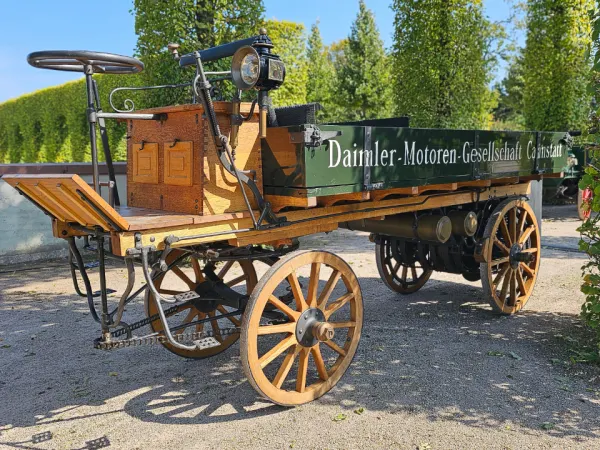
A reconstruction of the 1896 Daimler motorized truck shows the four-horsepower beginning of global commercial transport.
Credit: Mercedes‑Benz Trucks
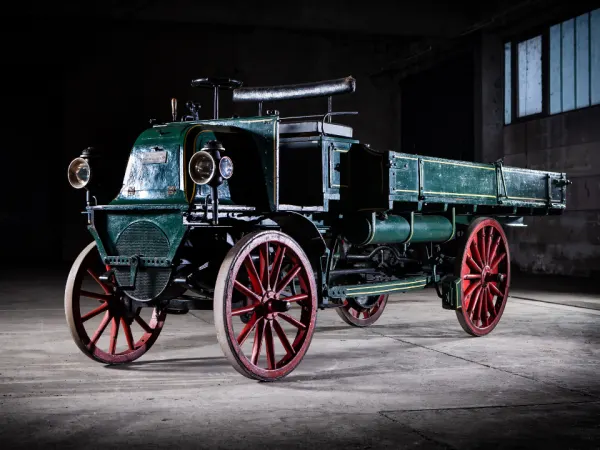
The 1899 Daimler truck featuring early shaft-drive technology marks one of the first major steps toward modern drivetrain layouts.
Credit: Mercedes‑Benz Trucks
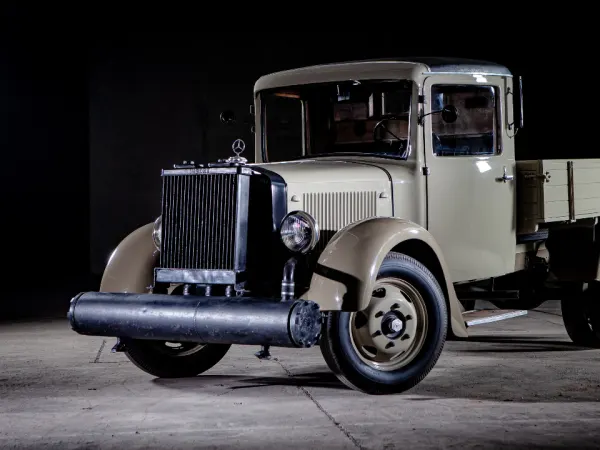
The 1937 Mercedes-Benz L 1500 equipped with a wood-gas generator reflects a time when alternative fuels were a necessity, not a trend.
Credit: Mercedes‑Benz Trucks

A classic mid-century Mercedes-Benz flatbed sits outside a historic museum, symbolizing decades of vocational service across Europe.
Credit: Mercedes‑Benz Trucks
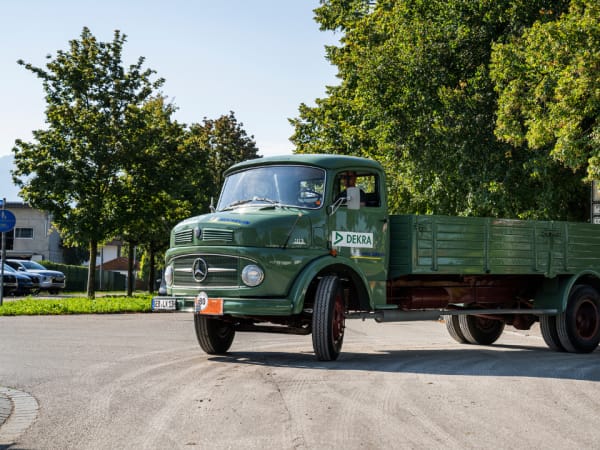
A restored mid-century Mercedes-Benz work truck represents the post-war era of commercial transport, when durability and simple mechanical design powered Europe’s rebuilding years.
Credit: Mercedes‑Benz Trucks
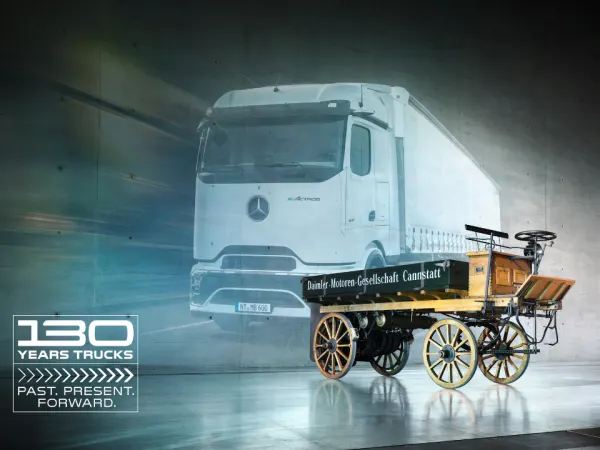
From the 1896 motorized truck to today’s electric Actros platform, 130 years of innovation show how commercial vehicles continue to evolve.
Credit: Mercedes‑Benz Trucks
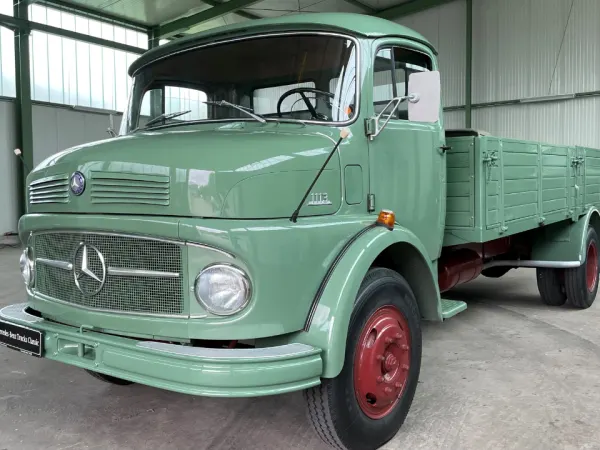
This restored Mercedes-Benz work truck highlights the mechanical simplicity and durability that defined mid-20th century fleet operations.
Credit: Mercedes‑Benz Trucks
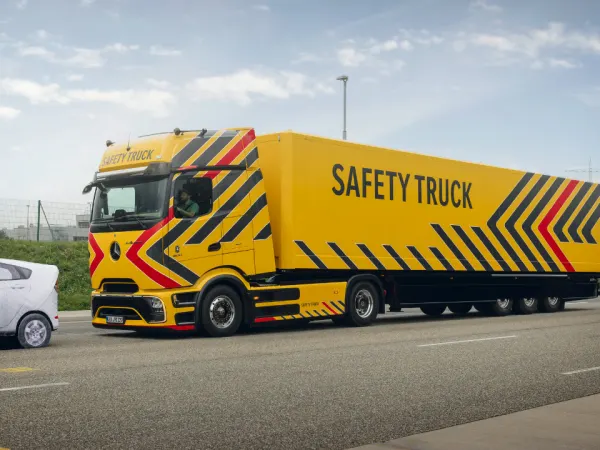
The eActros 600-based Safety Truck demonstrates how 130 years of engineering have evolved into advanced assistance systems designed to help prevent collisions.
Credit: Mercedes‑Benz Trucks
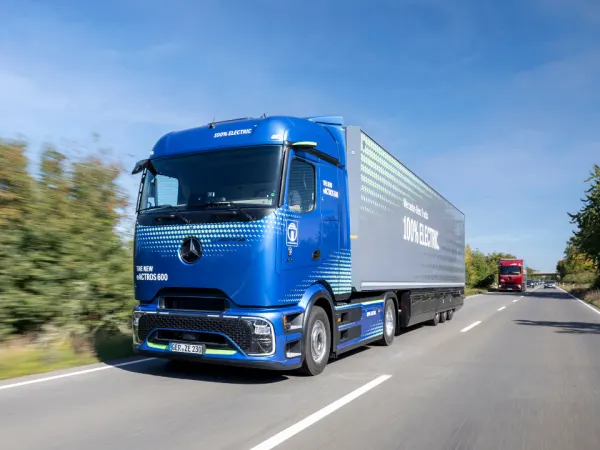
The Mercedes-Benz eActros 600 showcases the modern era of heavy-duty transport, combining battery-electric propulsion with connected systems and advanced driver assistance technology.
Credit: Mercedes‑Benz Trucks