




VMAC's 2024 Mobile Compressed Air Report Shows Resilience Amid Challenges
The report reveals that the work truck industry remains resilient despite ongoing challenges such as truck chassis delays, global supply chain disruptions, rising interest rates, and labor shortages.

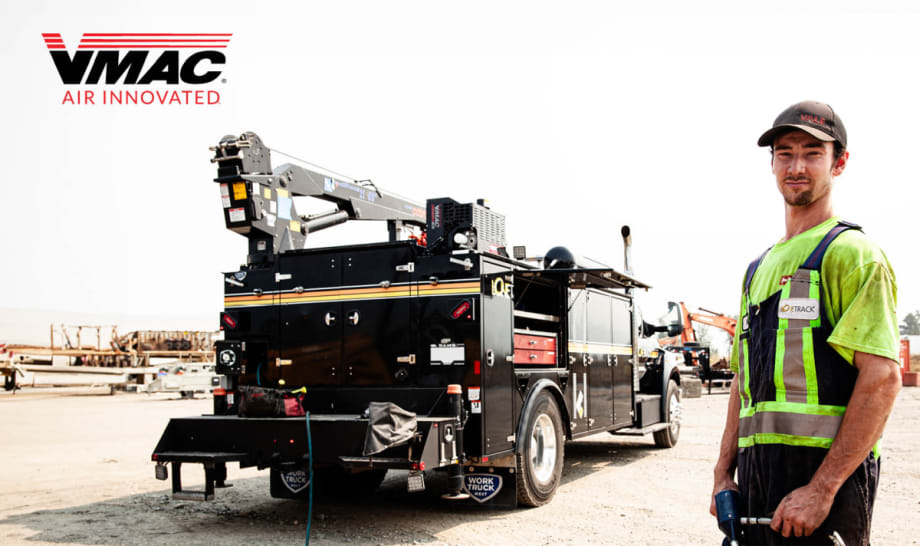
Financial pressures are pushing businesses to rethink their procurement strategies and explore cost-saving measures.
Photo: VMAC
VMAC released the latest edition of its State Of The Mobile Compressed Air Industry Report, a benchmarking tool for businesses that rely on mobile compressed air.
This year's survey, conducted between December 2023 and March 2024, included responses from 271 professionals across various industries, including equipment repair, construction, and agriculture. Participants spent an average of 7 minutes answering 31 questions about the state of the industry.
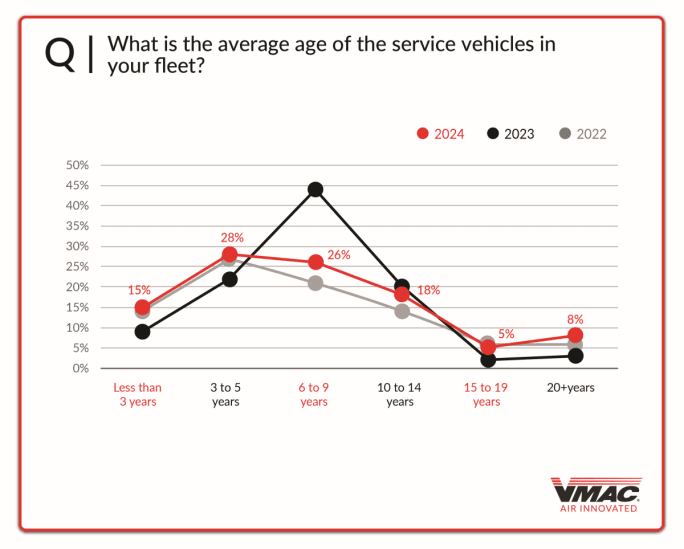
Most service vehicles are under 10 years old, and while service vans are widely used, their popularity has declined slightly in smaller fleets.
Photo: VMAC
State of the Air Compressor Industry
The report reveals that the work truck industry remains resilient despite ongoing challenges such as truck chassis delays, global supply chain disruptions, rising interest rates, and labor shortages. Notably, the business environment is expected to be less tumultuous in the coming year.
Key insights from the survey include:
Respondent Demographics: Owners and operators/mechanics comprised 59% of the respondents, with equipment repair and construction being the most represented industries. This demographic data provides a comprehensive look at the primary users of mobile compressed air systems and their unique needs and challenges.
Service Vehicles: Most service vehicles are under 10 years old, and while service vans are widely used, their popularity has declined slightly in smaller fleets. This shift indicates a potential change in fleet management strategies and the types of vehicles prioritized for specific tasks.
Air Compressors: Rotary screw air compressors are preferred by 75% of respondents for their performance, quality, and size. UNDERHOOD air compressors are the most desired system, surpassing gas-driven models. This preference highlights the industry's move towards more efficient and compact solutions that can enhance operational productivity.
Business Challenges: Supply chain issues have negatively impacted 62% of respondents, with price increases on materials, equipment, and trucks being a major concern. Rising interest rates have increased business expenses for over half of the respondents. These financial pressures push businesses to rethink their procurement strategies and explore cost-saving measures.
Labor Shortages: Almost half of the respondents report being negatively impacted by labor shortages, struggling to fill job vacancies and retain employees. This challenge is exacerbated by the need for skilled labor, which is critical for maintaining the efficiency and reliability of mobile compressed air systems.
Despite these challenges, 74% of respondents are optimistic, predicting that business conditions will remain the same or improve over the next year. This optimism reflects the industry's adaptability and the proactive steps businesses take to navigate current and future obstacles.
More Operations

Family Ties Inside the Fleet Families Building Careers Across Generations
Three fleet families share what it really takes to work together, learn across generations, and keep business from following them home.
Read More →
Shades of Fleet Call for Voices: Fleet's Hidden Heroes
Fleet’s hidden heroes are often the ones keeping everything moving behind the scenes. September’s Shades of Fleet is looking for dispatchers, coordinators, parts specialists, and other support pros to share their stories.
Read More →
Truck Centers, Inc. Celebrates National Truck Driver Appreciation Week with $1,000 Fuel Card Giveaways
During National Truck Driver Appreciation Week, Truck Centers, Inc. is offering customers a chance to fuel up for free. Customers at all Truck Centers locations can enter to win one of four $1,000 fuel cards from Sept. 14 - 18.
Read More →
Fleet Guides, AI Time-Savers, Truck Tariffs & Fuel Strategy Lead the News
This week’s Truck Chat Cheat Sheet covers new fleet vehicle guides, practical AI use cases, U.S.-Canada truck production, mixed-energy strategy, and more.
Read More →
What Fleet Employers Are Missing When Hiring Veterans
What if some of the strongest candidates for fleet are already out there, but their experience is written in a language our industry does not always recognize?
Read More →
Automotive Fleet Opens 2026 Personal Use Survey for Commercial Fleet Managers
Less than two weeks left! Commercial and corporate fleet managers are invited to share how their organizations handle company vehicle personal-use policies, charges, and driver eligibility.
Read More →
What Resilient Fleets Do Differently When Conditions Change
Fleet resilience is about more than reacting to disruption. Lauren Fletcher talks with AP Fleet’s Alex Coveney about flexibility, planning, scaling, and what helps fleets adapt when business conditions shift.
Read More →
If We Want the Next Generation in Automotive, We Have to Give Them a Reason to Care
The automotive industry talks constantly about its workforce shortage. But before we can recruit the next generation, we may need to do a better job giving kids a reason to care about automotive in the first place.
Read More →
Ram ProMaster City Under $40K, Truck Tariffs, and AI Maintenance Lead the News
A sub-$40K commercial van, tariff questions, AI-powered maintenance, and a new EV production strategy headline this week’s Truck Chat Cheat Sheet.
Read More →
Bob Adamsky Shares the Fleet Lessons You Usually Learn the Hard Way
After more than 30 years in fleet, Arrow International’s Bob Adamsky has learned that the job is about far more than vehicles. He shares the lessons he wishes every fleet manager could learn a little earlier.
Read More →