





Want More: How Connected Construction Operations Improves Finance Decisions
Q&A: Karl Weber of IntelliShift
With more than 20 years of industry experience, Weber opens up about his past experience, current challenges, and future goals.
October 7, 2021
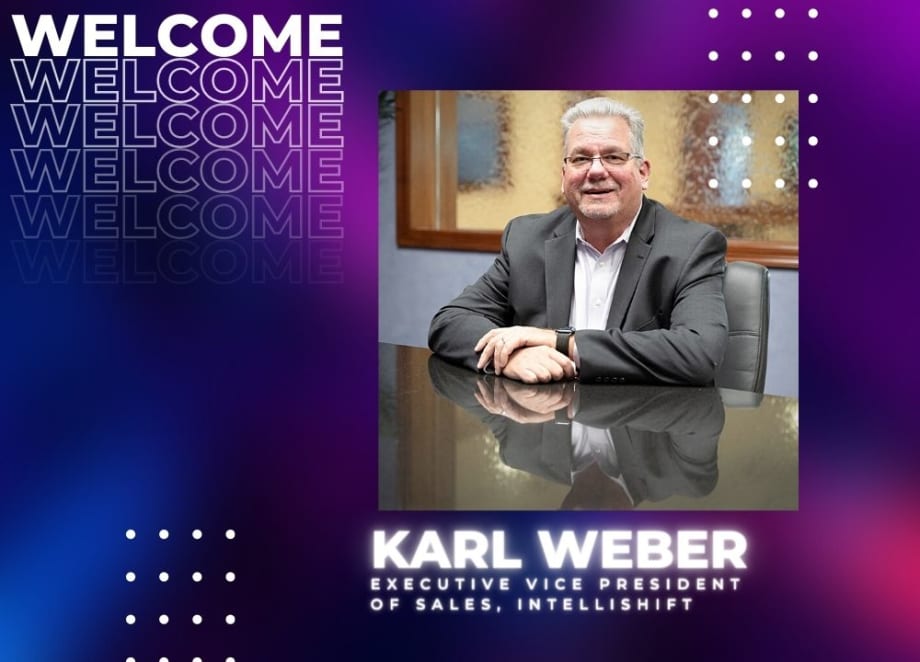
IntelliShift named Karl Weber Executive Vice President of Sales in September 2021.
Photo: IntelliShift/Work Truck
4 min to read
In September 2021, IntelliShift, a cloud-based fleet, and safety management platform, announced the addition of industry veteran Karl Weber to its leadership team. As executive vice president of sales, Weber will focus on scaling and executing the company’s next growth phase.
Work Truck caught up with Weber to learn more about his background, the challenges he sees right now, and what he sees for the future.
WT: Please share a little of your previous experience in the automotive and fleet industry.
Weber: Before serving as Executive Vice President of Sales at IntelliShift, I had more than 20 years of experience in sales leadership roles at various companies such as Derive Systems and Fleetmatics.
At Fleetmatics, I led the North American Enterprise sales team, where we accelerated dramatic growth, guided a successful IPO, and ultimately assisted in the sale of the Fleetmatics to Verizon for $2.4B.
While at Derive, I led the Enterprise Sales and Customer Success teams and reorganized corporate-wide marketing into a single cross-functional team. I am excited to apply my extensive experience to IntelliShift on its rapid growth journey.

As the Executive Vice President of Sales at IntelliShift, Karl Weber manages a team of sales professionals that determine and execute sales plans to meet overall goals.
Photo: IntelliShift
WT: Please discuss your current role with IntelliShift and responsibilities.
Weber: As Executive Vice President of Sales at IntelliShift, I manage a team of sales professionals that determine and execute sales plans to meet overall goals.
As I join the team, I’m thrilled to take a leading role in scaling and executing IntelliShift’s next growth phase. I’m also looking forward to partnering with customers, partners, and prospects alike to overcome challenges through IntelliShift’s innovative cloud platform.
WT: You mentioned partnering with customers and prospects alike to overcome challenges through IntelliShift’s cloud platform to build smarter, more efficient fleets. Can you share what the top challenges are that you will be addressing?
Weber: The top challenges we see relate to optimizing business processes and keeping drivers safe. With information getting lost in data silos, fleet managers are losing opportunities to enhance their businesses by understanding where their drivers are lacking — or to that end, areas where they’re exceeding and can replicate successful practices widely. Using our platform, customers can unite people, processes, and technology to optimize business performance.
WT: How do you plan to overcome these challenges?
Weber: We’ll work closely with customers and prospects to truly understand their pain points – and identify new and innovative ways we can help overcome them. By streamlining operations with IntelliShift’s cloud platform, we can identify opportunities to improve operations and safety practices. In doing so, we’ll build smarter, more efficient fleets.
WT: With continuing concerns over “data overload,” what advice do you have for vocational truck fleet managers to combat this overload and stay focused on what matters most?
Weber: First, leaders must break down the data silos that prevent them from interconnecting data from different business areas. Viewing a single data set in a silo may steer a fleet manager to decide they wouldn’t have if they could see the full picture.
Second, obtaining the right technology solution streamlines the data analytics process, so fleet managers can focus on their top priorities — driver safety and uncovering more efficient ways to provide services. With IntelliShift’s solutions, fleet managers don’t have to dedicate their time to back-end tasks or breaking down the mountains of raw data. Instead, they’ll have distilled insights readily available to make quick, informed decisions.
WT: What are some of your goals as EVP of Sales at IntelliShift?
Weber: My overall goals include accelerating IntelliShift’s awareness and growth to larger audiences and securing diverse customers in various vertical markets. There are audiences of business stakeholders, fleet, and operations managers we have yet to tap into. Several service trades and field service sectors will benefit from IntelliShift’s dynamic platform.
WT: Can you discuss the rebrand from VTS to IntelliShift and how that may impact fleets?
Weber: The elevation of the IntelliShift brand represents the strategic value of the company’s solution in driving the next phase of growth – following a $70 million investment in the platform from LLR Partners aimed at fueling additional expansion in North America and a deeper focus on exceptional customer experience.
With decades of IoT and telematics expertise, the IntelliShift team will continue its path of innovation and growth with next-gen solutions like AI-Video and advanced analytics.
The IntelliShift platform will only continue to positively impact fleets by delivering actionable insights and intelligently predicting and optimizing business performance.
Subscribe to Our Newsletter
More Operations
Family Ties Inside the Fleet Families Building Careers Across Generations
Three fleet families share what it really takes to work together, learn across generations, and keep business from following them home.
Read More →
Shades of Fleet Call for Voices: Fleet's Hidden Heroes
Fleet’s hidden heroes are often the ones keeping everything moving behind the scenes. September’s Shades of Fleet is looking for dispatchers, coordinators, parts specialists, and other support pros to share their stories.
Read More →
Truck Centers, Inc. Celebrates National Truck Driver Appreciation Week with $1,000 Fuel Card Giveaways
During National Truck Driver Appreciation Week, Truck Centers, Inc. is offering customers a chance to fuel up for free. Customers at all Truck Centers locations can enter to win one of four $1,000 fuel cards from Sept. 14 - 18.
Read More →
Fleet Guides, AI Time-Savers, Truck Tariffs & Fuel Strategy Lead the News
This week’s Truck Chat Cheat Sheet covers new fleet vehicle guides, practical AI use cases, U.S.-Canada truck production, mixed-energy strategy, and more.
Read More →
What Fleet Employers Are Missing When Hiring Veterans
What if some of the strongest candidates for fleet are already out there, but their experience is written in a language our industry does not always recognize?
Read More →
Automotive Fleet Opens 2026 Personal Use Survey for Commercial Fleet Managers
Less than two weeks left! Commercial and corporate fleet managers are invited to share how their organizations handle company vehicle personal-use policies, charges, and driver eligibility.
Read More →
What Resilient Fleets Do Differently When Conditions Change
Fleet resilience is about more than reacting to disruption. Lauren Fletcher talks with AP Fleet’s Alex Coveney about flexibility, planning, scaling, and what helps fleets adapt when business conditions shift.
Read More →
If We Want the Next Generation in Automotive, We Have to Give Them a Reason to Care
The automotive industry talks constantly about its workforce shortage. But before we can recruit the next generation, we may need to do a better job giving kids a reason to care about automotive in the first place.
Read More →
Ram ProMaster City Under $40K, Truck Tariffs, and AI Maintenance Lead the News
A sub-$40K commercial van, tariff questions, AI-powered maintenance, and a new EV production strategy headline this week’s Truck Chat Cheat Sheet.
Read More →
Bob Adamsky Shares the Fleet Lessons You Usually Learn the Hard Way
After more than 30 years in fleet, Arrow International’s Bob Adamsky has learned that the job is about far more than vehicles. He shares the lessons he wishes every fleet manager could learn a little earlier.
Read More →