




ZAP Targets Fleets with Electric Pickup
ZAP's two-passenger Xebra PK can carry up to 500 lbs. of cargo, has a range of about 40 miles per charge and can reach speeds of up to 40 mph on all-electric power.
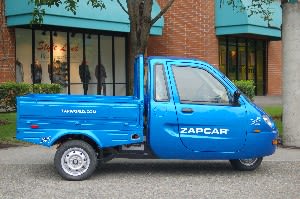
In this era of the incredibly expanding pickup, a market is opening for a task-specific hauler that. ZAP has introduced a new electric vehicle, the Xebra PK, which the company is targeting to corporate, industrial and municipal fleets. The Xebra PK has a multi-purpose platform behind the passenger compartment that can fold down, transforming the vehicle from a hauler to a dump truck or flatbed. “As far as we know, they’re probably the only all-electric that you can get that’s faster than 25 miles per hour,” says ZAP Chairman Gary Starr. The PK boasts speeds of up to 40 mph, can handle up to 500 lbs. of cargo and is priced at $10,000. ZAP plans to organize quantity fleet pricing for the Xebra and lists dealers by location at its Web site, www.zapworld.com, Starr reports. ZAP will also distribute in North America an electric car from Brazilian automaker OBVIO ! based on its 828 and 012 microsport car designs. Zap has pre-purchased 50,000 units. OBVIO ! said that gas-ethanol engines would power the initial versions of its 828 and 012 microcar designs, planned for production in 2007. But the 828E and 012E equipped with advanced electric drive systems will not be far behind, says OBVIO ! President Ricardo Machado. They won’t be cheap, at a targeted price of $49,000 and $59,000 respectively, yet the cars will be capable of reaching a top speed exceeding 120 mph for a range of up to 240 miles per charge. A full recharge takes up to five hours for normal charging, or two hours with fast charging. The cars would be able to travel for 20 to 50 miles with just a 30-minute charge time.
More Small Fleet


Developing Budget-Friendly Driver Safety Programs
From driver training and safety meetings to one-on-one coaching and incentive programs, several small fleets share how they have developed a safety culture with their drivers using low- to no-cost resources.
Read More →
Boosting Last-Mile Fleet Uptime, Safety, and Value with AI Vehicle Inspections
AI-powered inspections are transforming last-mile fleets by replacing manual checks with highly accurate automated scans that detect defects in seconds. By giving fleet operations visibility into the daily condition of their vehicles, you can identify trends over the vehicle’s lifecycle that enable improved procurement decisions, route management, driver training and accountability.
Read More →
Five Ways Seat Belts Help Prevent Injuries
There are five ways seat belts protect occupants from injuries, according to the Tennessee Department of Safety and Homeland Security.
Read More →
It’s here: The 2026 Fleet Technology Trends Report
What does AI mean for fleets? Get the answer — and learn other top tech trends.
Read More →
Small Fleets, Big Impact: How Independent Drivers Power Wreaths Across America
Check out how small fleets and independent drivers power Wreaths Across America each December and why their impact matters more than ever.
Read More →
VMS Survey Finds 65% of Small Fleet Managers Run Operations Alone
A new VMS survey shows small fleet managers are stretched thin, with most handling operations solo and eager to adopt digital tools for relief.
Read More →
Tips for Driving Safely on Halloween Night
This video features a reminder from the Connecticut Department of Transportation (DOT) and the Connecticut Police Chiefs Association, urging drivers to prioritize safety this Halloween.
Read More →
AI, Access, and Uptime: VMS’s Next Chapter with David Prusinski
VMS’s new Co-CEO, David Prusinski, shares how an AI-first approach will give small fleets and repair shops the tools to compete like big players.
Read More →
Fleet Managers Share Winter Prep Tips: It's Never Too Early!
Three fleets share best practices to prep vehicles for winter and prevent downtime when the cold sets in.
Read More →