




Why Are Hybrids' Actual Fuel Economies Lower Than the EPA's?
Major difference is that fuel economy is calculated on amount of carbon exhaust emitted by the tailpipe, not by a simple miles-driven/gallons consumed calculation. Hybrids emit less carbon exhaust because of their electric motor.
The common complaint among hybrid owners is that their real-world fuel economy doesn’t match the official estimate given by the Environmental Protection Agency (EPA)—by as much as 20 percent. Why the gap? There are a few reasons, according to an article posted July 11 at TheCarConnection.com. First, an explanation of the EPA test: Models are tested on a dynamometer, a treadmill for cars. A professional driver runs a “city” and “highway” program. In the city program, the car or truck is driven for 11 miles and makes 23 stops over the course of 31 minutes, with an average speed of 20 mph and a top speed of 56 mph. In the highway program, the vehicle is driven for 10 miles over a period of 12.5 minutes with an average speed of 48 mph and a top speed of 60 mph. A hose on the tailpipe collects engine exhaust. The amount of carbon from the exhaust system is measured to calculate the amount of fuel burned. The EPA claims this is more accurate than using a fuel gauge to physically measure the amount of gasoline burned. Still, the final test figures are adjusted downward, by 10 percent for city driving and 22 percent in highway mileage, to help reflect the differences between what happens in a lab and out on an actual road. Basing fuel economy upon the amount of carbon exhaust that's emitted by a vehicle's tailpipe automatically favors gas/electric-powered vehicles. Since some of a hybrid's power comes from an electric motor that automatically produces zero emissions, these figures tend to skew higher than simple miles-driven/gallons consumed computations would otherwise indicate, the article said. Other general factors: --The vehicles are tested without the air conditioning and other electrical accessories in use. --EPA's test vehicles are in top mechanical shape. Ill-maintained vehicles will consume more gas than those that are in perfect condition. --Different blends of gasoline may have more or less energy content in different parts of the country, which in turn results in better or worse fuel economy. --Physical factors like trip length, traffic conditions, terrain, temperature, and the weather all affect mileage. --Vehicle accessories (roof racks and cargo carriers) hamper aerodynamics and thus mileage. --Lead-footed acceleration, heavy braking, high-speed driving, excessive idling, towing, and engaging four-wheel-drive also negatively impact mileage, by as much as 33 percent.
More Small Fleet


Developing Budget-Friendly Driver Safety Programs
From driver training and safety meetings to one-on-one coaching and incentive programs, several small fleets share how they have developed a safety culture with their drivers using low- to no-cost resources.
Read More →
Boosting Last-Mile Fleet Uptime, Safety, and Value with AI Vehicle Inspections
AI-powered inspections are transforming last-mile fleets by replacing manual checks with highly accurate automated scans that detect defects in seconds. By giving fleet operations visibility into the daily condition of their vehicles, you can identify trends over the vehicle’s lifecycle that enable improved procurement decisions, route management, driver training and accountability.
Read More →
Five Ways Seat Belts Help Prevent Injuries
There are five ways seat belts protect occupants from injuries, according to the Tennessee Department of Safety and Homeland Security.
Read More →
It’s here: The 2026 Fleet Technology Trends Report
What does AI mean for fleets? Get the answer — and learn other top tech trends.
Read More →
Small Fleets, Big Impact: How Independent Drivers Power Wreaths Across America
Check out how small fleets and independent drivers power Wreaths Across America each December and why their impact matters more than ever.
Read More →
VMS Survey Finds 65% of Small Fleet Managers Run Operations Alone
A new VMS survey shows small fleet managers are stretched thin, with most handling operations solo and eager to adopt digital tools for relief.
Read More →
Tips for Driving Safely on Halloween Night
This video features a reminder from the Connecticut Department of Transportation (DOT) and the Connecticut Police Chiefs Association, urging drivers to prioritize safety this Halloween.
Read More →
AI, Access, and Uptime: VMS’s Next Chapter with David Prusinski
VMS’s new Co-CEO, David Prusinski, shares how an AI-first approach will give small fleets and repair shops the tools to compete like big players.
Read More →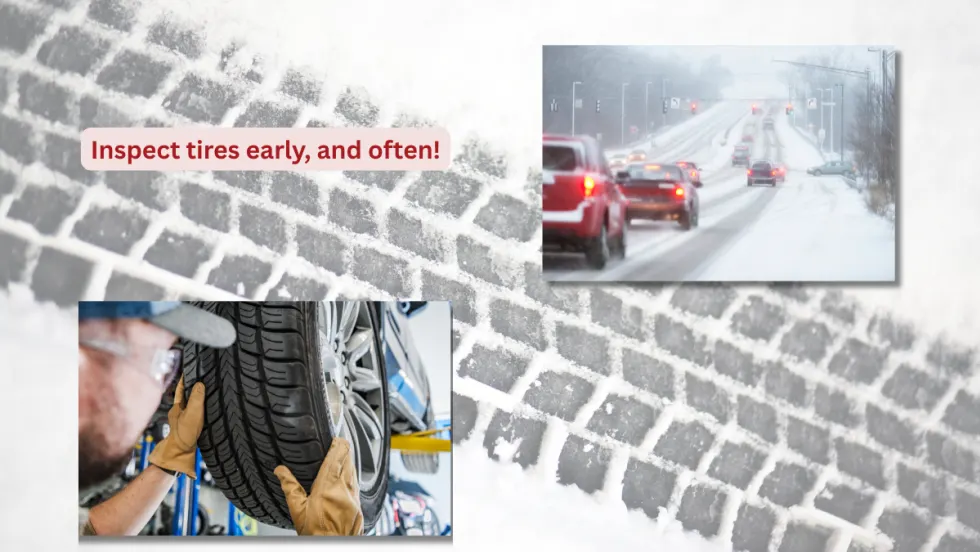
Fleet Managers Share Winter Prep Tips: It's Never Too Early!
Three fleets share best practices to prep vehicles for winter and prevent downtime when the cold sets in.
Read More →