




White House Reviewing Proposed Rear-View Camera Mandate
Despite multiple delays and cost concerns, legislation aimed at requiring rear-view cameras in all new cars may soon take effect.
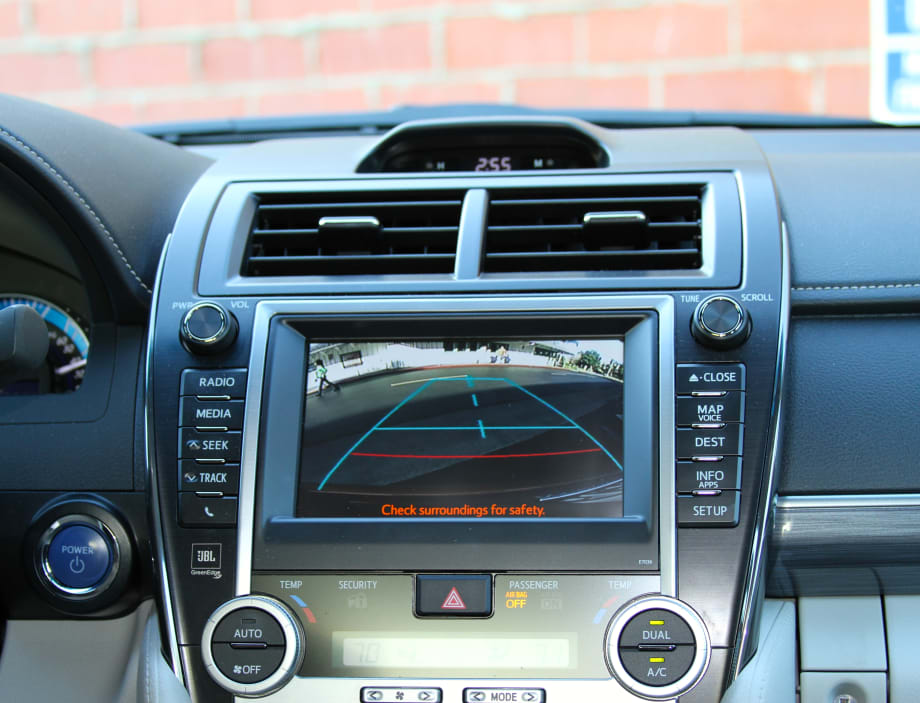
A rear-view camera system in a Toyota Camry.
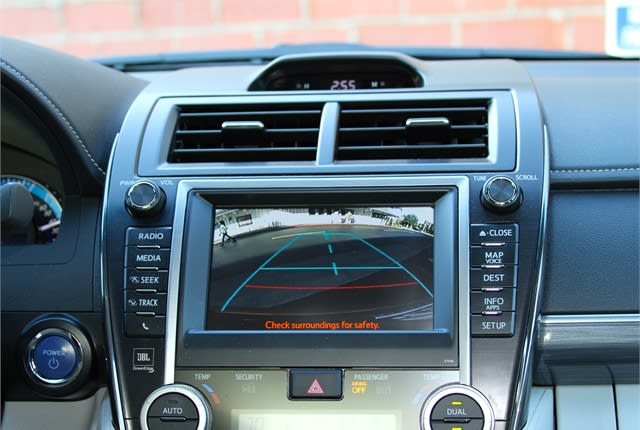
A rear-view camera system in a Toyota Camry.
The Office of Management and Budget (OMB) at the White House is now reviewing the latest set of proposed federal vehicle standards for rear visibility, the Detroit News reported.
The National Highway Traffic Safety Administration (NHTSA), part of the U.S. Department of Transportation, delivered the newest iteration of the proposed rules on Dec. 25, after conducting its own analysis. Now OMB will assess the rules’ costs and benefits and determine whether to give its final approval.
To comply with the proposed standards for rear visibility, auto manufacturers would need to equip all new vehicles with rear-view cameras. The goal is to prevent backup crashes that, according to NHTSA, on average kill 292 people and injure 18,000 annually. Children under the age of five represent 44 percent of the deaths. NHTSA estimates that a rear-view camera mandate would cut the number of deaths in half.
Back in 2007, Congress passed legislation requiring the Department of Transportation to issue a final ruling on more stringent rear-visibility standards by February 2011. President George Bush signed the legislation into law on Feb. 28, 2008.
But the Alliance of Automobile Manufacturers has opposed such a mandate, arguing that consumers should decide for themselves whether to assume the extra cost of such safety equipment. The industry estimates that a mandate requiring rear-view cameras in all new vehicles will cost $2.7 billion annually, which breaks down to roughly an additional $160 to $200 per vehicle. And that cost will be passed along to consumers.
In response, NHTSA has repeatedly postponed a final ruling on the rear visibility standards. In June 2013, the agency set a new deadline, Jan. 2, 2015, citing a need to gather more cost-benefit data.
In September 2013, these delays spurred some safety advocacy groups to file a lawsuit requesting a federal Court of Appeals to order NHTSA to issue a final ruling within 90 days.
It’s unclear how long OMB will take reviewing the latest proposed standards, the Detroit News reported.
Nearly 80 percent of 2013 models offered a rear-view camera as either an optional or standard safety feature, according to Edmunds.com.
Originally posted on Automotive Fleet
More Small Fleet


Developing Budget-Friendly Driver Safety Programs
From driver training and safety meetings to one-on-one coaching and incentive programs, several small fleets share how they have developed a safety culture with their drivers using low- to no-cost resources.
Read More →
Boosting Last-Mile Fleet Uptime, Safety, and Value with AI Vehicle Inspections
AI-powered inspections are transforming last-mile fleets by replacing manual checks with highly accurate automated scans that detect defects in seconds. By giving fleet operations visibility into the daily condition of their vehicles, you can identify trends over the vehicle’s lifecycle that enable improved procurement decisions, route management, driver training and accountability.
Read More →
Five Ways Seat Belts Help Prevent Injuries
There are five ways seat belts protect occupants from injuries, according to the Tennessee Department of Safety and Homeland Security.
Read More →
It’s here: The 2026 Fleet Technology Trends Report
What does AI mean for fleets? Get the answer — and learn other top tech trends.
Read More →
Small Fleets, Big Impact: How Independent Drivers Power Wreaths Across America
Check out how small fleets and independent drivers power Wreaths Across America each December and why their impact matters more than ever.
Read More →
VMS Survey Finds 65% of Small Fleet Managers Run Operations Alone
A new VMS survey shows small fleet managers are stretched thin, with most handling operations solo and eager to adopt digital tools for relief.
Read More →
Tips for Driving Safely on Halloween Night
This video features a reminder from the Connecticut Department of Transportation (DOT) and the Connecticut Police Chiefs Association, urging drivers to prioritize safety this Halloween.
Read More →
AI, Access, and Uptime: VMS’s Next Chapter with David Prusinski
VMS’s new Co-CEO, David Prusinski, shares how an AI-first approach will give small fleets and repair shops the tools to compete like big players.
Read More →
Fleet Managers Share Winter Prep Tips: It's Never Too Early!
Three fleets share best practices to prep vehicles for winter and prevent downtime when the cold sets in.
Read More →