




Vt. State Workers Question New Fleet Policy
New fleet program requires many state employees to use state-provided vehicles rather than collecting 40.5 cents a mile to drive their own cars. Some say the program is too costly and inefficient.
Some state workers in Vermont are questioning the prudence of the state’s year-old Fleet Management Services program, according to an August 14 story in the Barre/Montpelier Times Argus. The program was created to save money and reduce emissions. Earlier this year, the state began requiring many employees who need to drive to a meeting or a work site to use state-provided vehicles rather than collecting 40.5 cents a mile to drive their own cars. Employees, speaking anonymously, said the program has led them to spend more time making arrangements for vehicles and, in some cases, make extra trips to pick one up. Others say restrictions on use of vehicles, such as a single-driver rule, mean more miles on a car than needed. The program, run by five state employees, makes available 75 Ford Focus sedans and wagons and 25 Honda Civic hybrids to state employees. The state spent $1.2 million on the vehicles. The state rents the vehicles to an employee's department for $22 a day for up to 90 miles, 25 cents a mile after that. Like a rental agency, penalties can be assessed if it's not returned to the right location or with at least a half a tank of gas. For short trips – fewer than 54 miles – employees can drive their own vehicles as that works out to about $22. If state cars aren't available (which is often because there aren't enough vehicles to go around) staffers are told to rent from a local Enterprise Rent-A-Car at a discounted rate. State employees are complaining about the arrangement, the small size of the state cars and the strong policy language, according to the Argus story. They worry about winter driving and having to park their four-wheel-drive sport utility vehicles to hop into front-wheel drive Focuses and about the cost of paying state workers to drive to another town to rent cars. But Tom Sandretto, deputy commissioner of the state's Department of Buildings and General Services, said the new program is saving money. He said the expectation is that employees figure out which option is cheaper – driving their own car, a state car or renting – and pick that option. Despite the logistical challenges, many state departments think the program will save money, the article said.
More Small Fleet


Developing Budget-Friendly Driver Safety Programs
From driver training and safety meetings to one-on-one coaching and incentive programs, several small fleets share how they have developed a safety culture with their drivers using low- to no-cost resources.
Read More →
Boosting Last-Mile Fleet Uptime, Safety, and Value with AI Vehicle Inspections
AI-powered inspections are transforming last-mile fleets by replacing manual checks with highly accurate automated scans that detect defects in seconds. By giving fleet operations visibility into the daily condition of their vehicles, you can identify trends over the vehicle’s lifecycle that enable improved procurement decisions, route management, driver training and accountability.
Read More →

Five Ways Seat Belts Help Prevent Injuries
There are five ways seat belts protect occupants from injuries, according to the Tennessee Department of Safety and Homeland Security.
Read More →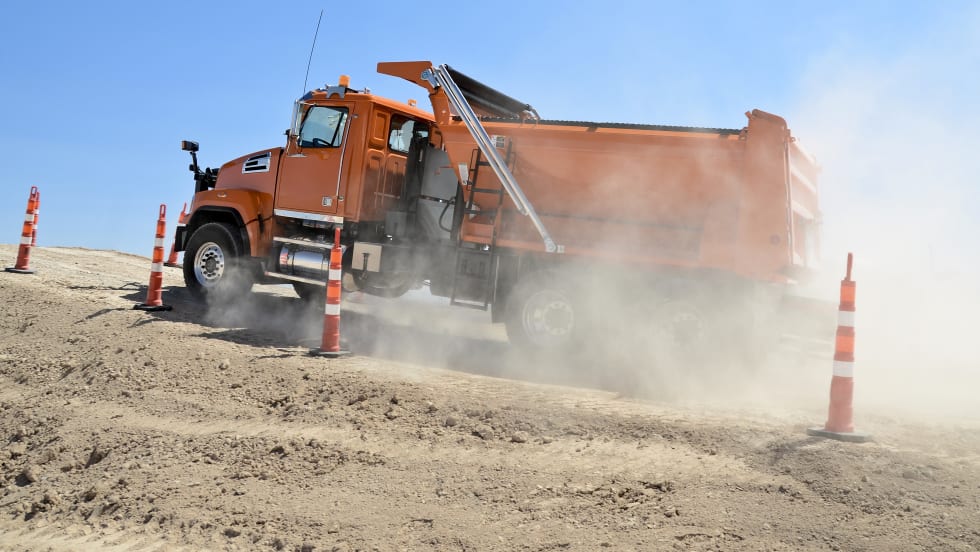
Basic Tracking vs Next Generation Fleet Technology
Fleet software is getting more sophisticated and effective than ever, tying big data models together to transform maintenance, safety, and the value of your existing tech stack. Fleet technology upgrades are undoubtedly an investment, but updated technology can offer a much higher return. Read how upgrading your fleet technology can increase the return on your investment.
Read More →
It’s here: The 2026 Fleet Technology Trends Report
What does AI mean for fleets? Get the answer — and learn other top tech trends.
Read More →
Small Fleets, Big Impact: How Independent Drivers Power Wreaths Across America
Check out how small fleets and independent drivers power Wreaths Across America each December and why their impact matters more than ever.
Read More →
VMS Survey Finds 65% of Small Fleet Managers Run Operations Alone
A new VMS survey shows small fleet managers are stretched thin, with most handling operations solo and eager to adopt digital tools for relief.
Read More →
Tips for Driving Safely on Halloween Night
This video features a reminder from the Connecticut Department of Transportation (DOT) and the Connecticut Police Chiefs Association, urging drivers to prioritize safety this Halloween.
Read More →
AI, Access, and Uptime: VMS’s Next Chapter with David Prusinski
VMS’s new Co-CEO, David Prusinski, shares how an AI-first approach will give small fleets and repair shops the tools to compete like big players.
Read More →