




Video: Mazda3 and Mazda6 Draw 5-Star Overall Safety Ratings
The vehicles excel in February crash tests conducted for NHTSA’s New Car Assessment Program.
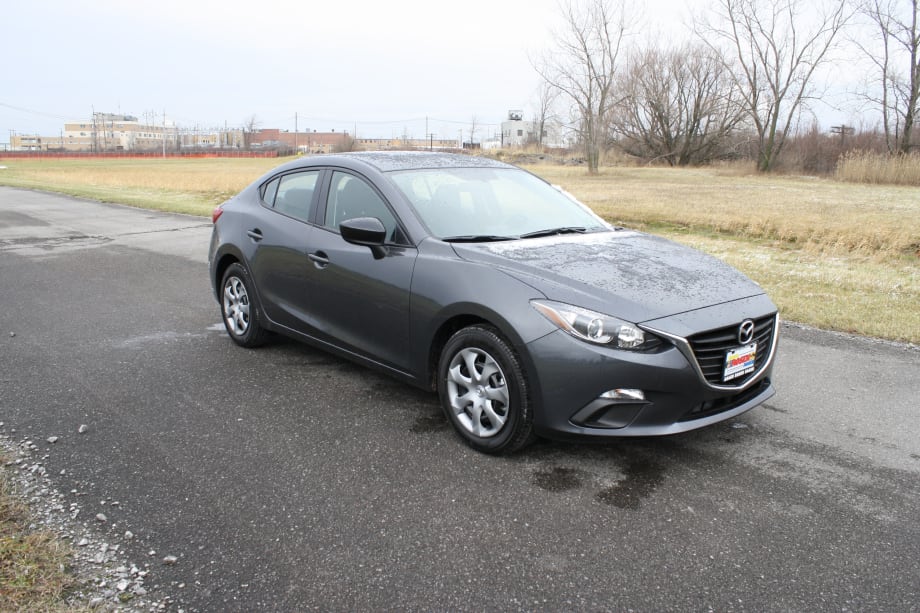
The 2014 Mazda3 before undergoing crash testing. Photo courtesy of NHTSA.
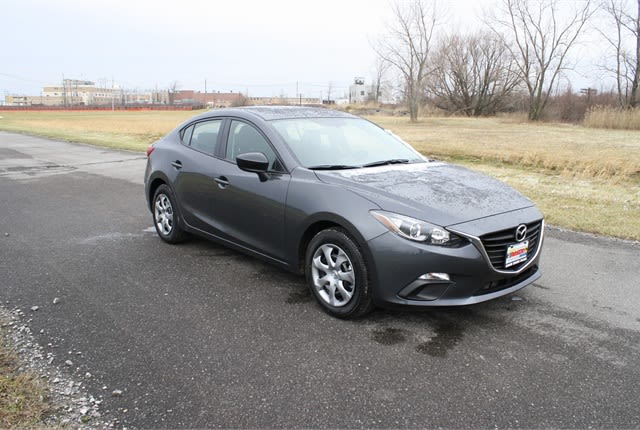
The 2014 Mazda3 before undergoing crash testing. Photo courtesy of NHTSA.
The 2014 model-year Mazda3 compact sedan and 5-door hatchback have received a 5-Star Overall Vehicle Score from the National Highway Traffic Safety Administration (NHTSA).
Additionally, the 2014 and 2015 Mazda6 mid-size sedans recently drew a 5-star Overall Vehicle Score from NHTSA.
The Mazda3 scored five stars in the frontal crash and side crash tests, and tallied four stars in the rollover test. The Mazda6 scored five stars in the side crash test and four stars in the frontal crash and rollover tests.
Calspan Corp. conducted the crash tests in February as part of NHTSA’s New Car Assessment Program (NCAP).
To view the frontal crash test for the 2014 Mazda6, click on the video below
To view the pole crash test for the 2014 Mazda6, click on the video below.
The 2014 Mazda3 introduces several safety systems under the umbrella known as i-ACTIVSENSE. These technologies use sensing devices such as milliwave radars and cameras to help the driver identify hazards and avoid collisions. While these systems will not eliminate accidents, they can help minimize them and reduce the severity of a crash.
The combination of the SKYACTIV-Body and SKYACTIV-Chassis offers high performance, lightweight materials for added strength and stability. Carefully engineered load-transfer ensures a firm grip on the road that the driver can sense, Mazda said. The SKYACTIV-Body provides increased rigidity of 30 percent compared to the previous model while reducing weight as well.
Moreover, 1,800MPa ultra-high-tensile steel also is used in the front and rear bumpers for additional weight savings as well as increased strength.
The SKYACTIV-Body efficiently absorbs impact energy from any direction and helps to minimize the chance of the cabin structure being compromised, Mazda said.
Other standard safety features for the 2014 Mazda3 include:
Six airbags (advanced dual front, front-seat mounted and full-length side curtain)
Whiplash-reducing front headrests
Headrests for all seating positions
Power-assisted ventilated front and solid rear disc brakes
Anti-lock brakes (ABS) with Electronic Brakeforce Distribution (EBD) and Brake Assist
Daytime running lights
Dynamic Stability Control (DSC)
Traction Control System (TCS)
Hill Launch Assist
Collapsible steering column (following air bag deployment)
Trunk entrapment release system
Tire-pressure monitoring system (TPMS)
Three-point safety belts for all seating positions
Front seatbelt pretensioners with force limiters as well as Lower Anchors and Tethers for Children (LATCH) in the rear seats.
Standard safety features for all 2015 Mazda6 models include:
Six airbags (advanced dual front, front-seat side mounted and full-length side curtain)
Daytime running lights
Whiplash-reducing front headrests
Height-adjustable headrests for all seating positions
Anti-lock Brake System (ABS)
Electronic Brakeforce Distribution (EBD) with Brake Assist
Dynamic Stability Control (DSC) with a Traction Control System (TCS)
Tire Pressure Monitoring System (TPMS)
Hill Launch Assist (HLA)
Power-assisted ventilated front brakes and solid rear disc brakes
Three-point safety belts for all seating positions
Fold-away brake pedal assembly
Trunk entrapment release system
Front seatbelt pretensioners with force limiters as well as Lower Anchors and Tethers for Children (LATCH).
A rearview camera is added to Sport models equipped with an automatic transmission. Blind Spot Monitoring (BSM) and Rear Cross Traffic Alert (RCTA) are standard on Touring models with Smart City Brake Support (SCBS) available as a package option.
Grand Touring models receive SCBS and an Adaptive Front-lighting System (AFS) as standard equipment. Mazda Radar Cruise Control (MRCC), Forward Obstruction Warning (FOW), a Lane Departure Warning System (LDWS) and High Beam Control (HBC) are available as package options.
Originally posted on Automotive Fleet
More Small Fleet


Developing Budget-Friendly Driver Safety Programs
From driver training and safety meetings to one-on-one coaching and incentive programs, several small fleets share how they have developed a safety culture with their drivers using low- to no-cost resources.
Read More →
Boosting Last-Mile Fleet Uptime, Safety, and Value with AI Vehicle Inspections
AI-powered inspections are transforming last-mile fleets by replacing manual checks with highly accurate automated scans that detect defects in seconds. By giving fleet operations visibility into the daily condition of their vehicles, you can identify trends over the vehicle’s lifecycle that enable improved procurement decisions, route management, driver training and accountability.
Read More →
Five Ways Seat Belts Help Prevent Injuries
There are five ways seat belts protect occupants from injuries, according to the Tennessee Department of Safety and Homeland Security.
Read More →
It’s here: The 2026 Fleet Technology Trends Report
What does AI mean for fleets? Get the answer — and learn other top tech trends.
Read More →
Small Fleets, Big Impact: How Independent Drivers Power Wreaths Across America
Check out how small fleets and independent drivers power Wreaths Across America each December and why their impact matters more than ever.
Read More →
VMS Survey Finds 65% of Small Fleet Managers Run Operations Alone
A new VMS survey shows small fleet managers are stretched thin, with most handling operations solo and eager to adopt digital tools for relief.
Read More →
Tips for Driving Safely on Halloween Night
This video features a reminder from the Connecticut Department of Transportation (DOT) and the Connecticut Police Chiefs Association, urging drivers to prioritize safety this Halloween.
Read More →
AI, Access, and Uptime: VMS’s Next Chapter with David Prusinski
VMS’s new Co-CEO, David Prusinski, shares how an AI-first approach will give small fleets and repair shops the tools to compete like big players.
Read More →
Fleet Managers Share Winter Prep Tips: It's Never Too Early!
Three fleets share best practices to prep vehicles for winter and prevent downtime when the cold sets in.
Read More →