




Toyota Unveils New Tundra CrewMax Pickup
DETROIT – The all-new Toyota Tundra CrewMax full-size pickup made its worldwide debut today at the 2007 North American International Auto Show. Featuring more than 44 inches of rear legroom, the super-sized CrewMax will go on sale in March, joining the rest of the new Toyota Tundra lineup, which will arrive at dealerships in February.
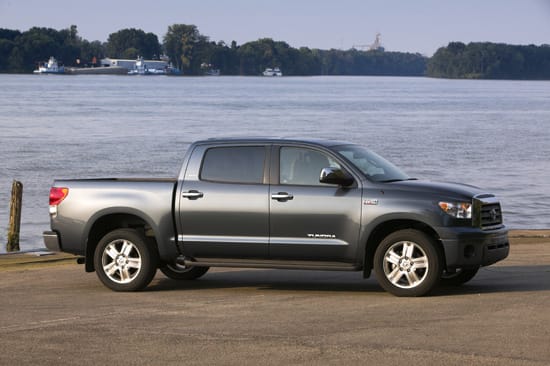
DETROIT – The all-new Toyota Tundra CrewMax full-size pickup made its worldwide debut today at the 2007 North American International Auto Show. Featuring more than 44 inches of rear legroom, the super-sized CrewMax will go on sale in March, joining the rest of the new Toyota Tundra lineup, which will arrive at dealerships in February. The CrewMax was the result of customer feedback. “We were told emphatically, ‘Give me a super-sized model with enough room for a sliding and reclining rear seat,’” said Jay Lentz, executive vice president, Toyota Motor Sales. Lentz also announced that Toyota will release a flex-fuel Tundra next year that can run on E-85 ethanol. This model will be released as a 2009 model. Larger in every dimension than the model it replaces, the 2007 Tundra is available in 31 model configurations, with a choice between 4x2 and 4x4 drivetrains. The 2007 Tundra offers three cab styles, three wheelbases, three bed lengths, three engines, and three trim levels. Tundra can be configured to serve as a work truck, recreational truck, or luxury family truck. Tundra offers the performance of an available new 381-horsepower 5.7L i-Force V-8 engine teamed to a new six-speed automatic transmission. Tundra offers three cab styles: Regular Cab, four-door Double Cab, and the super-sized four-door CrewMax with the segment's leading rear-seat legroom. Tundra Regular Cab comes in the DX trim level and can be upgraded to SR5 with an option package; the Double Cab and CrewMax models come in SR5 and Limited trim levels. In Regular and Double Cab models, a standard 4.0L V-6 produces 236 horsepower and 266 lb.-ft. of peak torque. The mid-grade option for these models – and standard for CrewMax models – is an enhanced version of the Tundra's 4.7L i-Force V-8 producing 271 horsepower and 313 lb.-ft. of peak torque. Tundra models equipped with the 4.0L engine achieve city/highway fuel economy ratings of 17/20 mpg. Tundra 4x2 and 4x4 models equipped with the 4.7L engine both have city/highway fuel economy ratings of 15/18 mpg. Both the V-6 and the i-Force 4.7 V8 feature DOHC 4-valve cylinder heads and Variable Valve Timing with intelligence (VVT-i) for responsive power across the engine's operating range. Both engines are teamed exclusively with a five-speed automatic transmission. Updated flex lock-up torque converter control enhances transmission response and efficiency. For added driver control, the Tundra five-speed automatic features uphill / downhill shift logic. All Tundra models feature sequential shift as standard equipment. Tundra 4x2 and 4x4 models equipped with the 5.7L engine have city/highway fuel economy ratings of 16/20 mpg and 14/18 mpg, respectively. The i-Force 5.7 V-8 uses aluminum for the cylinder block and DOHC heads. The engine's more-advanced Dual VVT-i controls valve timing and overlap on both the intake and exhaust valves, which also helps optimize power, fuel efficiency and emissions. The i-Force 5.7 is teamed exclusively with a new six-speed automatic transmission, which is only slightly larger than the five-speed automatic. Shift logic adapts the transmission's shift maps to driver input. Next year, select 2009 Tundra models equipped with the 5.7L V-8 will offer flexible-fuel capability with E-85 ethanol. The 2007 Tundra is built on a new frame that is optimized for vigorous work duty, impact safety, and ride quality. There are three Tundra wheelbases: 126.8 inches for Regular Cab/standard bed models; 145.7 inches for Regular Cab/long bed, Double Cab/standard bed and CrewMax models; and 164.6 inches for Double Cab/long bed models. Standard Automatic Limited-slip Differential (A-LSD) provides computer-controlled cross-axle torque management that allows some wheel-spin (necessary for some surfaces). Compared to a conventional mechanical limited slip differential, the A-LSD system helps provide better acceleration in deep sand or mud and on low- or mixed-friction surfaces. The combination of A-LSD and Vehicle Stability Control (VSC) as standard equipment on every model is a significant first in the segment. The Tundra's VSC system integrates traction control (TRAC) on all models, and enhances traction on or off-road by helping to keep the vehicle going on its intended course. VSC detects front-wheel slide and rear-wheel slide during cornering and attempts to control either condition with throttle intervention and/or by braking individual wheels. All Tundra models feature the STAR safety system as standard equipment, which includes ABS, Electronic Brakeforce Distribution (EBD), Brake Assist, Vehicle Stability Control (VSC), and Traction Control (TRAC). Tundra also features standard front- and rear-seat side and roll-sensing side-curtain airbags in all models. The optional Tow Package for i-Force V8 models increases towing capacity, up to 10,800 lbs., depending on the model and drivetrain. The Tow Package is available on all V-8 models and standard on Double Cab Long-Bed models. When the Tow Package is ordered for the 5.7L-equipped Tundra, its six-speed automatic transmission gains a tow/haul shift mode, selectable by a dedicated switch. The tow/haul shift mode applies specific logic for transmission upshift and downshift control, favoring and holding lower gears when accelerating or decelerating to enhance driver control and safety. Tundra Regular Cab and Double Cab models are offered in standard-bed (78.7-inch) or long-bed (97.6-inch) configurations; the CrewMax comes with a short bed (66.7-inch). In all models, the bed measures 22.2 inches deep. The Tundra also offers tailgate assist. Inside the new Tundra, the driver is surrounded by a U-shaped "command and control" center that helps provide an unobstructed view of the road and gauges, while keeping all knobs, switches, and buttons within easy reach. Toyota's 36-month/36,000-mile basic new-vehicle limited warranty applies to all components other than normal wear and maintenance items. Additional 60-month warranties cover the powertrain for 60 months/60,000 miles and corrosion perforation for 60 months with no mileage limitation.
Originally posted on Automotive Fleet
More Small Fleet


Developing Budget-Friendly Driver Safety Programs
From driver training and safety meetings to one-on-one coaching and incentive programs, several small fleets share how they have developed a safety culture with their drivers using low- to no-cost resources.
Read More →
Boosting Last-Mile Fleet Uptime, Safety, and Value with AI Vehicle Inspections
AI-powered inspections are transforming last-mile fleets by replacing manual checks with highly accurate automated scans that detect defects in seconds. By giving fleet operations visibility into the daily condition of their vehicles, you can identify trends over the vehicle’s lifecycle that enable improved procurement decisions, route management, driver training and accountability.
Read More →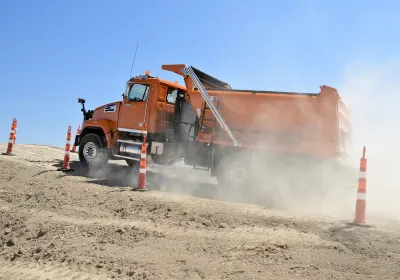

Five Ways Seat Belts Help Prevent Injuries
There are five ways seat belts protect occupants from injuries, according to the Tennessee Department of Safety and Homeland Security.
Read More →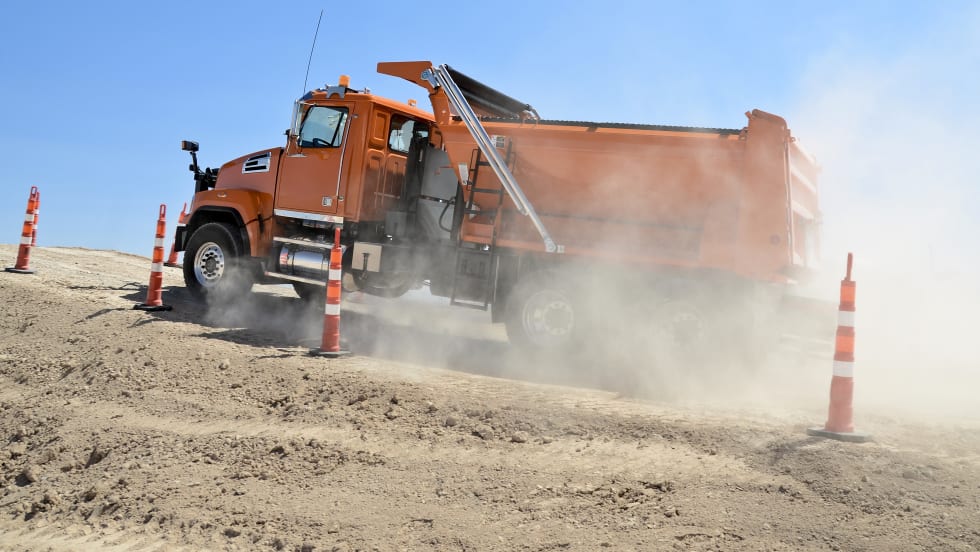
Basic Tracking vs Next Generation Fleet Technology
Fleet software is getting more sophisticated and effective than ever, tying big data models together to transform maintenance, safety, and the value of your existing tech stack. Fleet technology upgrades are undoubtedly an investment, but updated technology can offer a much higher return. Read how upgrading your fleet technology can increase the return on your investment.
Read More →
It’s here: The 2026 Fleet Technology Trends Report
What does AI mean for fleets? Get the answer — and learn other top tech trends.
Read More →
Small Fleets, Big Impact: How Independent Drivers Power Wreaths Across America
Check out how small fleets and independent drivers power Wreaths Across America each December and why their impact matters more than ever.
Read More →
VMS Survey Finds 65% of Small Fleet Managers Run Operations Alone
A new VMS survey shows small fleet managers are stretched thin, with most handling operations solo and eager to adopt digital tools for relief.
Read More →
Tips for Driving Safely on Halloween Night
This video features a reminder from the Connecticut Department of Transportation (DOT) and the Connecticut Police Chiefs Association, urging drivers to prioritize safety this Halloween.
Read More →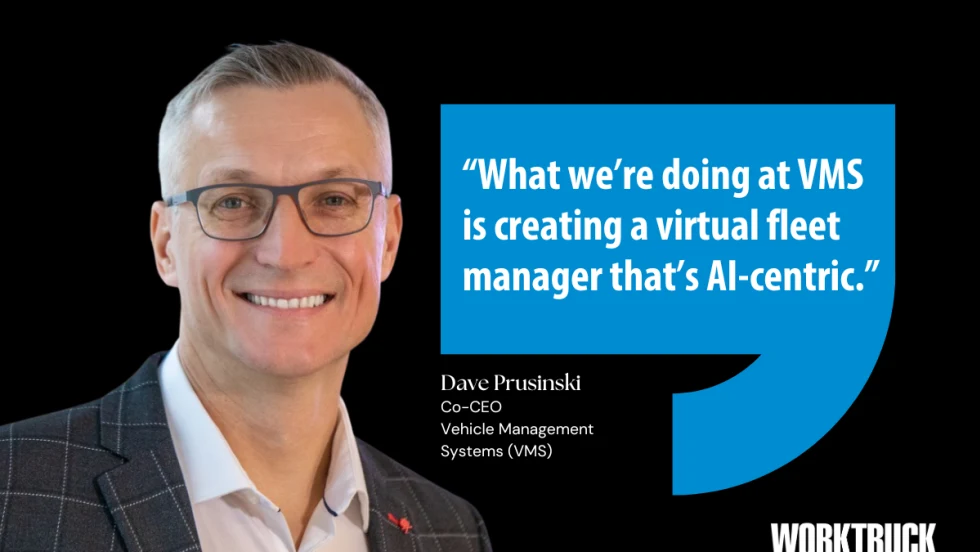
AI, Access, and Uptime: VMS’s Next Chapter with David Prusinski
VMS’s new Co-CEO, David Prusinski, shares how an AI-first approach will give small fleets and repair shops the tools to compete like big players.
Read More →