




Toyota Recalling Prius Hybrids for Software Update
The recall involves about 700,000 2010-2014 MY Prius vehicles and about 300,000 RAV4, Tacoma and Lexus RX 350 vehicles in the U.S.
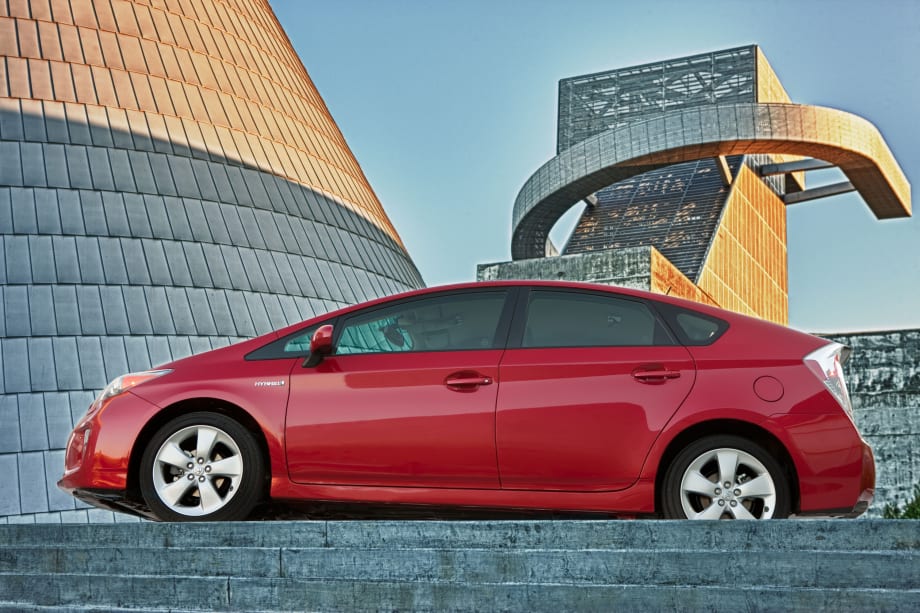
Toyota Prius. Photo courtesy of Toyota.
Toyota Prius. Photo courtesy of Toyota.
Toyota Motor Sales U.S.A. announced plans to recall approximately 700,000 2010-2014 model-year Prius vehicles to update the motor/generator control ECU and hybrid control ECU software. In addition, the automaker will recall about 300,000 2012 model-year RAV4, 2012-2013 MY Tacoma and 2012-2013 MY Lexus RX 350 vehicles to update their skid control ECU software.
Toyota said it has informed the National Highway Traffic Safety Administration of the recall plans.
In the Prius vehicles, the software fix is needed because current settings could result in high thermal stress in certain transistors, potentially causing them to become damaged, Toyota said. If this happens, various warning lights illuminate and the vehicle enters a failsafe mode. In rare circumstances, the car stalls after its hybrid system shuts down.
The software fix on the RAV4, Tacoma and Lexus RX 350 vehicles will address an electronic circuit condition that can cause the vehicle stability control, anti-lock brake and traction control functions to intermittently turn off, Toyota said. But if these systems shut down, standard braking operation remains fully functional.
Toyota said it has received no reports of accidents or injuries associated with either condition.
As part of these recalls, owners of affected vehicles will receive the software update free of charge. They will be notified by first-class mail when the software updates are available at their dealers.
For more information, vehicle owners can visit www.toyota.com/recall or call the Toyota Customer Experience Center at 1-800-331-4331.
Lexus customers can visit www.lexus.com/recall or call the Lexus Customer Satisfaction Center at 1-800-25-LEXUS (1-800-255-3987).
Originally posted on Automotive Fleet
More Small Fleet


Developing Budget-Friendly Driver Safety Programs
From driver training and safety meetings to one-on-one coaching and incentive programs, several small fleets share how they have developed a safety culture with their drivers using low- to no-cost resources.
Read More →
Boosting Last-Mile Fleet Uptime, Safety, and Value with AI Vehicle Inspections
AI-powered inspections are transforming last-mile fleets by replacing manual checks with highly accurate automated scans that detect defects in seconds. By giving fleet operations visibility into the daily condition of their vehicles, you can identify trends over the vehicle’s lifecycle that enable improved procurement decisions, route management, driver training and accountability.
Read More →
Five Ways Seat Belts Help Prevent Injuries
There are five ways seat belts protect occupants from injuries, according to the Tennessee Department of Safety and Homeland Security.
Read More →
It’s here: The 2026 Fleet Technology Trends Report
What does AI mean for fleets? Get the answer — and learn other top tech trends.
Read More →
Small Fleets, Big Impact: How Independent Drivers Power Wreaths Across America
Check out how small fleets and independent drivers power Wreaths Across America each December and why their impact matters more than ever.
Read More →
VMS Survey Finds 65% of Small Fleet Managers Run Operations Alone
A new VMS survey shows small fleet managers are stretched thin, with most handling operations solo and eager to adopt digital tools for relief.
Read More →
Tips for Driving Safely on Halloween Night
This video features a reminder from the Connecticut Department of Transportation (DOT) and the Connecticut Police Chiefs Association, urging drivers to prioritize safety this Halloween.
Read More →
AI, Access, and Uptime: VMS’s Next Chapter with David Prusinski
VMS’s new Co-CEO, David Prusinski, shares how an AI-first approach will give small fleets and repair shops the tools to compete like big players.
Read More →
Fleet Managers Share Winter Prep Tips: It's Never Too Early!
Three fleets share best practices to prep vehicles for winter and prevent downtime when the cold sets in.
Read More →