




Top-Rated Head Restraints Cut Injuries by 11%
A new study from two affiliated insurance industry groups highlights progress in the prevention of whiplash in rear-end crashes.

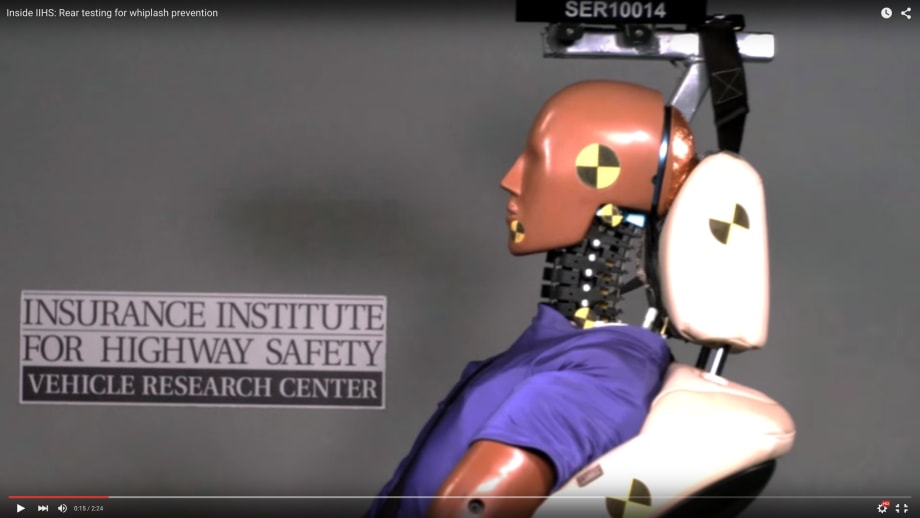
Photo: IIHS
Vehicle seat/head restraint combinations earning top scores from the Insurance Institute for Highway Safety reduce injury claim rates by 11.2 percent, compared to vehicles with poorly rated restraint combinations, a new study found.
The study, released by IIHS and the Highway Loss Data Institute, concluded that top-rated restraint combinations markedly reduce the likelihood that someone will sustain neck injuries if rear-ended by another vehicle.
The study also underscored the dramatic improvement in such restraint quality in today’s vehicles. A decade ago, IIHS said, more than half of the seat/head restraints the institute evaluated were rated “poor” and just 9 percent drew a “good” score. In contrast, 95 percent of 2015 models earned a “good” rating and none were rated “poor.” IIHS credited its own ratings program, combined with stricter federal requirements for higher front-seat head restraints, for the overall improvement in such occupant protection.
IIHS rates such vehicle restraints as “good,” “acceptable,” “marginal,” or “poor” based on both front-seat head restraint geometry and test results. (To learn more about these test methods, click on the photo or link below the headline to watch an IIHS video from 2013.)
In the U.S., whiplash injuries are the most frequently reported type of injury resulting from crashes.
For the recent study, researchers used an insurance claim database of more than 600,000 rear-impact crashes to assess the likelihood of an associated injury claim. IIHS and HLDI based study results on 2001-2014 model-year cars and SUVs using property damage liability and personal injury protection claims.
“The injury-reduction benefits were greatest for good-rated seats/head restraints,” IIHS reported. “Those with acceptable or marginal ratings had injury rates that were 4.4 percent and 3.7 percent lower, respectively, than seats/head restraints rated poor.”
The safety benefit of higher-quality restraints was even more pronounced among women, who saw lower injury rates with “good,” “acceptable,” and “marginal”-rated seats compared with “poor”-rated seats. For men, only “good”-rated seats were tied to statistically lower injury rates.
Females are believed to be at a higher risk for neck injuries because of several physical differences, the study noted.
“Injury rates were 13 percent lower for women and 9 percent lower for men in vehicles with good-rated seats/head restraints,” IIHS said.
Originally posted on Automotive Fleet
More Small Fleet


Developing Budget-Friendly Driver Safety Programs
From driver training and safety meetings to one-on-one coaching and incentive programs, several small fleets share how they have developed a safety culture with their drivers using low- to no-cost resources.
Read More →
Boosting Last-Mile Fleet Uptime, Safety, and Value with AI Vehicle Inspections
AI-powered inspections are transforming last-mile fleets by replacing manual checks with highly accurate automated scans that detect defects in seconds. By giving fleet operations visibility into the daily condition of their vehicles, you can identify trends over the vehicle’s lifecycle that enable improved procurement decisions, route management, driver training and accountability.
Read More →
Five Ways Seat Belts Help Prevent Injuries
There are five ways seat belts protect occupants from injuries, according to the Tennessee Department of Safety and Homeland Security.
Read More →
It’s here: The 2026 Fleet Technology Trends Report
What does AI mean for fleets? Get the answer — and learn other top tech trends.
Read More →
Small Fleets, Big Impact: How Independent Drivers Power Wreaths Across America
Check out how small fleets and independent drivers power Wreaths Across America each December and why their impact matters more than ever.
Read More →
VMS Survey Finds 65% of Small Fleet Managers Run Operations Alone
A new VMS survey shows small fleet managers are stretched thin, with most handling operations solo and eager to adopt digital tools for relief.
Read More →
Tips for Driving Safely on Halloween Night
This video features a reminder from the Connecticut Department of Transportation (DOT) and the Connecticut Police Chiefs Association, urging drivers to prioritize safety this Halloween.
Read More →
AI, Access, and Uptime: VMS’s Next Chapter with David Prusinski
VMS’s new Co-CEO, David Prusinski, shares how an AI-first approach will give small fleets and repair shops the tools to compete like big players.
Read More →
Fleet Managers Share Winter Prep Tips: It's Never Too Early!
Three fleets share best practices to prep vehicles for winter and prevent downtime when the cold sets in.
Read More →