




The 2014-MY Toyota Camry Offers Four-Cylinder, V-6, and Hybrid Models
For 2014-MY, the Toyota Camry and Camry Hybrid will be available in several models.
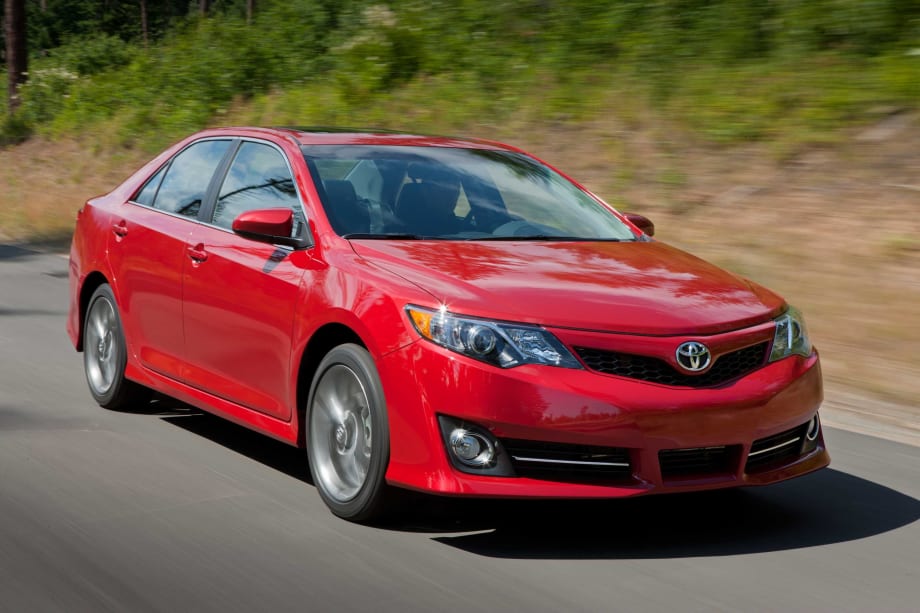
Toyota Camry SE
For 2014-MY, the Toyota Camry will be available in several models, including the entry-level L, value-driven LE, premium XLE and sporty SE grades, with a four-cylinder engine on L and LE and a choice of four-cylinder or V6 on SE and XLE. The Camry Hybrid is offered in LE and XLE grades.
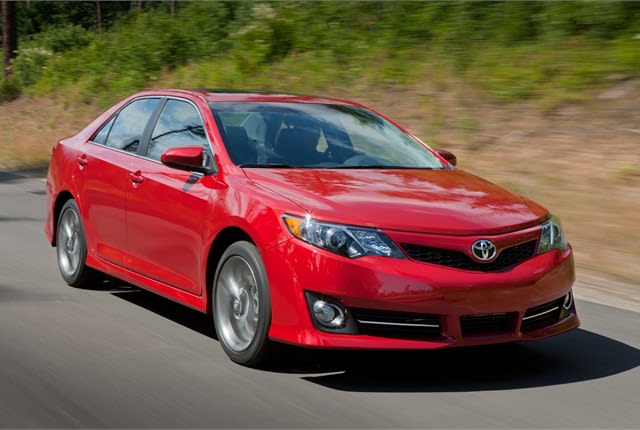
Toyota Camry SE
The 2014-MY Toyota Camry offers three powertrain choices, including a 2.5L four-cylinder gasoline engine, a DOHC 3.5L V-6 and the Hybrid Synergy Drive. The 2.5L four produces 178 hp and 170 lb.-ft. of peak torque and, teamed with the standard six-speed automatic transmission, with 25 mpg city / 35 mpg highway EPA fuel economy ratings.
The V-6 is available in the SE and XLE grades and delivers 268 hp at 6,200 rpm and 248 lb.-ft. of peak torque at 4,700 rpm. This engine delivers an EPA mpg rating of 21 mpg city / 31 mpg highway fuel economy ratings. Both Camry gasoline engines employ dual variable valve timing with intelligence (Dual VVT-i), which controls valve timing on both the intake and exhaust camshafts for optimal performance and efficiency at all engine speeds.
The gasoline-engine LE, XLE, and SE models come equipped exclusively with a six-speed automatic transmission that offers a sequential manual shift mode using the console shifter.
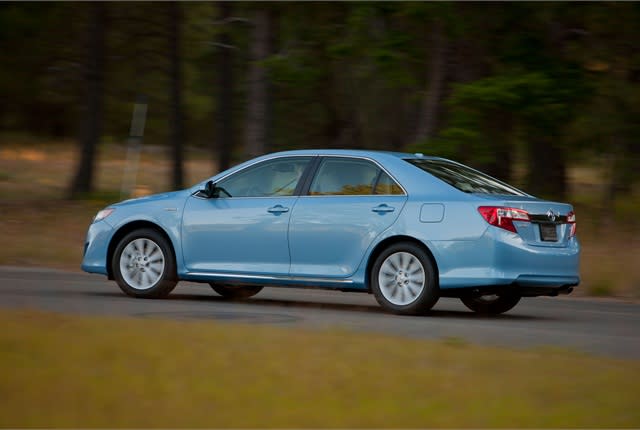
Toyota Camry Hybrid
With its Hybrid Synergy Drive powertrain, the 2014 Camry Hybrid LE is rated by the EPA with 43 mpg city/39 mpg highway/41 mpg combined fuel economy. An EV Drive mode allows the driver, under certain conditions, to operate the Camry Hybrid solely on the electric motor for up to 1.6 miles at lower speeds (below approximately 25 mph). A driver-selectable ECO mode optimizes throttle response and air conditioning output to help prioritize maximum fuel economy. The 2014-MY Camry Hybrid meets AT-PZEV (Advanced Technology Partial-credit Zero Emissions Vehicle) standards, according to the automaker.
Originally posted on Automotive Fleet
More Small Fleet


Developing Budget-Friendly Driver Safety Programs
From driver training and safety meetings to one-on-one coaching and incentive programs, several small fleets share how they have developed a safety culture with their drivers using low- to no-cost resources.
Read More →
Boosting Last-Mile Fleet Uptime, Safety, and Value with AI Vehicle Inspections
AI-powered inspections are transforming last-mile fleets by replacing manual checks with highly accurate automated scans that detect defects in seconds. By giving fleet operations visibility into the daily condition of their vehicles, you can identify trends over the vehicle’s lifecycle that enable improved procurement decisions, route management, driver training and accountability.
Read More →
Five Ways Seat Belts Help Prevent Injuries
There are five ways seat belts protect occupants from injuries, according to the Tennessee Department of Safety and Homeland Security.
Read More →
It’s here: The 2026 Fleet Technology Trends Report
What does AI mean for fleets? Get the answer — and learn other top tech trends.
Read More →
Small Fleets, Big Impact: How Independent Drivers Power Wreaths Across America
Check out how small fleets and independent drivers power Wreaths Across America each December and why their impact matters more than ever.
Read More →
VMS Survey Finds 65% of Small Fleet Managers Run Operations Alone
A new VMS survey shows small fleet managers are stretched thin, with most handling operations solo and eager to adopt digital tools for relief.
Read More →
Tips for Driving Safely on Halloween Night
This video features a reminder from the Connecticut Department of Transportation (DOT) and the Connecticut Police Chiefs Association, urging drivers to prioritize safety this Halloween.
Read More →
AI, Access, and Uptime: VMS’s Next Chapter with David Prusinski
VMS’s new Co-CEO, David Prusinski, shares how an AI-first approach will give small fleets and repair shops the tools to compete like big players.
Read More →
Fleet Managers Share Winter Prep Tips: It's Never Too Early!
Three fleets share best practices to prep vehicles for winter and prevent downtime when the cold sets in.
Read More →