




Study: Trucker Crash Risk Higher in 11th Hour
Crash risk in the last hour of a now legal 11-hour day is more than three times higher than during the first hour, a Penn State research team has found.
The crash risk for truck drivers in the last hour of a now legal 11-hour day behind the wheel is more than three times higher than during the first hour, a Penn State research team has found. In January 2004 the Federal Motor Carrier Safety Administration raised the limit of consecutive driving hours from 10 to 11 hours and reaffirmed the change in October this year. The Penn State study found that during normal operations in 2004 shows that the crash risk is statistically similar for the first six hours of driving. The risk increases significantly thereafter. The 11th hour has a crash risk more than three times the first hour. Dr. Paul Jovanis, professor of civil engineering who led the Penn State study, described the findings in a paper, On the Relationship of Crash Risk and Driver Hours of Service. The paper was presented at the 2005 International Truck & Bus Safety Security Symposium in Alexandria, Va. The pattern of increased crash risk associated with the number of hours driven that the Penn State team observed is contrary to the results of field studies conducted by others in the 1990s. However, the pattern is consistent with more recent Penn State observational studies. For example, using data on an estimated 16 million vehicle miles of actual long haul truck travel by professional drivers collected during 1984 and 1985, the Penn State researchers found recently that the 10th hour of driving had a crash risk 2.1 times the first hour of driving. Those results were reported at the Transportation Research Board annual meeting in Washington, D. C. last year and are scheduled to be published in a forthcoming issue of the Journal of the Transportation Research Board. Jovanis notes, "Our findings, using data from 2004 and from the 1980s, establish a consistent pattern of increased crash risk with hours driving, particularly in the 9th, 10th and 11th hours." In their most recent study, the researchers also found that multi-day driving schedules, over 7 days, were associated with significant crash risk increases similar in magnitude to extended driving time. In addition, separate analyses of the records of drivers who operate trucks that have sleeping compartments with those that don't have sleeping compartments show that there is a strong association of crash risk and driving time for sleeper operations, especially in the 8th, 10th and 11th hours. Non-sleeper operations associate crash risk with multi-day driving somewhat more strongly than with driving time.
More Small Fleet


Developing Budget-Friendly Driver Safety Programs
From driver training and safety meetings to one-on-one coaching and incentive programs, several small fleets share how they have developed a safety culture with their drivers using low- to no-cost resources.
Read More →
Boosting Last-Mile Fleet Uptime, Safety, and Value with AI Vehicle Inspections
AI-powered inspections are transforming last-mile fleets by replacing manual checks with highly accurate automated scans that detect defects in seconds. By giving fleet operations visibility into the daily condition of their vehicles, you can identify trends over the vehicle’s lifecycle that enable improved procurement decisions, route management, driver training and accountability.
Read More →
Five Ways Seat Belts Help Prevent Injuries
There are five ways seat belts protect occupants from injuries, according to the Tennessee Department of Safety and Homeland Security.
Read More →
It’s here: The 2026 Fleet Technology Trends Report
What does AI mean for fleets? Get the answer — and learn other top tech trends.
Read More →
Small Fleets, Big Impact: How Independent Drivers Power Wreaths Across America
Check out how small fleets and independent drivers power Wreaths Across America each December and why their impact matters more than ever.
Read More →
VMS Survey Finds 65% of Small Fleet Managers Run Operations Alone
A new VMS survey shows small fleet managers are stretched thin, with most handling operations solo and eager to adopt digital tools for relief.
Read More →
Tips for Driving Safely on Halloween Night
This video features a reminder from the Connecticut Department of Transportation (DOT) and the Connecticut Police Chiefs Association, urging drivers to prioritize safety this Halloween.
Read More →
AI, Access, and Uptime: VMS’s Next Chapter with David Prusinski
VMS’s new Co-CEO, David Prusinski, shares how an AI-first approach will give small fleets and repair shops the tools to compete like big players.
Read More →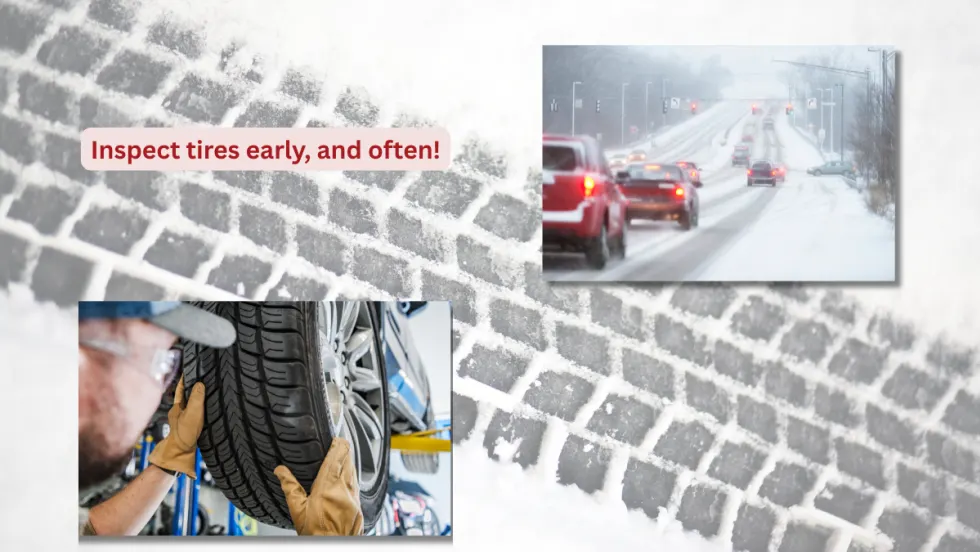
Fleet Managers Share Winter Prep Tips: It's Never Too Early!
Three fleets share best practices to prep vehicles for winter and prevent downtime when the cold sets in.
Read More →