




[Study] J. J. Keller Reports on Greatest Pain Points for Fleet Managers
Are you struggling to stay updated on regulatory changes, improve driver knowledge and skills, and comply with industry standards? You aren't alone.

![[Study] J. J. Keller Reports on Greatest Pain Points for Fleet Managers](https://assets.bobitstudios.com/image/upload/f_auto,q_auto,dpr_auto,c_limit,w_920/20240617-jjkeller-study_1775980431772_bc49kp.png)
Accurate and well-organized recordkeeping continues to be a challenge in FMCSA compliance for two consecutive years. Check out the other study findings today!
Photo: Work Truck
The latest study by the J. J. Keller Center for Market Insights, the research arm of J. J. Keller & Associates, Inc. reveals that fleet managers are dealing with ongoing challenges related to staying updated on regulatory changes, improving driver knowledge and skills, and complying with industry standards.
The study, titled "The State of Fleet Management: Insights on Priorities for Today’s Fleet Managers," is based on a survey conducted in February 2024 and is the fourth annual study on this topic by the J. J. Keller Center for Market Insights.
Key findings from the study highlight the following trending concerns from 2021 to 2024:
Difficulties with hours-of-service (HOS) limits and use exemptions increased by 13% from 2023 to 2024.
Finding and retaining high-quality drivers remained a top concern from previous years and increased by 12% from 2023.
Understanding how the Federal Motor Carrier Safety Administration (FMCSA) regulations specifically apply to fleet managers remained a top concern, increasing by 9% year-over-year.
According to Daren Hansen, senior industry advisor at J. J. Keller, despite the widespread use of electronic logs, hours-of-service compliance remains a significant issue, with HOS violations accounting for over 40% of all roadside violations and nearly 1 in 5 violations found during audits in 2023.
Hansen added, "Toss in a variety of exceptions, and it’s no wonder that drivers struggle with HOS compliance."
Digging into the J.J. Keller State of Fleet Management Study Results
Accurate and well-organized recordkeeping continues to be a challenge in FMCSA compliance for two consecutive years. According to a study, 47% of fleet managers consider "Having accurate and well-organized Driver Qualification files" as the most important aspect of FMCSA compliance, marking a 5% increase from 2023.
Respondents highlighted the difficulties of staying updated with changing DOT and OSHA rules, ensuring comprehensive compliance monitoring, and centralized record retention. They also expressed concerns about the constant changes in FMCSA rules, struggling to have all the necessary paperwork and records filed.
The focus on improving the knowledge and skills of drivers remains ongoing, with 65% of survey participants reporting that continuous learning is a significant emphasis within their companies. When it comes to driver training, respondents stress that training should be specific to their drivers' unique needs, operations, vehicles, or industry (47%), and that drivers should apply what they learn in training (45%).
"If you want to be a manager in this industry, either in safety or operations, be prepared. 74% of the respondents rated their jobs as moderately to extremely stressful. On the other end, just 27% said their job was only slightly challenging or not challenging at all. It reminds me of the old firefighter saying, ’Everyone wants to be the chief until you have to do chief things. Then the job gets hard.‘ Having good people around you and leaning on outside resources can make the job much easier,” said Tom Bray, Sr. Industry Advisor, J. J. Keller & Associates, Inc.
Top training concerns include having accurate and well-organized training records (30%), engaging and interesting training programs (28%), and the ability to demonstrate a driver's understanding of the training content if needed (25%).
It is essential for carriers to proactively build a safe and compliant fleet through training to minimize the impact of litigation. Mark Schedler, senior editor at J. J. Keller & Associates, Inc., suggests that leveraging dash cams, electronic logging devices, and telematics data can help carriers find and fix compliance and performance issues to prevent crashes, citations, and unnecessary turnover.
Unfortunately, 35% of respondents stated that they do not receive adequate support from their company for continuous learning.
Driving Thoughts on the State of Fleet Management
The most critical aspect of overall safety that fleet managers prioritize is consistent leadership that demonstrates the importance of safety (51%). Close behind is ensuring that employees feel valued, which is why fleet managers prioritize their safety (46%).
As the risk of "nuclear verdicts" and FMCSA audits continues to rise, fleet managers are expected to keep up with regulatory requirements and enhance driver knowledge and skills. Furthermore, ongoing economic challenges mean that avoiding costly incidents, eliminating inefficiencies, and reducing driver turnover are essential for fleet success.
Susan Baranczyk, head of corporate communications at J. J. Keller & Associates, Inc. stated, "Driver safety and regulatory compliance were the top trends in both the 2024 data and our findings from previous years of research. Our goal at J. J. Keller is to protect people and the businesses they run. We recognize that ensuring safety for drivers and the public is a significant challenge for fleet managers, and we commend the focus and efforts of our survey respondents to keep their teams and others safe."
The full report is available as a free download.
More Operations
Family Ties Inside the Fleet Families Building Careers Across Generations
Three fleet families share what it really takes to work together, learn across generations, and keep business from following them home.
Read More →
Shades of Fleet Call for Voices: Fleet's Hidden Heroes
Fleet’s hidden heroes are often the ones keeping everything moving behind the scenes. September’s Shades of Fleet is looking for dispatchers, coordinators, parts specialists, and other support pros to share their stories.
Read More →
Truck Centers, Inc. Celebrates National Truck Driver Appreciation Week with $1,000 Fuel Card Giveaways
During National Truck Driver Appreciation Week, Truck Centers, Inc. is offering customers a chance to fuel up for free. Customers at all Truck Centers locations can enter to win one of four $1,000 fuel cards from Sept. 14 - 18.
Read More →
Fleet Guides, AI Time-Savers, Truck Tariffs & Fuel Strategy Lead the News
This week’s Truck Chat Cheat Sheet covers new fleet vehicle guides, practical AI use cases, U.S.-Canada truck production, mixed-energy strategy, and more.
Read More →
What Fleet Employers Are Missing When Hiring Veterans
What if some of the strongest candidates for fleet are already out there, but their experience is written in a language our industry does not always recognize?
Read More →
Automotive Fleet Opens 2026 Personal Use Survey for Commercial Fleet Managers
Less than two weeks left! Commercial and corporate fleet managers are invited to share how their organizations handle company vehicle personal-use policies, charges, and driver eligibility.
Read More →
What Resilient Fleets Do Differently When Conditions Change
Fleet resilience is about more than reacting to disruption. Lauren Fletcher talks with AP Fleet’s Alex Coveney about flexibility, planning, scaling, and what helps fleets adapt when business conditions shift.
Read More →
If We Want the Next Generation in Automotive, We Have to Give Them a Reason to Care
The automotive industry talks constantly about its workforce shortage. But before we can recruit the next generation, we may need to do a better job giving kids a reason to care about automotive in the first place.
Read More →
Ram ProMaster City Under $40K, Truck Tariffs, and AI Maintenance Lead the News
A sub-$40K commercial van, tariff questions, AI-powered maintenance, and a new EV production strategy headline this week’s Truck Chat Cheat Sheet.
Read More →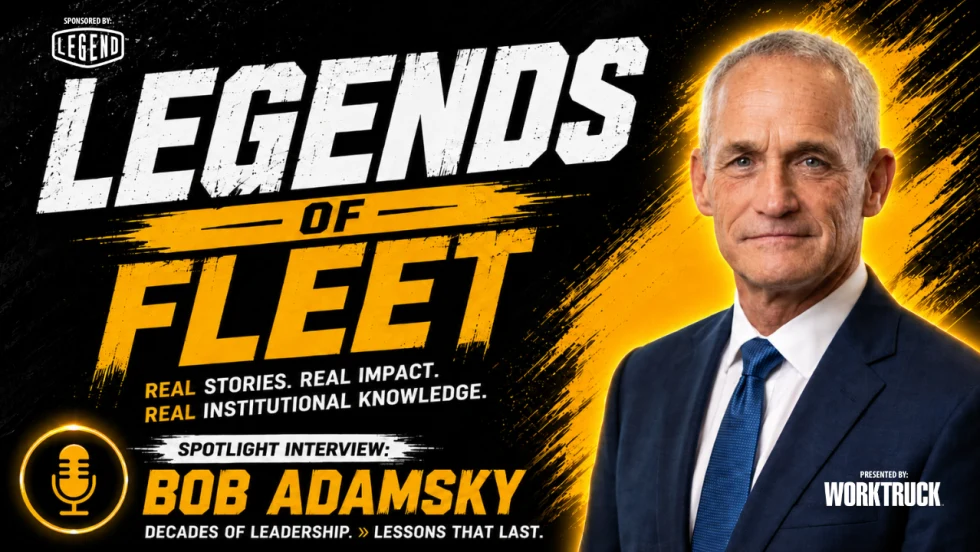
Bob Adamsky Shares the Fleet Lessons You Usually Learn the Hard Way
After more than 30 years in fleet, Arrow International’s Bob Adamsky has learned that the job is about far more than vehicles. He shares the lessons he wishes every fleet manager could learn a little earlier.
Read More →