




Safety Tips for Driving Over Icy Bridges
Icy bridges, a winter weather hazard that's often underestimated, cause more injuries and fatalities than tornadoes, lighting and floods combined each year.

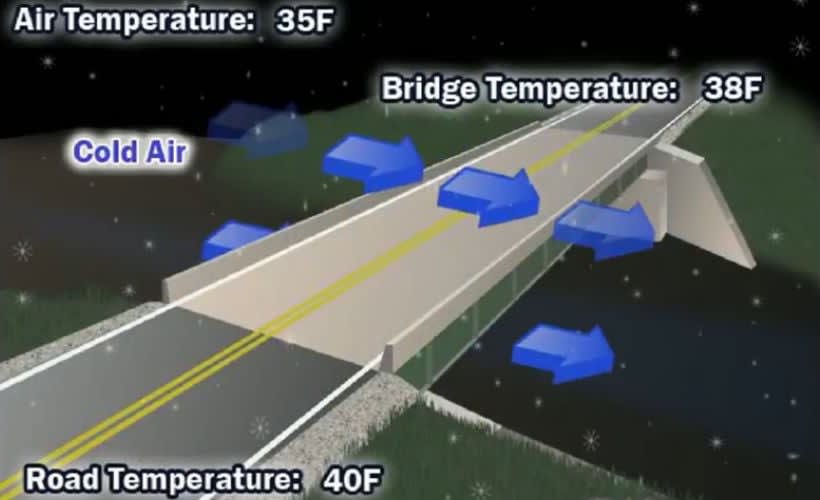
Icy bridges cause more injuries and fatalities than tornadoes, lighting, and floods combined each year.
Screenshot via Dan Robinson.
Icy bridges, a winter weather hazard that's often underestimated, cause more injuries and fatalities than tornadoes, lighting and floods combined each year.
Slick, slippery bridge surfaces often come as a surprise as ice on a bridge may be invisible to the driver. Because vehicles can hit the icy bridge surface without warning, accidents frequently happen at full highway speed — making them particularly dangerous.
In order to avoid crashes and stay safe while crossing bridges this winter, fleet drivers should keep the following in mind:
Stay aware of the weather: Always listen to the reports in your area and if your route covers a lot of distance, make sure to check the weather for your planned destination in advance.
Understand the difference between sand and salt: If you live in a region that uses sand versus salt on roads and bridges, it is all the more important to drive with caution. Sanded bridges are likely to be slicker because sand does not melt ice.
Know the warning signs of an icy bridge: Any precipitation when temperatures are near or below freezing could cause ice to form on a bridge. In addition, if ice is forming on your mirrors and windshield, chances are it is forming on any bridges you approach as well.
Reduce your speed: When approaching an icy bridge, slow down; moving at a higher speed means you are more likely to hit a patch of ice and lose control.
Avoid braking, changing lanes, or accelerating on the bridge: If the bridge is icy, any sudden moves can make your vehicle slip, slide and spin.
If you do slide or have an accident on an icy bridge, follow these steps:
Turn into the slide: Don't panic and gently turn into the slide to regain control of your vehicle.
Be aware of other vehicles: If you hit an ice patch on a bridge, chances are good that other vehicles will, too, so stay aware of what is happening around you.
Never exit your vehicle on an icy bridge: Leaving the vehicle leaves you open to being hit by another vehicle. Stay put and try to move your vehicle out of the way of traffic.
Originally posted on Automotive Fleet
More Small Fleet


Developing Budget-Friendly Driver Safety Programs
From driver training and safety meetings to one-on-one coaching and incentive programs, several small fleets share how they have developed a safety culture with their drivers using low- to no-cost resources.
Read More →
Boosting Last-Mile Fleet Uptime, Safety, and Value with AI Vehicle Inspections
AI-powered inspections are transforming last-mile fleets by replacing manual checks with highly accurate automated scans that detect defects in seconds. By giving fleet operations visibility into the daily condition of their vehicles, you can identify trends over the vehicle’s lifecycle that enable improved procurement decisions, route management, driver training and accountability.
Read More →
Five Ways Seat Belts Help Prevent Injuries
There are five ways seat belts protect occupants from injuries, according to the Tennessee Department of Safety and Homeland Security.
Read More →
It’s here: The 2026 Fleet Technology Trends Report
What does AI mean for fleets? Get the answer — and learn other top tech trends.
Read More →
Small Fleets, Big Impact: How Independent Drivers Power Wreaths Across America
Check out how small fleets and independent drivers power Wreaths Across America each December and why their impact matters more than ever.
Read More →
VMS Survey Finds 65% of Small Fleet Managers Run Operations Alone
A new VMS survey shows small fleet managers are stretched thin, with most handling operations solo and eager to adopt digital tools for relief.
Read More →
Tips for Driving Safely on Halloween Night
This video features a reminder from the Connecticut Department of Transportation (DOT) and the Connecticut Police Chiefs Association, urging drivers to prioritize safety this Halloween.
Read More →
AI, Access, and Uptime: VMS’s Next Chapter with David Prusinski
VMS’s new Co-CEO, David Prusinski, shares how an AI-first approach will give small fleets and repair shops the tools to compete like big players.
Read More →
Fleet Managers Share Winter Prep Tips: It's Never Too Early!
Three fleets share best practices to prep vehicles for winter and prevent downtime when the cold sets in.
Read More →