




Safe Tread Alliance Introduces the Quarter Test for Tires
The Safe Tread Alliance calls for modern tire safety standards in the United States and urges drivers to use a quarter rather than a penny to check tread depth.


The Safe Tread Alliance now recommends using a quarter to test tire tread depth rather than a penny.
Photo: Work Truck
The Safe Tread Alliance (STA), a national coalition of tire industry leaders, safety advocates, and nonprofit partners, is pushing to modernize tire safety standards in the United States, eliminate outdated consumer practices, and retire the “penny test” for tire tread depth.
STA noted that each year, thousands of crashes across the U.S. are linked to worn or unsafe tires. Between 2019 and 2023, the Fatality Analysis Reporting System (FARS) documented 2,740 fatal crashes and 3,136 deaths involving tire-related factors. The Safe Tread Alliance believes these tragedies can be prevented through stronger tread standards, better consumer education, and a renewed focus on proactive maintenance.
Ending the Penny Test
For decades, drivers have been told to use the “penny test” to judge tire safety by placing a penny in the tread and assuming the tire is safe if Lincoln’s head is partially covered.
However, STA said research shows that by the time a tire reaches the penny’s benchmark of 2/32 of an inch, its stopping distance, traction, and ability to resist hydroplaning are already dangerously compromised.
“The penny test has given Americans a false sense of security for far too long,” said Alex Bebiak, a co-founder of the Safe Tread Alliance and president of the Road Ready Foundation. “When lives are on the line, good enough isn’t good enough. It’s time to retire this outdated method and give drivers a safer standard.”
Introducing the Quarter Test
To replace the outdated penny test, the Safe Tread Alliance is introducing the “quarter test” a simple, accessible method for determining when tires are no longer safe. When a quarter is placed into the tire’s tread with Washington’s head down, if the top of his head is visible, the tread depth is at or below 4/32 of an inch, the point where performance and wet-weather safety begin to drop significantly.
Independent testing has shown that vehicles with tires worn to 2/32 of an inch can take up to 87 feet longer to stop in wet conditions than those with 4/32 of an inch tread. Tires at 4/32 maintain nearly 60% better water evacuation, reducing hydroplaning risk and improving overall handling.
Most major tire manufacturers and independent organizations, according to STA, are already starting to recommend replacing tires around 4/32 of an inch due to the significant reduction in wet-weather traction at that tread depth. However, STA said the messaging is unclear, inconsistent, and contradictory.
A Call for Modern U.S. Tire Standards
STA believes it’s time for the United States to adopt tire performance standards that reflect modern vehicles, technology, and real-world road conditions.
The organization is calling for a collaborative approach between industry leaders, government agencies, and safety organizations to ensure that tires are safe throughout their usable life, not just when they’re new.
Wet Grip or Worn Tires Regulation
On July 1, 2024, 55 of the 57 member countries of the United Nations Economic Commission for Europe (UNECE) passed into legislation a new Regulation R117.04, which is called the Wet Grip on Worn Tires, or WGWT Regulation.
This regulation introduced a stringent test to guarantee that tires maintain a certain level of performance, particularly wet grip, even when significantly worn. This test specifically measures a vehicle's braking distance required to decelerate from 80 KM/H to 20 KM/H with a water depth of 1 MM.
“Unfortunately, United States and Canada are the two key member countries who are not required or have elected to comply, following other standards that we believe are inadequate, haven’t evolved much in decades and are in dire need to be updated,” said Jamie Ward, a Co-Founder of Safe Tread Alliance, CEO of Tire Discounters, and president of the Ohio Tire & Automotive Association (OTAA).
“The technology exists to build safer, longer-lasting tires, but policy and awareness need to catch up. In fact, many global tire manufacturers already have certain tires that meet this criteria, and others are scrambling to build tires safer to comply with the new European regulation,” Ward added. “Until we the people of the United States take a stand, our lower standards will continue to allow for worn tires that aren’t as safe to be driven on our roadways, potentially killing hundreds of Americans each year in preventable traffic accidents. Together, we can save lives, reduce waste, and build consumer confidence.”
A Nation Driving Safer Movement
The Safe Tread Alliance’s national initiative, A Nation Driving Safer, aims to reset the public conversation around tire safety through advocacy, education, and industry alignment. The campaign will roll out across the country with events, social media education, and strategic partnerships designed to empower drivers and policymakers alike.
“Unsafe tires shouldn’t be a matter of opinion or luck,” Bebiak added. “We have the data, the technology, and the responsibility to act. The quarter test is more than a tool; it’s a movement towards a new standard to save lives.”
More Maintenance
Les Schwab Expands Commercial Tire Footprint Into Arizona
Les Schwab Tires has expanded into Arizona with two commercial tire locations in Phoenix and Tucson, strengthening its fleet service footprint in the Southwest.
Read More →
Volvo Trucks’ 'Lock and Leave' Software Updates Go Live Across North America
Unattended over-the-air software updates are now available in Volvo trucks across the U.S. and Canada. The new capability lets trucks stay current with the latest software without interrupting operations or requiring a dealership visit.
Read More →
Why Technician Appreciation Can’t Be a Once-a-Year Thought
For fleets trying to keep skilled technicians, recognition cannot begin and end with Technician Appreciation Week. Learn what year-round appreciation really looks like and why the everyday technician experience matters just as much as pay when fleets are trying to keep good people.
Read More →
How Faster Driver Reporting Can Keep Small Truck Problems Small
When minor damage, warning lights, or equipment issues are reported late, small problems can quickly become bigger maintenance headaches. Conversational AI can help shorten the path from what a driver notices in the field to the person who can act on it.
Read More →
BendPak’s Ranger Wheel Service Equipment Achieves North American Safety Certification
BendPak’s full line of Ranger tire changers and wheel balancers has been ETL certified to UL and CSA standards to improve operator safety.
Read More →
Isuzu & U.S. Department of Labor Celebrate Milestone for Veterans Apprenticeship Program
The Isuzu Veterans Apprenticeship Program (IVAP) signing ceremony highlighted Isuzu’s long-term commitment to veterans, Isuzu dealers, and the skilled workforce supporting its customers and the commercial transportation industry.
Read More →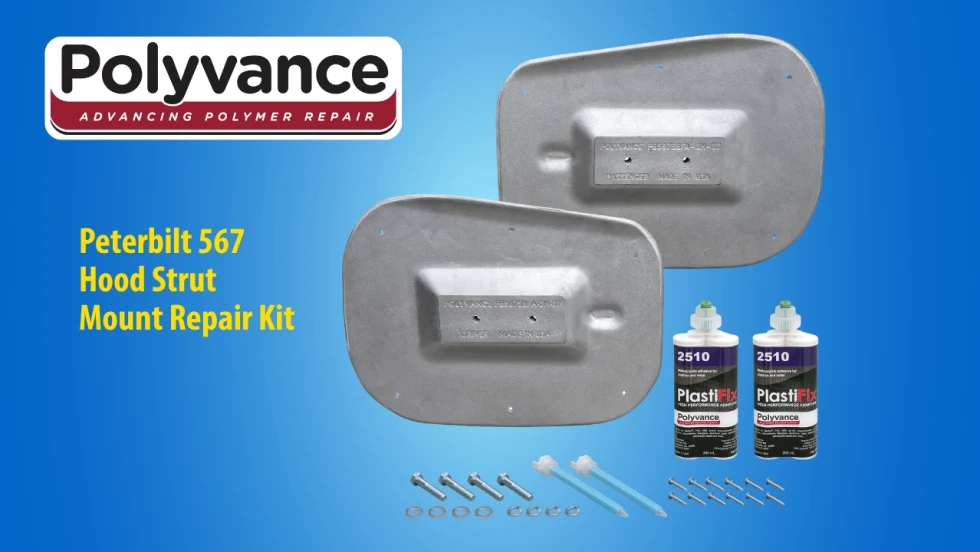
Polyvance Introduces New Peterbilt 567 Hood Strut Mount Repair Kit
Polyvance has launched a repair solution for Peterbilt 567 hood struts, helping truck owners and repair facilities avoid costly hood replacements.
Read More →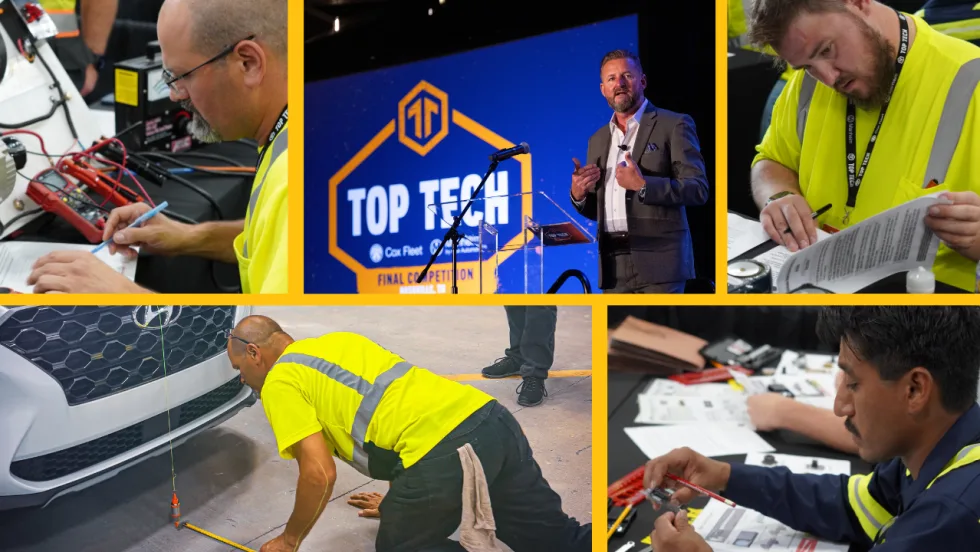
Cox Automotive Celebrates Technical Excellence at 2026 Top Tech Finals
The top technicians from Cox Fleet and Manheim tested their skills in Nashville, Tennessee, at Cox Automotive’s 2026 Top Tech Finals. The overall winners will advance to compete at the American Trucking Association’s TMC SuperTech competition.
Read More →
Grote Industries Appoints Vice President of North American Operations
Grote Industries has appointed Patrick Smith as vice president of North American operations as it celebrates 125 years of innovation and manufacturing excellence. He has more than 20 years of manufacturing leadership experience.
Read More →
Winter Fleet Prep: Expert Tips to Keep Vehicles Running Smoothly
Cold weather can expose weak batteries, tires, fuel systems, and maintenance gaps fast. Use this winter fleet checklist to prepare trucks and drivers before temperatures drop.
Read More →