




Report: Technical Hurdles to Fuel-Cell Vehicles “Daunting”
Hydrogen's "wide-scale use is laden with potential technical, economic and societal impasses." Optimistic prediction is that by 2020 fuel-cell vehicles will enter the marketplace and by 2050 everybody will be driving them.
General Motors and Toyota are in talks about collaborating on a fuel cell partnership, according to news reports this week. However, researchers conclude in an article to be published in June that it could take "several decades" to overcome daunting technical challenges standing in the way of the mass production and use of hydrogen fuel cell cars. The article, to appear as the cover story in the June issue of the AIChE Journal published by the American Institute of Chemical Engineers, notes that hydrogen fuel cell "success is not certain." The article says that hydrogen's "wide-scale use is laden with potential technical, economic and societal impasses." In case fuel cells never do become practical for cars, the researchers conclude, it would be wise for the nation to "maintain a robust portfolio of energy research and development" in other areas. Current obstacles to a fuel-cell economy include: --the high cost of power. Today's fuel cells generate power at a cost of greater than $2,000 per kilowatt, compared with $35 per kilowatt for the internal combustion engine. --operating life. Fuel cells in cars last less than 1,000 hours of driving time, compared with at least 5,000 hours of driving time for an internal combustion engine. --vehicle cost. A fuel-cell car built with today's technology costs about $250,000. --storage and transportation. Hydrogen is a light gas, meaning it needs more space than a normal gas tank to provide the same amount of power to an engine. Transporting hydrogen would be more expensive as well. --method of hydrogen production. Industry now extracts hydrogen from natural gas, oil and coal. These fossil fuels will eventually run out and pose potential environmental hazards. --infrastructure. Plants dedicated to hydrogen production, as well as filling stations, would need to be built at a cost of billions of dollars. Who would foot the bill is not certain. "I believe we can probably solve the technological problems related to making hydrogen fuel cells practical as a replacement for the internal combustion engine, but it won't be easy and it likely won't happen very soon," said article co-writer Rakesh Agrawal, Purdue University's Winthrop E. Stone Distinguished Professor of Chemical Engineering. "An optimistic prediction would be that a significant number hydrogen fuel cell cars will be entering the marketplace around 2020, and by 2050 everybody will be driving them." The article was written by Agrawal, Martin Offutt, from the National Research Council, and Michael P. Ramage, a retired executive from ExxonMobile Corp.
More Small Fleet


Developing Budget-Friendly Driver Safety Programs
From driver training and safety meetings to one-on-one coaching and incentive programs, several small fleets share how they have developed a safety culture with their drivers using low- to no-cost resources.
Read More →
Boosting Last-Mile Fleet Uptime, Safety, and Value with AI Vehicle Inspections
AI-powered inspections are transforming last-mile fleets by replacing manual checks with highly accurate automated scans that detect defects in seconds. By giving fleet operations visibility into the daily condition of their vehicles, you can identify trends over the vehicle’s lifecycle that enable improved procurement decisions, route management, driver training and accountability.
Read More →
Five Ways Seat Belts Help Prevent Injuries
There are five ways seat belts protect occupants from injuries, according to the Tennessee Department of Safety and Homeland Security.
Read More →
It’s here: The 2026 Fleet Technology Trends Report
What does AI mean for fleets? Get the answer — and learn other top tech trends.
Read More →
Small Fleets, Big Impact: How Independent Drivers Power Wreaths Across America
Check out how small fleets and independent drivers power Wreaths Across America each December and why their impact matters more than ever.
Read More →
VMS Survey Finds 65% of Small Fleet Managers Run Operations Alone
A new VMS survey shows small fleet managers are stretched thin, with most handling operations solo and eager to adopt digital tools for relief.
Read More →
Tips for Driving Safely on Halloween Night
This video features a reminder from the Connecticut Department of Transportation (DOT) and the Connecticut Police Chiefs Association, urging drivers to prioritize safety this Halloween.
Read More →
AI, Access, and Uptime: VMS’s Next Chapter with David Prusinski
VMS’s new Co-CEO, David Prusinski, shares how an AI-first approach will give small fleets and repair shops the tools to compete like big players.
Read More →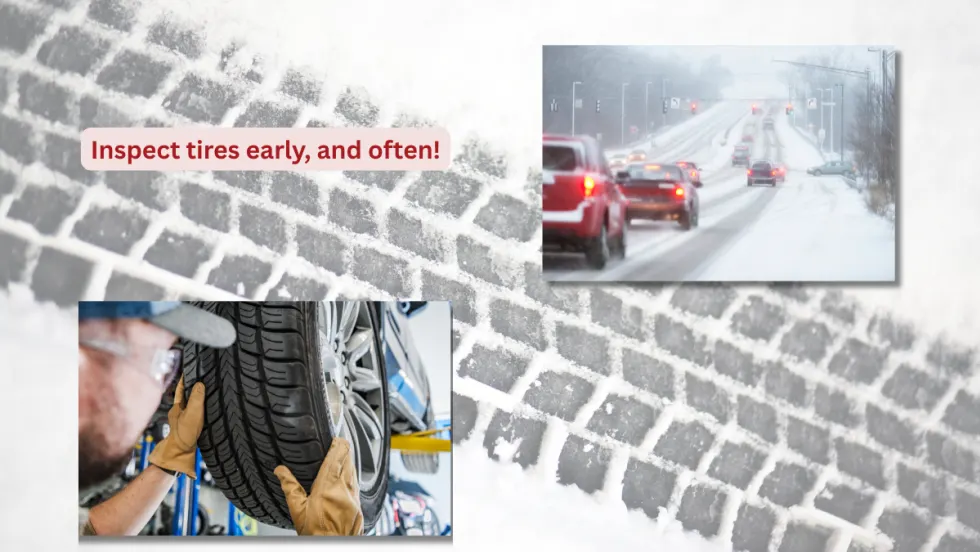
Fleet Managers Share Winter Prep Tips: It's Never Too Early!
Three fleets share best practices to prep vehicles for winter and prevent downtime when the cold sets in.
Read More →