




Postal Service Seeking Next-Gen Delivery Vehicle
The U.S. Postal Service will meet with automotive manufacturers in Washington, D.C., this week to field questions about its proposal to replace its aging delivery fleet with a next-generation vehicle, according to federal records.

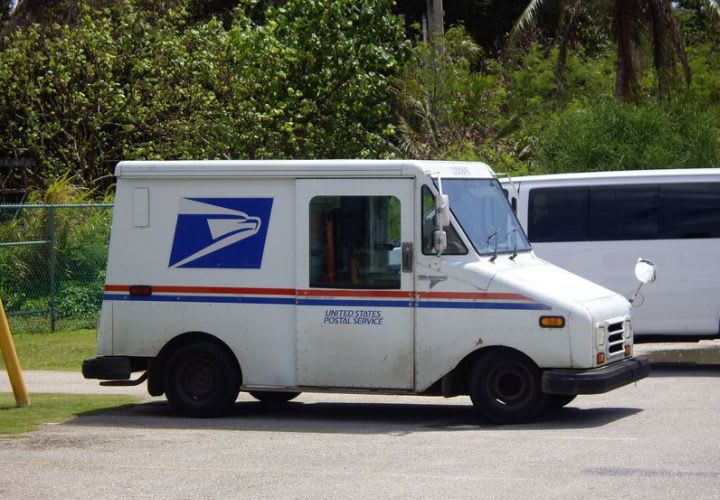
Photo of exising USPS vehicle via Wikimedia.
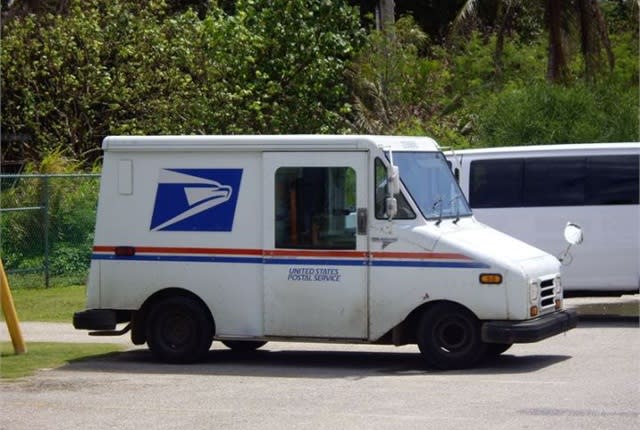
Photo of exising USPS vehicle via Wikimedia.
The U.S. Postal Service will meet with automotive manufacturers in Washington, D.C., this week to field questions about its proposal to replace its aging delivery fleet with a next-generation vehicle, according to federal records.
The Feb. 18 meeting follows a "request for information" released by the USPS on Jan. 20 that included detailed specifications about the new vehicle, which will replace the Long Life Vehicle (LLV) that entered service in 1987.
The USPS plans to replace the majority of its fleet of more than 200,000 vehicles that includes 180,000 light-duty carrier route vehicles. Replacing up to 180,000 LLVs would cost between $4.5 billion and $6.3 billion. The USPS hopes to place the new vehicles into service in January of 2018.
General Motors contributed core components to the LLV including the Chevrolet S-10 chassis, 3-speed transmission paired with rear-wheel drivetrain, and 2.5-liter four-cylinder Pontiac engine. The vehicle was assembled by Grumman in Montgomery, Pa., until 1994.
"GM listens to the needs across a wide range of customers," said Robert Wheeler, communications manager for GM Fleet & Commercial. "The U.S Postal Service is an important customer, and we are early in the process of exploring potential solutions that would work for their needs."
A Ram Truck spokesman acknowledged receipt of the request for information, and a Ford spokesman said the company does not "speculate on potential customer orders." Automotive manufacturers must respond by March 6.
The USPS has said it will give out a single award for the replacement fleet by early January of 2017. Suppliers would submit prototype vehicles for testing by February of 2016.
The existing USPS fleet vehicles average about 5,000 miles per year with an average speed of 15 mph. The higher-mileage units can accumulate 20,000 miles per year. Some of the units can average more than 600 stops per day.
As part of its specifications, the USPS is asking for several requirements, including right-hand steering with a two-wheel drive and a four-wheel drive option; heavy-duty automatic transmission with traction control; enclosed, van-style body with integrated cab and cargo compenent constructed of aluminum alloy or composite materials; sliding driver door and separate cargo side door; 1,500-pound payload capacity; and rear-view camera with monitor.
The next-generation vehicle should be no longer than 230 inches, no taller than 106 inches, and no wider than 85 inches, according to the specification documents.
By Paul Clinton
Originally posted on Automotive Fleet
More Operations

Family Ties Inside the Fleet Families Building Careers Across Generations
Three fleet families share what it really takes to work together, learn across generations, and keep business from following them home.
Read More →
Shades of Fleet Call for Voices: Fleet's Hidden Heroes
Fleet’s hidden heroes are often the ones keeping everything moving behind the scenes. September’s Shades of Fleet is looking for dispatchers, coordinators, parts specialists, and other support pros to share their stories.
Read More →
Truck Centers, Inc. Celebrates National Truck Driver Appreciation Week with $1,000 Fuel Card Giveaways
During National Truck Driver Appreciation Week, Truck Centers, Inc. is offering customers a chance to fuel up for free. Customers at all Truck Centers locations can enter to win one of four $1,000 fuel cards from Sept. 14 - 18.
Read More →From Our Partners



Fleet Guides, AI Time-Savers, Truck Tariffs & Fuel Strategy Lead the News
This week’s Truck Chat Cheat Sheet covers new fleet vehicle guides, practical AI use cases, U.S.-Canada truck production, mixed-energy strategy, and more.
Read More →
What Fleet Employers Are Missing When Hiring Veterans
What if some of the strongest candidates for fleet are already out there, but their experience is written in a language our industry does not always recognize?
Read More →
Automotive Fleet Opens 2026 Personal Use Survey for Commercial Fleet Managers
Less than two weeks left! Commercial and corporate fleet managers are invited to share how their organizations handle company vehicle personal-use policies, charges, and driver eligibility.
Read More →
What Resilient Fleets Do Differently When Conditions Change
Fleet resilience is about more than reacting to disruption. Lauren Fletcher talks with AP Fleet’s Alex Coveney about flexibility, planning, scaling, and what helps fleets adapt when business conditions shift.
Read More →
If We Want the Next Generation in Automotive, We Have to Give Them a Reason to Care
The automotive industry talks constantly about its workforce shortage. But before we can recruit the next generation, we may need to do a better job giving kids a reason to care about automotive in the first place.
Read More →
Ram ProMaster City Under $40K, Truck Tariffs, and AI Maintenance Lead the News
A sub-$40K commercial van, tariff questions, AI-powered maintenance, and a new EV production strategy headline this week’s Truck Chat Cheat Sheet.
Read More →
Bob Adamsky Shares the Fleet Lessons You Usually Learn the Hard Way
After more than 30 years in fleet, Arrow International’s Bob Adamsky has learned that the job is about far more than vehicles. He shares the lessons he wishes every fleet manager could learn a little earlier.
Read More →