





Gas vs. Diesel: The Bad Investment Only Fleet Managers Know About
PG&E Introduces EV Fleet Savings Calculator
PG&E’s new EV Fleet Savings Calculator allows business customers and public agencies with medium- to heavy-duty fleet vehicles to explore EV investment estimates based on their own fleet sizes, infrastructure, budget, and other factors.
December 2, 2020

PG&E’s new EV Fleet Savings Calculator, using calculations based on PG&E’s new Business EV Rate, allows business and public agency customers to evaluate their fleet plans by analyzing how much they can save by switching to EVs.
Photo: PG&E
3 min to read
Pacific Gas and Electric Company (PG&E) announced a new online tool for companies and organizations considering transitioning their fleets to electric vehicles (EVs). PG&E’s new EV Fleet Savings Calculator allows business customers and public agencies with medium- to heavy-duty fleet vehicles to explore EV investment estimates based on their own fleet sizes, infrastructure, budget, and other factors.
Transportation is the single largest source of climate-related pollution in California, contributing to 41% of greenhouse-gas emissions across the state. Heavy- and medium-duty vehicles often use diesel, which is a highly polluting fuel. EVs are four times more efficient than diesel and natural gas engines and offer significant fuel cost savings, according to PG&E.
“Expanding the use of electric vehicles is essential for California to achieve its bold climate and clean-air goals. PG&E has been an active partner in helping make EVs an option for millions of Californians, including for our business and public agency customers who are transitioning their fleets to electric vehicles. Reducing vehicle emissions is good for our state and good for the environment in which we all live," said PG&E Corporation Interim CEO Bill Smith.
PG&E’s own commitment to further electrify its vehicle fleet by 2030 includes 100% of its light-duty fleet, 10% of its medium-duty fleet, and 5% of its heavy-duty fleet.
In addition to the new EV Fleet Savings Calculator, PG&E offers business and public agency customers innovative rate options as well as its EV charging infrastructure program for fleets.
For customers with fleets that are making the transition to electric, an essential step in the process is understanding the costs and potential cost savings when deploying EVs. PG&E’s new EV Fleet Savings Calculator, using calculations based on PG&E’s new Business EV Rate, allows business and public agency customers to evaluate their fleet plans by analyzing how much they can save by switching to EVs.
The tool helps customers better understand key total cost of ownership factors including incentives, energy costs, infrastructure considerations and participation in California’s statewide Low Carbon Fuel Standard (LCFS). After customers input information on vehicles and usage, the tool offers recommendations for charging infrastructure, charging schedule based on fleet needs, how much they can save on fuel costs, revenue they could generate from LCFS, and estimated reductions in greenhouse-gas emissions.
This year, PG&E also launched its new Business EV Rate to support charging needs for businesses and public agencies, as well as apartment buildings and other public locations. On average, EV customers on the new rate can save up to 40% on charging costs compared to previous rate options, although actual bill impacts will vary for each customer depending on types of vehicles and charging patterns.
Customers on PG&E’s Business EV Rate achieve cost savings through a new feature called a subscription charge, which allows customers to choose the amount of kilowatt power they need for their charging stations, similar to choosing a data plan for a phone bill. This subscription charge can be much lower than current rate options, and allows customers to have simpler, more consistent monthly costs.
On the Business EV Rate, customers pay for the electricity used by the EV chargers and the monthly subscription charge. Customers can always adjust their subscription levels up or down to meet their changing needs for EV charging.
Finally, PG&E’s EV Fleet program helps customers with medium-duty, heavy-duty, and off-road fleets begin to transition their fleet vehicles to clean electricity to save money, eliminate tailpipe emissions and simplify maintenance. By 2024, the program aims to help more than 700 organizations deploy more than 6,500 EVs across numerous medium- and heavy-duty fleet categories.
Through the EV Fleet program, PG&E builds the electrical infrastructure for customers’ medium- to heavy-duty EVs from the utility pole (electric service) to the customer meter or to the charger depending on which ownership option the customer choses. PG&E comprehensively helps customers across all facets of EV charging including available incentives and rebates, site design and permitting, construction and activation, and maintenance and upgrades.
More Green Fleet

Fleet Forward Conference Introduces One-Day Passes for 2026
New one-day registration gives fleet professionals the flexibility to attend Tuesday, Wednesday, or Thursday, with passes available for $199 through Sept. 18.
Read More →
CALSTART Rebrands as Catalyst Mobility, Will Combine with Forth in 2027
CALSTART has rebranded as Catalyst Mobility and will combine with Forth at the start of 2027. The new organization said it is poised to become one of the world's largest, strongest, and most impactful clean transportation nonprofits.
Read More →
Electric Truck and Charging Programs to Boost Sustainability at NY & NJ Ports
Together, the Port Authority of New York and New Jersey and CALSTART will electrify drayage and terminal operations serving the East Coast’s busiest container port. A pair of incentive programs totaling $45 million has launched to accelerate adoption of zero-emission drayage trucks and terminal tractors.
Read More →
Xos Hub Surpasses One Gigawatt-Hour of Energy Delivered in the Field
A single Xos Hub has surpassed one gigawatt-hour of energy across more than 33,600 charging sessions in the field, demonstrating performance that supports Xos' expansion across new products and markets.
Read More →
Carrier Transicold Launches All-Electric Vector 8200 TRU for Diesel-Free On-Site Cold Storage
Carrier Transicold’s first engineless multi-temperature TRU helps fresh- and frozen-food fleets add supplemental cold storage capacity during seasonal peaks.
Read More →
Narro Trucks Introduces Electric Utility Vehicle
Narro Trucks officially launched its operations on Aug. 20 and hosted a ride and drive to showcase its electric truck, which will be produced in Virginia.
Read More →
Samsung SDI Takes Full Control of GM Battery JV as Indiana Plant Pivots to Energy Storage
Samsung SDI is taking full control of its Indiana battery plant with GM, marking a major shift from the EV-focused joint venture Charged Fleet first covered in 2023.
Read More →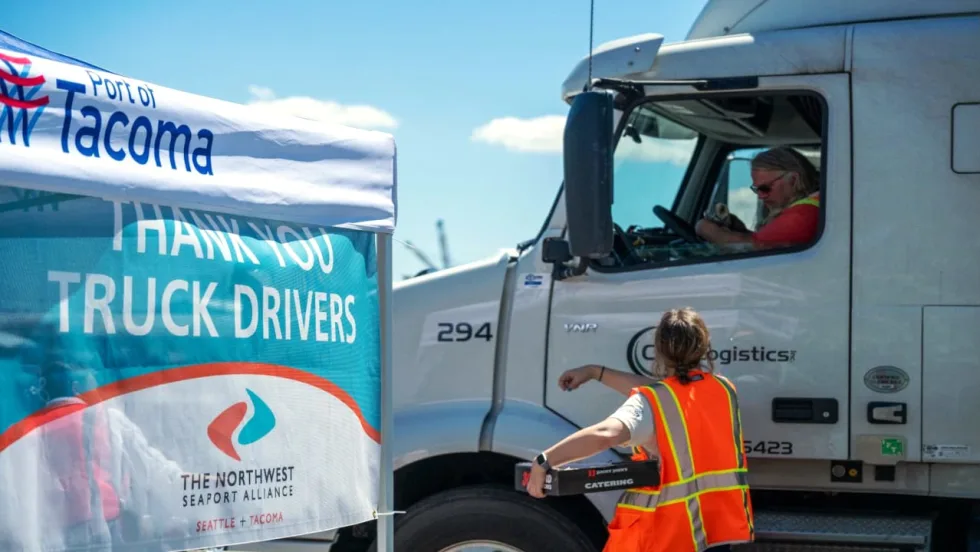
NWSA Taps CALSTART to Administer Zero-Emission Drayage Assistance Program
CALSTART will provide free technical assistance services to drayage fleets serving the Ports of Seattle and Tacoma and looking to transition to cleaner technologies and help decarbonize freight hubs.
Read More →
EV Fleet Reality Check: What Operators Wish They Knew Before Electrifying Their Work Vans
Electric work truck upfits bring new compatibility questions. Learn how parts availability, OEM guidance, power demands, and route planning can affect fleet performance.
Read More →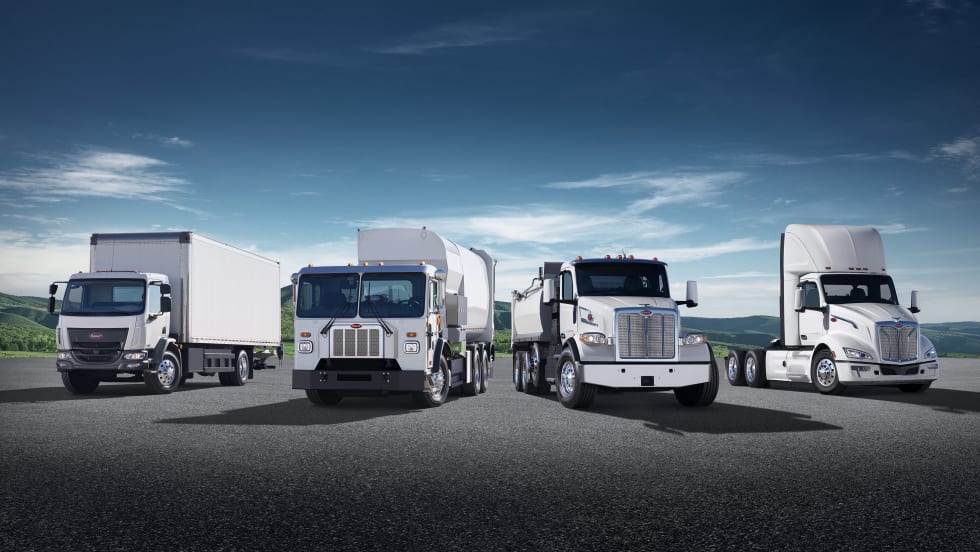
Peterbilt Expands Sourcewell Partnership with Electric Vehicle Lineup
Peterbilt Motors Company’s cooperative purchasing agreement with Sourcewell and its Canadian partner, Canoe Procurement Group, now includes including Peterbilt's battery-electric vehicle lineup.
Read More →