




Peterbilt Delivers U.S. House of Representatives 1st Hybrid Truck
The House of Representative will use the Peterbilt Model 330 Hybrid Electric Truck, which provides up to 30 percent increase in fuel efficiency.
Peterbilt Motors Co. delivered to the U.S. House of Representatives its first hybrid electric vehicle today - a Peterbilt Model 330 Hybrid Electric Truck - to the Chief Administrative Officer of the House of Representatives, the Honorable Daniel Beard.
"It makes sense, both for the environment and for the bottom line, to replace our aging vehicle fleet with low-emissions trucks," said Chief Administrative Officer Beard. "It means that the House will be driving into the future leaner and greener."
The environmentally-friendly truck is slated to carry thousands of pounds of furniture and office equipment on the Capitol Campus and throughout the Greater Washington, D.C. area, according to Beard. The Hybrid Peterbilt Model 330 was selected because it not only provides up to a 30 percent increase in fuel efficiency, but also dramatically reduces tailpipe emissions of hydrocarbons, carbon monoxide, and oxides of nitrogen (NOx).
"North Texas companies like Peterbilt are leading the way in developing clean, energy efficient products," explained Congressman Michael C. Burgess, M.D. (TX-26). "The House of Representatives made a very wise decision in selecting a Peterbilt truck to add to their fleet, and I am proud to represent Peterbilt in Texas' 26th Congressional District."
"Peterbilt is honored to have been chosen by the House of Representatives to supply their first hybrid electric vehicle," said Bill Jackson, Peterbilt general manager and PACCAR Vice President. "Peterbilt's commitment to the environment is evident by our offering the broadest array of advanced technology, environmentally friendly vehicles for the Class 6, 7 and 8 markets."
Peterbilt Hybrid Vehicles and Systems
Peterbilt has the industry's most comprehensive lineup of hybrid vehicles for pick-up and delivery, utility, municipal and refuse applications. The Peterbilt Model 330 and Model 335 hybrid vehicles are currently in full production.
Peterbilt's Hybrid Electric Power System was developed with Eaton and has an electric motor that assists the PACCAR PX-6 engine with supplemental torque leading to significant fuel economy gains. The system stores energy during stopping through a process called regenerative braking, and then reuses it for acceleration. The Models 330 and 335 hybrid electric trucks also feature an in-dash 7-inch PACCAR proprietary Hybrid System Monitor, which provides information regarding fuel economy and battery state of charge, allowing the driver to modify behavior to maximize fuel economy through optimized use of the system.
The Model 330 hybrid utilizes components that provide up to a 30 percent improvement in fuel economy in a stop-and-go urban driving cycle, and can be configured for non-CDL drivers. The Model 335 hybrid utilizes components that provide an up to a 50 percent improvement in fuel efficiency, when configured for a utility application. These fuel savings are realized through both an on-road fuel economy gain, and an 80 percent reduction in engine idling, through electric operation of the Power Take-Off (PTO) using the on-board lithium-ion batteries.
Peterbilt is also developing two heavy duty hybrid configurations - a Model 320 hydraulic launch assist (HLA) vehicle for vocational and stop-and-go applications available in late 2009, and a long-haul developmental hybrid electric platform currently undergoing pilot program testing with Walmart.
More Small Fleet

Tips for Driving Safely on Halloween Night
This video features a reminder from the Connecticut Department of Transportation (DOT) and the Connecticut Police Chiefs Association, urging drivers to prioritize safety this Halloween.
Read More →
Developing Budget-Friendly Driver Safety Programs
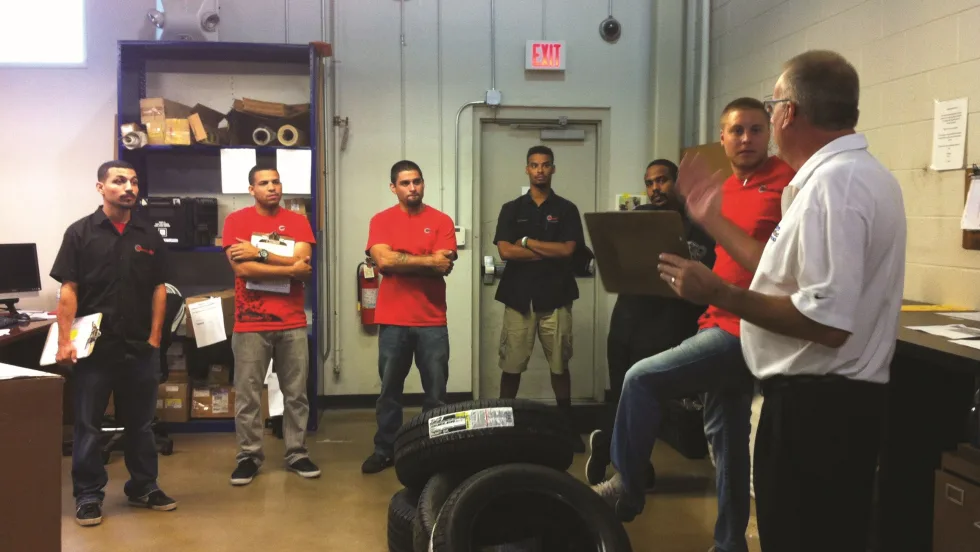
From driver training and safety meetings to one-on-one coaching and incentive programs, several small fleets share how they have developed a safety culture with their drivers using low- to no-cost resources.
Read More →

Boosting Last-Mile Fleet Uptime, Safety, and Value with AI Vehicle Inspections
AI-powered inspections are transforming last-mile fleets by replacing manual checks with highly accurate automated scans that detect defects in seconds. By giving fleet operations visibility into the daily condition of their vehicles, you can identify trends over the vehicle’s lifecycle that enable improved procurement decisions, route management, driver training and accountability.
Read More →
Five Ways Seat Belts Help Prevent Injuries
There are five ways seat belts protect occupants from injuries, according to the Tennessee Department of Safety and Homeland Security.
Read More →
Basic Tracking vs Next Generation Fleet Technology
Fleet software is getting more sophisticated and effective than ever, tying big data models together to transform maintenance, safety, and the value of your existing tech stack. Fleet technology upgrades are undoubtedly an investment, but updated technology can offer a much higher return. Read how upgrading your fleet technology can increase the return on your investment.
Read More →
It’s here: The 2026 Fleet Technology Trends Report
What does AI mean for fleets? Get the answer — and learn other top tech trends.
Read More →
Small Fleets, Big Impact: How Independent Drivers Power Wreaths Across America
Check out how small fleets and independent drivers power Wreaths Across America each December and why their impact matters more than ever.
Read More →
VMS Survey Finds 65% of Small Fleet Managers Run Operations Alone
A new VMS survey shows small fleet managers are stretched thin, with most handling operations solo and eager to adopt digital tools for relief.
Read More →
AI, Access, and Uptime: VMS’s Next Chapter with David Prusinski
VMS’s new Co-CEO, David Prusinski, shares how an AI-first approach will give small fleets and repair shops the tools to compete like big players.
Read More →