




Organic Engine Product Improves Fuel Economy
Drop an ounce of this product in your tank and your fuel economy will improve an average of 9.44 percent, your nitrous oxide emissions will be reduced by 31 percent, and you’ll get more pep in your engine. Oh, and it runs partly on grapefruit peels. It sounds like the type of embellishments made by barkers in an old-time medicine show. But Frank Norman, the Maine-based inventor of a “fuel maximizer” called Diesel/Gas Go! can produce test results from a university’s testing laboratory and the EPA to back up his claims. Diesel/Gas Go! is an organic catalyst – Normal steers clear of the term “additive” – that is part solvent and is put directly into a gas- or diesel-powered tank. In simple terms, the formula changes the combustion chemistry in the vehicle’s cylinder. It breaks apart the gasoline molecule so it burns more easily and efficiently without a spike in temperature, resulting in less nitrogen oxide formation. A custom chemical mixing/blending/filling plant produces the product under his supervision. The fuel economy tests were conducted at the University of Southern Maine’s Manufacturing Applications Center Product Testing Laboratory. The tests were done on a mix of eight- and six-cylinder vans and trucks, with an average gas fuel economy savings of 9.44 percent. The diesel savings averaged 7.94 percent. The EPA certified lab test results showed a 5.4 percent reduction in carbon monoxide emissions, 31 percent reduction in nitrogen oxide, and a 2.26 percent reduction in carbon dioxode emissions. Norman, a former salesman for major chemical companies, admits his marketing efforts to date have been grass-roots. He sells his product directly through his Web site (www.futurefueltechnologies.com) or by direct sale – by picking up the phone and calling him. A single retail location in Southern Maine carries Diesel/Gas Go! Norman estimates that not more than 150 vehicles are using the product now. Norman is focusing his sales efforts on the fleet level. He says that ideally the product should be added to 10,000 gallon tanks to ensure accuracy. “This is not the great American product where more is better,” he says. Too much or too little will cause a reduction in gas mileage, he says. The proper measurement is one ounce for 10 gallons. The savings, especially for companies running fleets of cars, can be substantial. Consumers pay $25.95 a bottle plus tax over the Internet, which equals 13 cents to treat a gallon. But a fleet owner willing to purchase a drum could pay as low as 5.8 cents per gallon. If gas is $2.00 a gallon, the total cost per gallon equals about $2.06. By realizing the average fuel savings of 10 percent, the net savings per gallon is 14 cents. For fleets that run 100,000 miles a year, the $14,000 savings is substantial. “We’re willing to work with some fleet people and initially provide the product free so they can get a feel for it,” Norman says. The owner of the vehicles recruited by USM for the tests is a convert. Steve Klein of Mermaid Transportation, the owner of a fleet of sixteen passenger transport vehicles, now buys the product in five-gallon drums. “When I said to my mechanic that we were going to test this he said, ‘Ah, another snake oil.’ I can tell you it works. I’m seeing the savings on paper.” Geri Tino, the Publisher of New England’s Environment Magazine, owns a four-cylinder Toyota Echo. Interestingly, no four-cylinder cars were included in the tests. “I estimate I get 7-10 percent better gas mileage with the product. I was very impressed. I’m an enthusiastic person but i’m not gullible,” she says. “It seems like holy water the way I talk about it.” Norman realizes he needs the stamp of approval of a larger, established authority such as the Southwest Research Labs in San Antonio, which conducts tests for the Big 3 car “We’re talking six-digit numbers to pay for testing,” he says. Money Norman doesn’t have. He isn’t yet interested in venture capital.
More Small Fleet


Developing Budget-Friendly Driver Safety Programs
From driver training and safety meetings to one-on-one coaching and incentive programs, several small fleets share how they have developed a safety culture with their drivers using low- to no-cost resources.
Read More →
Boosting Last-Mile Fleet Uptime, Safety, and Value with AI Vehicle Inspections
AI-powered inspections are transforming last-mile fleets by replacing manual checks with highly accurate automated scans that detect defects in seconds. By giving fleet operations visibility into the daily condition of their vehicles, you can identify trends over the vehicle’s lifecycle that enable improved procurement decisions, route management, driver training and accountability.
Read More →
Five Ways Seat Belts Help Prevent Injuries
There are five ways seat belts protect occupants from injuries, according to the Tennessee Department of Safety and Homeland Security.
Read More →
It’s here: The 2026 Fleet Technology Trends Report
What does AI mean for fleets? Get the answer — and learn other top tech trends.
Read More →
Small Fleets, Big Impact: How Independent Drivers Power Wreaths Across America
Check out how small fleets and independent drivers power Wreaths Across America each December and why their impact matters more than ever.
Read More →
VMS Survey Finds 65% of Small Fleet Managers Run Operations Alone
A new VMS survey shows small fleet managers are stretched thin, with most handling operations solo and eager to adopt digital tools for relief.
Read More →
Tips for Driving Safely on Halloween Night
This video features a reminder from the Connecticut Department of Transportation (DOT) and the Connecticut Police Chiefs Association, urging drivers to prioritize safety this Halloween.
Read More →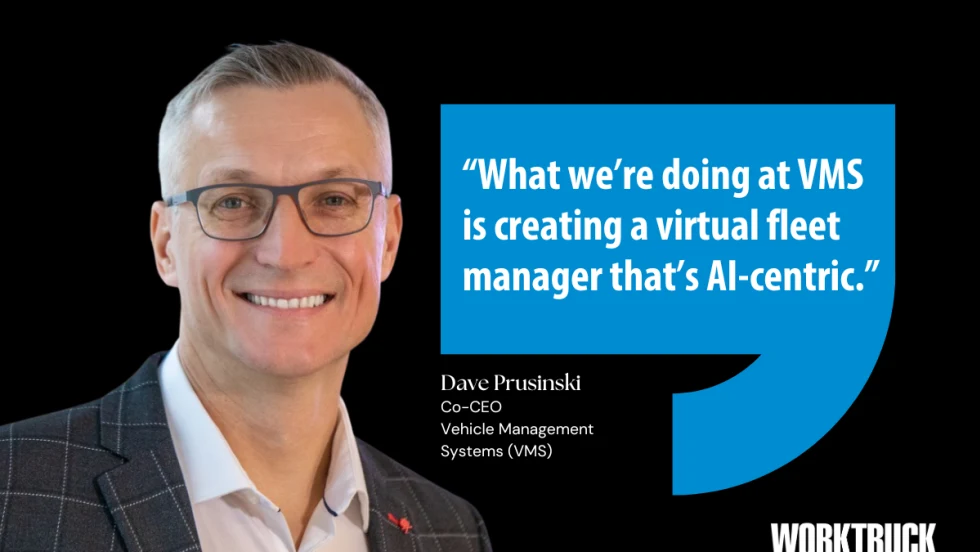
AI, Access, and Uptime: VMS’s Next Chapter with David Prusinski
VMS’s new Co-CEO, David Prusinski, shares how an AI-first approach will give small fleets and repair shops the tools to compete like big players.
Read More →
Fleet Managers Share Winter Prep Tips: It's Never Too Early!
Three fleets share best practices to prep vehicles for winter and prevent downtime when the cold sets in.
Read More →