




Op-Ed: Why ‘Drill Baby Drill’ is Far From the Answer
David Ruggles, an industry analyst, says that understanding oil as a world commodity is a key to understanding U.S. gas prices.

The following is an editorial submitted to Business Fleet by David Ruggles, an industry analyst who attended this year's Conference of Automotive Remarketing.
It seems every few years the world market price of oil is the topic to write about. We had a little run up in fuel prices last year over the Libyan overthrow of their dictator, but talk of attacking Iran before they get a nuke has triggered another scare; this time more serious. And because this is a Presidential election year, the increasing fuel prices have become a political football — despite the fact that Presidents can do very little about the world market price of oil.
During the recent Conference of Automotive Remarketing (CAR) held in Las Vegas at Caesar’s Palace, there was a lot of talk about fuel prices being the “wild card” in industry projections.
It is quite remarkable that so few in this country really understand how the world market for oil works. If they did, they would understand why “Drill Baby Drill” is far from the complete answer.
First, oil is a fungible commodity:
From Wikipedia – “Fungibility is the property of a good or a commodity whose individual units are capable of mutual substitution, such as crude oil, shares in a company, bonds, precious metals or currencies. For example, if someone lends another person a $10 bill, it does not matter if they are given back the same $10 bill or a different one, since currency is fungible; if someone lends another person their car, however, they would not expect to be given back a different car, even of the same make and model, as cars are not fungible.”
What does “fungibility” in the world market price of oil mean to Americans and our economy? A barrel of oil from the Bakken fields in North Dakota is worth the same as a barrel of oil in Saudi Arabia, excluding transportation and refining expense differences. The barrel of oil from Saudi Arabia might cost $10 to extract while the barrel from Bakken might cost $65 or more due to the extra cost of “fracking” to get the oil out of the ground.
Following is a chart showing the relative cost of various types of oil production:

Saudi Arabian oil has been the cheapest to produce over the years. While there may be a sense of security knowing we are sitting on the huge Bakken Reserve, Bakken does not lend itself to cheap gas at the pump. In fact, oil sands and oil shale require a high world market price to be viable. Add in the higher cost to refine these thick and gooey oil stocks from sands and shale, and the price of refined fuel becomes quite high.
The bottom line is that it is highly unlikely that oil producers in North Dakota would sell their oil to American consumers for any less than the world market price. And it is unlikely that American consumers would pay more for Bakken oil just because it came from the U.S. [PAGEBREAK]

Even if we were able to source all our oil needs from the United States, as long as we are subject to the world market price of oil it won’t impact the price of fuel at the pump more than a few pennies. The only way to change this is to nationalize the oil companies, something no one with any sense wants to do.
Yet the clamoring for more U.S. production continues even as we are exporting an increasing amount of refined fuels because we don’t use all we produce. The export of refined fuel is currently one of the country’s biggest export items.
OPEC has a huge influence on the world market price of oil. It influences the price via its spigot. Following is a chart of OPEC production over the years. Interestingly, it produces about the same amount today as it did 40 years ago. The population of the world has doubled while the global consumption of oil has increased by a factor of three. OPEC must be trying to keep the world market price of oil relatively high. What a surprise.
OPEC walks a fine line. If it keeps the price too high for too long, it risks investment by competitors into items like alternative liquid fuels. If OPEC floods the world market, it can drive down prices. While this might hurt its revenue short term, it can also drive competitors into insolvency and shut down production like Bakken and the Canadian oil sands operations. After all, who wants to spend $65 to extract a barrel of oil you can only get $45 for? How long would that last?
At CAR we managed to corner a number of leading auto industry economists on stage at the same time. We even managed to extract each one’s guess of what the gas price will be on Nov. 5, 2012. It was generally agreed that rising fuel prices will depress consumption while at the same time triggering increased production rushing to market to get the higher price.
The wild card is what OPEC will do and how long will any perceived shortage last. The last time the country experienced a substantial fuel price spike we had the financial collapse of 2008 to help squash demand, creating a glut that dropped the price of fuel from a high around $4.50 in mid-summer 2008 to less than $2 by the November election. Not one of our experts expects that to happen this time.
The prognosticators include myself, as well as Ricky Beggs of Black Book, Eric Ibarra of Kelly Blue Book, Tom Kontos of ADESA, Tom Webb of Manheim, Eric Lyman of ALG, and Jonathan Banks of NADA. The projections were from $2.90 to $3.85.
We’ll announce the winner and the prize in November.
More Small Fleet

Tips for Driving Safely on Halloween Night
This video features a reminder from the Connecticut Department of Transportation (DOT) and the Connecticut Police Chiefs Association, urging drivers to prioritize safety this Halloween.
Read More →
Simple Tire Checks That Help Keep Your Business Fleet Moving
A survey found that nearly one in every 10 passenger vehicles has at least one bald tire. What's more, 27% -- more than one in four -- of vehicles are driven with one or more severely under-inflated tires.
Read More →
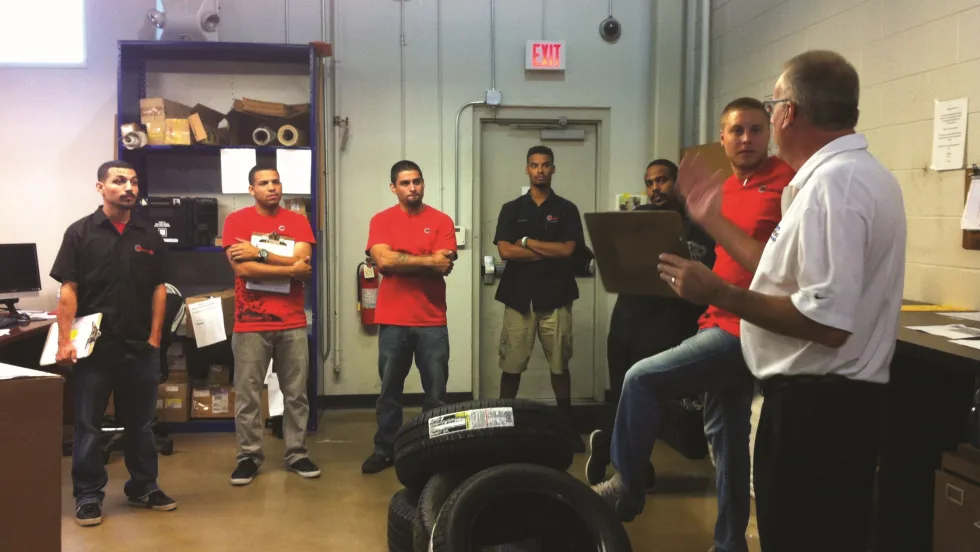
Developing Budget-Friendly Driver Safety Programs
From driver training and safety meetings to one-on-one coaching and incentive programs, several small fleets share how they have developed a safety culture with their drivers using low- to no-cost resources.
Read More →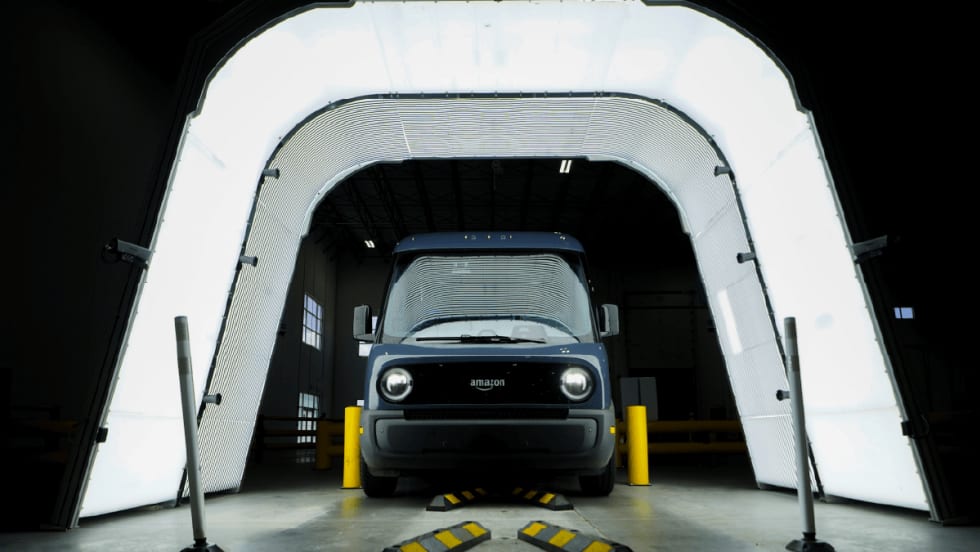
Boosting Last-Mile Fleet Uptime, Safety, and Value with AI Vehicle Inspections
AI-powered inspections are transforming last-mile fleets by replacing manual checks with highly accurate automated scans that detect defects in seconds. By giving fleet operations visibility into the daily condition of their vehicles, you can identify trends over the vehicle’s lifecycle that enable improved procurement decisions, route management, driver training and accountability.
Read More →
Five Ways Seat Belts Help Prevent Injuries
There are five ways seat belts protect occupants from injuries, according to the Tennessee Department of Safety and Homeland Security.
Read More →
Basic Tracking vs Next Generation Fleet Technology
Fleet software is getting more sophisticated and effective than ever, tying big data models together to transform maintenance, safety, and the value of your existing tech stack. Fleet technology upgrades are undoubtedly an investment, but updated technology can offer a much higher return. Read how upgrading your fleet technology can increase the return on your investment.
Read More →
It’s here: The 2026 Fleet Technology Trends Report
What does AI mean for fleets? Get the answer — and learn other top tech trends.
Read More →
Small Fleets, Big Impact: How Independent Drivers Power Wreaths Across America
Check out how small fleets and independent drivers power Wreaths Across America each December and why their impact matters more than ever.
Read More →
VMS Survey Finds 65% of Small Fleet Managers Run Operations Alone
A new VMS survey shows small fleet managers are stretched thin, with most handling operations solo and eager to adopt digital tools for relief.
Read More →