




Older Drivers Have Slower Response to Telematics: Study
Drivers aged 65-75 perform much more slowly on tasks involving telematics products, such as navigation systems, than drivers in the 18-30 year-old range, studies at the University of Michigan Transportation Research Institute (UMTRI) show. Because these tasks take attention away from driving, older drivers' slow performance puts them at greater risk of being involved in accidents. To help keep all motorists safe, developers of telematics products must be sure to include older subjects in safety and usability evaluations of the devices, according to senior research scientist Paul Green. Green reviewed the results of several UMTRI studies on age and driver performance at the Association for the Advancement of Automotive Medicine Conference on Aging on Driving Feb. 19. Even the basic task of "plain old driving" is more difficult for older drivers than for younger ones, UMTRI studies show. "However, much larger differences are often found when common telematics tasks are added -- such as responding to warnings, reading complex displays and entering data," says Green. "This difference is of particular concern because the time older drivers take to complete some tasks is on the order of minutes, and distractions of that duration can expose drivers to unacceptable levels of risk." Many of the UMTRI studies were done using the institute's driving simulator. To study the demands of ordinary driving, for example, the researchers had subjects "drive" straight and curvy roads in the simulator, keeping their eyes closed as much as possible and pressing a button whenever they felt they needed a 0.5 second glimpse of the road to continue driving safely. The rationale for this experiment is that the more demanding the driving situation, the more often the driver needs to look at the road. By recording the amount of time subjects keep their eyes open, researchers can assess the visual demand of driving. In experiments of this type, visual demand generally increased with age, with the value for older drivers being 15 percent-50 percent greater than for younger drivers. The higher visual demand means that older drivers have much less time to take their eyes off the road and pay attention to gadgets inside the car. In other experiments, drivers in a mock vehicle watched a typical expressway scene, with road signs, passing cars and flashing brake lights. While scanning the road as they would in normal driving, the drivers also had to watch for a triangle-shaped warning icon on a windshield display and press a key whenever they noticed the icon. On average, older drivers took 40 percent longer to respond to warnings than younger drivers. UMTRI researchers also studied drivers as they used electronic maps and entered and retrieved destinations into a navigation system. They found that: * Older drivers took 33 percent to 100 percent longer than younger drivers to perform map-reading tasks while driving in the simulator. They also made more errors in map interpretation. The more difficult the task, the greater the difference between older and younger drivers. * In an actual vehicle on the road, the difference was even greater, with older drivers taking 40 percent to 70 percent longer than younger drivers to complete the same map reading tasks. Again, the difference increased as tasks became more difficult. * Even when parked, older drivers took almost 80 percent more time than younger drivers to enter information in a navigation system. "As these studies have shown, older drivers experience considerably more difficulty in completing telematics tasks," Green said. The solution, according to Green, is not to keep older drivers off the roads, because the resulting loss of mobility and independence can be as devastating as a serious illness. Instead, "it is critical that motor vehicles and telematics products for vehicles be designed so that they are safe and easy to use for elderly drivers," Green said. "If the older drivers are able to complete a task safely and easily, then other drivers will be able to as well."
More Small Fleet


Developing Budget-Friendly Driver Safety Programs
From driver training and safety meetings to one-on-one coaching and incentive programs, several small fleets share how they have developed a safety culture with their drivers using low- to no-cost resources.
Read More →
Boosting Last-Mile Fleet Uptime, Safety, and Value with AI Vehicle Inspections
AI-powered inspections are transforming last-mile fleets by replacing manual checks with highly accurate automated scans that detect defects in seconds. By giving fleet operations visibility into the daily condition of their vehicles, you can identify trends over the vehicle’s lifecycle that enable improved procurement decisions, route management, driver training and accountability.
Read More →
Five Ways Seat Belts Help Prevent Injuries
There are five ways seat belts protect occupants from injuries, according to the Tennessee Department of Safety and Homeland Security.
Read More →
It’s here: The 2026 Fleet Technology Trends Report
What does AI mean for fleets? Get the answer — and learn other top tech trends.
Read More →
Small Fleets, Big Impact: How Independent Drivers Power Wreaths Across America
Check out how small fleets and independent drivers power Wreaths Across America each December and why their impact matters more than ever.
Read More →
VMS Survey Finds 65% of Small Fleet Managers Run Operations Alone
A new VMS survey shows small fleet managers are stretched thin, with most handling operations solo and eager to adopt digital tools for relief.
Read More →
Tips for Driving Safely on Halloween Night
This video features a reminder from the Connecticut Department of Transportation (DOT) and the Connecticut Police Chiefs Association, urging drivers to prioritize safety this Halloween.
Read More →
AI, Access, and Uptime: VMS’s Next Chapter with David Prusinski
VMS’s new Co-CEO, David Prusinski, shares how an AI-first approach will give small fleets and repair shops the tools to compete like big players.
Read More →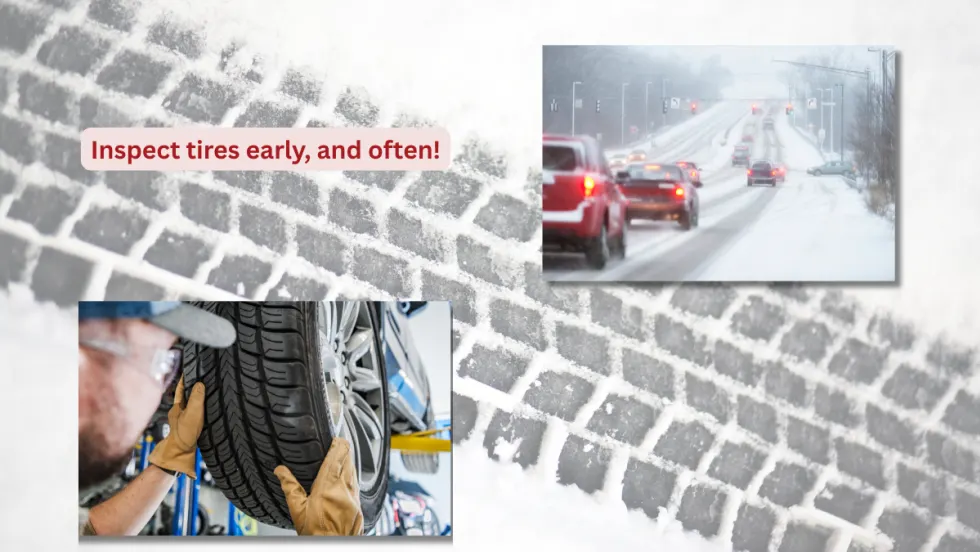
Fleet Managers Share Winter Prep Tips: It's Never Too Early!
Three fleets share best practices to prep vehicles for winter and prevent downtime when the cold sets in.
Read More →